Covid-19 and Art
-
-
Vera Ellen
- Newtown Festival
- Aotearoa Music Award winning and Taite Award nominated artist Vera Ellen was born and raised in Naenae in Te Whanganui-A-Tara/Wellington. Vera relocated to Los Angeles, where she started the band Girl Friday, whose music debuted on indie giant Sub Pop’s sub-label, Hardly Art. In early 2020, Vera moved back to Aotearoa during the pandemic, leading […]
- Accepted from Newtown festival 2019 by feedreader
- Tagged as:
- naenae
- art
- covid-19
Naenae, Lower Hutt, Lower Hutt City, Wellington, New Zealand (OpenStreetMap)
-
-
-
From Rural to Urban: How Indian Textile Artists Adapted and Flourished During Covid-19
- Friends of Te Papa
- In pre-Covid days, Friends of Te Papa enjoyed some delightful presentations from Joji and Shani covering the textile artists of India, from hand weavers in the villages to the creation […]
- Accepted from Coming Events – Friends of Te Papa by feedreader
- Tagged as:
- covid-19
- te-papa
Te Papa, 55, Cable Street, Te Aro, Wellington, Wellington City, Wellington, 6011, New Zealand (OpenStreetMap)
-
-
-
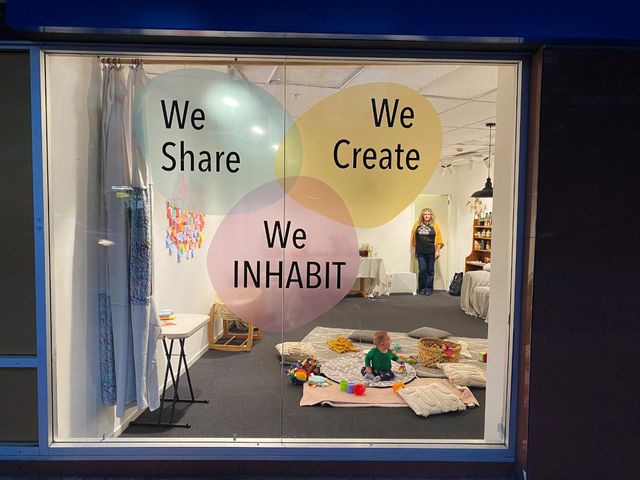
The artist as many other things first
- Urban Dream Brokerage
- Holly McEntegart in conversation with Anne Noble, facilitated by Mark Amery <figure class=" sqs-block-image-figure intrinsic " > Image: Anne Noble Merging her work as an artist, mother and full spectrum doula, Holli McEntegart recently brought something remarkably different to the bustle of Wellington’s Courtenay Place, in an exploration of art as a social practice. Providing a warm, calm space for participation, Inhabit brought together mothers and their infants to examine how community, cultural and whānau postpartum care has changed in Aotearoa, sharing experiences in real-time and as oral history. A private issue was brought into a public realm. Rethinking the artist’s role in society, McEntegart was supported by artist Anne Noble in a project commissioned by Letting Space for vacant space activators Urban Dream Brokerage. McEntegart now has plans to bring the project to Auckland. Here are Holli and Anne in conversation. Mark Amery Anne Noble: Letting Space and Urban Dream Brokerage have made a really remarkable contribution to the Wellington art scene. Letting Space positioned itself as an entity that sits outside the conventional domain of the gallery, where the artist is mostly defined e as a producer of objects and artefacts. They offered an experimental space and an invitation to artists to expand the ecology of contemporary art and provide support for them to provide a new kind of experience for communities and publics to engage with contemporary art I see Inhabit as a perfect example of the kind of project that Letting Space and Urban Dream Brokerage were established to nurture, enable and support. When I first thought about your ambition for Inhabit: to marry both your practices as an artist and a full spectrum doula, one of my first questions was about the expanded role of the artist in a social practice. How is your work first and foremost art while being shaped by other practices and concerns? What came to mind was a book [^1] I’ve had on my bookshelf, which has on its cover The Artist As followed by a list: that includes such descriptors of the artist as .. producer; the artist as… archivist; the artist as… ethnographer; the artist as… catalyst; the artist as… orchestrator; the artist as… poet; the artist as… curator. And it ends with this really beautiful phrase in capital letters: AND MANY OTHER THINGS FIRST. This points to the fundamental premise of your art practice - driven and formed by another whole domain of expertise, professional practice, experience and activist concerns. <figure class=" sqs-block-image-figure intrinsic " > Image: Anne Noble | Infant massage with Jo Chambers. From left: Megan Rodgers and Jasper, Jo Chambers from Blissful Bubs You define yourself as a social practice artist but you also practice as a full spectrum doula. How did you arrive at the idea of merging your practice as an artist with your life as a mother, your interest in the post-partum experience and your activism in this space? Holli McEntegart: You and I talked a lot about the artist as a conduit; or as activator. As a young artist I was always really interested in capturing images of moments that had complicated stories behind them. I realised that my interest was often more in the story; how we got to this point; the full stop. The work was always, for me, in the negotiation of getting to that image - with the image itself feeling lacklustre in comparison to that journey. Then when I moved to Pittsburgh to complete my Masters I found that there was a greater focus on social practice as a role for the artmaker. The driving need for me has always been to build relationships, and therefore community. So when I was taking photographs I would spend months getting to know people, navigating the permission, not just to be there, but to be accepted; to belong. I’ve joined every group under the sun! A loon (an aquatic bird) counting group in Maine, a porcelain painting group in Mt Albert, a bluegrass group, banjo club and a barbershop quartet in Pittsburgh, and a cake decorating group in Otara, to name a few. But I didn't feel like I had the right to be there unless I was really an accepted part of the community. That came to a head for me in Pittsburgh when I joined a semi-gated spiritualist community called Lily Dale, and began making work out of the readings they were doing for me. I would spend eight months with them before I could make that work. By the time I was living in New York there were many grants, residencies and galleries supporting a socially engaged framework of art making. My eyes were opened to the fact that this community exchange and the energy I was investing into relationship building was not only valid, it was the work.That really gave me permission to move past just documenting my work with photographs or videos and writing and to pull the focus back to the process, the making and the relationship tending. Research is a huge part of my process, whatever I’m working on I’m always off down a research tunnel. So, when I got pregnant in New York with my first child Arlo I went on a huge journey to understand pregnancy, birth and everything that was happening to my body. I discovered that in New York City, the maternal mortality rate in pregnancy, birth and early postpartum is astoundingly high, and that black women are 12 times more likely to die in childbirth than white women. OB’s are often pushing for a lot of unnecessary interventions within the hospital system and midwives are not as commonly used, though that is changing. I come from a family of home birthers in New Zealand, it was normalised and seemed like the obvious place for me to birth, but only around 1.5% of people give birth at home in the US, so it's quite a radical thing to do in that context. I was so lucky that I had a neighbour and friend who was training to be a midwife and was working as a birth doula. Through her I discovered this group of folks called doulas. I started learning about the role they play in birth work, about reproductive and birth justice advocacy, and about everything I was going to need to know to birth my baby at home while being supported by a midwife and doula team. <figure class=" sqs-block-image-figure intrinsic " > Image: Anne Noble New York City is so compact, we had a tiny apartment and I had a home studio. My son, Arlo, was born underwater, in a birth pool on my studio floor. At that point I had been working for some time within these spiritualist communities. I had been really delving into why people were seeking healing in these communities and what it meant to be constantly practising these healing rituals. Birthing my son in my studio was like an epiphany, I was on a healing journey myself and this was a part of the work. Birth was incredibly healing for me at that point in my life and then, like many people, postpartum was a completely different beast. Like most people experiencing giving birth far from their home and family, I just felt an intense lack of support from the world. And with that a deep loneliness. I was so homesick. My parents came to visit for two weeks which was incredible, but it went so fast. A few good friends showed up as best they could but I was living and working as an artist in New York, I didn’t know anyone with babies or even young kids. People are busy - for everyone else, life goes on. It’s the postpartum person that is stuck in stillness, but constantly working. It was a totally different world. You get the sense that everybody shows up for birth, everyones interested, you learn so much about pregnancy and childbirth, tracking the changes in your body all the way through to this kind of event, and then everyone leaves, and you’re left in charge of a human. It’s wild, uncharted territory and no-one’s told you that much, or what they have told you is irrelevant, biassed, outdated and sometimes even harmful. I longed for my family, mostly for my mum. I found myself floating out to sea, and there was a realisation that no one was going to rescue me - I had to rescue myself. And to do that I needed to dive even deeper into what was happening to me, go down that research tunnel again and find out what support there was in the world and how I could heal. That led to me doing Seen, a postpartum doula mentorship programme with Birdsong Brooklyn, and learning constantly - four or five months too late - what could have rescued me before I needed rescuing! It was eye opening and there was a lot of deep grief about the care I had missed out on, and the ways I could have been supported. I was diving deeply into the profoundness of becoming a mother and the reality of how much is lacking in the world in supporting new parents. I just fell in love with this idea that we could be healing collectively if we just looked after each other better and shared our knowledge. I built my community from that in New York in that first year of parenting. At that point I had been working for three years as the studio manager for an incredible artist, Janine Antoni, who is also a parent and understands that mothering work. It was a huge question for me: how do I keep working in the world as an artist, be able to show up as a mother and earn enough money to live? How do I juggle all of this and stay tethered to myself? I gave birth to my son when I was 38 and I was being called a geriatric mother by the medical system. It scared me. I wanted to breathe in my baby, just inhale him and not miss a second. But how do I do that and keep up my practice? Well… I just gave birth to my son in my studio…. It was these layers of realisation: this labour is the work. I have to reframe my life so that this labour of the home, the labour of care, of mothering, is seen and valued. So I left my job in the studio with Janine and went straight into postpartum doula training. I needed to be immersed in the community in the same way I had been with the spiritualists or the cake decorators or the bird counters in Maine. <figure class=" sqs-block-image-figure intrinsic " > Image: Holli McEntegart | Multiples Feeding Support Group. From left: Jessie Lee Broadbent, anon Anne: You have talked about your journey as a photographer engaging with communities, and how the outcome can be separated from those experiences that feel like part of the work. That is n true for many documentary photography projects.You’ve also described beautifully your dissatisfaction with being both outside a subject and yet needing to be right in the heart of it. The notion of a social practice artist is less common in New Zealand than in the US. It has currency in art schools, but my instinct when we first met and talked was that you have a really highly evolved practice in which you prioritise your relationship as an artist to the post-partum communities you engage with Your work begins with you your life as a mother and your practice as a doula being the site of public art activism, of making the post-partum world experience shared and visible. How have you then addressed the visibility of this as an artwork? You only need to look at the project website to see the level of community engagement and the number of people you have drawn into this space. It’s really significant. Those workshops - people flocked to them. But to make it public, visible to participants and to audiences how does that work? Holli: What comes first for me is the relationship, being a good community member and trust. I come at relationship building and getting people involved with their whole heart; with a genuine interest and respect. I have to have something at risk as well. Inhabit was a year in the making, but the day we opened, with a multiples lactation support workshop. We had six twin mums and probably six assistants or helpers, including grandmas, friends, lactation and doula support. That's 12 babies plus Indigo [Holli’s own baby]. Over 24 bodies breathing life into the space. That was the moment that the work became art; that it became an artwork. It was activated by the community of people in the room and their energy. Up until then there’s a lot of risk on my part because I don’t know who is going to show up and what they will bring on the day. The work is filled with intention but it has to meet people where they are and vice versa, and for that reason, it’s never the same, it evolves and unfolds and, much like mothering, I must surrender to it. I think I’m comfortable leaning into the unknown. Within a socially engaged practice you really don’t know how your participants or your audience (the public) are going to enter the work. I consider the folks facilitating workshops my co-creators. There were six months of emailing and zoom conversations about what I was making with that final group of people, so many conversations about what the community needed. And then there was a point when they came to me with a plan to set up this specific workshop for multiples families. They were asking for my permission, and I was overjoyed because, it was at that point that they took ownership and really began to have agency within the work. That was the moment when the community was activated, they started creating what they needed under the umbrella that I offered - this community activation was where the social practice aspect of the work really came into play. <figure class=" sqs-block-image-figure intrinsic " > Image: Milan Maric | Combined yoga and Infant massage workshop with Emma Chen Flitcroft and Jo Chambers I was coming to Wellington, into a community I’m not from, so I’m constantly asking myself, how do I leave this space better than when I got here? Within social practice I think there is a very real responsibility to care for the community you're working in and to make sure there are ongoing care agreements in that community. Everyone that provided a workshop for Inhabit offers free or sliding scale services that could continue to be accessed after Inhabit closed for example. Anne: That’s a beautiful description of the artist as catalyst. I’m very fond of the notion that when an artist plays those roles, the artist in a conventional sense disappears to become a generating and catalysing force Holli: I’m interested in the way my role shifted from facilitator to participant, or mother , or host. Hourly that changed. Originally I thought I would be facilitating some workshops but I didn't end up doing that because so many people wanted to facilitate their own. At the beginning of each workshop I would introduce the project and really ground it back into the context of an artwork, to remind people they were participating in something both bigger than them, but also inherently generated by them, and then I would participate alongside them. I was never an observer, I was a participant. I think it’s really important I have the ability to be part of what’s happening as opposed to being an outsider. Learning, participating and being vulnerable. That vulnerability permissions other people in the space to also be vulnerable. It’s not like, as you’re describing Anne, that ‘‘you’re the artist and you’re over there’ on a pedestal. The process is about me sinking back into the work. It’s a dance between making sure people feel like they are being held and acknowledged and the space is being tended to in the correct way, but not dominating it. <figure class=" sqs-block-image-figure intrinsic " > Image: Anne Noble Anne: As a public artwork, positioned in Courtenay Place, it was a really beautiful intervention with really subtle signage and this glowing light masked by a wall of handmade stitched together nappies! It offered a surprising encounter that was intriguingly signposted and people were welcomed to just stop and to consider what it might be - as a public art project. Sometimes I was amazed at the number of people participating and how the work created an opportunity for a community to assemble. How did you introduce participants to the process of being part of something for them but also part of something larger? Of being participants and collaborators in Inhabit as an artwork. Holli: That was definitely one of my biggest challenges. There were a couple of things I did practically. Even before Inhabit opened I worked very hard to centre the project in the community with this drawing project that involved - six Love Note posters that were plastered repetitively around the city in the two weeks leading up to our opening. I was documenting them in situ and sending images of them to people when they were signing up for the workshops as well as using them in social media. So there was a centring of it as an art project before they arrived. Most people had seen these drawings and then saw the wall of Love Notes growing on the wall when they came into the space. I introduced that as a collaborative drawing project and really impressed the importance of adding everyone's voice to that growing archive. <figure class=" sqs-block-image-figure intrinsic " > Image: Lily Dowd I constantly was re-centring it as an artwork in this way all the time, and encouraging the public to participate, reminding them of what they are a part of. I see the Love Notes as the beginning of an archive of postpartum stories - a collection. And that maybe this is how we start something: a movement, a book, an archive - we just have to start putting our stories on the wall. I think that grew really organically and became a way for people to gently be reminded of the fact that they were a part of an artwork, and then they forgot about it - which was great. Someone hands them a bowl of soup, nourishes them, checks in and makes sure they’re OK. Offers to hold their baby. and that energy of care flows into the space and people feel really comfortable. And that comfort was there in part because I was there visibly parenting, making the work. Creating a space that makes visible the lived experience of parenting, and artmaking at the same time. <figure class=" sqs-block-image-figure intrinsic " > Image: Anne Noble As it transpired there was very little foot traffic, and actually the space needed to be very protected, intimate and gate kept. So the curtain that I made really provided a level of intimacy. It is another drawing project I had been working on as a part of the show, but I didn’t quite know where it would fit. I’ve been collecting these used flat nappies. They are very identifiable, heavily washed and starched white cotton with a red stripe down the side. They are the kind of do everything cloth of motherhood. So representative of the labour of the home. Soaking up the mess of it all. I’ve been stamping all over them with my own mother at my kitchen table, “Ssshhhhhh sshhh shhh ssshhh shh shh shh…” On the first day of installation it was clear to me that we needed to be able to transform the space into a private, intimate one, and to open it up to the world. Sewing the nappies together to make a curtain was a wonderful way to create that boundary between public and private. And then at the end of the last workshop I was really inspired to “pull back that curtain” and be seen. I called you and asked you to document this moment of being seen in parenting and artmaking. It was such a moment of connectivity and community connection. There’s now two groups I believe that came together at Inhabit and are continuing to meet. It was great to cultivate this level of nurturance and community engagement in a place like Courtenay Place - buses, cars and people with so much going-to-work energy, once we pulled back that curtain I think people were taken aback by it “there are so many babies!” <figure class=" sqs-block-image-figure intrinsic " > Image: Milan Maric | Combined yoga and Infant massage workshop with Emma Chen Flitcroft and Jo Chambers Anne: Yes it was a brightly lit window that glowed like a little jewel! And was such a surprising experience walking by. You’ve described the artist as a generator and how there is a legacy for participants beyond the exhibition space. What were some of the highpoints during Inhabit and some of those legacies? Holli: The highest high was our opening, that first day. 13 babies in the space. One of the sets of twins was only five weeks old and it was their first time out of the house and their mum had driven an hour to get there, they spent all day with us. Any future Inhabit projects will always open with a multiples workshop because these folks are the least catered for within the system. The world was not made for people birthing two or three babies at a time… So to have this space where people were surrounded by support and advice and understanding. It was so magic and it was so clear there was a need for that. I think that in the current Covid climate people are feeling so much more isolated and unable to get out of the house. Opportunities for connection that were available to parents pre covid often aren't now, like community or library meetups and coffee groups. Many people were speaking of coming to Inhabit as the first time they’d been to a group outside the home, there is a lot of isolation and fear out there, and a deep lack in support services. A few people who weren’t parents had some very interesting interactions with the space as an artwork, which I found fascinating. Some really generative conversations came from them being confronted: that they were coming to a public exhibition, and were questioning ‘what is this?!’ I had very interesting conversations with other artists about what participation looks like when you’re not a parent. For parents their participation was organic but for others, it felt very different. They accessed it through my facilitation and it was interesting seeing them sink into comfort because they were being cared for; getting down on the floor and playing with Indigo. Having some soup, and learning about traditions of postpartum care and methodologies. I’m interested in pulling back the veil on this kind of care work because we can all benefit from learning how to tend to our communities and families. <figure class=" sqs-block-image-figure intrinsic " > Image: Milan Maric Another highlight was my involvement with Little Shadow. They run perinatal mental health support groups in the Wellington region and virtually across the motu. They were so supportive of this project. They really saw the power of what Inhabit created in offering an entrance point to conversations about perinatal mental health that are softer and more nurturing than how it’s often tackled when people are looking for support within a healthcare system. Inhabit provides nourishing food, a space to express yourself creatively, a place to move your postpartum body, and a room full of folks on a similar path. Once there, we are able to get into the nitty gritty of what we are all experiencing because the space itself is so tended to. Something that I repeat all the time is that I’m examining patterns of care, whilst caring for our communities. I want to decolonise postpartum care so that we may all gain the knowledge of how to care for each other. Then there was that final reveal, pulling back that curtain. I felt I was truly being seen as my whole self in the work. Before that point I was a shapeshifter facilitating everybody else's journey. But at that moment I was in my deeply creative space of making and mothering as I finished the project. It felt like closure and an answer to that question of how I can be an artist, make work and be a parent. It struck me how that question has deeply impacted my relationships with people and how I move in the world. In my first few days in Wellington I had a clear vision of that image we captured at the end. I saw the room glowing with light, semi dark outside and the interior being a place of making and of process. A gallery, and a living room and a studio and a feeding place. Where bums are getting changed, a place where all of life is happening at the same time. And that the public are walking past and peeking in. The labour of parenthood and of artmaking is usually so invisible. That moment at the end just felt like: let’s get it all on display! <figure class=" sqs-block-image-figure intrinsic " > Image: Milan Maric <figure class=" sqs-block-image-figure intrinsic " > Image: Milan Maric Anne: I love what you say about risk. Because if art doesn't involve risk it doesn't leave the opportunity for engagement - If it's there and says it all it doesn’t ask very much of people. The way both your processes of making and lived experience are entirely central to the work raises questions for people coming in off the street - challenging their notions about art - and confronts them with the invisibility of the post-partum experience. Can you talk about how Inhabit is an evolving work? How it’s more than a one-off event where communities come together and are potentially transformed. How is the website a part of the evolution of the work? Holli: If you are thinking about community engagement and looking at different types of communities' needs then you’ve got to move around those communities. My vision for Inhabit was always that it would move around the motu. One of the things I thought was important about the experience in Wellington was that it felt disruptive. It felt radical. It was an interesting way to inhabit vacant space in the CBD and disrupt a community. It ignited something that people were aware they needed, but no-one knew how to connect on and build. <figure class=" sqs-block-image-figure intrinsic " > Image: Anne Noble I think there’s a lot of power in Inhabit travelling around regionally and disrupting systems in ways that are really positive and ignite connection. I think of little things growing, sprouting. And of having this homebase of an archive online where we can collect and hold these postpartum stories and learn from what we’ve been doing here to better support communities. Anne: Thanks Holli - for the pleasure of being a small part of this project with you. Anne Noble (Laureate), ONZM, is a photographer and curator whose work spans still and moving image, installation and international curatorial commissions. Over multiple projects Annne Noble has considered the significance of memory and imagination to personal and cultural narratives of place and belonging.Holli McEntegart is an interdisciplinary artist using social practice, video, performance, photography and text. She holds a Bachelor of Visual Arts in Photography (NZ), and a Masters of Visual Art and Design from Auckland University of Technology (NZ), which included a one year MFA scholarship at Carnegie Mellon School of Art, Pittsburgh (USA). In 2014 she was an artist in residence at the Skowhegan School of Painting & Sculpture in Maine (USA). Her work has been performed and exhibited throughout the USA and New Zealand. In 2018 she trained as a Full Spectrum Doula after giving birth to her first son in Brooklyn, New York. Returning to Aotearoa in 2020, where she continues her work as an artist and as a Reproductive Justice Advocate. Holli is now an island named Mother to two boys, aged 4 and 9 months. <figure class=" sqs-block-image-figure intrinsic " > Image: Holli McEntegart | Multiples Feeding Support Group - From left; Anon, Georgie Manning, Jessie [^1]: Aileen Burns, Tara McDowell, and Johan Lundh, The Artist As Producer, Quarry, Thread, Director, Writer, Orchestrator, Ethnographer, Choreographer, Poet, Archivist, Forger, Curator, and Many Other Things First. Institute of Modern Art, Brisbane, Curatorial Practice at Monash University, Melbourne and Sternberg Press, 2018.
- Accepted from Urban Dream Brokerage Blog by feedreader
- Tagged as:
- brooklyn
- covid-19
- exhibitions
- libraries
Brooklyn, Wellington, New Zealand (OpenStreetMap)
-
-
-
Caroline Laurent arrives at Randell Cottage
- Randell Cottage Writers Trust
- We are thrilled to welcome French writer Caroline Laurent for a short residency at Randell Cottage, after her original visit was delayed by Covid restrictions.
- Accepted from Randell Cottage Writers Trust news by feedreader
- Tagged as:
- covid-19
Randell Cottage, 14, St Mary Street, Wellington Central, Wellington, Wellington City, Wellington, 6140, New Zealand (OpenStreetMap)
-
-
-
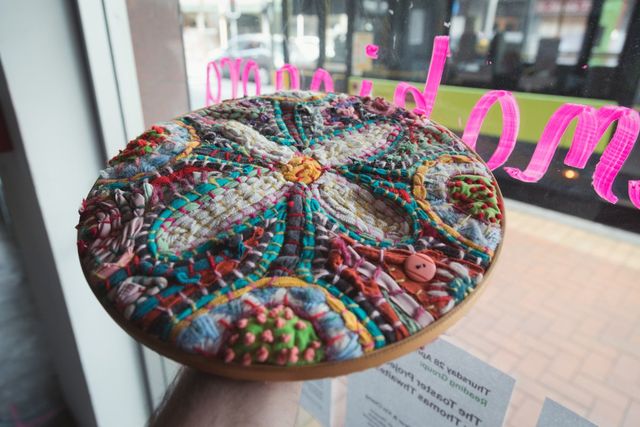
Making the World by Stella Peg Carruthers
- Urban Dream Brokerage
- <figure class=" sqs-block-image-figure intrinsic " > A Place for Local Making - Xin Cheng & Adam Ben-Dror | Image - Markuza Maric More than only fixing things, the Urban Dream Brokerage facilitated makerspace and online platform ‘A Place for Local Making’ took making to the next level of resourcefulness. Artists Xin Cheng and Adam Ben-Dror (with support from Grace Ryder) recently ran the pop-up focusing on creative remaking in central Wellington. Taking pre-loved materials as the basis for creative exploration, Xin and Adam forged local connections within the fields of waste-minimization. Equally, by hosting convivial events which opened up questions around the right to repair and the role of the designer in contemporary society, they fostered an alternative view towards cultures of making and living together. Through re-visioning the acts of designing, making, using and remaking, it was not only objects being re-created but also notions of community. Informed by Free University principles, resourceful makerspaces such as ‘A Place for Local Making’ meet the issue of waste head on in an egalitarian manner. Applying local practices to address global issues, resourceful makerspaces can be platforms for genuine community connection. This re-making of waste materials within a community context felt particularly pertinent in Wellington – a city recovering from a violent protest, with the cloud of Covid-19 still hanging low. Through coming together to fix and transform broken things and waste materials, people engaged with their material surrounds in new ways. Repair and remaking together can also regenerate community cohesion. <figure class=" sqs-block-image-figure intrinsic " > Creative Mending Circle coordinator & writer - Stella Carruthers | Image - Markuza Maric With a background in community education, textile crafts and a passion for sustainability, I joined ‘A Place for Local Making’ as a co-facilitator for the workshop ‘Creative Mending Circle’ in April. Influenced by strong ecological ideals and my own low-waste lifestyle, I was attracted by the resourceful use of waste applied in a community setting. To fix rather than throw out is a philosophy that serves both people and the planet. It is one I personally adhere to. It is also at the heart of Xin and Adam’s creative practices where they consider conviviality, sustainability, and ways of living in a waste-conscious way. As Adam said, ‘Sometimes it is hard to connect the act of gathering and working with these “waste” materials with global societal changes that have to happen in order for us to come into more harmony with the rest of life. They just seem so small. Xin pointed out to me though that these practices add to the diversity, that the world is a richer place because someone is practicing this kind of thing. It opens possibilities for other ways of living and adds up to something greater than the sum of its parts.’ As artists, Xin and Adam have been growing this idea of opening new possibilities through sharing the process of re-making. <figure class=" sqs-block-image-figure intrinsic " > Creative Mending Circle at A Place For Local Making | Image - Markuza Maric De-stabilising traditional hierarchies through re-making practices can democratise creativity. In the mending workshop I co-facilitated with Xin, we supported everyday people in giving new lives to clothing. Snaps on a shirt were both strengthened and adorned with brightly-coloured stitches. Meanwhile, children’s clothing and hard-wearing socks were patched to extend their useful lives. Taking an egalitarian approach to making, anyone could learn to add to and alter their world through making and remaking. As we face the challenges of the 21st century: the effects of the Anthropocene and the climate crisis, the COVID pandemic, a myriad of issues around waste... What is the role of the artist and the designer today? What kind of creative practices could there be, with locality and community at the centre? Xin and Adam approached their position as artists and designers by taking on a facilitator role. Whether it is running a practical workshop or hosting a reading group, both artists work with materials and ideas. More than ‘Think Globally, Act Locally’ – their approach is about thinking locally as well. <figure class=" sqs-block-image-figure intrinsic " > Frugal Electronics Workshop | Image: Markuza Maric Through amplifying and sharing innovative ways of (re)making at A Place for Local Making, fellow human beings were supported in designing to meet their own needs. This approach is based on Ezio Manzini’s ideas of diffuse design: people revisioning reality in a manner meaningful to their own context. The principles of small, local, open, connected help communities reimagine new ways of providing for their needs and community life. Adam and Xin talk about sharing resourcefulness, re-making and repair as ways of changing the culture of living. By taking the time to fix things at hand, doing so through working with our hands, and learning from each other, we are envisioning the possibilities for a different kind of collective future. In this future, social connections are made through non-hierarchical skill-sharing, across generational and demographic diversity. In the mending workshop I co-hosted, participants ranged from the elderly to early twenties. I enjoyed seeing a middle-aged mother showing a young man how to hem a shirt. Next to them, a younger woman helped thread a needle for an older lady. These exchanges are beautiful examples of people approaching repair as both life-enhancing and pleasurable. More powerfully, they are also moments where everyday people practice new (and ancient) skills for an uncertain future. Local skills and resources are utilised in the broadest sense, both in accessibility and value. <figure class=" sqs-block-image-figure intrinsic " > Frugal Electronics Workshop - Curator Grace Ryder & Artist Adam Ben-Dror | Image Markuza Maric Value and the associated idea of abundance are central to the discussions of making and social innovation at ‘A Place for Local Making’. Cherishing small acts of making, re-making and caring can reshape our mental models which give rise to values in life. ‘Time’s gone by so quickly!’ I overheard one participant say. ‘This mending thing, it’s slow… but it’s fun!’ Here, time became valued once again–not only for the results of the work done, but also for the creative enjoyment and the human connections which grew from time spent together. As a creative adventure, mending and (re)making is as much about the process as the end result. In their time at ‘A Place for Local Making’, Xin and Adam facilitated process-based creativity. They asked questions around waste and wants, value and needs, and they did so through reaching out rather than drawing in. Instead of making artworks to display on a wall, they supported community creativity through researching local waste streams and stories of remaking, gathering reclaimed materials for communal use and facilitating public events. Through the workshops and numerous examples of local (re)making documented on the online platform, we can see that with the toolkit of resourceful making and thinking, we can reconsider how we relate with our material surroundings. A product or object may be repaired to fulfil its original designed purpose, or adapted to new, future lives. To consider what happens to an object when it eventually leaves a person’s hands gives new meaning to the word resourcefulness. Here, as we learned at ‘A Place for Local Making,’ it can be fruitful to think of materiality in terms of what a thing is made of, how it is made and remade, who is doing the caring and remaking, as well as what it could become within a constantly changing, living world. <figure class=" sqs-block-image-figure intrinsic " > Contributors links Writer - Stella Carruthers Project - A Place For Local Making Artists - Xin Cheng + Adam Ben-Dror Photographer - Markuza Maric
- Accepted from Urban Dream Brokerage Blog by feedreader
- Tagged as:
- covid-19
-
-
-
June Update from DCM - Together we can end homelessness
- Downtown Community Ministry
- 96 June Update from DCM - Together we can end homelessness p{ margin:10px 0; padding:0; } table{ border-collapse:collapse; } h1,h2,h3,h4,h5,h6{ display:block; margin:0; padding:0; } img,a img{ border:0; height:auto; outline:none; text-decoration:none; } body,#bodyTable,#bodyCell{ height:100%; margin:0; padding:0; width:100%; } .mcnPreviewText{ display:none !important; } #outlook a{ padding:0; } img{ -ms-interpolation-mode:bicubic; } table{ mso-table-lspace:0pt; mso-table-rspace:0pt; } .ReadMsgBody{ width:100%; } .ExternalClass{ width:100%; } p,a,li,td,blockquote{ mso-line-height-rule:exactly; } a[href^=tel],a[href^=sms]{ color:inherit; cursor:default; text-decoration:none; } p,a,li,td,body,table,blockquote{ -ms-text-size-adjust:100%; -webkit-text-size-adjust:100%; } .ExternalClass,.ExternalClass p,.ExternalClass td,.ExternalClass div,.ExternalClass span,.ExternalClass font{ line-height:100%; } a[x-apple-data-detectors]{ color:inherit !important; text-decoration:none !important; font-size:inherit !important; font-family:inherit !important; font-weight:inherit !important; line-height:inherit !important; } .templateContainer{ max-width:600px !important; } a.mcnButton{ display:block; } .mcnImage,.mcnRetinaImage{ vertical-align:bottom; } .mcnTextContent{ word-break:break-word; } .mcnTextContent img{ height:auto !important; } .mcnDividerBlock{ table-layout:fixed !important; } h1{ color:#222222; font-family:Helvetica; font-size:40px; font-style:normal; font-weight:bold; line-height:150%; letter-spacing:normal; text-align:center; } h2{ color:#222222; font-family:Helvetica; font-size:34px; font-style:normal; font-weight:bold; line-height:150%; letter-spacing:normal; text-align:center; } h3{ color:#444444; font-family:Helvetica; font-size:22px; font-style:normal; font-weight:bold; line-height:150%; letter-spacing:normal; text-align:center; } h4{ color:#949494; font-family:Georgia; font-size:20px; font-style:italic; font-weight:normal; line-height:125%; letter-spacing:normal; text-align:center; } #templateHeader{ background-color:#07486a; background-image:none; background-repeat:no-repeat; background-position:50% 50%; background-size:cover; border-top:0; border-bottom:0; padding-top:54px; padding-bottom:54px; } .headerContainer{ background-color:transparent; background-image:none; background-repeat:no-repeat; background-position:center; background-size:cover; border-top:0; border-bottom:0; padding-top:0; padding-bottom:0; } .headerContainer .mcnTextContent,.headerContainer .mcnTextContent p{ color:#757575; font-family:Helvetica; font-size:16px; line-height:150%; text-align:left; } .headerContainer .mcnTextContent a,.headerContainer .mcnTextContent p a{ color:#007C89; font-weight:normal; text-decoration:underline; } #templateBody{ background-color:#transparent; background-image:none; background-repeat:no-repeat; background-position:center; background-size:cover; border-top:0; border-bottom:0; padding-top:27px; padding-bottom:54px; } .bodyContainer{ background-color:#transparent; background-image:none; background-repeat:no-repeat; background-position:center; background-size:cover; border-top:0; border-bottom:0; padding-top:0; padding-bottom:0; } .bodyContainer .mcnTextContent,.bodyContainer .mcnTextContent p{ color:#757575; font-family:Helvetica; font-size:16px; line-height:150%; text-align:left; } .bodyContainer .mcnTextContent a,.bodyContainer .mcnTextContent p a{ color:#007C89; font-weight:normal; text-decoration:underline; } #templateFooter{ background-color:#07486a; background-image:none; background-repeat:no-repeat; background-position:center; background-size:cover; border-top:0; border-bottom:0; padding-top:45px; padding-bottom:63px; } .footerContainer{ background-color:transparent; background-image:none; background-repeat:no-repeat; background-position:center; background-size:cover; border-top:0; border-bottom:0; padding-top:0; padding-bottom:0; } .footerContainer .mcnTextContent,.footerContainer .mcnTextContent p{ color:#FFFFFF; font-family:Helvetica; font-size:12px; line-height:150%; text-align:center; } .footerContainer .mcnTextContent a,.footerContainer .mcnTextContent p a{ color:#FFFFFF; font-weight:normal; text-decoration:underline; } @media only screen and (min-width:768px){ .templateContainer{ width:600px !important; } } @media only screen and (max-width: 480px){ body,table,td,p,a,li,blockquote{ -webkit-text-size-adjust:none !important; } } @media only screen and (max-width: 480px){ body{ width:100% !important; min-width:100% !important; } } @media only screen and (max-width: 480px){ .mcnRetinaImage{ max-width:100% !important; } } @media only screen and (max-width: 480px){ .mcnImage{ width:100% !important; } } @media only screen and (max-width: 480px){ .mcnCartContainer,.mcnCaptionTopContent,.mcnRecContentContainer,.mcnCaptionBottomContent,.mcnTextContentContainer,.mcnBoxedTextContentContainer,.mcnImageGroupContentContainer,.mcnCaptionLeftTextContentContainer,.mcnCaptionRightTextContentContainer,.mcnCaptionLeftImageContentContainer,.mcnCaptionRightImageContentContainer,.mcnImageCardLeftTextContentContainer,.mcnImageCardRightTextContentContainer,.mcnImageCardLeftImageContentContainer,.mcnImageCardRightImageContentContainer{ max-width:100% !important; width:100% !important; } } @media only screen and (max-width: 480px){ .mcnBoxedTextContentContainer{ min-width:100% !important; } } @media only screen and (max-width: 480px){ .mcnImageGroupContent{ padding:9px !important; } } @media only screen and (max-width: 480px){ .mcnCaptionLeftContentOuter .mcnTextContent,.mcnCaptionRightContentOuter .mcnTextContent{ padding-top:9px !important; } } @media only screen and (max-width: 480px){ .mcnImageCardTopImageContent,.mcnCaptionBottomContent:last-child .mcnCaptionBottomImageContent,.mcnCaptionBlockInner .mcnCaptionTopContent:last-child .mcnTextContent{ padding-top:18px !important; } } @media only screen and (max-width: 480px){ .mcnImageCardBottomImageContent{ padding-bottom:9px !important; } } @media only screen and (max-width: 480px){ .mcnImageGroupBlockInner{ padding-top:0 !important; padding-bottom:0 !important; } } @media only screen and (max-width: 480px){ .mcnImageGroupBlockOuter{ padding-top:9px !important; padding-bottom:9px !important; } } @media only screen and (max-width: 480px){ .mcnTextContent,.mcnBoxedTextContentColumn{ padding-right:18px !important; padding-left:18px !important; } } @media only screen and (max-width: 480px){ .mcnImageCardLeftImageContent,.mcnImageCardRightImageContent{ padding-right:18px !important; padding-bottom:0 !important; padding-left:18px !important; } } @media only screen and (max-width: 480px){ .mcpreview-image-uploader{ display:none !important; width:100% !important; } } @media only screen and (max-width: 480px){ h1{ font-size:30px !important; line-height:125% !important; } } @media only screen and (max-width: 480px){ h2{ font-size:26px !important; line-height:125% !important; } } @media only screen and (max-width: 480px){ h3{ font-size:20px !important; line-height:150% !important; } } @media only screen and (max-width: 480px){ h4{ font-size:18px !important; line-height:150% !important; } } @media only screen and (max-width: 480px){ .mcnBoxedTextContentContainer .mcnTextContent,.mcnBoxedTextContentContainer .mcnTextContent p{ font-size:14px !important; line-height:150% !important; } } @media only screen and (max-width: 480px){ .headerContainer .mcnTextContent,.headerContainer .mcnTextContent p{ font-size:16px !important; line-height:150% !important; } } @media only screen and (max-width: 480px){ .bodyContainer .mcnTextContent,.bodyContainer .mcnTextContent p{ font-size:16px !important; line-height:150% !important; } } @media only screen and (max-width: 480px){ .footerContainer .mcnTextContent,.footerContainer .mcnTextContent p{ font-size:14px !important; line-height:150% !important; } } Clifton shares his story and we hear from Hapi again. About Us Contact Clifton’s Story “I love being part of a major change in people’s lives.” Ko Clifton tōku ingoa. I was born in Wellington but lived in Ōpōtiki for the first 13 years of my life. I was raised by my Koro and Nanny in a whole house full of cousins and aunties and uncles. We grew up on the family farm. They had 14 children, so we were never without whānau around us. My favourite thing to do growing up was to ride my horse with my brother and cousins, down to the river for a swim or up the bush for a hunt, just exploring. My mother spent most of her time in Australia and down in Wellington. Then, out of nowhere, when I was 12 years old she turned up, and my brother and I went to live with her in Wellington. I have worked in a number of different jobs over the years. I started off in the family taxi office in Miramar as soon as I left Rongotai College. I have worked in the sugar cane fields of Fiji; I have had work with other whānau up in Ōpōtiki in kiwifruit orchards. Back in the early 2000s I worked for a time as a forklift operator. I was working for Fletcher Construction when the first lockdown began. When all the work stopped, I lost my job and my income. I was trapped in Wellington with no whānau support and nowhere to stay. I had to move into emergency accommodation. Clifton volunteered his time to support the DCM Foodbank Appeal in May. When was the first time I heard about DCM? It was during that first lockdown, and I was at AC International. There were three of us in the one room; myself and my two adult daughters. I saw a pamphlet about DCM, and gave them a call. Steph answered. I think originally I was asking for food, for a food parcel. It was a proper lockdown, and DCM was only open at very specific times. Steph told me to come down on the Wednesday morning, and I did. I told Steph that there were three of us in the same room. She said “we can’t have that” and got straight on to it. Paula arranged for us to move to two rooms at Halswell. My room number was Room 24, I remember that clearly. I was in one room, and the two girls were in the other. Once I was settled in at Halswell, Kat and Peni from DCM came over to speak to me – about getting housed! They spoke to me about finding the right place. I told them about the issues I had had, with places in certain suburbs where family and others from my past would come by. It was not so good. We agreed that I needed an apartment where others couldn’t just come in to my whare, and that it needed to be in the city. And it sure was meant to be! They offered me, Clifton, a place on Clifton Terrace! And I moved in – on 31 August 2020. Clifton with George on Super Saturday vaccine day. DCM supports people like me in so many ways. Not just with housing and food parcels, but I have also seen the audiologist, the dentist and the Te Aro Health nurses. I have been vaccinated at DCM – I had my first two shots there, and went off myself to get my booster. When I was in emergency housing, I would regularly come to Te Hāpai to get out and about and away from emergency housing for a while. I was always made welcome; the DCM kaimahi were genuinely interested in getting to know me, and hearing what my own hopes and dreams were. It was one of the DCM team, Dom, who supported and encouraged me to stop smoking. And then, a month after I moved in to my place, Kat asked me if I would like to work at DCM. I knew Fabian, and I had wondered how he came to get a job at DCM. The next step was for me to be part of one of the Peer Support courses which DCM offers to people who are interested in a kaiāwhina* role. No sooner was that done, than Kat came back to see me. She helped me with my CV and a cover letter. Then I had an interview at DCM – with Natalia and Paula. They asked me what sort of work I was interested in. I said I would love to work with the Outreach team, and they immediately agreed. They listened to me, to what I was keen to do. It was the ultimate miracle. Clifton is always looking out for ways to support others. He has stepped up to help all of DCM’s teams at one time or another. He enjoys working with Evan to deliver the Te Awatea programme (left) and participating in DCM training and team-building days (with Moses, Bella and Michelle at right). Since then, I have got to be involved right across the many areas of DCM’s mahi. I am part of the Outreach team, but I have also been out with Arieta, Adriana and George from DCM’s Aro Mai Housing First team and with Nadeeka to support our Sustaining Tenancies mahi. I have worked in Te Hāpai, and on DCM’s Te Awatea programme. I have been part of the team delivering our Community Connections programme. I was even at the very first session when we launched the programme at Newlands. I love the patience and resilience of DCM. We roll with it. When taumai are ready, we go forward with them. If they are not ready today, we will try again tomorrow. There are endless chances. We won’t give up on you. And now, I have been able to add more mahi in to my week. I have also joined the Take 10 team, working with youth. On a Saturday night, we are out from 9pm–4am in the city, connecting to young people, checking that they are safe, even paying for them to get an Uber home when this is what needs to happen. We offer water, sweets, etc., to get the young people to connect with us so that we can check in with them. All the DCM taumai seem to go by! They greet me, wonder what I am doing there. The way DCM has stepped up during this pandemic has been ever so encouraging and inspiring. They have come up with ways of supporting those who need it most, regardless of the traffic light system or regular lockdowns. That’s what separates DCM from other community services – the constancy of our level of passion for the work we do. It has been exceptionally impressive – the aroha and manaakitanga I have experienced and have seen others experience over my time at DCM – first as taumai, and now as a kaimahi. Clifton with his team leader, Natalia, outside DCM in Lukes Lane. Natalia Clifton is the type of person who will do anything for anyone. He is generous with his time, cares about his colleagues and keeps his eyes and ears open for ways that he can help people. Clifton also loves learning. It’s one of his great strengths – he listens, watches, and then tries something himself. He also asks for feedback from colleagues which shows great strength of character and humility. He is always open to doing things differently or better. Clifton has covered so much work for DCM including supporting us on outreach visits, running manaakitanga in Te Hāpai, coaching new kaiāwhina, moving furniture for taumai who have become housed, supporting community connections mahi, and sharing his own story in Te Awatea to help the taumai open up and share their story. He’s probably the only DCM staff member who has worked across all services and all teams. How would I describe Clifton? He is collaborative, humble, kind, patient and always supportive. Of both his colleagues – those he works alongside here at DCM – and of taumai. Clifton is always ready to lend a helping hand – whether it is cleaning up the hall after one of DCM’s Community Connections afternoons (left) or staying behind with Fiona after DCM’s last AGM to do the dishes and tidy up (right). <!-- --> Hapi In January, we introduced you to Hapi and shared his story. Hapi is a creative and sociable man who is thriving in his new home, a house provided by private landlord Dev. Hapi loves his art, and this month, some of his pieces have featured in a very successful exhibition organised by MIX, a mental health service which offers programmes in art and wellbeing. Hapi’s work has been popular, with more than half of the items he has prepared for the exhibition selling on opening night alone. Here’s what Hapi has to say about what art means to him: “Bro, it frees my mind. It frees me. I’m free! I'm free and I don’t have no other thoughts about anything else, but just go for my own things. Do my own style of work. I feel awesome when I make anything that I know that I can do, or whatever vision comes in my mind. I just lay it out how it is. What really makes me feel good is other people love it.” You can hear Hapi speak about his art for yourself, in this brief film clip: <!-- --> Support DCM *DCM uses the term kaiāwhina, meaning a helper or advocate for those staff who bring lived experience to their mahi at DCM. We call the people we work with taumai, meaning to settle. This reflects the journey we set out on together – to become settled, stable and well. Nāku te rourou, nāu te rourou, ka ora ai te iwi. With your basket and my basket, the people will thrive. <!-- --> Copyright © 2022 DCM. All rights reserved. Our mailing address is: DCMPO Box 6133Marion SqWellington, Wellington 6011 New ZealandAdd us to your address book Want to change how you receive these emails? You can update your preferences or unsubscribe from this list.
- Accepted from DCM alerts archive by feedreader
- Tagged as:
- miramar
- newlands
- covid-19
- exhibitions
Newlands, Wellington, Wellington City, Wellington, New Zealand/Aotearoa (OpenStreetMap)
-
-
-
A rich and ongoing connection: French residency 2023 opens for applications
- Randell Cottage Writers Trust
- At last, we can celebrate the return of our French writers in residence! After a two-year break because of Covid-19 border restrictions, Randell Cottage looks forward to welcoming a new French writer in 2023. Check out the application details and criteria here. Applications close on 10 July 2022. Founding trustee and Trustee Emerita, Dame Fiona […]
- Accepted from Randell Cottage Writers Trust news by feedreader
- Tagged as:
- covid-19
Randell Cottage, 14, St Mary Street, Wellington Central, Wellington, Wellington City, Wellington, 6140, New Zealand (OpenStreetMap)
-
-
-
Te Papa Covid-19 information
- Friends of Te Papa
- Planning a visit to the museum? Whether you are meeting friends for a cuppa, self-guiding, or attending one of our events, please be sure to follow the guidelines as set out on this page.
- Accepted from News – Friends of Te Papa by tonytw1
- Tagged as:
- covid-19
- events
- te-papa
Te Papa, 55, Cable Street, Te Aro, Wellington, Wellington City, Wellington, 6011, New Zealand (OpenStreetMap)
-
-
-
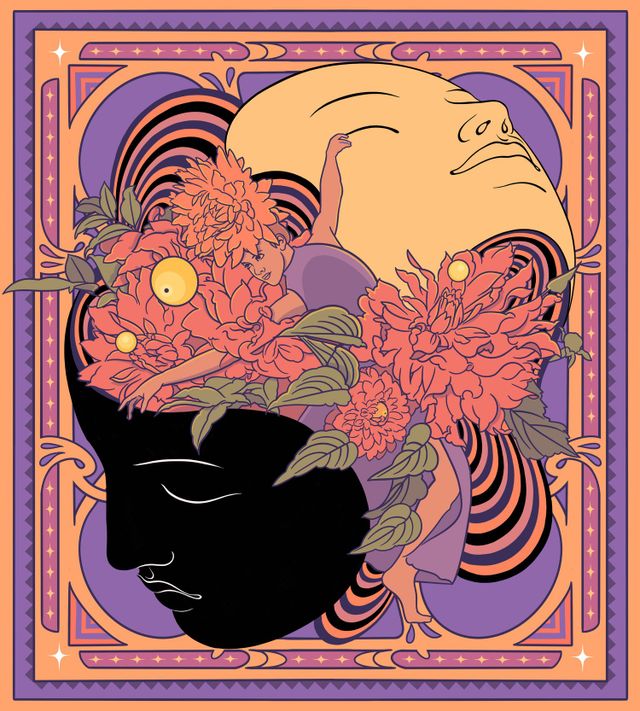
Here & Out
- Toi Pōneke
- Here & Out sees nine female street artists from five different countries present new work in response to the impacts of Covid-19. Artists include: Dreamgirls Collective (Wellington, NZ), Janine Williams (Aotearoa) Gleo (Colombia) and Caratoes (Hong Kong - Belgium).
- Accepted from Toi Pōneke Events by feedreader
- Tagged as:
- covid-19
- exhibitions
Toi Pōneke Arts Centre, Footscray Avenue, Mount Cook, Wellington, Wellington City, Wellington, 6040, New Zealand (OpenStreetMap)
-
-
-
Tom Denize's lockdown reading picks
- Enjoy Contemporary Art Space
- Tom Denize is currently studying for a BFA at Massey University and has been interning at Enjoy for 2021 as part of the Massey internship elective. Part of Tom's work at Enjoy has been reviving the reading/writing group. The in person meet-ups are on hold due to Covid Alert Level 3 and 2 restrictions, so here are some of Tom's top reading picks.
- Accepted from Enjoy blog by feedreader
- Tagged as:
- covid-19
Enjoy Contemporary Art Space, 211, Left Bank, Te Aro, Wellington, Wellington City, Wellington, 6011, New Zealand (OpenStreetMap)
-
-
-
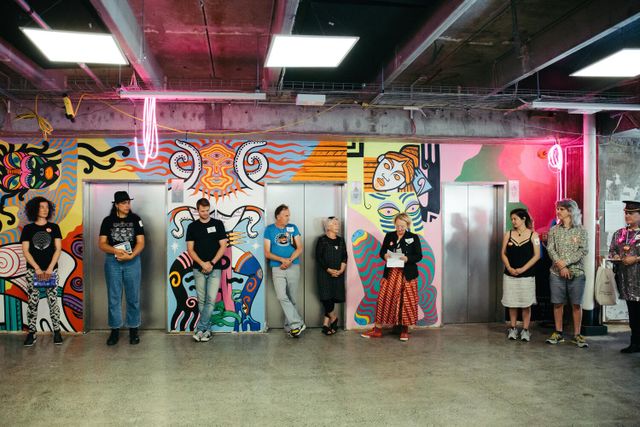
The role of vacant urban space in a Covid crisis
- Urban Dream Brokerage
- <figure class=" sqs-block-image-figure intrinsic " > Jan Bieringa, Sophie Jerram, Linda Lee and Jason Muir with 'Exquisite Kaitiaki' by Miriama Grace-Smith, Xoe Hall and Gina Kiel at Urban Dream Brokerage and Brokered Dreams book launch, 2/57, Wellington. Image: Ebony Lamb Wellington communities need more creative and public spaces as inner city population booms and housing crisis puts rental stress on the young and vulnerable Covid-19 and economic recession leaves empty shops and buildings empty in Wellington Urban Dream Brokerage programme will resume connecting artists with owners of unoccupied property Applications for artists to run projects are now open online www.urbanddreambrokerage.org.nz <figure class=" sqs-block-image-figure intrinsic " > Ariki Bloomwell presenting welcoming karakia. Image: Ebony Lamb As the residential property market escalates, and as increasing numbers move into city apartments, a need for inner city spaces for exchange and community is growing. With significant growth in commercial property left vacant since Covid-19 hit, the programme Urban Dream Brokerage is relaunching in Wellington to provide vital spaces for people to exchange, meet and help the city develop. Following its first run between 2012 and 2018 in response to the Global Financial Crisis, creative space programme Urban Dream Brokerage (UDB) has been relaunched funded by the Wellington City Council Tipu Toa: Build Back Better / City Recovery fund. <figure class=" sqs-block-image-figure intrinsic " > Image: Ebony Lamb The relaunch is spurred by a rise in unoccupied property around Wellington city due to the pandemic, and the need to create shared public spaces and experiences in a central city whose population is growing fast. The programme continues to run in Dunedin and has previously run in Porirua and Masterton. After the 2016 Kaikōura earthquake many buildings were taken off the Wellington market for strengthening, meaning fewer spaces could be used. Now property owners are embracing the renewed opportunity to enrich the city with artist and community occupied spaces. “We have a commitment to a city that feels good for the most vulnerable and gives space to the most generous. We see ourselves as intentionally curating projects that will provoke change, for example decarbonising and indigenising the city,” says UDB co-founder Sophie Jerram. <figure class=" sqs-block-image-figure intrinsic " > Victoria Singh from The Waiting Room Image: Ebony Lamb “Other cities across the world including Brussels and Barcelona are taxing buildings that are vacant for more than three months, providing incentives to keep buildings occupied, something that could work well when property is surging in value.” The aim of the brokerage is not just to help restore the city to pre-pandemic levels and types of activity, but to help create a new and better place where art acts as a bridge that welcomes all comers. UDB co-founder Mark Amery makes a case for culture providing a vital sense of place and meaning for city dwellers that leads to economic development. “A cultural recovery in Wellington is more than about attracting visitors through events. Culture is fundamental to our wellbeing and a sense of ownership of the city for those who live here. And we also invest financially where we feel a sense of belonging.” <figure class=" sqs-block-image-figure intrinsic " > Mark Amery and Helen Kirlew Smith. Image: Ebony Lamb A book of past projects Brokered Dreams: 98 Uses For Vacant Space has just been launched. “We also need to test new models of living space as we face environmental and social crises. Artists and community groups are leading the way,” says Amery. <figure class=" sqs-block-image-figure intrinsic " > Brokered Dreams: 98 Uses for Vacant Space. Image: Ebony Lamb Wellington City Council is supporting the brokerage to re-enliven the city in 2021 with activities, including support for the performance programme The City as a Theatre and a rejuvenated Cubadupa. UDB is produced by Maverick Creative, managed by dynamic Political Cutz performer Jason Muir with Linda Lee from Shared Lines Collaborative. Muir is already visiting property owners to find homes for projects. “UDB rules! My creative practice emerged from Urban Dream Brokerage so now I feel proud to manage the project and look forward to enabling others on their journey, to share their dreams with the people of Wellington,” says Muir. Urban Dream Brokerage was established in 2012 by Sophie Jerram and Mark Amery as part of their Letting Space entity under the umbrella of Wellington Independent Arts Trust. UDB found spaces around New Zealand for over 120 creative projects, some short and some long term with more than 40 property owners, allowing the artists’ work to infuse energy into the properties while new tenants were found. Some projects continue in the properties where they started - Come Sew With Me in Masterton’s Queen Elizabeth Park is celebrating this month its third anniversary, while others like Coliberate a ‘mental health gym’ are now successful innovative businesses. Brokered Dreams: 98 Uses for Vacant Space - the book is available at www.urbandreambrokerage.org.nz/book or at Unity Bookshop Wellington. <figure class=" sqs-block-image-figure intrinsic " > Evzen Novak, Thomas Lahood, Darcy Case Laurie Foon, Suzanne Tamaki and Gerry Paul during karakia. Image: Ebony Lamb <figure class=" sqs-block-image-figure intrinsic " > Sam Trubridge. Image: Ebony Lamb <figure class=" sqs-block-image-figure intrinsic " > Crowd at two/fiftyseven. Image: Ebony Lamb <figure class=" sqs-block-image-figure intrinsic " > Image: Ebony Lamb
- Accepted from Urban Dream Brokerage Blog by tonytw1
- Tagged as:
- cubadupa
- theatre
- porirua
- covid-19
Cuba Street, Te Aro, Wellington, Wellington City, Wellington, 6040, New Zealand (OpenStreetMap)
-
-
-
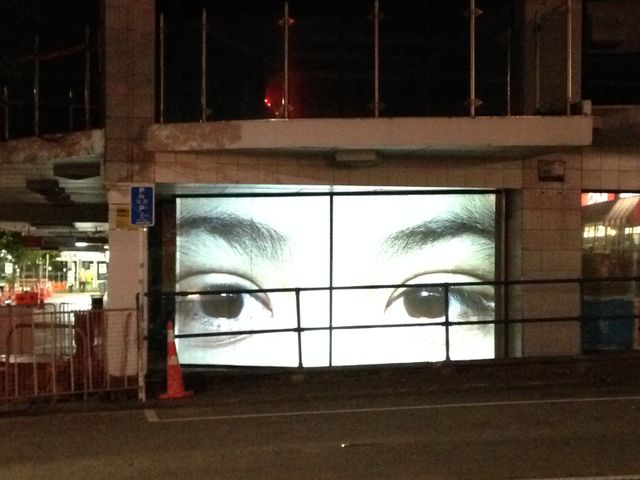
We're back!
- Urban Dream Brokerage
- <figure class=" sqs-block-image-figure intrinsic " > Young Visionaries Tēnā koutou katoa We come with great news! We are delighted to write that the Urban Dream Brokerage is relaunching in Wellington city (see the website), with support from the WCC City Recovery Fund for the first year. We are now open for new applications from both citizens with new ideas for vacant space to increase public participation in the city, and from property owners with vacant space that needs enlivening. UDB continues to be funded through the Wellington Independent Arts Trust but Letting Space (Mark Amery and Sophie Jerram) are announcing the handover to Maverick Creative led by broker Jason Muir and staff Linda Lee and Tallulah Farrar. We have been in discussion for some time, and Mark, Sophie (and past brokers Helen Kirlew Smith and Tamsin Cooper) are professionally involved in training and overseeing the establishment of the UDB over the first six months. Excitingly, Letting Space are also curating six commissions with WCC funding for UDB in 2021 (details here). Pencil in the busy Xmas diary a rather special launch celebration for Thursday evening 17 December 5.30pm at Level 2 57 Willis Street (above Unity Books) which will see the launch of a UDB Book 2012-2018, Brokered Dreams, and the introduction of a raft of exciting programmes for early 2021 Theatre as a City with Performance Arcade, Cubadupa, and the dynamic new artist powered work space we are in for that evening Two/Fifty Seven. More details to follow. RSVPS required,. Many exciting ideas and property relationships are already in development and we are all so thankful for the support and enthusiasm this is already receiving at a vital time for Wellington city, and indeed the planet, to look for new models of being together in urban environments as we see apartment blocks rise, income and property inequality issues, significant wasted vacant space as we potentially face a recession and dramatic new challenges with Covid and environmental factors. Urban Dream Brokerage is a mechanism for all in our community to lead. Our aims remain as follows: Increase diversity and community through living spaces in the city. Reduce vacant space and increase citizen ownership in towns and cities. See stronger representation of mana whenua in the city. Increase professionalism and help innovate business development. See creatives, artists and community service groups resident long term in the CBD. Increase mixed use of the city's building stock. Increase public engagement in the city See our cities known for their innovative use of space and public interaction. We are excited to be working in closer partnership with major creative partners like PlaygroundNZ and Creative Capital Arts Trust, WCC, Wellingtonnz and major property partners to support independent artists, community organisations and creative-minded citizens to occupy this special city. We are a service for the whole city and want to hear from you. We can’t wait to celebrate together.
- Accepted from Urban Dream Brokerage Blog by tonytw1
- Tagged as:
- covid-19
- cubadupa
- theatre
Cuba Street, Te Aro, Wellington, Wellington City, Wellington, 6040, New Zealand (OpenStreetMap)
-
-
-
On kindness, on ignorance: A frightful passage
- Randell Cottage Writers Trust
- CNZ RCWT 2020 Writing Fellow Michalia Arathimos began 2020 in Melbourne Australia where the threat of bushfires would shortly be replaced by the threat of the Covid-19 pandemic.
- Accepted from Randell Cottage Writers Trust news by feedreader
- Tagged as:
- covid-19
Randell Cottage, 14, St Mary Street, Wellington Central, Wellington, Wellington City, Wellington, 6140, New Zealand (OpenStreetMap)
-
-
-
Economic research charts sharp fall then slow growth until 2030
- Greater Wellington Regional Council
- More information is emerging on the likely shape of the Wellington region’s post-COVID-19 economy.
- Accepted from GW media releases 2019 by feedreader
- Tagged as:
- art
- covid-19
- wellington
-
-
-
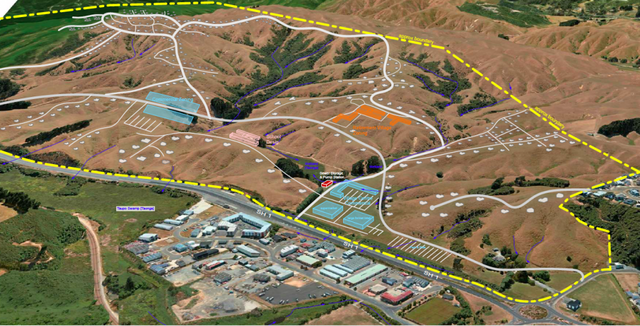
Plimmerton Farm: getting greenfields right
- Talk Wellington
- If we’re hellbent on doing more residential development in greenfields, what does “decent” look like in Plimmerton, hilly land near an existing suburb – like most of our region’s greenfields? This post is basically a guide for anyone who cares about Plimmerton, good urban development, or healthy wetlands, streams and coast, but is time-poor and can’t face going through the truckloads of documents they’ve stuck up without any specific meta-guidance (some FAQ are here). Hopefully this will help you pop in a submission! PCC’s “information” pages they suggest you use for submitting. Every one of these is a large PDF document, 90% written in technical language… aargh! The background: what where and how For those who don’t know, Plimmerton Farm’s a big proposed subdivision of hilly farmland draining into the significant Taupō Wetland and to Plimmerton Beach, just over the train line and highway from Plimmerton village (original Ngāti Toa name: Taupō). It’s going through a Streamlined Planning Process, a pre-COVID government scheme for accelerating development. The key step is the requisite change of the land’s zoning in the Porirua District Plan (“rural” zone to “residential” and other “urban” zones) that sets out what kind of stuff can then be built, where. It’s mostly streamlined because there’s just one shot for the public to have input on the plan change. One shot. Why submit? I was born and raised in Plimmerton, live here now, and intend to for the rest of my days. I’d love to see it grow, well. I would love Plimmerton to get more wallets, more hearts and minds, more faces (more diverse ones too!). But not with more traffic, and pointless damage to our environment. Right now, the proposal has some serious flaws which need sorting. I say Sorting because the changes won’t make it crazy innovative, just good enough for a development in the spot it is, being kicked off in 2020. Time matters too: there’a a bunch of good things happening imminently (and some bad Porirua trends that need to be reversed). I cover these in Get it right, below. It’s worth submitting because given the situation, a 1990s-grade development just won’t cut it. So what about Plimmerton Farm needs to change? It boils down to two themes: dial down the driveability and dial up the liveabilitymake Local the logical and easy choice for daily needs I’ll outline what needs to change in each. NOTE: There’s a third – don’t stuff the wetlands and streams. This is really important as Taupō Wetland is regionally significant, and all our streams and harbours have suffered from frankly shameful mismanagement of sediment from earthworks-heavy subdivisions like Aotea and Duck Creek, and from the earthworks-a-rama of Transmission Gully. Friends of Taupo Swamp have an excellent submission guide for you – add in some of their suggested bits to your submission. I: Dial down the driveability, dial up the liveability There aren’t many truly black-and-white things in life, but there’s one for towns: If a street is nice to drive in, it’ll be a crappy place to do anything else in (walk / eat / hang out / have a conversation / play / scoot or cycle / shop / have a pint). If it’s nice to do anything else in, it’ll be a crappy place to drive in. Mostly this is because of the nature of the automobile: big solid things that smash into our soft bodies if someone makes a mistake (75% odds of death if that’s at 50km/hour, 10% odds of death if at 30km/hour) big objects that need lots of space for manoeuvering and especially parking – which offstreet can be crazy expensive and push up the cost of a home, and onstreet hoover up valuable public space. big solid things driven by us real humans (for a while at least) who respond to the environment but also get distracted, and generally aren’t good at wielding these big solid things safely. The transport setup proposed for Plimmerton Farm makes for a much too driveable and poorly liveable place. 1. Narrow down all the roads. The current proposal’s roading setup has roads and streets that are too big, and there’s too much of them. Right sized roads for a liveable community The cross-sections for the roads include on-street parking and really wide lane widths. This is really gobsmacking for a consortium that talked a big talk about good practice. For all the reasons that Low Traffic Neighbourhoods are good, this is bad. (And it’s especially nuts when you realise that the excessively wide “arterial” roads (11 metres!) will need earthworked platforms built for them where they’re drawn running up the sharp ridges and across the tops of gullies. Expensive, damaging for the environment, and … what were they thinking?) So recommended changes: NARROW DOWN THE ROADS. Seriously. Design all the living-area streets and roads, and the centre, to be self-explaining for an operating traffic speed of 30km or less – that’s the speed where mistakes are rarely fatal. What does that look like? The designers will know and if they don’t they should be fired. Narrower crossing distances; chicanes (great way to incorporate green infrastructure and trees and seating!); narrowed sight-lines (trees! sculpture!) so no-one driving feels inclined to zoom. Reduced trafficked lanes (rori iti on the larger roads!), with properly wide and friendly footpaths. Threshold treatments, humps, modal filters, all the things we know very well are the natural ways to slow us down when driving, and make streets nicer for people. The beauty of all this “restriction” on driving is how much it frees us up for making everything else appealing. Streets become hospitable for kids to walk, scoot, bike to school safely, using the road not the footpath. Older people and those with impairments can walk and wheelchair safely. Teens coming home from town of an evening can scoot or bike home, safely. Popping down to the shops or for a coffee or to the train becomes a pleasure to do on foot, or on a scooter or bike. And you’re moving in a legitimate way – seeing and being seen, not stuck off in the bush on a “recreational” track like what they’ve described. The ordinary streets and roads are walkable, bikeable, scootable, mobility-scootable, and perfectly driveable, equally safe and useable in all weathers and anytime of day or night. Used to be a big, fast road. Now, kids bike to school and old people can chill out on it. (Mark Kerrison) (And in case you’re worried about firetrucks / rubbish trucks / buses, recall that on even Wellington City’s far more winding, narrower hilly streets everyone gets their rubbish collected and fires fought just fine. On public transport, smaller buses, like those that community transport operators use, are the way of the future for less densely-populated areas like this). Don’t build the through and loop roads. You don’t need signs like this when the only people who bother to drive in are those who live there, or who are visiting friends, because you just have to drive out again the way you came. When it’s the place you live, you’re invested in not being a dick far more than if you’re just out for a drive – or worse, out for a bit of a boyrace hoon on a massive loop route through a whole place. So just don’t build those big connector roads that enable people to drive easily from one residential area to the next, especially the ones up in the hilltops (section C) that just say “come for a hoon!” Instead, connect the living spaces heavily with bikeable, walkable, scootable, disability-friendly streets and lanes, and as much as possible, only one way in and out for cars from each living area. II: Make local logical and easy Plimmerton is a true village, with a great little centre (including a train station!) but Plimmerton Farm is ultimately a damn big area. The way to go is to enable people to get the basics of life – like school, groceries, a coffee – with a little local trip on foot, bike or scooter – it’s more of a bother to get in the car. Right now though, it needs two changes: 1. Provide for a second centre “Bumping into” spaces are known to be crucial to a feeling of neighbourhood, and in the (initial) absence of third places (worship places, community hall, sports club, cafe/pub, a supermarket is a vital social centre. Yet the north end of Plimmerton Farm is currently a deadzone for anything except residential. What things will probably look like under current layout. Like in Edwards Scissorhands without the interest of a castle. There’s no provision for a place to do your household groceries, so people will drive to Mana New World – more car trips – and less opportunity to bump into people who live nearby. (There’ll be no school in Plimmerton Farm for a while, because Ministry of Education isn’t allowed by the Education Act to build a school somewhere until there’s a certain population density of kids to fill it. A shitty Catch-22 for developments which is hopefully going to be fixed … sometime. Just another reason to make walking, biking and scooting really kid-friendly, as extra dropoff traffic for kids going to St Theresa’s, Plimmerton School, Paremata and Pukerua Bay schools will be a nightmare.) So they should provide for an additional centre in the north, including a groceries place of some kind. 2. Intensify within walking distance of Plimmerton proper. We should intensify properly, with lots of medium and even some high density (6 storeys of nicely laid-out density done well!) in the area that’s within a 5-minute walk of Plimmerton Village. The more people can live and work with access to all its many amenities, and its rail station (10 min to Porirua, 30 min to Wellington), the better. But there’s not enough density provided for there. Plimmerton Railway station: buzzing in 1916 and has only got bigger. (Photo: Pātaka Porirua Museum) So they should add another zone – E – of higher density in that 5-minute walking catchment of Plimmerton Village. What could it look like? A good example is 3333 Main, Vancouver . Submission tips On the site they ask you to fill in a Word or PDF form, saying which specific bit of the gazillion proposals you are talking about and the specific changes you want. This is a BS way to treat the vast majority of people submitting: normal non-professionals, just regular people who care about good development and liveable places. So just don’t worry about that. In those question 6 column boxes just put “Transport” and “Layout”. It’s the professional planners’ job to figure out specifically how to change a planning document. Just be specific enough that they know what you want to see. The text above is worth copying and pasting – it’ll be enough. And don’t forget the Friends of Taupo Swamp and Catchment advice is essential – definitely go read and use. That’s all you really need – just go submit! But if you’re keen to know more reasons why they should be doing this better, here’s some… Get it right, now Once this plan change is through, traditional developers like Gillies like to whack in all the infrastructure – hello, massive earthworks. And yet the place will take decades to fill with actual people – those hearts and minds and wallets. (Note even before COVID, Porirua’s growth rate was 0.1% per year. Yep, one tenth of one percent.) And extra pressure’s on to do this better because all these things are features of the next one to three years: the One Network Road Classification (sets the design specs for roads of different types) is being updated right now to be more people-friendly in the specs for roads in residential and centre areas, so designs like Plimmerton Farm’s will soon be Officially Bad Practice Sales and riding of e-bikes and e-scooters are going through the roof, continuing through and beyond COVID – this shows no signs of slowing, and prices are dropping. E-power flattens the hills of Plimmerton Farm and makes wheely active travel a breeze for the middle-class people who’ll be living here, if the streets and roads are hospitablePlimmerton Railway Station (on the most popular Wellington train line) is being upgraded to be a terminus station – i.e. better servicesThe Wellington Regional Growth Framework is setting a bunch of directions for councils on how to grow well, including well-known but often well-ignored issues like intensifying around public transport hubs Councils will soon be required to do to a bunch of a bunch of international good practice including get rid of many minimum parking requirements (in the news lately), and to upzone (enable intensification) of landuse in the walking catchment of public transport hubs. (5 min walk = approx 400 metres, 10 min = 800m).Bad trends we need to stop: Porirua’s really high car-dependency (we own cars a lot and drive a lot) is continuing, due to car-dependent urban form [PDF]– despite nice words in council’s strategic intentions.People living outside Wellington City are mostly to blame for our region’s 14% increase in emissions from transport in just 10 years. OK go submit now – and share with anyone who you think might care!
- Accepted from Talk Wellington posts by feedreader
- Tagged as:
- paremata
- porirua
- transmission-gully
- sculpture
- government
- parking
- design
- covid-19
- law
- planning
- wellington
- education
- developments
- sport
- buses
- coffee
- zoo
- people
Transmission Gully Motorway, Kenepuru, Porirua, Porirua City, Wellington, 5022, New Zealand (OpenStreetMap)
-
-
-
Weekly Wrap Up (Week 11, Term 2)
- Wellington High School
- Important Dates Monday 29 June: Open Evening 6pm Wednesday 1 July: Music Evening 7pm Friday 3 July: End of Term 2 Monday 20 July: Start of Term 3 Wednesday 22 July: Parents’ Evening (Senior Students) Monday 27 July: Parents’ Evening (Junior Students) Important Information Board of Trustees by-election results As a result of the recent Board of Trustees by-election, Dr Wyatt Page has been elected to the Board. Wyatt will join the Board with effect from the next meeting on Monday 27 July. Reports and parent-teacher meetings Learning Profile reports for Term 2 are now available for download from the Parent Portal (see Results > Reports). Parent Teacher meetings will take place on Wednesday 22 July (Senior students) and Monday 27 July (Junior students). To make appointments go to: Go to: https://www.schoolinterviews.co.nz/ Enter the code: vdm7q (Juniors) or 5yjhn (Seniors) Choose the SUBJECT then the TEACHER. Please leave a five minute gap between bookings. Note that we are only able to run one conversation with each teacher per student. If you are hearing impaired the Riley Centre can be a challenging environment: please email admin@whs.school.nz and we will aim to accommodate your bookings separately. Revised guidance on testing for COVID-19 The Ministry of Education has circulated the following information to all schools: At a time where there are increasing numbers of colds and other winter illnesses, the Ministry of Health has revised its guidance on who might need testing for COVID-19. It is important to note that there is currently no known community transmission of COVID-19 in New Zealand. The vast majority of adults, children and young people with symptoms consistent with COVID-19 will not have COVID-19. Symptoms of COVID-19 can include new onset or worsening of one or more of the following: Cough Fever Sore throat Runny nose Shortness of breath/difficulty breathing Temporary loss of smell Health’s information on who should get tested notes that people with any of the COVID-19 symptoms who are close contacts of confirmed cases, have recently travelled overseas, or been in contact with recent travellers, should get assessed. If anyone has symptoms but is unsure if they have been exposed to COVID-19, they should ring Healthline on 0800 358 5453 or their GP for advice. Over winter there are many other viruses about that can cause people to feel unwell and have symptoms similar to those of COVID-19. Some people with symptoms consistent with COVID-19 may be tested as part of Health’s ongoing surveillance to ensure that there is no community transmission in New Zealand. If they are not close contacts of confirmed cases, have not recently travelled overseas, or have not been in contact with recent travellers, then there is no need for them to self-isolate while awaiting the test result, and they can return to school once they are feeling well. If not recommended for testing, they will be able to return to school or their early learning service when they are feeling well and no longer displaying symptoms. Wallace Street roadworks update The current phase of the Wallace Street roadworks is due for completion by the end of the month. As long as the rain holds off, Wallace Street should be re-opened to through traffic on 1 July. Following this, however, works will need to get underway along Wallace Street, near Massey University’s entrance, to upgrade wastewater pipes. This will take place in off peak hours (9.00am-4.00pm) on weekdays and traffic will often be reduced to a single lane with Stop / Go control. This is likely to take two months to complete. What’s happening? Economists breakfast with Dr Allan Bollard On Thursday, Year 13 Economics students Sarah Bennett and Rachel Woolcott, attended a Cullen Breakfast at the Wellington Club. Speaking at this week’s breakfast was Dr Alan Bollard, who has held numerous senior positions in Government and interGovernmental agencies. Dr Bollard discussed the economic impact of the covid epidemic and then participated in a question and answer session. Sarah said “the range of angles in the topic discussed was thought provoking”. Rachel commented “it was a very interesting discussion and I enjoyed listening to his jokes and insight.” Year 13 performance of ‘Girls like that’ Evan Placey’s Girls Like That is an ensemble play that explores the pressures young people face today in the face of advancing technologies. Year 13 Drama students produced and performed this play this week. The students are to be congratulated for their sophisticated performance which was an enduring piece of theatre, an achievement all the more impressive when considering that much of this production was conceived and developed during lockdown. Congratulations to all, and to Drama teacher Roger Mantel. He Kākano The He Kākano students have been engaged in a range of creative activities, cognitive thinking skills and maths throughout the week. Winter in the garden The weather over the past few weeks has seen our horticulture students spend time on maintenance, cleaning and repairing tools including secateurs. They will be well prepared for winter pruning and work outside once the weather improves. Instrumental & vocal lessons update If your Junior student is interested in taking instrumental / vocal lessons but has not yet enrolled, please download the form from the Student Hub and hand in or email the completed form to Fritz Wollner Lessons will be reorganised for Terms 3 and 4. If students have not been attending regularly, they need to see Mr Wollner as soon as possible to ensure they do not lose their spot. Achievements National Bridge Speech competition place secured Year 13 Amelia Smith qualified for a place in the National Bridge Speech competition following her success in the regional Chinese speech competition last week. Amelia will represent the North Island outside Auckland region in the competition, to be held at Victoria University on Sunday 2 August. At that event, each qualified candidate will need to present a speech, perform to demonstrate a skill and answer questions in Chinese. Finalists will represent New Zealand and compete with candidates from all over the world in October. We wish Amelia luck as she progresses through the competition. Sports Junior girls football For the first time in many years WHS has a junior girls football team out in competition. Their most recent game resulted in a very close 2-1 loss but the girls had fun and were very impressive despite some players not having very much experience. This team could not have gone ahead without the support of parents who helped with both transport and officiating. Special thanks to Bea Gladding and Jennifer Argyle who are the coach/manager dream team who make this team possible. Below are some photos of the action and sideline support. Basketball Basketball is underway with all teams at WHS having played at least one game so far. Big thanks to Jason Reddish who is taking on the entire boys programme at school which includes four teams and doing a great job. Another big thanks to Nick Andrews who along with a parent is coaching the Senior girls team. Junior Boys play on a Tuesday and another junior team plays on a Thursday. All Senior teams play on Fridays, with the top boys and girls team playing at the ASB Centre. Below are some photos from the first junior basketball game. Boys 1st XI football The 1st XI played their first game of the season, bringing home a 5-1 victory against St Patrick’s Silverstream. Their next fixture is against Newlands College this coming weekend.
- Accepted from WHS news by feedreader
- Tagged as:
- newlands
- water
- government
- transport
- music
- covid-19
- theatre
- wellington
- education
- art
- basketball
- people
Wellington High School, Taranaki Street, Mount Cook, Wellington, Wellington City, Wellington, 6011, New Zealand (OpenStreetMap)
-
-
-

Aisle be Back: Hurricanes at home against the Crusaders
- Wellington Club Weekly
- By Kevin McCarthy (soon to be in quarantine) Remember all those highly-paid athletes complaining about long-haul flights to South Africa. They should try flying back to New Zealand from the Falkland Islands. We’ve decided to trek it home obviously because of the return of Aotearoa Super Rugby. That and the COVID-19 free status of New...
- Accepted from Club Weekly 2020 by feedreader
- Tagged as:
- art
- covid-19
- rugby
-
-
-
Wellbeing, employment and COVID-19
- Victoria University of Wellington
- A key test of the New Zealand Government's wellbeing focus over coming weeks will be the extent and nature of its support for firms to survive, writes Professor Arthur Grimes.
- Accepted from VUW News feed by feedreader
- Tagged as:
- art
- covid-19
- government
-
-
-
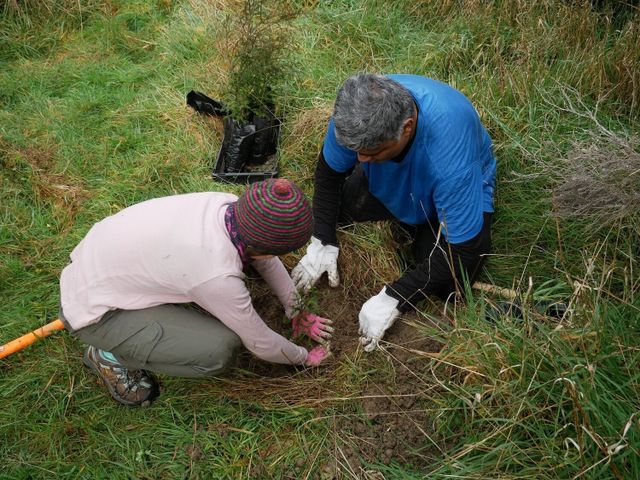
Dig days and planting work parties back on
- Makara Peak Mountain Bike Park
- Now that we’re back at COVID alert level 1 , our dig days on the trail that will link North Face to Starfish are back up and running.
- Accepted from Makara peak latest news by feedreader
- Tagged as:
- art
- covid-19
Makara Peak Summit Viewing Deck, Ridgeline, Karori West, Wellington, Wellington City, Wellington, 6012, New Zealand (OpenStreetMap)
-
-
-
Could food and drink save the tourism industry?
- Victoria University of Wellington
- Ahead of a a free public webinar exploring the role of food and drink in reimagining New Zealand tourism post-COVID-19, its participants spoke to Newsroom.
- Accepted from VUW News feed by feedreader
- Tagged as:
- art
- covid-19
- tourism
-
-
-
We’re Back!
- Fencing starts tomorrow, so come along, stay safe by following the Covid requirements, warm up well, keep your distance, just hold back from going full out until you are well warmed up, warm down at the gym and last but most importantly, have fun, work hard and smart.
- Accepted from Hutt Valley Fencing Club feed by feedreader
- Tagged as:
- art
- covid-19
-
-
-
May update from DCM - together we can end homelessness
- Downtown Community Ministry
- 96 May update from DCM - together we can end homelessness p{ margin:10px 0; padding:0; } table{ border-collapse:collapse; } h1,h2,h3,h4,h5,h6{ display:block; margin:0; padding:0; } img,a img{ border:0; height:auto; outline:none; text-decoration:none; } body,#bodyTable,#bodyCell{ height:100%; margin:0; padding:0; width:100%; } .mcnPreviewText{ display:none !important; } #outlook a{ padding:0; } img{ -ms-interpolation-mode:bicubic; } table{ mso-table-lspace:0pt; mso-table-rspace:0pt; } .ReadMsgBody{ width:100%; } .ExternalClass{ width:100%; } p,a,li,td,blockquote{ mso-line-height-rule:exactly; } a[href^=tel],a[href^=sms]{ color:inherit; cursor:default; text-decoration:none; } p,a,li,td,body,table,blockquote{ -ms-text-size-adjust:100%; -webkit-text-size-adjust:100%; } .ExternalClass,.ExternalClass p,.ExternalClass td,.ExternalClass div,.ExternalClass span,.ExternalClass font{ line-height:100%; } a[x-apple-data-detectors]{ color:inherit !important; text-decoration:none !important; font-size:inherit !important; font-family:inherit !important; font-weight:inherit !important; line-height:inherit !important; } .templateContainer{ max-width:600px !important; } a.mcnButton{ display:block; } .mcnImage,.mcnRetinaImage{ vertical-align:bottom; } .mcnTextContent{ word-break:break-word; } .mcnTextContent img{ height:auto !important; } .mcnDividerBlock{ table-layout:fixed !important; } h1{ color:#222222; font-family:Helvetica; font-size:40px; font-style:normal; font-weight:bold; line-height:150%; letter-spacing:normal; text-align:center; } h2{ color:#222222; font-family:Helvetica; font-size:34px; font-style:normal; font-weight:bold; line-height:150%; letter-spacing:normal; text-align:center; } h3{ color:#444444; font-family:Helvetica; font-size:22px; font-style:normal; font-weight:bold; line-height:150%; letter-spacing:normal; text-align:center; } h4{ color:#949494; font-family:Georgia; font-size:20px; font-style:italic; font-weight:normal; line-height:125%; letter-spacing:normal; text-align:center; } #templateHeader{ background-color:#0f288b; background-image:none; background-repeat:no-repeat; background-position:50% 50%; background-size:cover; border-top:0; border-bottom:0; padding-top:54px; padding-bottom:54px; } .headerContainer{ background-color:transparent; background-image:none; background-repeat:no-repeat; background-position:center; background-size:cover; border-top:0; border-bottom:0; padding-top:0; padding-bottom:0; } .headerContainer .mcnTextContent,.headerContainer .mcnTextContent p{ color:#757575; font-family:Helvetica; font-size:16px; line-height:150%; text-align:left; } .headerContainer .mcnTextContent a,.headerContainer .mcnTextContent p a{ color:#007C89; font-weight:normal; text-decoration:underline; } #templateBody{ background-color:#transparent; background-image:none; background-repeat:no-repeat; background-position:center; background-size:cover; border-top:0; border-bottom:0; padding-top:27px; padding-bottom:54px; } .bodyContainer{ background-color:#transparent; background-image:none; background-repeat:no-repeat; background-position:center; background-size:cover; border-top:0; border-bottom:0; padding-top:0; padding-bottom:0; } .bodyContainer .mcnTextContent,.bodyContainer .mcnTextContent p{ color:#757575; font-family:Helvetica; font-size:16px; line-height:150%; text-align:left; } .bodyContainer .mcnTextContent a,.bodyContainer .mcnTextContent p a{ color:#007C89; font-weight:normal; text-decoration:underline; } #templateFooter{ background-color:#333333; background-image:none; background-repeat:no-repeat; background-position:center; background-size:cover; border-top:0; border-bottom:0; padding-top:45px; padding-bottom:63px; } .footerContainer{ background-color:transparent; background-image:none; background-repeat:no-repeat; background-position:center; background-size:cover; border-top:0; border-bottom:0; padding-top:0; padding-bottom:0; } .footerContainer .mcnTextContent,.footerContainer .mcnTextContent p{ color:#FFFFFF; font-family:Helvetica; font-size:12px; line-height:150%; text-align:center; } .footerContainer .mcnTextContent a,.footerContainer .mcnTextContent p a{ color:#FFFFFF; font-weight:normal; text-decoration:underline; } @media only screen and (min-width:768px){ .templateContainer{ width:600px !important; } } @media only screen and (max-width: 480px){ body,table,td,p,a,li,blockquote{ -webkit-text-size-adjust:none !important; } } @media only screen and (max-width: 480px){ body{ width:100% !important; min-width:100% !important; } } @media only screen and (max-width: 480px){ .mcnRetinaImage{ max-width:100% !important; } } @media only screen and (max-width: 480px){ .mcnImage{ width:100% !important; } } @media only screen and (max-width: 480px){ .mcnCartContainer,.mcnCaptionTopContent,.mcnRecContentContainer,.mcnCaptionBottomContent,.mcnTextContentContainer,.mcnBoxedTextContentContainer,.mcnImageGroupContentContainer,.mcnCaptionLeftTextContentContainer,.mcnCaptionRightTextContentContainer,.mcnCaptionLeftImageContentContainer,.mcnCaptionRightImageContentContainer,.mcnImageCardLeftTextContentContainer,.mcnImageCardRightTextContentContainer,.mcnImageCardLeftImageContentContainer,.mcnImageCardRightImageContentContainer{ max-width:100% !important; width:100% !important; } } @media only screen and (max-width: 480px){ .mcnBoxedTextContentContainer{ min-width:100% !important; } } @media only screen and (max-width: 480px){ .mcnImageGroupContent{ padding:9px !important; } } @media only screen and (max-width: 480px){ .mcnCaptionLeftContentOuter .mcnTextContent,.mcnCaptionRightContentOuter .mcnTextContent{ padding-top:9px !important; } } @media only screen and (max-width: 480px){ .mcnImageCardTopImageContent,.mcnCaptionBottomContent:last-child .mcnCaptionBottomImageContent,.mcnCaptionBlockInner .mcnCaptionTopContent:last-child .mcnTextContent{ padding-top:18px !important; } } @media only screen and (max-width: 480px){ .mcnImageCardBottomImageContent{ padding-bottom:9px !important; } } @media only screen and (max-width: 480px){ .mcnImageGroupBlockInner{ padding-top:0 !important; padding-bottom:0 !important; } } @media only screen and (max-width: 480px){ .mcnImageGroupBlockOuter{ padding-top:9px !important; padding-bottom:9px !important; } } @media only screen and (max-width: 480px){ .mcnTextContent,.mcnBoxedTextContentColumn{ padding-right:18px !important; padding-left:18px !important; } } @media only screen and (max-width: 480px){ .mcnImageCardLeftImageContent,.mcnImageCardRightImageContent{ padding-right:18px !important; padding-bottom:0 !important; padding-left:18px !important; } } @media only screen and (max-width: 480px){ .mcpreview-image-uploader{ display:none !important; width:100% !important; } } @media only screen and (max-width: 480px){ h1{ font-size:30px !important; line-height:125% !important; } } @media only screen and (max-width: 480px){ h2{ font-size:26px !important; line-height:125% !important; } } @media only screen and (max-width: 480px){ h3{ font-size:20px !important; line-height:150% !important; } } @media only screen and (max-width: 480px){ h4{ font-size:18px !important; line-height:150% !important; } } @media only screen and (max-width: 480px){ .mcnBoxedTextContentContainer .mcnTextContent,.mcnBoxedTextContentContainer .mcnTextContent p{ font-size:14px !important; line-height:150% !important; } } @media only screen and (max-width: 480px){ .headerContainer .mcnTextContent,.headerContainer .mcnTextContent p{ font-size:16px !important; line-height:150% !important; } } @media only screen and (max-width: 480px){ .bodyContainer .mcnTextContent,.bodyContainer .mcnTextContent p{ font-size:16px !important; line-height:150% !important; } } @media only screen and (max-width: 480px){ .footerContainer .mcnTextContent,.footerContainer .mcnTextContent p{ font-size:14px !important; line-height:150% !important; } } Here at DCM, we have been determined to do whatever it takes to support our taumai during the COVID crisis. Doing things differently Here at DCM, we have been determined to do whatever it takes to support our taumai during the COVID crisis. For many of us, this has meant taking on different roles and tasks. In our March update, we saw Rob from our Outreach Team manning DCM’s new 0800 number phone support service for our taumai from his home. In our April update, we saw how DCM and Westpac kaimahi immediately worked together to enable our taumai to access their money during lock-down. Today we talk to Paula, a team leader on our Aro Mai team, about the fantastic work she and her team have been doing during this time... Paula As soon as we learned that lock-down was imminent, my team and I had to rapidly shift our focus – from supporting people with long histories of homelessness into permanent housing, to getting people off the streets and in to emergency housing. Together we can end homelessness – yes, this is always what it comes down to. The success of this work has been built on collaboration – in particular, between the government, government agencies and organisations like DCM. Prior to the lock-down, the whole process around emergency housing was slow and complex, but to respond rapidly to the COVID challenge, we were able to work together to rapidly improve and expedite the process. HUD* immediately stepped up; like us, they quickly shifted their focus, organising emergency housing and entering in to contracts with motels and the like, to ensure that the spaces we needed would be available. MSD were regularly in touch with us, asking us what we needed and supporting our work every step of the way. We received referrals from many different sources – from DCM kaimahi and our Outreach Team, but also from Wellington City Council, the police, Probation Services, the hospital and from mental health nurses and services. When it came to placing these people in emergency housing, I was able to work closely with Regina – another key to our success. Reg has been at DCM since 2011; she knows a lot about the most marginalised people, and often knows their story. She offers insight into what will work for them, and what the issues are. Together we could determine the right location, mix of people and a plan for the management of each location. Regina You asked me what success has looked like. To begin with, people have settled and stayed in their emergency housing, and this has actually enabled us to be true to our kaupapa, and to our commitment to Housing First. We have been able to engage with taumai, see them regularly and go forward together. People who have been homeless and who were not on our radar at all have stepped forward. With street begging not an option, limited toilet facilities and with drop-in spaces closed, emergency housing has become much more attractive to those who have been rough sleeping in our city. Now we are in touch with them, building relationships, getting their names on the housing register and – yes! – moving the first of them on in to permanent housing. So it has been a change in focus for me and my team, but ultimately, it has totally supported our over-riding goal as a team and an organisation which is committed to a Housing First kaupapa. *Ministry of Housing and Urban Development (HUD) <!-- --> From emergency housing to a permanent home DCM kaimahi helping taumai move into a permanent home Yes, as Paula says, we can now begin to share the stories of people who have already moved from emergency housing into their own whare. A has had a long history of engagement with DCM; he has been a regular at Te Hāpai, we have supported him to sort his benefit and to get his name on the housing register, he has had dental appointments, seen Te Aro Health nurses and received food support at DCM. A is a very pleasant, quiet and unassuming man who doesn’t ask for support and values his independence. We initially got an emergency housing room for him at AC International; it was immediately clear that a shared place like this didn’t work for him. There were too many people – A was accustomed to living in the bush on his own. We were then able to get him a self-contained place where he could be independent, but where there are also other taumai we are working with. Together, they have formed a very supportive community. They have been company for one another, and have been able to provide advice and support to one another. Dominic from our Aro Mai team then stepped up to support A in to a permanent home. DCM has a strong relationship with Wellington City Housing, and we were able to get A a WCH tenancy – yes, last week, he moved in to his own home. He can walk in to town, and has friends and supports close by. Dominic will continue to check in with him regularly, but A is enjoying the independence that is so important to him. <!-- --> Please help us get the message out there! Forward this email on to everyone you can think of who may be interested in how to respond to homelessness, and just generally people who are passionate about Wellington. <!-- --> Read More Success Stories Nāku te rourou, nāu te rourou, ka ora ai te iwi With your basket and my basket, the people will thrive <!-- --> Copyright © 2020 DCM. All rights reserved. Our mailing address is: DCMPO Box 6133Marion SqWellington, Wellington 6011 New ZealandAdd us to your address book Want to change how you receive these emails? You can update your preferences or unsubscribe from this list.
- Accepted from DCM alerts archive by feedreader
- Tagged as:
- government
- media
- dental
- covid-19
- wellington
- art
- housing
- hospital
- people
-
-
-
Weekly News: All systems go?
- Evans Bay Yacht and Motorboat Club
- This week we have an update on the Barton Marine Winter Series, the Zhik NZ eSailing Challenge and a trial of our COVID-19 systems in the Members Lounge this Friday. Check out all the details here.
- Accepted from EBYMBC news by feedreader
- Tagged as:
- art
- covid-19
Evans Bay Yacht And Motor Boat Club, 447, Evans Bay Parade, Hataitai, Wellington, Wellington City, Wellington, 6021, New Zealand (OpenStreetMap)
-
-
-

Naitoa Ah Kuoi taking rugby return one step at a time
- Wellington Club Weekly
- By Adam Julian Naitoa Ah Kuoi left Wellington to play Super Rugby for the Chiefs because it was a “great opportunity to grow my game and become more independent.” A Covid-19 lockdown and pair of twins later the 20-year old has grown up quicker than most youngsters migrating for career prospects. On April 9 his partner...
- Accepted from Club Weekly 2020 by feedreader
- Tagged as:
- art
- covid-19
- rugby
- wellington
-
-
-
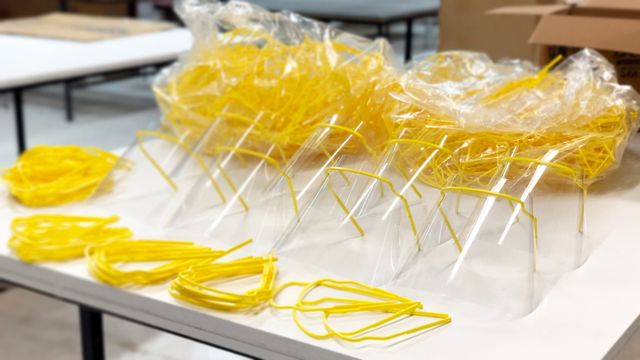
University’s design expertise behind production of face shields for local health workers
- Victoria University of Wellington
- Te Herenga Waka—Victoria University of Wellington’s School of Design Innovation has been using its design expertise and state-of-the-art facilities to help create face shields to meet demand from medical centres under COVID-19.
- Accepted from VUW News feed by feedreader
- Tagged as:
- design
- covid-19
- wellington
- art
-
-
-
Covid-19 Level 2 Update
- Aikido Shinryukan Wellington
- Although amateur club contact sports are not allowed at Level 2, Aikido Wellington has started non-contact exercise classes. Richard Sensei will run his usual lunchtime classes (12pm – 1pm each Tuesday and Thursday), covering tae sabaki and ken and jo suburi.
- Accepted from Aikido Tenshindo by feedreader
- Tagged as:
- art
- covid-19
- sport
- wellington
Prince of Wales Park Water Reservoir, Mount Cook, Wellington, Wellington City, Wellington, 6021, New Zealand (OpenStreetMap)
-
-
-
WRC FAQ’s for reopening at Level 2
- Wellington Rowing Club
- WRC Covid-19 Level 2 Start-up FAQs Final
- Accepted from WRC news by feedreader
- Tagged as:
- art
- covid-19
The Boatshed, Odlins Plaza, Te Aro, Wellington, Wellington City, Wellington, 6011, New Zealand (OpenStreetMap)
-
-
-
The future of New Zealand’s state sector
- Victoria University of Wellington
- Central government has abdicated responsibility and accountability by decentralising its decision-making and when the dust clears from the COVID-19 crisis we should look at bringing back specialised departments headed by real experts, writes Dr Geoff Bertram.
- Accepted from VUW News feed by feedreader
- Tagged as:
- art
- covid-19
- government
-
-
-
Tennis restarts tomorrow, Covid rules apply
- Wellington Tennis Club
- With tennis starting up at the club again tomorrow, we have put some steps in place — guided by Tennis NZ — to help keep everyone safe when people are on club premises. Please read them here: https://wellingtontennisclub.org.nz/covid-safe-play-guidelines/ And happy hitting!
- Accepted from Wellington Tennis Club news by feedreader
- Tagged as:
- covid-19
- wellington
- art
- tennis
- people
-