Search / “UL 62133-2 free ebook”
Matching Newsitems
-
-
December Update from DCM - together we can end homelessness
- Downtown Community Ministry
- 96 December Update from DCM - together we can end homelessness p{ margin:10px 0; padding:0; } table{ border-collapse:collapse; } h1,h2,h3,h4,h5,h6{ display:block; margin:0; padding:0; } img,a img{ border:0; height:auto; outline:none; text-decoration:none; } body,#bodyTable,#bodyCell{ height:100%; margin:0; padding:0; width:100%; } .mcnPreviewText{ display:none !important; } #outlook a{ padding:0; } img{ -ms-interpolation-mode:bicubic; } table{ mso-table-lspace:0pt; mso-table-rspace:0pt; } .ReadMsgBody{ width:100%; } .ExternalClass{ width:100%; } p,a,li,td,blockquote{ mso-line-height-rule:exactly; } a[href^=tel],a[href^=sms]{ color:inherit; cursor:default; text-decoration:none; } p,a,li,td,body,table,blockquote{ -ms-text-size-adjust:100%; -webkit-text-size-adjust:100%; } .ExternalClass,.ExternalClass p,.ExternalClass td,.ExternalClass div,.ExternalClass span,.ExternalClass font{ line-height:100%; } a[x-apple-data-detectors]{ color:inherit !important; text-decoration:none !important; font-size:inherit !important; font-family:inherit !important; font-weight:inherit !important; line-height:inherit !important; } .templateContainer{ max-width:600px !important; } a.mcnButton{ display:block; } .mcnImage,.mcnRetinaImage{ vertical-align:bottom; } .mcnTextContent{ word-break:break-word; } .mcnTextContent img{ height:auto !important; } .mcnDividerBlock{ table-layout:fixed !important; } h1{ color:#222222; font-family:Helvetica; font-size:40px; font-style:normal; font-weight:bold; line-height:150%; letter-spacing:normal; text-align:center; } h2{ color:#222222; font-family:Helvetica; font-size:34px; font-style:normal; font-weight:bold; line-height:150%; letter-spacing:normal; text-align:left; } h3{ color:#444444; font-family:Helvetica; font-size:22px; font-style:normal; font-weight:bold; line-height:150%; letter-spacing:normal; text-align:left; } h4{ color:#949494; font-family:Georgia; font-size:20px; font-style:italic; font-weight:normal; line-height:125%; letter-spacing:normal; text-align:left; } #templateHeader{ background-color:#0f288b; background-image:none; background-repeat:no-repeat; background-position:50% 50%; background-size:cover; border-top:0; border-bottom:0; padding-top:54px; padding-bottom:54px; } .headerContainer{ background-color:transparent; background-image:none; background-repeat:no-repeat; background-position:center; background-size:cover; border-top:0; border-bottom:0; padding-top:0; padding-bottom:0; } .headerContainer .mcnTextContent,.headerContainer .mcnTextContent p{ color:#757575; font-family:Helvetica; font-size:16px; line-height:150%; text-align:left; } .headerContainer .mcnTextContent a,.headerContainer .mcnTextContent p a{ color:#007C89; font-weight:normal; text-decoration:underline; } #templateBody{ background-color:#transparent; background-image:none; background-repeat:no-repeat; background-position:center; background-size:cover; border-top:0; border-bottom:0; padding-top:27px; padding-bottom:54px; } .bodyContainer{ background-color:transparent; background-image:none; background-repeat:no-repeat; background-position:center; background-size:cover; border-top:0; border-bottom:0; padding-top:0; padding-bottom:0; } .bodyContainer .mcnTextContent,.bodyContainer .mcnTextContent p{ color:#757575; font-family:Helvetica; font-size:16px; line-height:150%; text-align:left; } .bodyContainer .mcnTextContent a,.bodyContainer .mcnTextContent p a{ color:#007C89; font-weight:normal; text-decoration:underline; } #templateFooter{ background-color:#333333; background-image:none; background-repeat:no-repeat; background-position:center; background-size:cover; border-top:0; border-bottom:0; padding-top:45px; padding-bottom:63px; } .footerContainer{ background-color:transparent; background-image:none; background-repeat:no-repeat; background-position:center; background-size:cover; border-top:0; border-bottom:0; padding-top:0; padding-bottom:0; } .footerContainer .mcnTextContent,.footerContainer .mcnTextContent p{ color:#FFFFFF; font-family:Helvetica; font-size:12px; line-height:150%; text-align:center; } .footerContainer .mcnTextContent a,.footerContainer .mcnTextContent p a{ color:#FFFFFF; font-weight:normal; text-decoration:underline; } @media only screen and (min-width:768px){ .templateContainer{ width:600px !important; } } @media only screen and (max-width: 480px){ body,table,td,p,a,li,blockquote{ -webkit-text-size-adjust:none !important; } } @media only screen and (max-width: 480px){ body{ width:100% !important; min-width:100% !important; } } @media only screen and (max-width: 480px){ .mcnRetinaImage{ max-width:100% !important; } } @media only screen and (max-width: 480px){ .mcnImage{ width:100% !important; } } @media only screen and (max-width: 480px){ .mcnCartContainer,.mcnCaptionTopContent,.mcnRecContentContainer,.mcnCaptionBottomContent,.mcnTextContentContainer,.mcnBoxedTextContentContainer,.mcnImageGroupContentContainer,.mcnCaptionLeftTextContentContainer,.mcnCaptionRightTextContentContainer,.mcnCaptionLeftImageContentContainer,.mcnCaptionRightImageContentContainer,.mcnImageCardLeftTextContentContainer,.mcnImageCardRightTextContentContainer,.mcnImageCardLeftImageContentContainer,.mcnImageCardRightImageContentContainer{ max-width:100% !important; width:100% !important; } } @media only screen and (max-width: 480px){ .mcnBoxedTextContentContainer{ min-width:100% !important; } } @media only screen and (max-width: 480px){ .mcnImageGroupContent{ padding:9px !important; } } @media only screen and (max-width: 480px){ .mcnCaptionLeftContentOuter .mcnTextContent,.mcnCaptionRightContentOuter .mcnTextContent{ padding-top:9px !important; } } @media only screen and (max-width: 480px){ .mcnImageCardTopImageContent,.mcnCaptionBottomContent:last-child .mcnCaptionBottomImageContent,.mcnCaptionBlockInner .mcnCaptionTopContent:last-child .mcnTextContent{ padding-top:18px !important; } } @media only screen and (max-width: 480px){ .mcnImageCardBottomImageContent{ padding-bottom:9px !important; } } @media only screen and (max-width: 480px){ .mcnImageGroupBlockInner{ padding-top:0 !important; padding-bottom:0 !important; } } @media only screen and (max-width: 480px){ .mcnImageGroupBlockOuter{ padding-top:9px !important; padding-bottom:9px !important; } } @media only screen and (max-width: 480px){ .mcnTextContent,.mcnBoxedTextContentColumn{ padding-right:18px !important; padding-left:18px !important; } } @media only screen and (max-width: 480px){ .mcnImageCardLeftImageContent,.mcnImageCardRightImageContent{ padding-right:18px !important; padding-bottom:0 !important; padding-left:18px !important; } } @media only screen and (max-width: 480px){ .mcpreview-image-uploader{ display:none !important; width:100% !important; } } @media only screen and (max-width: 480px){ h1{ font-size:30px !important; line-height:125% !important; } } @media only screen and (max-width: 480px){ h2{ font-size:26px !important; line-height:125% !important; } } @media only screen and (max-width: 480px){ h3{ font-size:20px !important; line-height:150% !important; } } @media only screen and (max-width: 480px){ h4{ font-size:18px !important; line-height:150% !important; } } @media only screen and (max-width: 480px){ .mcnBoxedTextContentContainer .mcnTextContent,.mcnBoxedTextContentContainer .mcnTextContent p{ font-size:14px !important; line-height:150% !important; } } @media only screen and (max-width: 480px){ .headerContainer .mcnTextContent,.headerContainer .mcnTextContent p{ font-size:16px !important; line-height:150% !important; } } @media only screen and (max-width: 480px){ .bodyContainer .mcnTextContent,.bodyContainer .mcnTextContent p{ font-size:16px !important; line-height:150% !important; } } @media only screen and (max-width: 480px){ .footerContainer .mcnTextContent,.footerContainer .mcnTextContent p{ font-size:14px !important; line-height:150% !important; } } December Update from DCM - together we can end homelessness A gift from our taumai to you We come to the end of a season when many of us have been able to enjoy time with our families and friends, and have given and received gifts. Tuku atu, tuku mai - the spirit and practice of generosity and reciprocity - is very important to us here at DCM. Being able to give as well as receive enhances the mana of all of us. Over this Christmas period, many of you have generously provided gifts for our taumai – people who are homeless or at risk of homelessness. And so now it is time for us to offer YOU a gift. One of the gifts our taumai can share is the gift of their stories, the stories of what success looks like, of the life-changing work that is possible thanks to your support and our shared commitment to ending homelessness. Wayne's view It’s a stunner of a view from Wayne’s 10th floor whare. He can gaze out across Te Aro to Wellington Harbour and Mt Victoria. It’s almost the perfect reverse of his view during the winter of 2018. That was from the slopes of Mt Victoria, from a tent hidden in the bush. Read Wayne's story here. Enjoy, reflect, and know that your support has made this all possible. <!-- --> 250 dental sessions This month, we ran our 250th dental session here at DCM. What a phenomenal gift to the most marginalised people in our city this service is. "I've been putting up with sore front teeth for eight years and recently haven’t been able to eat properly. Within an hour of walking in to DCM, all of my problem teeth had been extracted. The dentist was kind, polite and thorough and I’m just so happy with the result. The alternative would have been to keep putting up with the pain for another eight years." (Simon) "I came in to DCM to talk about housing, and heard about the DCM dental service. I haven’t seen a dentist since I was a child – I extract my own teeth whenever they become too painful. Wow, I just feel so good after seeing the dentist here." (Robert) Bill ended up in the Night Shelter after family problems compounded by his meth addiction saw him sleeping at a reserve. He came to DCM after he heard from other taumai about the hospitality available here. Like all taumai who come to DCM Bill was asked if he needed a dental appointment - and now off meth he had started to notice that he was experiencing severe dental pain. Bill was able to be treated and though he has a long road ahead on his journey to wellbeing, he is now free from the worst pain caused by 20+ years of addiction. We have a lengthy waiting list for dental appointments, and urgently need more dentists and dental assistants to become part of our amazing team. Please ask your own dentist if they volunteer at DCM – if they do, lift them up for the very practical way in which they are part of the solution to homelessness. If they don’t, encourage them to get in touch. <!-- --> Together we can end homelessness - at Christmas and in the New Year At this time of year, we are reminded every day of the kindness and commitment of the people of Wellington to our taumai and our mahi. If you follow us on Facebook, you will have seen some of our stories about the range of people and organisations who have brought in food, gifts, baking, donations, their time and their skills. From our friends at Live Wires who paid for all the items we need to prepare 200 Christmas hampers for taumai, to those of you who offered to buy us something we really need and can enjoy together (yes, we were able to purchase an entire new set of chairs for everyone who spends time at Te Hāpai!), to the people of Ngaio Union Church who bought gifts for taumai spending their first Christmas in their new home, to the many locals and workplaces who brought in supplies for our foodbank, to the Nota Bene concert at Prefab...the list goes on and on. As we move into a new year, you may like to reflect on new ways you can become involved in 2020 – here is some food for thought. Thank you, Wellington, for the many practical ways in which you are part of the solution to homelessness. Ngā mihi o te Tau Hou. <!-- --> Please help us get the message out there! Forward this email on to everyone you can think of who may be interested in how to respond to homelessness, and just generally people who are passionate about Wellington. <!-- --> Read More Success Stories Nāku te rourou, nāu te rourou, ka ora ai te iwi With your basket and my basket, the people will thrive <!-- --> Copyright © 2019 DCM. All rights reserved. Our mailing address is: DCMPO Box 6133Marion SqWellington, Wellington 6011 New ZealandAdd us to your address book Want to change how you receive these emails? You can update your preferences or unsubscribe from this list.
- Accepted from DCM alerts archive by tonytw1
- Tagged as:
- ngaio
Ngaio, Wellington, Wellington City, Wellington, New Zealand (OpenStreetMap)
-
-
-
August Update from DCM
- Downtown Community Ministry
- 96 August Update from DCM p{ margin:10px 0; padding:0; } table{ border-collapse:collapse; } h1,h2,h3,h4,h5,h6{ display:block; margin:0; padding:0; } img,a img{ border:0; height:auto; outline:none; text-decoration:none; } body,#bodyTable,#bodyCell{ height:100%; margin:0; padding:0; width:100%; } .mcnPreviewText{ display:none !important; } #outlook a{ padding:0; } img{ -ms-interpolation-mode:bicubic; } table{ mso-table-lspace:0pt; mso-table-rspace:0pt; } .ReadMsgBody{ width:100%; } .ExternalClass{ width:100%; } p,a,li,td,blockquote{ mso-line-height-rule:exactly; } a[href^=tel],a[href^=sms]{ color:inherit; cursor:default; text-decoration:none; } p,a,li,td,body,table,blockquote{ -ms-text-size-adjust:100%; -webkit-text-size-adjust:100%; } .ExternalClass,.ExternalClass p,.ExternalClass td,.ExternalClass div,.ExternalClass span,.ExternalClass font{ line-height:100%; } a[x-apple-data-detectors]{ color:inherit !important; text-decoration:none !important; font-size:inherit !important; font-family:inherit !important; font-weight:inherit !important; line-height:inherit !important; } .templateContainer{ max-width:600px !important; } a.mcnButton{ display:block; } .mcnImage,.mcnRetinaImage{ vertical-align:bottom; } .mcnTextContent{ word-break:break-word; } .mcnTextContent img{ height:auto !important; } .mcnDividerBlock{ table-layout:fixed !important; } h1{ color:#222222; font-family:Helvetica; font-size:40px; font-style:normal; font-weight:bold; line-height:150%; letter-spacing:normal; text-align:center; } h2{ color:#222222; font-family:Helvetica; font-size:34px; font-style:normal; font-weight:bold; line-height:150%; letter-spacing:normal; text-align:center; } h3{ color:#444444; font-family:Helvetica; font-size:22px; font-style:normal; font-weight:bold; line-height:150%; letter-spacing:normal; text-align:center; } h4{ color:#949494; font-family:Georgia; font-size:20px; font-style:italic; font-weight:normal; line-height:125%; letter-spacing:normal; text-align:center; } #templateHeader{ background-color:#0f288b; background-image:none; background-repeat:no-repeat; background-position:50% 50%; background-size:cover; border-top:0; border-bottom:0; padding-top:54px; padding-bottom:54px; } .headerContainer{ background-color:transparent; background-image:none; background-repeat:no-repeat; background-position:center; background-size:cover; border-top:0; border-bottom:0; padding-top:0; padding-bottom:0; } .headerContainer .mcnTextContent,.headerContainer .mcnTextContent p{ color:#757575; font-family:Helvetica; font-size:16px; line-height:150%; text-align:left; } .headerContainer .mcnTextContent a,.headerContainer .mcnTextContent p a{ color:#007C89; font-weight:normal; text-decoration:underline; } #templateBody{ background-color:#transparent; background-image:none; background-repeat:no-repeat; background-position:center; background-size:cover; border-top:0; border-bottom:0; padding-top:27px; padding-bottom:54px; } .bodyContainer{ background-color:#transparent; background-image:none; background-repeat:no-repeat; background-position:center; background-size:cover; border-top:0; border-bottom:0; padding-top:0; padding-bottom:0; } .bodyContainer .mcnTextContent,.bodyContainer .mcnTextContent p{ color:#757575; font-family:Helvetica; font-size:16px; line-height:150%; text-align:left; } .bodyContainer .mcnTextContent a,.bodyContainer .mcnTextContent p a{ color:#007C89; font-weight:normal; text-decoration:underline; } #templateFooter{ background-color:#333333; background-image:none; background-repeat:no-repeat; background-position:center; background-size:cover; border-top:0; border-bottom:0; padding-top:45px; padding-bottom:63px; } .footerContainer{ background-color:transparent; background-image:none; background-repeat:no-repeat; background-position:center; background-size:cover; border-top:0; border-bottom:0; padding-top:0; padding-bottom:0; } .footerContainer .mcnTextContent,.footerContainer .mcnTextContent p{ color:#FFFFFF; font-family:Helvetica; font-size:12px; line-height:150%; text-align:center; } .footerContainer .mcnTextContent a,.footerContainer .mcnTextContent p a{ color:#FFFFFF; font-weight:normal; text-decoration:underline; } @media only screen and (min-width:768px){ .templateContainer{ width:600px !important; } } @media only screen and (max-width: 480px){ body,table,td,p,a,li,blockquote{ -webkit-text-size-adjust:none !important; } } @media only screen and (max-width: 480px){ body{ width:100% !important; min-width:100% !important; } } @media only screen and (max-width: 480px){ .mcnRetinaImage{ max-width:100% !important; } } @media only screen and (max-width: 480px){ .mcnImage{ width:100% !important; } } @media only screen and (max-width: 480px){ .mcnCartContainer,.mcnCaptionTopContent,.mcnRecContentContainer,.mcnCaptionBottomContent,.mcnTextContentContainer,.mcnBoxedTextContentContainer,.mcnImageGroupContentContainer,.mcnCaptionLeftTextContentContainer,.mcnCaptionRightTextContentContainer,.mcnCaptionLeftImageContentContainer,.mcnCaptionRightImageContentContainer,.mcnImageCardLeftTextContentContainer,.mcnImageCardRightTextContentContainer,.mcnImageCardLeftImageContentContainer,.mcnImageCardRightImageContentContainer{ max-width:100% !important; width:100% !important; } } @media only screen and (max-width: 480px){ .mcnBoxedTextContentContainer{ min-width:100% !important; } } @media only screen and (max-width: 480px){ .mcnImageGroupContent{ padding:9px !important; } } @media only screen and (max-width: 480px){ .mcnCaptionLeftContentOuter .mcnTextContent,.mcnCaptionRightContentOuter .mcnTextContent{ padding-top:9px !important; } } @media only screen and (max-width: 480px){ .mcnImageCardTopImageContent,.mcnCaptionBottomContent:last-child .mcnCaptionBottomImageContent,.mcnCaptionBlockInner .mcnCaptionTopContent:last-child .mcnTextContent{ padding-top:18px !important; } } @media only screen and (max-width: 480px){ .mcnImageCardBottomImageContent{ padding-bottom:9px !important; } } @media only screen and (max-width: 480px){ .mcnImageGroupBlockInner{ padding-top:0 !important; padding-bottom:0 !important; } } @media only screen and (max-width: 480px){ .mcnImageGroupBlockOuter{ padding-top:9px !important; padding-bottom:9px !important; } } @media only screen and (max-width: 480px){ .mcnTextContent,.mcnBoxedTextContentColumn{ padding-right:18px !important; padding-left:18px !important; } } @media only screen and (max-width: 480px){ .mcnImageCardLeftImageContent,.mcnImageCardRightImageContent{ padding-right:18px !important; padding-bottom:0 !important; padding-left:18px !important; } } @media only screen and (max-width: 480px){ .mcpreview-image-uploader{ display:none !important; width:100% !important; } } @media only screen and (max-width: 480px){ h1{ font-size:30px !important; line-height:125% !important; } } @media only screen and (max-width: 480px){ h2{ font-size:26px !important; line-height:125% !important; } } @media only screen and (max-width: 480px){ h3{ font-size:20px !important; line-height:150% !important; } } @media only screen and (max-width: 480px){ h4{ font-size:18px !important; line-height:150% !important; } } @media only screen and (max-width: 480px){ .mcnBoxedTextContentContainer .mcnTextContent,.mcnBoxedTextContentContainer .mcnTextContent p{ font-size:14px !important; line-height:150% !important; } } @media only screen and (max-width: 480px){ .headerContainer .mcnTextContent,.headerContainer .mcnTextContent p{ font-size:16px !important; line-height:150% !important; } } @media only screen and (max-width: 480px){ .bodyContainer .mcnTextContent,.bodyContainer .mcnTextContent p{ font-size:16px !important; line-height:150% !important; } } @media only screen and (max-width: 480px){ .footerContainer .mcnTextContent,.footerContainer .mcnTextContent p{ font-size:14px !important; line-height:150% !important; } } Together we can end homelessness When this is all over, what would you like to do differently? In our last update, we shared with you some of our taumai’s* reflections on the challenges and the positives of the COVID lock-down. Taumai also reflected on the future, and what they might like to do differently. DCM open but doing things differently at alert level 2, August 2020 Taumai spoke about the difference being housed – in emergency housing or a permanent whare – had made, and their desire to sustain this: “No going back onto the streets” “Stay committed to the process - settle down, look at me!” “Stay in a home, and we can do it because we have done it here.” Some of the things taumai spoke about doing differently after lock-down were focused on habits they did not wish to return to, while others identified new habits or skills they wish to focus on. “I will try not to go begging; that habit” “Hopefully go out more and be more assertive about finding work, or studying” “I want to do some exercise” “I want to keep buying groceries and cooking – it’s a good habit” “Try to do more – access services myself because I was not aware of what support I could get, but now I do.” As we in Aotearoa have moved back in to COVID-related restrictions this month, here at DCM we can celebrate having so many of our taumai safe and warm in their own homes or emergency housing. <!-- --> I absolutely love working at DCM Would you, or someone who you know, like to come to work with us here at DCM? We are currently advertising for several kaimahi roles here. This is a great place to work – but don’t just take our word for it! Alex Talivai started at DCM last October. This week, she shared her experience and reflections with us, including the things she has most enjoyed about working here: Every day is different. I love the variety. I love the challenging personalities of our taumai. I enjoy seeing the regulars in the morning. I absolutely love my colleagues here at DCM. I love that DCM and our leaders are all open to change and to kōrero; we can question and discuss things, make suggestions, do things differently. I enjoy the waiata and karakia in the morning – it really does prepare us for the day – and again at the end of the day. It is cleansing, an opportunity to release the day, not take things home with you. We asked Alex what she would say to anyone considering coming to work at DCM. She replied: If you have a heart for it, go for it!! To put it bluntly, if you don’t take up an opportunity to be part of this team, you are a fool! You really can make a difference to someone’s life. You can read Alex’s story here. For more information about the roles we are recruiting for, click here. Please share these opportunities widely! We really need people with big hearts to work alongside our taumai, supporting them to thrive in their homes and their lives. <!-- --> Thank you, Wellington! “Together we can end homelessness” – every month we are lifted up by the support DCM and our taumai receive from the people of Wellington. Last week, we were contacted by Pat who offered to make masks for our taumai. We have been giving these out, and including them with food support deliveries. Taumai can now use public transport, and are able to feel confident in other spaces where there are groups of people. We are also housing several people each week – moving them in to their own homes. Prue purchased some brand new linen as a house-warming gift for one of these taumai. If you would like to provide a gift of new linen for another taumai, please keep the docket so that we can provide you with a receipt for tax purposes. *We call the people we work with taumai, meaning to settle. This reflects the journey we embark on together to become settled, stable and well. <!-- --> Please help us get the message out there! Forward this email on to everyone you can think of who may be interested in how to respond to homelessness, and just generally people who are passionate about Wellington. <!-- --> Support DCM! Nāku te rourou, nāu te rourou, ka ora ai te iwi With your basket and my basket, the people will thrive <!-- --> Copyright © 2020 DCM. All rights reserved. Our mailing address is: DCMPO Box 6133Marion SqWellington, Wellington 6011 New ZealandAdd us to your address book Want to change how you receive these emails? You can update your preferences or unsubscribe from this list.
- Accepted from DCM alerts archive by feedreader
- Tagged as:
- covid-19
-
-
-
Match Report Rd 6 Swindale – OBU lose first 2020 match to MSP
- Old Boys - University Rugby Club
- <div class="slider slider-nav-circle slider-nav-large slider-nav-light slider-style-normal" data-flickity-options='{ "cellAlign": "center", "imagesLoaded": true, "lazyLoad": 1, "freeScroll": false, "wrapAround": true, "autoPlay": 6000, "pauseAutoPlayOnHover" : true, "prevNextButtons": true, "contain" : true, "adaptiveHeight" : true, "dragThreshold" : 10, "percentPosition": true, "pageDots": true, "rightToLeft": false, "draggable": true, "selectedAttraction": 0.1, "parallax" : 0, "friction": 0.6 }' > #image_638246734 { width: 100%; } #image_886644742 { width: 100%; } #image_1156154081 { width: 100%; } #image_2018455272 { width: 100%; } #image_975258038 { width: 100%; } #image_627336695 { width: 100%; } OBU 18 MSP 22 This was never going to be an easy match. MSP have recruited well this season particularly in the backs and welcomed some Hurricanes experience in the Proctor brothers to the starting line-up. It was old-timers day for MSP and a fair few of the older members had turned out to their clubrooms to preload! Conditions The weather was fine with the wind blowing diagonally down the pitch from the north into the south-eastern corner where the field dips away a little. the sun was low in the first half and difficult for OBU to deal with playing into it from the southeastern corner. It would be even worse for MSP in the second half. OBU was playing from Gym end toward the road in the first half. John ‘JC’ Cable & Jaesen Sumner were kindly present to keep an eye on the play while I wrestled with the screen lock on my phone. We are positioned up beside the video platform on the northern side. Notable performances The front row was mighty but didn’t really get the rewards it may have felt entitled to. The lineout applied lots of pressure and caused plenty of mistakes from MSP Paddy Carter was immense around the field. He is becoming a valuable utility player covering locks and flanks and is certainly a lineout option with outstanding aerial skills whichever position he is in. Shamus and Caleb deserve a mention every week. Hardworking, rugged and abrasive all over the park. In the backs, Sam Reid was once again rock-solid barely making a mistake. Ty Poe is a consistent performer growing each week. Callum and Dale are a great pairing of skill, speed and determination. Kyle really stood up in this match and had several classy touches including the chip and regather for the try. How the game unfolded 2 mins The tone for the match was set early scrum-wise by OBU. A powerful shunt spoilt the MSP feed which resulted in a knock-on in the backline due to the backfoot ball. 5 mins A series of pick and goes near the MSP line in the left corner resulted in a penalty to OBU. Dale steps up and nails the shot on the 22m line about 15 in from the left touchline OBU 3-0 6 mins From the kick-off there is a penalty for a high shot on Paddy. The penalty kick doesn’t find touch. The kick is followed up well enough to pressure MSP whop are finally able to clear to the touch after a couple of minor wobbles. 9 mins MSP manages to get it wide to their left side close to the touchline in front of us. The MSP player makes a great burst upfield but eventually, it breaks down and we go back to the penalty the ref was playing advantage for. The shot is successfully taken from 35 metres out and just to the right of the posts. 3-3 13 mins MSP puts up an up and under (or ‘Gary Owen’ for the northerners), then they regain at the ensuing ruck and the halfback chips downfield. Sam Reid has no choice but to run it into touch near our line on the far side of the paddock. From the lineout MSP throw is not straight so OBU gets to clear from the scrum. Pressure diffused for now. 17 mins MSP sets up a driving maul from a lineout but OBU gets the drive on. The maul breaks up with MSP players in behind our forwards. MSP flanker and halfback both have a dab at the line but it’s the right-winger who busts through for the score. The conversion misses. MSP 8-3 20 mins OBU charge down an MSP clearing kick. Ty Poe claims the loose ball and scores it under the sticks. The conversion was successful. OBU 10-8 23 mins A great move from OBU down the left-hand side of the field, Shamus makes lots of ground commits the defence and sets Paddy for the pass but it goes behind Paddy. MSP runs it out. There is a brief altercation. The Assistant Referee puts his flag out and a discussion ensues with the ref. The referee calls the captains together and presumably issues a warning to both teams to keep it clean despite what looked like a punch thrown by the red player. 24 mins Kyle darts down the blindside and chips past the first line of defence. He regathers under pressure from 3 defenders and scoots the rest of the way down the far sideline to score it in the corner. Conversion unsuccessful. OBU 15-8 28 mins Shamus crashes through the defence with some good pace and offloads to Finbarr. Reece ratchets up the pressure with an attack down the close touchline. OBU is right on the MSP goal line but are penalised. Can’t tell from our position what it was for. Unfortunately, someone says something to the ref so we deservedly get marched 10 metres. 30 mins OBU is in MSPs half again and looking likely but are penalised for holding on in the tackle. Good play from MSP flanker to beat the cleaners to the ball. MSP kick into the far corner. From the lineout MSP over-throw the ball and Kyle makes a great 40-meter clearance. 39 mins MSP is penalised for backs offside. Callum steps up to have a long-range shot from just inside the MSP half and out to the left. Kick misses Halftime OBU 15-8 41 mins MSP on the attack, OBU backs are caught offside 35 metres out and slightly to the right of the posts. Kick landed OBU 15-11 46 mins A long sequence of pick and goes on the MSP line. An MSP player crashes over the top believing he is onside and concedes a very obvious penalty. Dale successfully takes the shot. OBU 18-11 49 mins OBU concede a penalty for holding near the 10-metre line straight out in front. Kick is successfully taken. OBU 18-14 52 mins Paddy claims the kickoff with a memorable AFL-style leap. 55 mins OBU move the ball wide to Sam Reid who slips through the first tackle but can’t get through the second and eventually the ball runs into touch. MSP again overthrow the lineout. Morgan tries to gather the ball but knocks it on. MSP feed to the scrum. 57 mins MSP manages to clear the scrum which is under pressure and begin a promising period of attack near the OBU line. OBU player gest over the ball and wins the penalty which is cleared to touch taking some of the pressure off but we lose the lineout. Matt Fowler makes it on for his 50th replacing Kyle Preston at the base of the scrum. Sam Godwin on James Poloniati Off 60 mins A great driving maul from OBU. Eventually, MSP concedes the penalty and OBU elects to kick to the corner. Another great driving maul and an MSP forward rolls the dice by dropping it and gets away with it this time. Eventually, OBU knocks the ball forward. 63 mins MSP clear their line from a massive kick by James Proctor playing at 2nd 5. He kicked from the 5-meter line and the ball eventually goes out just on OBUs side of halfway. 66 mins Almost an action replay with another great clearing kick from Proctor. 73 mins MSP are hot on the attack and looking dangerous. There is an OBU player down. It turns out to be Matt Fowler in his 50th. Kyle comes on to replace him as a precaution. Morgan comes back on sporting a bandage on his head. I missed where he went off! Sam Coombs leaves the field. Taine Plumtree is replaced by Josh Gimblett 75 mins There is a series of Pick and goes on our line. Eventually #19 James Tuia crashes over. Conversion unsuccessful. MSP 19-18 75 mins Sam Coombs is on for Finbarr Kerr-Newell and somewhere along the way Matt Sleith came on at hooker for Kenan Gillson. OBU just need to hold the ball and work it back up the field to get in position to pressure MSP into a mistake. OBU puts the drive on from a lineout but the ball is knocked on. 78 mins OBU desperate now tries to run it out to the other end of the field but MSP turn the ball over in our 22 and the 1st 5 for MSP lines up and slots the drop goal. MSP 22-18 That’s the way the match ended. A riveting game with a very tight finish. I get the feeling that this match could well be replayed over the coming weeks in a semi or a final, but let’s not count our chickens just yet. Another almighty challenge awaits against Tawa out at Lyndhurst Park next week. Final Score MSP 22-18 The post Match Report Rd 6 Swindale – OBU lose first 2020 match to MSP appeared first on OBU Rugby.
- Accepted from OBU feed by feedreader
- Tagged as:
- tawa
- rugby
Tawa, Wellington, New Zealand (OpenStreetMap)
-
-
-
Ngā Kōrero – Latest Stories from DCM
- Downtown Community Ministry
- Ngā Kōrero – Latest Stories from DCM Ngā Kōrero – Latest Stories from DCM communities where whānau are housed, connected, valued and thriving About Us Contact A Message From Our Manahautū He Rā Ka Huri: Seasons Change, Our Purpose Remains Stephen Turnock, Manahautū (Director) at DCM Tēnā koutou katoa, As the seasons shift once again, I find myself reflecting on just how much change we’ve witnessed lately, not only in the weather, but across our communities, sector, and Aotearoa. Like the turn from summer to autumn, some changes are expected, while others arrive quickly, bringing with them a sense of uncertainty. This changing environment is being felt deeply across the community sector. Policy directions are shifting, funding decisions are pending. Many of us are operating in a space where the future feels less certain than before. At DCM, this has real impacts. The security of our contracts, the continuity of our mahi, and the wellbeing of our kaimahi (staff) are all front of mind. And it's not just our sector, every day we see how these pressures are being experienced by whānau across Te-Whanganui-a-Tara: the cost of living, the struggle to find and keep a safe place to live, and the weight of navigating systems that often don’t work for them. Change is constant, but for many, it doesn’t always feel like it’s moving in the right direction. In the face of this, we ground ourselves in what remains constant. Our commitment to whānau-led support, our belief in housing as a human right, and our dedication to walking alongside those doing it tough. No matter the season, our purpose stays the same. And we want you to know, we have a plan. Even in a time of shifting sands, we’re clear on our direction. We’re committed to building on what works, data-informed insights, whanau-centred practice and courageous leadership. And we know we can’t do this alone. It’s through community collaboration, with whānau, with partners, and with people like you, that real solutions are found and created. So as the leaves begin to fall and we prepare for the colder months ahead, we do so with determination, with hope, and with deep gratitude for your continued support. You are part of this journey, and together, we will keep working towards a city where everyone has a place to stand. Ngā manaakitanga, Stephen Turnock Finding An Oasis At DCM I was homeless and running around the country before I came to Wellington. I was drinking heavily. I was an alcoholic. My mental health issues hadn’t been diagnosed, so I was unmedicated and pretty messy. Before that I was in Christchurch. I got made redundant, and then I had nothing to do. I started drinking, getting into hard drugs, getting in trouble. I made a lot of people mad and I had to leave. I just wanted to hide somewhere and drink. That was my plan. It’s crazy I kept drinking even when I was that sick. I knew I was sick, but the need for alcohol was stronger than any concern I had for my own safety. I was housed out in the Hutt maybe six or seven years ago, not by DCM but someone else. They put me there to get me out of Wellington, away from the drinking. But I still drank sometimes. Then I got told my liver couldn’t take it anymore. They said it was no good. That changed everything. I had to stop drinking, and that changed my life completely. I couldn’t fill the voids with alcohol anymore. I had to deal with stuff. Face my demons. And it was too much, really. I ended up needing medication. There was nothing like DCM out in the Hutt then. I came back into town because there’s more here, and DCM is a hub that has everything I need. I’ve been coming here every day, every week, for as long as I’ve been back in Wellington. DCM has supported me in all sorts of ways. I come here for coffee, for health, for dental, and they make sure I get to my appointments. Te Aro Health and the nurse let me know if the doctors want to see me. It’s amazing that everything is just here. And yeah, I get food from DCM. It’s good to know it comes from people I know, not some stranger. It keeps it in the whānau, you know? I don’t eat much. Once a day is usually enough to keep me going. I used to be a good cook, but I’ve lost all interest in it. Cooking for one is boring. Food is just something I put in myself now. The DCM staff are even trying to get more fruits and vegetables into me. I’ll eat it if it’s put in front of me, but I won’t cook it. I’m eating like an old man now. DCM hasn’t given up on people, not like other places have. That’s what surprised me. DCM is an oasis and people rely on this place. If they weren’t here, there’d be nothing for us. We’d be eating out of rubbish bins. "DCM is absolutely brilliant because it’s saving people in Wellington. It’s keeping people alive. Without this service, people would be lost. They’d just be lost." These days, I guess, I’m mostly just working out what life looks like until I die. That’s what concerns me now. My health isn’t great. I don’t know how long I’ve got, but I’m trying to be all right until then. If you’re struggling, don’t stop yourself. Get to DCM. If they see the need, they’ll help. I fully recommend it to anyone in Wellington who needs support. Spotlight on Lynda: Fundraising For Hope Lynda McGregor, owner of Little Bread Loaf, wears many hats. She runs a small artisan bakery in Lower Hutt where everything is made from scratch, a busy café in Miramar, works in fresh produce markets, and does catering too. Yet despite her full plate (pun intended), Lynda makes time to support DCM. Her connection with DCM began when she saw one of our Instagram posts calling for donations. “It really moved me,” she says. “I just thought, we can all do something to help our community. It’s not about pity, it’s about showing up and helping.” Lynda shared the post, a conversation followed, then a tour, and she soon found herself organising her first foodbank collection for DCM at Little Bread Loaf where she and her community raised over 200 cans of food. “I’ve always known about DCM and the work you do. I know you don’t get as much funding as the bigger charities, and I felt I could add value here in a way that would make a real impact.” Supporting DCM wasn’t a random choice. It aligned with Lynda’s values. “My mum always tithed. She gave a portion of what she had or her time to help others. I’ve always tried to do that too. I’m not religious, but giving back is a part of who I am.” She’s also realistic. “In the charity sector, it’s often the causes that are more ‘attractive’ that get attention". But DCM, she says, offers something deeper. “I truly believe that nobody wakes up wanting to be on the street. DCM works with some of the most vulnerable people in Wellington and you stay constant, even when others would walk away. The whānau you support can keep coming back for coffee, a chat, or whatever they need and you are always there for them.” For Lynda, donating food is not about charity. It’s about manaakitanga. “If the food isn’t good enough for me to eat, I won’t bring it in. What I give has to be mana enhancing; for DCM, for me as the maker, and for anyone who receives it. I want people to feel dignity when they receive something from me.” She adds that contributing makes her feel good too. “It feeds my soul. I do this for selfish reasons because it makes me happy and brings me joy.” Lynda has seen the challenges facing our communities and the pressure DCM is under. “It makes me sad to see the foodbank shelves so bare. You’re doing incredible work, and so much of it comes from heart. You can tell that your team is here because they genuinely want to be of service.” She believes anyone can make a difference and her hope is that more people and businesses will step up.. “You don’t have to give a lot. A couple of cans, a few dollars, whatever you can manage. That small act might have a huge impact on someone’s day." She adds, "It’s not about changing someone’s whole life. It’s about easing their path just a little. It’s about giving someone a little hope.” We are so thankful to Lynda, and our other wonderful supporters, for standing with us. DCM is proud to work alongside people who care so deeply about making Wellington a city where everybody has a place. This year, we are running a Foodbank Appeal Week from 17 to 24 May, and we are inviting the community to help us to continue to provide essential food support to Wellington’s most marginalised residents. There are many ways you can get involved. You could host a food donation box at your workplace, school, or church, run a fundraiser for DCM, or, if you would like to support us financially, you can do so by clicking the button below. Support DCM Copyright © 2025 DCM. All rights reserved. Our mailing address is: DCM Wellington, 2 Lukes Lane, Te Aro, Wellington Want to change how you receive these emails? You can update your preferences or unsubscribe from this list.
- Accepted from DCM alerts archive by feedreader
- Tagged as:
- miramar
- lower-hutt
Lower Hutt, Lower Hutt City, Wellington, 5010, New Zealand (OpenStreetMap)
-
-
-
Match Report Rd 7 Swindale – OBU defence wins the day against determined Tawa
- Old Boys - University Rugby Club
- <div class="slider slider-nav-circle slider-nav-large slider-nav-light slider-style-normal" data-flickity-options='{ "cellAlign": "center", "imagesLoaded": true, "lazyLoad": 1, "freeScroll": false, "wrapAround": true, "autoPlay": 6000, "pauseAutoPlayOnHover" : true, "prevNextButtons": true, "contain" : true, "adaptiveHeight" : true, "dragThreshold" : 10, "percentPosition": true, "pageDots": true, "rightToLeft": false, "draggable": true, "selectedAttraction": 0.1, "parallax" : 0, "friction": 0.6 }' > Taine Plumtree in the blood bin. Sensational sponsor logo! #image_840778479 { width: 100%; } Fui and Morgan charge it up the field #image_35539783 { width: 100%; } Callum Harkin steps the Tawa centre #image_832130887 { width: 100%; } Dale lines up the shot with Jack Green doing the tee duties, Luke Chisolm returning from injury in the nbackground #image_1739355293 { width: 100%; } Sam Reid slides over for the 5 points after whipping down the sideline #image_419362905 { width: 100%; } #image_1665940115 { width: 100%; } Caleb Delaney with a towering lineout take #image_2048566506 { width: 100%; } Morgan bullocks through the tackles with Fui and Shamus in support. Sam Reid is eyeing up options to the right! #image_632142925 { width: 100%; } #image_11988736 { width: 100%; } OBU 27 Tawa 9 The rugby trip to the suburb of Tawa-hiti is always a torrid affair. This week was no exception. For extra spice, Tawa drew the ire of many in the rugby community by starting the player currently accused of assault in an incident outside the Poneke clubrooms late at night a few weeks ago. From an OBU perspective, the most important points were a solid defence that didn’t leak any tries and no serious injuries. Sam Reid has a minor injury concern but was thumbs up for the Avalon fixture this coming Saturday. Conditions It was an overcast day with with barely a breath of wind. This brought terror to those still petrified from Alfred Hitchcock’s movie, ‘The Birds’ as a tree on the clubrooms side of the field attracted thousands of twittering birds. Who knows if it interfered with the lineout calls. OBU was playing from right to left from the terraces side of the field in the first half. Or if you like back to the road and clubrooms end. Notable Performances Caleb Delaney had one of his best if not the best performances in the jersey. A towering presence in the lineout and involved in everything around the field. Similarly Morgan Poi had the best game I’ve seen him play for OBU proving a really difficult opponent for Tawa to stop. The partnership of Dale Sabbagh and Callum Harkin at first and second five is looking stronger every week both on attack and defence! Ty Poe continues to grow in the centre role. He may not be the size of some of the players he marks, but he proves that they still hit the ground hard if you use good technique. It seems like I repeat myself every week but Shamus was stellar at the back of the scrum, as was Kyle at 9 and Sam Reid playing at fullback this week. How the game unfolded Minute What happened Score 1 Min OBU win the kickoff and set to the right. Finally lost forward in the ensuing ruck. 4 Min OBU scrum on halfway, close side. the ball spins wide but goes in behind the backs. Well picked up and taken into contact. OBU penalised for holdng on. Kick to the corner by Tawa goes out in goal. 6 Mins Scrum to OBU, Shamus takes it down the blindside and recycled 10 m on. Kyle chips it over the top. Tawa gather and bring it back to the close side of the field. Sam Reid makes a good tackle and Shamus turns the ball over and kicks it long. 8 Mins OBU feed to the scrum. The backs take it right for one phase then back to the left. Tawa backs get caught offside. It’s not straightforward but is a kickable penalty. OBU successfully kick to the corner through Dale. The lineout throw is called not straight and scrum is set. OBU penalised for dropping the scrum. 16 Mins OBU penalised for side entry to the ruck. Tawa opt for the shot 38 metres out from the posts and just to the left. Penalty is successful! Tawa 3 OBU 0 18 Mins OBU knock on from the restart! 20 Mins OBU penalised for not releasing the tackled player. This starts a solid period on defence 5 meters out from the goal line. Eventually Tawa spill the ball on about the 6th or 7th pick and go. Somewhere in the middle of that Taine subs off for blood and Josh runs on to take his place (Caleb into lock, Josh on the blindside). Josh Gimblett Replaces Taine Plumtree (blood bin) 25 Mins OBU penalised for player going off their feet at the ruck. It’s about 35 meters out and in front of the posts. Kick at goal is successful. Tawa 6 OBU 0 27 Mins The kickoff goes out on the full. Taine and Josh trade places after Taine is cleaned up. Taine Plumtree replaces Josh Gimblett (blood bin) 33 Mins Tawa lineout on their 22 meter line. They clear the ball down to Sam Reid who runs it back strongly but is taken in a head high for his trouble. OBU elect to go for the shot 40 meters in front. Dale lands it. Tawa 6 OBU 3 39 Mins Tawa penalised for dropping the scrum 5 meters in from the near touch on halfway. OBU kick to the corner to take the lineout 5 meters out. Tawa are penalised for collapsing the ensuing maul. OBU go back to the lineout again. The lineout drive goes again with the backs piling in. The ref has a penalty advantage to OBU. there are several pick and go’s. The penalty is called and a quick tap is taken with a driver at the line. try to Taine. Successfully converted by Dale. OBU take 10-6 lead into the halftime oranges. Tawa 6 OBU 10 ———————————- 44 Mins OBU attacking the Tawa line are penalised for not releasing the tackled player. Someone offers an opinion and we are marched 10 meters. Ouch! Tawa elect to have a shot 45 meters out and to the right of the sticks. Tawa kicker lands a useful kick Tawa 9 OBU 10 46 Mins Tawa center makes a good break and looks to put his wing into space. Not sure if the pass wasn’t up to it or the wing didn’t get to where he needed to be, either way the ball rolls meekly into touch on the close side of the field. 48 Mins Tawa holding on in the tackle. OBU go for the posts about 42 meters out in front and slightly to the left. The discipline monster is back to upset proceedings for Tawa. The kick misses but the ref plays his joker and gives Dale another shot. I think it is due to a Tawa player trying to put Dale off by shouting something. No-one seems to know what the hand signal is for that! Dale makes no mistake on his second attempt. Tawa 9 OBU 13 50 Mins From the 10 meter line in Tawa territory Adam Clarke gets away an impossible pass to Sam Reid who boosts along the far touchline and scores it in the far corner. The referee and his assistant consult for a few seconds before the try is awarded. The difficult conversion is successful. Tawa 9 OBU 20 53 Mins Great kick from Dale down into Tawa corner. Tawa lineout. OBU backs are caught offside. Tawa clears to touch about halfway. An action replay takes Tawa into the 22. Morgan is issued a team warning. Tawa mounts an attack down the sideline and the Tawa fans are ecstatic but Kyle has taken care of the hooker who is in touch before the corner. Kurt Sickler on for Sam Reid (injury) 58 Mins Tawa concede a penalty on the 22 for backs offside. The referee issues another warning to both teams. Josh Gimblett on for Matt Sleith (tactical) Matt has had yet another busy day at the office. This time in the number 7 shirt after a few weeks in the front row. 63 Mins Tawa has a strong scrum which they drive off to the left. The OBU clean-out comes from the side and the ball is cleared out to the touch on halfway. 65 Mins OBU has a strong lineout drive to disrupt Tawa possession. Tawa’s experimental kick pass to the left wing doesn’t pay off as OBU is awarded a penalty possibly for in front of the kicker. Cleared down to 15 Meters out from Tawa line. 66 Mins Another powerful OBU lineout drive at the line with Shamus taking it over to keep his try tally marching on (2nd equal for Wellington premier rugby, 1 ahead of Sam Reid and 2 ahead of Ty Poe and Taine Plumtree!) OBU were under penalty advantage for collapsing again. Conversion successful. Substitutions – Luke Chisholm on for Fui at tighthead prop (tactical) Wirangi Parata on for Kenan Gillson at hooker (tactical) Great to see these two back in action after a few weeks off for injury. Tawa 9 OBU 27 75 Mins Matt Fowler on for Kyle Preston at halfback (tactical) Izzy Foai on for Adam Clarke (tactical). Clarky was on the wing but Izzy is usually a 2nd 5. I didn’t get much time to work out who moved to where but safe to say Izzy’s hard ball running was back on display nearer to the ruck than wing. Great to have him back! Josh makes a great break from a lineout but the pass in the tackle goes into touch. 78 Mins Long period of OBU attacking the Tawa line. Tawa infringe and seeking the bonus point, OBU takes the lineout in the corner. 81 Mins From there an error leads to a Tawa scrum. they bravely try to run it out to salvage something from the game. Eventually they knock it on from some strong OBU defence. From the scrum OBU are penalised for not rolling away and after a few more phases the game is whistled to completion. All in all a well taken victory. OBU looked in control for most of the match while not ever looking completely dominant. That was probably the strongest scrummaging side of the season so far. We didn’t get the clear advantage we have usually enjoyed. That’s to Tawa’s credit. There were a lot of penalties, but to that we’d have to say there was a lot of infringing! The referee had a very good game I thought. The post Match Report Rd 7 Swindale – OBU defence wins the day against determined Tawa appeared first on OBU Rugby.
- Accepted from OBU feed by feedreader
- Tagged as:
- tawa
- rugby
Tawa, Wellington, New Zealand (OpenStreetMap)
-
-
-
July Update from DCM
- Downtown Community Ministry
- 96 July Update from DCM p{ margin:10px 0; padding:0; } table{ border-collapse:collapse; } h1,h2,h3,h4,h5,h6{ display:block; margin:0; padding:0; } img,a img{ border:0; height:auto; outline:none; text-decoration:none; } body,#bodyTable,#bodyCell{ height:100%; margin:0; padding:0; width:100%; } .mcnPreviewText{ display:none !important; } #outlook a{ padding:0; } img{ -ms-interpolation-mode:bicubic; } table{ mso-table-lspace:0pt; mso-table-rspace:0pt; } .ReadMsgBody{ width:100%; } .ExternalClass{ width:100%; } p,a,li,td,blockquote{ mso-line-height-rule:exactly; } a[href^=tel],a[href^=sms]{ color:inherit; cursor:default; text-decoration:none; } p,a,li,td,body,table,blockquote{ -ms-text-size-adjust:100%; -webkit-text-size-adjust:100%; } .ExternalClass,.ExternalClass p,.ExternalClass td,.ExternalClass div,.ExternalClass span,.ExternalClass font{ line-height:100%; } a[x-apple-data-detectors]{ color:inherit !important; text-decoration:none !important; font-size:inherit !important; font-family:inherit !important; font-weight:inherit !important; line-height:inherit !important; } .templateContainer{ max-width:600px !important; } a.mcnButton{ display:block; } .mcnImage,.mcnRetinaImage{ vertical-align:bottom; } .mcnTextContent{ word-break:break-word; } .mcnTextContent img{ height:auto !important; } .mcnDividerBlock{ table-layout:fixed !important; } h1{ color:#222222; font-family:Helvetica; font-size:40px; font-style:normal; font-weight:bold; line-height:150%; letter-spacing:normal; text-align:center; } h2{ color:#222222; font-family:Helvetica; font-size:34px; font-style:normal; font-weight:bold; line-height:150%; letter-spacing:normal; text-align:center; } h3{ color:#444444; font-family:Helvetica; font-size:22px; font-style:normal; font-weight:bold; line-height:150%; letter-spacing:normal; text-align:center; } h4{ color:#949494; font-family:Georgia; font-size:20px; font-style:italic; font-weight:normal; line-height:125%; letter-spacing:normal; text-align:center; } #templateHeader{ background-color:#0f288b; background-image:none; background-repeat:no-repeat; background-position:50% 50%; background-size:cover; border-top:0; border-bottom:0; padding-top:54px; padding-bottom:54px; } .headerContainer{ background-color:transparent; background-image:none; background-repeat:no-repeat; background-position:center; background-size:cover; border-top:0; border-bottom:0; padding-top:0; padding-bottom:0; } .headerContainer .mcnTextContent,.headerContainer .mcnTextContent p{ color:#757575; font-family:Helvetica; font-size:16px; line-height:150%; text-align:left; } .headerContainer .mcnTextContent a,.headerContainer .mcnTextContent p a{ color:#007C89; font-weight:normal; text-decoration:underline; } #templateBody{ background-color:#transparent; background-image:none; background-repeat:no-repeat; background-position:center; background-size:cover; border-top:0; border-bottom:0; padding-top:27px; padding-bottom:54px; } .bodyContainer{ background-color:#transparent; background-image:none; background-repeat:no-repeat; background-position:center; background-size:cover; border-top:0; border-bottom:0; padding-top:0; padding-bottom:0; } .bodyContainer .mcnTextContent,.bodyContainer .mcnTextContent p{ color:#757575; font-family:Helvetica; font-size:16px; line-height:150%; text-align:left; } .bodyContainer .mcnTextContent a,.bodyContainer .mcnTextContent p a{ color:#007C89; font-weight:normal; text-decoration:underline; } #templateFooter{ background-color:#333333; background-image:none; background-repeat:no-repeat; background-position:center; background-size:cover; border-top:0; border-bottom:0; padding-top:45px; padding-bottom:63px; } .footerContainer{ background-color:transparent; background-image:none; background-repeat:no-repeat; background-position:center; background-size:cover; border-top:0; border-bottom:0; padding-top:0; padding-bottom:0; } .footerContainer .mcnTextContent,.footerContainer .mcnTextContent p{ color:#FFFFFF; font-family:Helvetica; font-size:12px; line-height:150%; text-align:center; } .footerContainer .mcnTextContent a,.footerContainer .mcnTextContent p a{ color:#FFFFFF; font-weight:normal; text-decoration:underline; } @media only screen and (min-width:768px){ .templateContainer{ width:600px !important; } } @media only screen and (max-width: 480px){ body,table,td,p,a,li,blockquote{ -webkit-text-size-adjust:none !important; } } @media only screen and (max-width: 480px){ body{ width:100% !important; min-width:100% !important; } } @media only screen and (max-width: 480px){ .mcnRetinaImage{ max-width:100% !important; } } @media only screen and (max-width: 480px){ .mcnImage{ width:100% !important; } } @media only screen and (max-width: 480px){ .mcnCartContainer,.mcnCaptionTopContent,.mcnRecContentContainer,.mcnCaptionBottomContent,.mcnTextContentContainer,.mcnBoxedTextContentContainer,.mcnImageGroupContentContainer,.mcnCaptionLeftTextContentContainer,.mcnCaptionRightTextContentContainer,.mcnCaptionLeftImageContentContainer,.mcnCaptionRightImageContentContainer,.mcnImageCardLeftTextContentContainer,.mcnImageCardRightTextContentContainer,.mcnImageCardLeftImageContentContainer,.mcnImageCardRightImageContentContainer{ max-width:100% !important; width:100% !important; } } @media only screen and (max-width: 480px){ .mcnBoxedTextContentContainer{ min-width:100% !important; } } @media only screen and (max-width: 480px){ .mcnImageGroupContent{ padding:9px !important; } } @media only screen and (max-width: 480px){ .mcnCaptionLeftContentOuter .mcnTextContent,.mcnCaptionRightContentOuter .mcnTextContent{ padding-top:9px !important; } } @media only screen and (max-width: 480px){ .mcnImageCardTopImageContent,.mcnCaptionBottomContent:last-child .mcnCaptionBottomImageContent,.mcnCaptionBlockInner .mcnCaptionTopContent:last-child .mcnTextContent{ padding-top:18px !important; } } @media only screen and (max-width: 480px){ .mcnImageCardBottomImageContent{ padding-bottom:9px !important; } } @media only screen and (max-width: 480px){ .mcnImageGroupBlockInner{ padding-top:0 !important; padding-bottom:0 !important; } } @media only screen and (max-width: 480px){ .mcnImageGroupBlockOuter{ padding-top:9px !important; padding-bottom:9px !important; } } @media only screen and (max-width: 480px){ .mcnTextContent,.mcnBoxedTextContentColumn{ padding-right:18px !important; padding-left:18px !important; } } @media only screen and (max-width: 480px){ .mcnImageCardLeftImageContent,.mcnImageCardRightImageContent{ padding-right:18px !important; padding-bottom:0 !important; padding-left:18px !important; } } @media only screen and (max-width: 480px){ .mcpreview-image-uploader{ display:none !important; width:100% !important; } } @media only screen and (max-width: 480px){ h1{ font-size:30px !important; line-height:125% !important; } } @media only screen and (max-width: 480px){ h2{ font-size:26px !important; line-height:125% !important; } } @media only screen and (max-width: 480px){ h3{ font-size:20px !important; line-height:150% !important; } } @media only screen and (max-width: 480px){ h4{ font-size:18px !important; line-height:150% !important; } } @media only screen and (max-width: 480px){ .mcnBoxedTextContentContainer .mcnTextContent,.mcnBoxedTextContentContainer .mcnTextContent p{ font-size:14px !important; line-height:150% !important; } } @media only screen and (max-width: 480px){ .headerContainer .mcnTextContent,.headerContainer .mcnTextContent p{ font-size:16px !important; line-height:150% !important; } } @media only screen and (max-width: 480px){ .bodyContainer .mcnTextContent,.bodyContainer .mcnTextContent p{ font-size:16px !important; line-height:150% !important; } } @media only screen and (max-width: 480px){ .footerContainer .mcnTextContent,.footerContainer .mcnTextContent p{ font-size:14px !important; line-height:150% !important; } } Together we can end homelessness Ensuring that our taumai have a voice At DCM, we are committed to ensuring that our taumai* have a voice – at DCM and in Aotearoa. Many of us have been sharing stories of lock-down; we wanted to ensure that the experience of taumai over this time was also captured and shared. We interviewed 65 of our taumai and will share some of their insights over the next few updates. We asked taumai to name the biggest challenges of the period for them, as well as what they enjoyed most about lock-down. An empty Wellington city, 2 April 2020 What have been the biggest challenges for you? Staying indoors, not being able to go out - 33% Not being able to spend time with friends or whānau - 27% Not being able to do the things I enjoy, missing my routine - 29% There haven’t been any challenges - 15% What have you enjoyed most about lock-down? One third commented that they had not enjoyed anything about this period (“Nothing really”; “I enjoyed nothing, just carried on with my life”), but two thirds spoke about the positives of lock-down. They had enjoyed the quiet, time with family, being busy and getting exercise - “watching TV and listening to music”, “cleaning my house”, “I have been enjoying the long walks daily” and “getting out and getting fresh air”. And then there were those who most enjoyed not having much to do – “the best thing has been not having to do anything”, “being lazy” and “we don’t have to do so many things”. Several referred to the positives of reduced alcohol and drug use: “We are not drinking as much as we used to.” “I have given up drinking and have been using my money for much needed things for my home. Utility bills and food. I always have food now.” “I've been getting off the drugs.” “Getting off the drugs means I've been enjoying food more.” “I didn’t gamble.” But the very best thing about lock-down, mentioned by 25% of those we spoke with, was having a roof over their heads or moving in to a home: “Not having to worry about where I am going to stay.” “Showers, warm bed, a roof.” “Having my own apartment, I can make a drink when I want to, turn my TV on.” “Having a place to stay - just knowing there was somewhere.” “Being safe and having a roof over my head.” “Being in a motel has made me feel safe and warm.” “I have coped well, better now that I am housed.” <!-- --> General Election 2020 We are excited to also share with you another way in which we are ensuring our taumai have a voice in Aotearoa. With the support of the Electoral Commission, we have been encouraging our taumai to enrol to vote, and look forward to having a polling booth here at DCM to ensure voting is as accessible for our taumai as possible. Among the many taumai we've enrolled this month is Manu. Manu is a Māori man in his late 50s who has never voted in his lifetime. He is now signed up to the Māori electorate and is looking forward to voting in his first-ever election right here at DCM. <!-- --> Checking in with Arthur - two years later We celebrate each time one of our taumai is housed; we also celebrate the hard mahi they put in to sustaining that tenancy, often with the ongoing support of DCM kaimahi. Two years ago we introduced you to Arthur. Arthur was delighted to have his own whare after months of being without shelter. But DCM’s support extended beyond getting Arthur into his own whare. He was supported through the DCM Dental Service to get a new set of teeth, and DCM’s volunteer audiologist treated him so he was able to hear much better. “DCM helped me with pretty much everything,” Arthur says. “They gave me food parcels, supported me to get my license back and got a copy of my birth certificate.” Another important support DCM was able to offer was to visit Arthur in his whare to make sure everything was going OK. This month marked another milestone for Arthur - he has now been housed for two years. Arthur has whānau living with him, and is taking part in his local community, attending a weekly community group at a local church. He also works part time, an amazing accomplishment two years on from living on the streets. Kia kaha, kia maia, kia manawanui Arthur! You can read the story we shared two years ago when Arthur was first housed. Would you like to support someone who has recently moved in to their own home? We would welcome donations of microwaves for our taumai. Contact us or find other ways to support us here. *We call the people we work with taumai, meaning to settle. This reflects the journey we embark on together to become settled, stable and well. <!-- --> Please help us get the message out there! Forward this email on to everyone you can think of who may be interested in how to respond to homelessness, and just generally people who are passionate about Wellington. <!-- --> Support DCM! Nāku te rourou, nāu te rourou, ka ora ai te iwi With your basket and my basket, the people will thrive <!-- --> Copyright © 2020 DCM. All rights reserved. Our mailing address is: DCMPO Box 6133Marion SqWellington, Wellington 6011 New ZealandAdd us to your address book Want to change how you receive these emails? You can update your preferences or unsubscribe from this list.
- Accepted from DCM alerts archive by feedreader
- Automatically tagged as:
- religious-groups
-
-
-
February update from DCM - together we can end homelessness
- Downtown Community Ministry
- 96 February update from DCM - together we can end homelessness p{ margin:10px 0; padding:0; } table{ border-collapse:collapse; } h1,h2,h3,h4,h5,h6{ display:block; margin:0; padding:0; } img,a img{ border:0; height:auto; outline:none; text-decoration:none; } body,#bodyTable,#bodyCell{ height:100%; margin:0; padding:0; width:100%; } .mcnPreviewText{ display:none !important; } #outlook a{ padding:0; } img{ -ms-interpolation-mode:bicubic; } table{ mso-table-lspace:0pt; mso-table-rspace:0pt; } .ReadMsgBody{ width:100%; } .ExternalClass{ width:100%; } p,a,li,td,blockquote{ mso-line-height-rule:exactly; } a[href^=tel],a[href^=sms]{ color:inherit; cursor:default; text-decoration:none; } p,a,li,td,body,table,blockquote{ -ms-text-size-adjust:100%; -webkit-text-size-adjust:100%; } .ExternalClass,.ExternalClass p,.ExternalClass td,.ExternalClass div,.ExternalClass span,.ExternalClass font{ line-height:100%; } a[x-apple-data-detectors]{ color:inherit !important; text-decoration:none !important; font-size:inherit !important; font-family:inherit !important; font-weight:inherit !important; line-height:inherit !important; } .templateContainer{ max-width:600px !important; } a.mcnButton{ display:block; } .mcnImage,.mcnRetinaImage{ vertical-align:bottom; } .mcnTextContent{ word-break:break-word; } .mcnTextContent img{ height:auto !important; } .mcnDividerBlock{ table-layout:fixed !important; } h1{ color:#222222; font-family:Helvetica; font-size:40px; font-style:normal; font-weight:bold; line-height:150%; letter-spacing:normal; text-align:center; } h2{ color:#222222; font-family:Helvetica; font-size:34px; font-style:normal; font-weight:bold; line-height:150%; letter-spacing:normal; text-align:left; } h3{ color:#444444; font-family:Helvetica; font-size:22px; font-style:normal; font-weight:bold; line-height:150%; letter-spacing:normal; text-align:left; } h4{ color:#949494; font-family:Georgia; font-size:20px; font-style:italic; font-weight:normal; line-height:125%; letter-spacing:normal; text-align:left; } #templateHeader{ background-color:#0f288b; background-image:none; background-repeat:no-repeat; background-position:50% 50%; background-size:cover; border-top:0; border-bottom:0; padding-top:54px; padding-bottom:54px; } .headerContainer{ background-color:transparent; background-image:none; background-repeat:no-repeat; background-position:center; background-size:cover; border-top:0; border-bottom:0; padding-top:0; padding-bottom:0; } .headerContainer .mcnTextContent,.headerContainer .mcnTextContent p{ color:#757575; font-family:Helvetica; font-size:16px; line-height:150%; text-align:left; } .headerContainer .mcnTextContent a,.headerContainer .mcnTextContent p a{ color:#007C89; font-weight:normal; text-decoration:underline; } #templateBody{ background-color:#transparent; background-image:none; background-repeat:no-repeat; background-position:center; background-size:cover; border-top:0; border-bottom:0; padding-top:27px; padding-bottom:54px; } .bodyContainer{ background-color:transparent; background-image:none; background-repeat:no-repeat; background-position:center; background-size:cover; border-top:0; border-bottom:0; padding-top:0; padding-bottom:0; } .bodyContainer .mcnTextContent,.bodyContainer .mcnTextContent p{ color:#757575; font-family:Helvetica; font-size:16px; line-height:150%; text-align:left; } .bodyContainer .mcnTextContent a,.bodyContainer .mcnTextContent p a{ color:#007C89; font-weight:normal; text-decoration:underline; } #templateFooter{ background-color:#333333; background-image:none; background-repeat:no-repeat; background-position:center; background-size:cover; border-top:0; border-bottom:0; padding-top:45px; padding-bottom:63px; } .footerContainer{ background-color:transparent; background-image:none; background-repeat:no-repeat; background-position:center; background-size:cover; border-top:0; border-bottom:0; padding-top:0; padding-bottom:0; } .footerContainer .mcnTextContent,.footerContainer .mcnTextContent p{ color:#FFFFFF; font-family:Helvetica; font-size:12px; line-height:150%; text-align:center; } .footerContainer .mcnTextContent a,.footerContainer .mcnTextContent p a{ color:#FFFFFF; font-weight:normal; text-decoration:underline; } @media only screen and (min-width:768px){ .templateContainer{ width:600px !important; } } @media only screen and (max-width: 480px){ body,table,td,p,a,li,blockquote{ -webkit-text-size-adjust:none !important; } } @media only screen and (max-width: 480px){ body{ width:100% !important; min-width:100% !important; } } @media only screen and (max-width: 480px){ .mcnRetinaImage{ max-width:100% !important; } } @media only screen and (max-width: 480px){ .mcnImage{ width:100% !important; } } @media only screen and (max-width: 480px){ .mcnCartContainer,.mcnCaptionTopContent,.mcnRecContentContainer,.mcnCaptionBottomContent,.mcnTextContentContainer,.mcnBoxedTextContentContainer,.mcnImageGroupContentContainer,.mcnCaptionLeftTextContentContainer,.mcnCaptionRightTextContentContainer,.mcnCaptionLeftImageContentContainer,.mcnCaptionRightImageContentContainer,.mcnImageCardLeftTextContentContainer,.mcnImageCardRightTextContentContainer,.mcnImageCardLeftImageContentContainer,.mcnImageCardRightImageContentContainer{ max-width:100% !important; width:100% !important; } } @media only screen and (max-width: 480px){ .mcnBoxedTextContentContainer{ min-width:100% !important; } } @media only screen and (max-width: 480px){ .mcnImageGroupContent{ padding:9px !important; } } @media only screen and (max-width: 480px){ .mcnCaptionLeftContentOuter .mcnTextContent,.mcnCaptionRightContentOuter .mcnTextContent{ padding-top:9px !important; } } @media only screen and (max-width: 480px){ .mcnImageCardTopImageContent,.mcnCaptionBottomContent:last-child .mcnCaptionBottomImageContent,.mcnCaptionBlockInner .mcnCaptionTopContent:last-child .mcnTextContent{ padding-top:18px !important; } } @media only screen and (max-width: 480px){ .mcnImageCardBottomImageContent{ padding-bottom:9px !important; } } @media only screen and (max-width: 480px){ .mcnImageGroupBlockInner{ padding-top:0 !important; padding-bottom:0 !important; } } @media only screen and (max-width: 480px){ .mcnImageGroupBlockOuter{ padding-top:9px !important; padding-bottom:9px !important; } } @media only screen and (max-width: 480px){ .mcnTextContent,.mcnBoxedTextContentColumn{ padding-right:18px !important; padding-left:18px !important; } } @media only screen and (max-width: 480px){ .mcnImageCardLeftImageContent,.mcnImageCardRightImageContent{ padding-right:18px !important; padding-bottom:0 !important; padding-left:18px !important; } } @media only screen and (max-width: 480px){ .mcpreview-image-uploader{ display:none !important; width:100% !important; } } @media only screen and (max-width: 480px){ h1{ font-size:30px !important; line-height:125% !important; } } @media only screen and (max-width: 480px){ h2{ font-size:26px !important; line-height:125% !important; } } @media only screen and (max-width: 480px){ h3{ font-size:20px !important; line-height:150% !important; } } @media only screen and (max-width: 480px){ h4{ font-size:18px !important; line-height:150% !important; } } @media only screen and (max-width: 480px){ .mcnBoxedTextContentContainer .mcnTextContent,.mcnBoxedTextContentContainer .mcnTextContent p{ font-size:14px !important; line-height:150% !important; } } @media only screen and (max-width: 480px){ .headerContainer .mcnTextContent,.headerContainer .mcnTextContent p{ font-size:16px !important; line-height:150% !important; } } @media only screen and (max-width: 480px){ .bodyContainer .mcnTextContent,.bodyContainer .mcnTextContent p{ font-size:16px !important; line-height:150% !important; } } @media only screen and (max-width: 480px){ .footerContainer .mcnTextContent,.footerContainer .mcnTextContent p{ font-size:14px !important; line-height:150% !important; } } Reception at Government House A highlight this month was the opportunity for us to visit Government House where The Rt. Hon. Dame Patsy Reddy hosted a reception to celebrate DCM’s 50th birthday. This also provided an opportunity to recommit to our vision of ending homelessness, and to reflect on what we all need to do to better support this vision going forward. We share some key sound bytes from the speeches delivered by Dame Patsy and by DCM Director Stephanie McIntyre at Government House. Dame Patsy with DCM Kaihautū Neavin Broughton. “I was interested to learn that DCM is located on a site once occupied by Te Ati Awa. "One of my predecessors, Sir Paul Reeves, was descended from those people who lived in Aro Pā, and he talked about the pain experienced by his tipuna when they lost their homes there in the early days of settlement in Wellington. "So I think Sir Paul would be pleased that an organisation dedicated to finding homes for the homeless is now in that very locality, particularly given that a large proportion of DCM’s taumai are Māori. "We all know that shelter is a basic human right, and that individuals can’t address other issues or explore their aspirations if they don’t have a roof over their heads. "It must be particularly challenging for DCM and its partners to be working at a time when there just aren’t enough houses for Wellington’s population, let alone the range of accommodation options to suit the needs of the people who walk in DCM’s door.” - Dame Patsy Reddy Morris Wong, President of the Wellington Branch of the New Zealand Dental Association with the former President, Gavin Cho, at the reception at Government House; both are volunteers at DCM's emergency Dental Service. "Over the last year, DCM has grown to the point where we now have the human resources to support people in to houses, and to provide the wrap-around support and intensive case management they need. The irony is, however, that we haven’t got the bricks and mortar. "Last year we were able to support 85 people from homelessness into houses, but this year, in the midst of a very significant housing crisis, we are really struggling to access homes for our taumai. This is something we need to do together, and this is why my key message to you all tonight is this. "If you or anyone you know has a rental property or is thinking about investing in a rental property, please speak to us. We can offer landlords a 'no hassles' service – guaranteed rent, no fees, maintenance sorted and funded – and you will be providing a whare for a person who is experiencing homelessness." - Stephanie McIntyre, Director, DCM <!-- --> Meet Junior This year, we are introducing you to some of our kaimahi, the amazing team of people who support taumai to access and sustain housing. Junior Leota joined us in October 2019. He is working with the Aro Mai Housing First team, getting people with long histories of homelessness in to a permanent home, and supporting them to get to a good place in all aspects of their lives. What have you most enjoyed about your time at DCM so far? I’ve enjoyed seeing a lot of our taumai come out of their current position, homeless or at risk of homelessness, into a more stable one. Seeing the happy look on their faces from a good end result is priceless. What have you learned about homelessness since you started at DCM? It can be a long road for someone to move out of homelessness. Patience is important. Be sensitive and compassionate toward their situation. Sometimes you just want people to snap out of bad habits, but there may be a lifetime of trauma behind it. DCM is keeping me humble! When people ask you how they can be part of the solution to homelessness, what do you suggest? I would suggest bringing people who are homeless to a service like this – like DCM. Find places that can provide the right level of support for them. Find the people who really care, and introduce them to us. What is your favourite…? Food? Cream donuts. Waiata? Whakataka Te Hau. Sport? Volleyball. Film? Enter the Dragon. (I love Bruce Lee.) What’s on your bucket list? Get a lot healthier and eat better. Less donuts! At DCM we often share “moments” from our interactions with taumai. What’s a special “moment” you enjoying sharing with others? I have enjoyed the best moment – finding permanent housing for people who have been homeless for a long, long time. Our latest taumai to be housed was teary-eyed when he got to view his place. We saw a burden lifted off his shoulders – he no longer has to worry about where to go or where to sleep. And his kids can come and stay with him now. Getting a roof over your head is truly life-changing. <!-- --> Foodbank shortage As Junior has noted, it is very special to see people who have been homeless for a long time move into a permanent home. But with this comes new challenges – adjusting to the realities of their new living situation, paying rent, electricity and other bills. Often there is very little left for food. DCM’s foodbank is busy year-round, but as our mahi has expanded, we are visiting more and more people in their new homes, supporting them to sustain their tenancy and to thrive in all aspects of their lives. Being able to offer food support from time to time is an important part of this, and our foodbank is busier than ever. We are now very short of many items, and we seek your support to re-stock the shelves. Some of the things we most need at present are: Tinned fish Instant noodles Soups and ready meals Spaghetti Spreads Please drop food items in our food bin at New World Chaffers any time, or bring them directly in to DCM at 2 Lukes Lane, Te Aro, weekdays. <!-- --> Please help us get the message out there! Forward this email on to everyone you can think of who may be interested in how to respond to homelessness, and just generally people who are passionate about Wellington. <!-- --> Read More Success Stories Nāku te rourou, nāu te rourou, ka ora ai te iwi With your basket and my basket, the people will thrive <!-- --> Copyright © 2020 DCM. All rights reserved. Our mailing address is: DCMPO Box 6133Marion SqWellington, Wellington 6011 New ZealandAdd us to your address book Want to change how you receive these emails? You can update your preferences or unsubscribe from this list.
- Accepted from DCM alerts archive by tonytw1
- Tagged as:
- accommodation
- government
- media
- dental
- wellington
- art
- housing
- places
- sport
- people
-
-
-
April Update from DCM - together we can end homelessness
- Downtown Community Ministry
- 96 April Update from DCM - together we can end homelessness p{ margin:10px 0; padding:0; } table{ border-collapse:collapse; } h1,h2,h3,h4,h5,h6{ display:block; margin:0; padding:0; } img,a img{ border:0; height:auto; outline:none; text-decoration:none; } body,#bodyTable,#bodyCell{ height:100%; margin:0; padding:0; width:100%; } .mcnPreviewText{ display:none !important; } #outlook a{ padding:0; } img{ -ms-interpolation-mode:bicubic; } table{ mso-table-lspace:0pt; mso-table-rspace:0pt; } .ReadMsgBody{ width:100%; } .ExternalClass{ width:100%; } p,a,li,td,blockquote{ mso-line-height-rule:exactly; } a[href^=tel],a[href^=sms]{ color:inherit; cursor:default; text-decoration:none; } p,a,li,td,body,table,blockquote{ -ms-text-size-adjust:100%; -webkit-text-size-adjust:100%; } .ExternalClass,.ExternalClass p,.ExternalClass td,.ExternalClass div,.ExternalClass span,.ExternalClass font{ line-height:100%; } a[x-apple-data-detectors]{ color:inherit !important; text-decoration:none !important; font-size:inherit !important; font-family:inherit !important; font-weight:inherit !important; line-height:inherit !important; } .templateContainer{ max-width:600px !important; } a.mcnButton{ display:block; } .mcnImage,.mcnRetinaImage{ vertical-align:bottom; } .mcnTextContent{ word-break:break-word; } .mcnTextContent img{ height:auto !important; } .mcnDividerBlock{ table-layout:fixed !important; } h1{ color:#222222; font-family:Helvetica; font-size:40px; font-style:normal; font-weight:bold; line-height:150%; letter-spacing:normal; text-align:center; } h2{ color:#222222; font-family:Helvetica; font-size:34px; font-style:normal; font-weight:bold; line-height:150%; letter-spacing:normal; text-align:center; } h3{ color:#444444; font-family:Helvetica; font-size:22px; font-style:normal; font-weight:bold; line-height:150%; letter-spacing:normal; text-align:center; } h4{ color:#949494; font-family:Georgia; font-size:20px; font-style:italic; font-weight:normal; line-height:125%; letter-spacing:normal; text-align:center; } #templateHeader{ background-color:#0f288b; background-image:none; background-repeat:no-repeat; background-position:50% 50%; background-size:cover; border-top:0; border-bottom:0; padding-top:54px; padding-bottom:54px; } .headerContainer{ background-color:transparent; background-image:none; background-repeat:no-repeat; background-position:center; background-size:cover; border-top:0; border-bottom:0; padding-top:0; padding-bottom:0; } .headerContainer .mcnTextContent,.headerContainer .mcnTextContent p{ color:#757575; font-family:Helvetica; font-size:16px; line-height:150%; text-align:left; } .headerContainer .mcnTextContent a,.headerContainer .mcnTextContent p a{ color:#007C89; font-weight:normal; text-decoration:underline; } #templateBody{ background-color:#transparent; background-image:none; background-repeat:no-repeat; background-position:center; background-size:cover; border-top:0; border-bottom:0; padding-top:27px; padding-bottom:54px; } .bodyContainer{ background-color:#transparent; background-image:none; background-repeat:no-repeat; background-position:center; background-size:cover; border-top:0; border-bottom:0; padding-top:0; padding-bottom:0; } .bodyContainer .mcnTextContent,.bodyContainer .mcnTextContent p{ color:#757575; font-family:Helvetica; font-size:16px; line-height:150%; text-align:left; } .bodyContainer .mcnTextContent a,.bodyContainer .mcnTextContent p a{ color:#007C89; font-weight:normal; text-decoration:underline; } #templateFooter{ background-color:#333333; background-image:none; background-repeat:no-repeat; background-position:center; background-size:cover; border-top:0; border-bottom:0; padding-top:45px; padding-bottom:63px; } .footerContainer{ background-color:transparent; background-image:none; background-repeat:no-repeat; background-position:center; background-size:cover; border-top:0; border-bottom:0; padding-top:0; padding-bottom:0; } .footerContainer .mcnTextContent,.footerContainer .mcnTextContent p{ color:#FFFFFF; font-family:Helvetica; font-size:12px; line-height:150%; text-align:center; } .footerContainer .mcnTextContent a,.footerContainer .mcnTextContent p a{ color:#FFFFFF; font-weight:normal; text-decoration:underline; } @media only screen and (min-width:768px){ .templateContainer{ width:600px !important; } } @media only screen and (max-width: 480px){ body,table,td,p,a,li,blockquote{ -webkit-text-size-adjust:none !important; } } @media only screen and (max-width: 480px){ body{ width:100% !important; min-width:100% !important; } } @media only screen and (max-width: 480px){ .mcnRetinaImage{ max-width:100% !important; } } @media only screen and (max-width: 480px){ .mcnImage{ width:100% !important; } } @media only screen and (max-width: 480px){ .mcnCartContainer,.mcnCaptionTopContent,.mcnRecContentContainer,.mcnCaptionBottomContent,.mcnTextContentContainer,.mcnBoxedTextContentContainer,.mcnImageGroupContentContainer,.mcnCaptionLeftTextContentContainer,.mcnCaptionRightTextContentContainer,.mcnCaptionLeftImageContentContainer,.mcnCaptionRightImageContentContainer,.mcnImageCardLeftTextContentContainer,.mcnImageCardRightTextContentContainer,.mcnImageCardLeftImageContentContainer,.mcnImageCardRightImageContentContainer{ max-width:100% !important; width:100% !important; } } @media only screen and (max-width: 480px){ .mcnBoxedTextContentContainer{ min-width:100% !important; } } @media only screen and (max-width: 480px){ .mcnImageGroupContent{ padding:9px !important; } } @media only screen and (max-width: 480px){ .mcnCaptionLeftContentOuter .mcnTextContent,.mcnCaptionRightContentOuter .mcnTextContent{ padding-top:9px !important; } } @media only screen and (max-width: 480px){ .mcnImageCardTopImageContent,.mcnCaptionBottomContent:last-child .mcnCaptionBottomImageContent,.mcnCaptionBlockInner .mcnCaptionTopContent:last-child .mcnTextContent{ padding-top:18px !important; } } @media only screen and (max-width: 480px){ .mcnImageCardBottomImageContent{ padding-bottom:9px !important; } } @media only screen and (max-width: 480px){ .mcnImageGroupBlockInner{ padding-top:0 !important; padding-bottom:0 !important; } } @media only screen and (max-width: 480px){ .mcnImageGroupBlockOuter{ padding-top:9px !important; padding-bottom:9px !important; } } @media only screen and (max-width: 480px){ .mcnTextContent,.mcnBoxedTextContentColumn{ padding-right:18px !important; padding-left:18px !important; } } @media only screen and (max-width: 480px){ .mcnImageCardLeftImageContent,.mcnImageCardRightImageContent{ padding-right:18px !important; padding-bottom:0 !important; padding-left:18px !important; } } @media only screen and (max-width: 480px){ .mcpreview-image-uploader{ display:none !important; width:100% !important; } } @media only screen and (max-width: 480px){ h1{ font-size:30px !important; line-height:125% !important; } } @media only screen and (max-width: 480px){ h2{ font-size:26px !important; line-height:125% !important; } } @media only screen and (max-width: 480px){ h3{ font-size:20px !important; line-height:150% !important; } } @media only screen and (max-width: 480px){ h4{ font-size:18px !important; line-height:150% !important; } } @media only screen and (max-width: 480px){ .mcnBoxedTextContentContainer .mcnTextContent,.mcnBoxedTextContentContainer .mcnTextContent p{ font-size:14px !important; line-height:150% !important; } } @media only screen and (max-width: 480px){ .headerContainer .mcnTextContent,.headerContainer .mcnTextContent p{ font-size:16px !important; line-height:150% !important; } } @media only screen and (max-width: 480px){ .bodyContainer .mcnTextContent,.bodyContainer .mcnTextContent p{ font-size:16px !important; line-height:150% !important; } } @media only screen and (max-width: 480px){ .footerContainer .mcnTextContent,.footerContainer .mcnTextContent p{ font-size:14px !important; line-height:150% !important; } } Me aro ki te hā o Hine-ahu-one - Pay heed to the mana of women Me aro ki te hā o Hine-ahu-one Pay heed to the mana of women Meda From rough sleeping and pregnant – to housed and hopeful Meda first came to DCM in 2016 – pregnant, and rough sleeping on the streets of Wellington. It has been a long journey for Meda – but she is in a good place now, in her own home and doing well. Photos by DCM kaitautoko Gabrielle McKone Meda grew up in a home she describes as “a house filled with love”, with two half-sisters, and one brother. “As a kid I enjoyed everything from running to swimming – I especially loved building tree houses! My childhood was full of outdoorsy stuff. I enjoyed school and I liked my teachers.” After her parents split, Meda bounced around a bit, eventually living with her aunty. But when she was kicked out of the house, she became homeless, living on the streets of Wellington with nowhere to go. It was a Wellington street friend who told Meda about DCM. “Someone said, ‘If you go down there they might be able to help you out.’ So I did.” It was around this time that Meda discovered she was pregnant. She was able to get into emergency housing, but a week before she was due to give birth, she found out that the courts had decided to uplift her baby once he was born. Losing her son was heart-breaking for Meda, and she describes it as being “the trigger for my trauma”. It led her to drink, and she no longer took very good care of herself. But in the midst of all this, Meda continued to work with DCM. “DCM has supported me in so many different ways,” says Meda. “I’ve seen the dentist a few times, popped in to see the Te Aro Health nurses, received food support and I was also on DCM’s money management service for a while until I got my own bank account. I was really proud when I got that – it felt like a big thing.” Sometimes it’s the little things that count. When Meda reflects back on the years of support from DCM, one of her favourite memories is of a woman greeting her by name, giving her a cup of coffee and a muesli bar each morning – this woman was DCM kaimahi Joanne. DCM helped Meda get into her own place, and continues to provide support so that she can thrive in her whare. Meda has made some friends in her new community and is loving this new feeling of independence, but she also appreciates being part of the wider “DCM family”. Best of all, Meda has been able to see her son. “It wasn't until I was housed and feeling a bit more stable that I was finally able to see him. A highlight for me was when I was able to go down to Nelson for his 5th birthday.” Meda maintains regular contact and is able to see her son from time to time. She’s so proud of this, and how far she’s come. “I’ve achieved a lot in the last year, getting my act together – and along the way I’ve developed a real passion for health and wellbeing. In the year ahead, I’d like to do some studies. I am proud of how far I have come, and I have plans and a lot of hope for the future.” You can read Meda's full story on our website. <!-- --> Regina and Joanne A hīkoi of courage and pride Sisters Regina and Joanne work together at DCM; both have big hearts for our mahi and our people. This month has seen them return from a hīkoi to get their moko kauae. Photos by Kylie Robinson (Regina and Joanne’s niece) It took many decades to get to this point. While the desire and longing was always there, there was too much stigma attached, and although their great grandmother had her moko kauae, it had skipped a few generations. Earlier this year, Regina and Joanne headed home for their grandmother’s tangi. It was a catalyst for them both, and opened up their sense of longing again. They prayed about this as well as speaking to family members. They both laugh as they talk about who was going to speak to their mother. Joanne lost, and spoke to their mum, who fully supported their decision. Joanne had her moko kauae completed at Mataora Bay; this is where their grandmother is buried and a place Joanne returns to often. Regina went inland to Ngahutoitoi marae where their father was raised and is buried. Several taumai challenged and encouraged them to take this step, and it has had a big impact on taumai since. At a taumai tangi soon after they returned to Wellington, Doc approached Regina. He held her hand, and put his hands on her face – “I am so proud of you.” * “Coming back to Wellington, I feel grounded,” says Regina. “I am not ashamed of being Māori. I’m proud of my culture. We have been indoctrinated to be ashamed of who we are. There are those who say that to carry the moko kauae, I would be carrying the bad things of the past. I choose instead to carry all the blessings of my tīpuna.” Many of our taumai, like Regina and Joanne, have received so many negative messages over the years about what it is to be Māori. They have been robbed of their reo; they have given up speaking it or have never learned it. Instead of feeling proud of who they are, they often carry the stigma and whakamā over many years, or over a whole lifetime. Here at DCM, we lift up Joanne and Regina for their courage, for their example, and for their commitment to DCM’s taumai and kaupapa. * Doc Manuel died soon after as a result of an accident in Wellington. Taumai had encouraged Joanne and Regina to set out on this journey, and Doc had blessed them when they had returned from that journey. RIP Doc. <!-- --> Stephanie Homelessness...and home Stephanie McIntyre stepped down as Director of DCM at the end of 2020. This month, the Dominion Post caught up with her; they asked her to share some of her reflections on homelessness, and discussed what she has been up to since leaving DCM. You can read her reflections and her challenge to us all on Stuff. “We’ve long had the tag line at DCM: ‘together, we can end homelessness’. Without sounding twee, this is something everyone’s got to embrace together, and do together.” <!-- --> How can I help? It would be fantastic if we could take Meda and some of the other wāhine we've recently housed shopping so they can select something for their home. If you would like to purchase some vouchers for Briscoes or similar, that would be much appreciated. Drop these in to Matthew Mawkes at DCM, 2 Lukes Lane, week day mornings, or pop in the post. Kia ora! <!-- --> Support DCM! Me aro ki te hā o Hine-ahu-one Pay heed to the mana of women <!-- --> Copyright © 2021 DCM. All rights reserved. Our mailing address is: DCMPO Box 6133Marion SqWellington, Wellington 6011 New ZealandAdd us to your address book Want to change how you receive these emails? You can update your preferences or unsubscribe from this list.
- Accepted from DCM alerts archive by feedreader
- Automatically tagged as:
- religious-groups
-
-
-
July Update from DCM - Together We Can End Homelessness
- Downtown Community Ministry
- 96 July Update from DCM - Together We Can End Homelessness p{ margin:10px 0; padding:0; } table{ border-collapse:collapse; } h1,h2,h3,h4,h5,h6{ display:block; margin:0; padding:0; } img,a img{ border:0; height:auto; outline:none; text-decoration:none; } body,#bodyTable,#bodyCell{ height:100%; margin:0; padding:0; width:100%; } .mcnPreviewText{ display:none !important; } #outlook a{ padding:0; } img{ -ms-interpolation-mode:bicubic; } table{ mso-table-lspace:0pt; mso-table-rspace:0pt; } .ReadMsgBody{ width:100%; } .ExternalClass{ width:100%; } p,a,li,td,blockquote{ mso-line-height-rule:exactly; } a[href^=tel],a[href^=sms]{ color:inherit; cursor:default; text-decoration:none; } p,a,li,td,body,table,blockquote{ -ms-text-size-adjust:100%; -webkit-text-size-adjust:100%; } .ExternalClass,.ExternalClass p,.ExternalClass td,.ExternalClass div,.ExternalClass span,.ExternalClass font{ line-height:100%; } a[x-apple-data-detectors]{ color:inherit !important; text-decoration:none !important; font-size:inherit !important; font-family:inherit !important; font-weight:inherit !important; line-height:inherit !important; } .templateContainer{ max-width:600px !important; } a.mcnButton{ display:block; } .mcnImage,.mcnRetinaImage{ vertical-align:bottom; } .mcnTextContent{ word-break:break-word; } .mcnTextContent img{ height:auto !important; } .mcnDividerBlock{ table-layout:fixed !important; } h1{ color:#222222; font-family:Helvetica; font-size:40px; font-style:normal; font-weight:bold; line-height:150%; letter-spacing:normal; text-align:center; } h2{ color:#222222; font-family:Helvetica; font-size:34px; font-style:normal; font-weight:bold; line-height:150%; letter-spacing:normal; text-align:left; } h3{ color:#444444; font-family:Helvetica; font-size:22px; font-style:normal; font-weight:bold; line-height:150%; letter-spacing:normal; text-align:left; } h4{ color:#949494; font-family:Georgia; font-size:20px; font-style:italic; font-weight:normal; line-height:125%; letter-spacing:normal; text-align:left; } #templateHeader{ background-color:#0f288b; background-image:none; background-repeat:no-repeat; background-position:50% 50%; background-size:cover; border-top:0; border-bottom:0; padding-top:54px; padding-bottom:54px; } .headerContainer{ background-color:transparent; background-image:none; background-repeat:no-repeat; background-position:center; background-size:cover; border-top:0; border-bottom:0; padding-top:0; padding-bottom:0; } .headerContainer .mcnTextContent,.headerContainer .mcnTextContent p{ color:#757575; font-family:Helvetica; font-size:16px; line-height:150%; text-align:left; } .headerContainer .mcnTextContent a,.headerContainer .mcnTextContent p a{ color:#007C89; font-weight:normal; text-decoration:underline; } #templateBody{ background-color:#transparent; background-image:none; background-repeat:no-repeat; background-position:center; background-size:cover; border-top:0; border-bottom:0; padding-top:27px; padding-bottom:54px; } .bodyContainer{ background-color:transparent; background-image:none; background-repeat:no-repeat; background-position:center; background-size:cover; border-top:0; border-bottom:0; padding-top:0; padding-bottom:0; } .bodyContainer .mcnTextContent,.bodyContainer .mcnTextContent p{ color:#757575; font-family:Helvetica; font-size:16px; line-height:150%; text-align:left; } .bodyContainer .mcnTextContent a,.bodyContainer .mcnTextContent p a{ color:#007C89; font-weight:normal; text-decoration:underline; } #templateFooter{ background-color:#333333; background-image:none; background-repeat:no-repeat; background-position:center; background-size:cover; border-top:0; border-bottom:0; padding-top:45px; padding-bottom:63px; } .footerContainer{ background-color:transparent; background-image:none; background-repeat:no-repeat; background-position:center; background-size:cover; border-top:0; border-bottom:0; padding-top:0; padding-bottom:0; } .footerContainer .mcnTextContent,.footerContainer .mcnTextContent p{ color:#FFFFFF; font-family:Helvetica; font-size:12px; line-height:150%; text-align:center; } .footerContainer .mcnTextContent a,.footerContainer .mcnTextContent p a{ color:#FFFFFF; font-weight:normal; text-decoration:underline; } @media only screen and (min-width:768px){ .templateContainer{ width:600px !important; } } @media only screen and (max-width: 480px){ body,table,td,p,a,li,blockquote{ -webkit-text-size-adjust:none !important; } } @media only screen and (max-width: 480px){ body{ width:100% !important; min-width:100% !important; } } @media only screen and (max-width: 480px){ .mcnRetinaImage{ max-width:100% !important; } } @media only screen and (max-width: 480px){ .mcnImage{ width:100% !important; } } @media only screen and (max-width: 480px){ .mcnCartContainer,.mcnCaptionTopContent,.mcnRecContentContainer,.mcnCaptionBottomContent,.mcnTextContentContainer,.mcnBoxedTextContentContainer,.mcnImageGroupContentContainer,.mcnCaptionLeftTextContentContainer,.mcnCaptionRightTextContentContainer,.mcnCaptionLeftImageContentContainer,.mcnCaptionRightImageContentContainer,.mcnImageCardLeftTextContentContainer,.mcnImageCardRightTextContentContainer,.mcnImageCardLeftImageContentContainer,.mcnImageCardRightImageContentContainer{ max-width:100% !important; width:100% !important; } } @media only screen and (max-width: 480px){ .mcnBoxedTextContentContainer{ min-width:100% !important; } } @media only screen and (max-width: 480px){ .mcnImageGroupContent{ padding:9px !important; } } @media only screen and (max-width: 480px){ .mcnCaptionLeftContentOuter .mcnTextContent,.mcnCaptionRightContentOuter .mcnTextContent{ padding-top:9px !important; } } @media only screen and (max-width: 480px){ .mcnImageCardTopImageContent,.mcnCaptionBottomContent:last-child .mcnCaptionBottomImageContent,.mcnCaptionBlockInner .mcnCaptionTopContent:last-child .mcnTextContent{ padding-top:18px !important; } } @media only screen and (max-width: 480px){ .mcnImageCardBottomImageContent{ padding-bottom:9px !important; } } @media only screen and (max-width: 480px){ .mcnImageGroupBlockInner{ padding-top:0 !important; padding-bottom:0 !important; } } @media only screen and (max-width: 480px){ .mcnImageGroupBlockOuter{ padding-top:9px !important; padding-bottom:9px !important; } } @media only screen and (max-width: 480px){ .mcnTextContent,.mcnBoxedTextContentColumn{ padding-right:18px !important; padding-left:18px !important; } } @media only screen and (max-width: 480px){ .mcnImageCardLeftImageContent,.mcnImageCardRightImageContent{ padding-right:18px !important; padding-bottom:0 !important; padding-left:18px !important; } } @media only screen and (max-width: 480px){ .mcpreview-image-uploader{ display:none !important; width:100% !important; } } @media only screen and (max-width: 480px){ h1{ font-size:30px !important; line-height:125% !important; } } @media only screen and (max-width: 480px){ h2{ font-size:26px !important; line-height:125% !important; } } @media only screen and (max-width: 480px){ h3{ font-size:20px !important; line-height:150% !important; } } @media only screen and (max-width: 480px){ h4{ font-size:18px !important; line-height:150% !important; } } @media only screen and (max-width: 480px){ .mcnBoxedTextContentContainer .mcnTextContent,.mcnBoxedTextContentContainer .mcnTextContent p{ font-size:14px !important; line-height:150% !important; } } @media only screen and (max-width: 480px){ .headerContainer .mcnTextContent,.headerContainer .mcnTextContent p{ font-size:16px !important; line-height:150% !important; } } @media only screen and (max-width: 480px){ .bodyContainer .mcnTextContent,.bodyContainer .mcnTextContent p{ font-size:16px !important; line-height:150% !important; } } @media only screen and (max-width: 480px){ .footerContainer .mcnTextContent,.footerContainer .mcnTextContent p{ font-size:14px !important; line-height:150% !important; } } Arthur...one year on Arthur is one of DCM’s many success stories. Remember his story - which you all enjoyed so much? Arthur was delighted to have his own whare after months of being without shelter. He was housed in Naenae, and despite some reservations about living outside central Wellington, he now describes it as “Like being in the country.” DCM’s support extended beyond getting Arthur into his own whare. He was supported through the DCM Dental Service to get a new set of teeth, and DCM’s volunteer audiologist treated him so he was able to hear much better. “DCM helped me with pretty much everything,” Arthur says. “They gave me food parcels, supported me to get my license back and got a copy of my birth certificate.” Another important support DCM was able to offer was to visit Arthur in his whare to make sure everything was going OK. Arthur has now been housed for a full year, and on his one year anniversary DCM staff dropped by with a gift and a card signed by the whole team. We are so proud of the progress he has made. “My whare is going well. I’ve been able to connect with my daughter and grand kids, and have met some new friends. I get along with my neighbours too – on both sides.” Arthur still comes in to Wellington from time to time, but he calls Naenae home, and he's proud to play a part in his community. As Arthur says, “Everything is better having your own place!” <!-- --> Support DCM at our 24th annual Bookfair DCM's iconic annual Bookfair will be held on Saturday 17 August, Shed 6, 8am-6pm. This will be our 24th fundraising Bookfair. Over the years Wellingtonians have spent well over $2 million buying books – money that goes straight to funding DCM’s work with people who are experiencing homelessness or at risk of homelessness. Preparations for the Bookfair start just after Easter each year. That’s when a small army of volunteers begins sorting, pricing and boxing books. Wellington has been generous to us this year, and we look forward to offering some 70,000 books at this year's Bookfair. To get the word out we rely on a team of 'publicity blitz' volunteers, and you will have hopefully seen our DCM Bookfair flyers, posters and signs up all around Wellington. It is not too late to help us get the word out - please drop by DCM one week day to pick up some flyers and posters for your community, school or workplace. You can also help us online. Join our Facebook event where we are featuring a 'Category of the Week'. And DCM is now on Instagram - follow us @dcm_wellington and look out for our 'Book of the Day'. <!-- --> Help us celebrate our 50th birthday In September DCM will be celebrating our 50th birthday with a photo exhibition, highlighting the amazing support you, the people of Wellington, provide us with. Please mark the dates in your diary and plan to be involved. Because together we can end homelessness in our city! <!-- --> Donating time, not sandwiches This article by Lee-Anne Duncan appeared in the July edition of North & South. Photo (above) by Victoria Birkinshaw. At DCM, every day begins with waiata and karakia. Outside the red double doors, a couple of dozen people stand in a circle, holding the lyrics on printouts, as a guitar-playing DCM social worker leads the singing. Half the singers are DCM staff, along with the day’s dentist and dental assistant, an ophthalmologist, and a Wellington City Council Local Host, there to check in about a newly arrived rough sleeper. Completing the circle are what DCM calls “taumai” – meaning ‘to settle’ – the people most organisations more clinically call “service users”. But there’s nothing clinical about the services DCM provides. When it first opened its doors back in 1969, then known as the Inner City Ministry, later becoming Downtown Community Ministry, DCM’s mission was clear – to “focus on the needs of, and help to empower, those marginalised in the city”. An ever-increasing squeeze on housing means that's more acute than ever, as DCM marks its 50th year. The singing over, the karakia delivered, the taumai climb the stairs to Te Hāpai, meaning to lift up, a place where they can have a hot drink, some donated food, and kōrero with other taumai and DCM’s social workers. They’re genuinely welcome. “This is where people come seeking support, connection and community,” says DCM’s director of 15 years, Stephanie McIntyre. “We do all we can to give them a voice, to be heard, to be lifted up. But it is about so much more than this.” Where the instinct to help those experiencing homelessness is to hand out food, blankets, clothes – all temporary comforts – DCM is focused on dealing with the underlying causes. “More than 1200 taumai come through our doors each year. Of those, some 275 are without shelter, sleeping rough,” says McIntyre. “We focus on getting them into housing as a first step. That done, for all our taumai, we support them to sustain their tenancies and we set out on a journey together to greater wellbeing.” About half DCM’s services are backed by government or Wellington City Council funding, including an outreach programme, where social workers visit those rough sleeping or begging, ensuring they’re connected to social services and encouraging them into DCM. The other half comes from donations and fundraising, undertaken by Wellingtonians generous with their money and their time. In Shelly Bay, a legion of volunteers is counting and sorting books ready for the upcoming DCM Bookfair (17 August), DCM’s major annual fundraiser. Many have given their time year after year. Around the city, volunteer photographers are capturing images for a photo exhibition to mark DCM’s 50th birthday this September. Back at DCM, in one of the organisation’s two treatment rooms, Paul, a retired ophthalmologist, is helping taumai see properly. “Sometimes with a few minutes of Paul’s time and a $5 pair of Warehouse glasses, our taumai leave able to see again. How amazing is that?” asks McIntyre. When Paul is not there, Jeff, a neighbouring physiotherapist, donates his time to ease the aches of sleeping rough, and Lisa, an audiologist, tests hearing, cleans ears and fits donated hearing aids. They’re all life-changing services offered gratis by skilled professionals, but potentially the most impactful is the relief dispensed by DCM’s Dental Service, with the backing of the Wellington branch of the New Zealand Dental Association. Dental Assistant Emily Kremmer gives five hours of her time once a week, despite working full time for a periodontist and studying for a communications degree. “It’s so humbling and rewarding to volunteer here. You take away their pain and get so much gratitude in return. One man we worked on the other day said, ‘I’m a new man, I feel fantastic’. I am really busy but I’ve no plans to stop volunteering. I learn so much working here.” “We have adopted the tagline ‘Together, we can end homelessness in Wellington’,” says McIntyre. “For our 50th anniversary we’re emphasising the ‘together’ part. Donating time or money is an effective way to help end homelessness. It’s certainly a more effective way to be part of the solution than by handing over a sandwich.” <!-- --> Please help us get the message out there! Forward this email on to everyone you can think of who may be interested in books, how to respond to homelessness, photography and just generally people who are passionate about Wellington. Because together we CAN end homelessness in our city. <!-- --> Read More Success Stories Nāku te rourou, nāu te rourou, ka ora ai te iwi With your basket and my basket, the people will thrive <!-- --> Copyright © 2019 DCM. All rights reserved. Our mailing address is: DCMPO Box 6133Marion SqWellington, Wellington 6011 New ZealandAdd us to your address book Want to change how you receive these emails? You can update your preferences or unsubscribe from this list.
- Accepted from DCM alerts archive by tonytw1
- Automatically tagged as:
- religious-groups
-
-
-
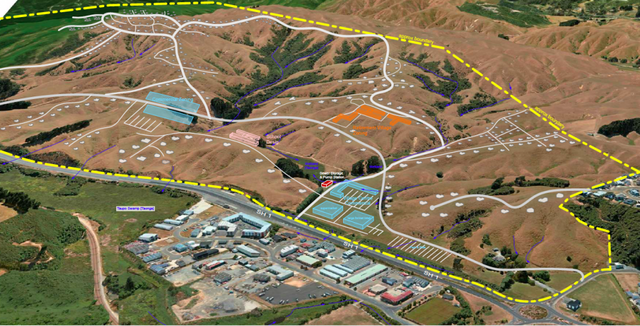
Plimmerton Farm: getting greenfields right
- Talk Wellington
- If we’re hellbent on doing more residential development in greenfields, what does “decent” look like in Plimmerton, hilly land near an existing suburb – like most of our region’s greenfields? This post is basically a guide for anyone who cares about Plimmerton, good urban development, or healthy wetlands, streams and coast, but is time-poor and can’t face going through the truckloads of documents they’ve stuck up without any specific meta-guidance (some FAQ are here). Hopefully this will help you pop in a submission! PCC’s “information” pages they suggest you use for submitting. Every one of these is a large PDF document, 90% written in technical language… aargh! The background: what where and how For those who don’t know, Plimmerton Farm’s a big proposed subdivision of hilly farmland draining into the significant Taupō Wetland and to Plimmerton Beach, just over the train line and highway from Plimmerton village (original Ngāti Toa name: Taupō). It’s going through a Streamlined Planning Process, a pre-COVID government scheme for accelerating development. The key step is the requisite change of the land’s zoning in the Porirua District Plan (“rural” zone to “residential” and other “urban” zones) that sets out what kind of stuff can then be built, where. It’s mostly streamlined because there’s just one shot for the public to have input on the plan change. One shot. Why submit? I was born and raised in Plimmerton, live here now, and intend to for the rest of my days. I’d love to see it grow, well. I would love Plimmerton to get more wallets, more hearts and minds, more faces (more diverse ones too!). But not with more traffic, and pointless damage to our environment. Right now, the proposal has some serious flaws which need sorting. I say Sorting because the changes won’t make it crazy innovative, just good enough for a development in the spot it is, being kicked off in 2020. Time matters too: there’a a bunch of good things happening imminently (and some bad Porirua trends that need to be reversed). I cover these in Get it right, below. It’s worth submitting because given the situation, a 1990s-grade development just won’t cut it. So what about Plimmerton Farm needs to change? It boils down to two themes: dial down the driveability and dial up the liveabilitymake Local the logical and easy choice for daily needs I’ll outline what needs to change in each. NOTE: There’s a third – don’t stuff the wetlands and streams. This is really important as Taupō Wetland is regionally significant, and all our streams and harbours have suffered from frankly shameful mismanagement of sediment from earthworks-heavy subdivisions like Aotea and Duck Creek, and from the earthworks-a-rama of Transmission Gully. Friends of Taupo Swamp have an excellent submission guide for you – add in some of their suggested bits to your submission. I: Dial down the driveability, dial up the liveability There aren’t many truly black-and-white things in life, but there’s one for towns: If a street is nice to drive in, it’ll be a crappy place to do anything else in (walk / eat / hang out / have a conversation / play / scoot or cycle / shop / have a pint). If it’s nice to do anything else in, it’ll be a crappy place to drive in. Mostly this is because of the nature of the automobile: big solid things that smash into our soft bodies if someone makes a mistake (75% odds of death if that’s at 50km/hour, 10% odds of death if at 30km/hour) big objects that need lots of space for manoeuvering and especially parking – which offstreet can be crazy expensive and push up the cost of a home, and onstreet hoover up valuable public space. big solid things driven by us real humans (for a while at least) who respond to the environment but also get distracted, and generally aren’t good at wielding these big solid things safely. The transport setup proposed for Plimmerton Farm makes for a much too driveable and poorly liveable place. 1. Narrow down all the roads. The current proposal’s roading setup has roads and streets that are too big, and there’s too much of them. Right sized roads for a liveable community The cross-sections for the roads include on-street parking and really wide lane widths. This is really gobsmacking for a consortium that talked a big talk about good practice. For all the reasons that Low Traffic Neighbourhoods are good, this is bad. (And it’s especially nuts when you realise that the excessively wide “arterial” roads (11 metres!) will need earthworked platforms built for them where they’re drawn running up the sharp ridges and across the tops of gullies. Expensive, damaging for the environment, and … what were they thinking?) So recommended changes: NARROW DOWN THE ROADS. Seriously. Design all the living-area streets and roads, and the centre, to be self-explaining for an operating traffic speed of 30km or less – that’s the speed where mistakes are rarely fatal. What does that look like? The designers will know and if they don’t they should be fired. Narrower crossing distances; chicanes (great way to incorporate green infrastructure and trees and seating!); narrowed sight-lines (trees! sculpture!) so no-one driving feels inclined to zoom. Reduced trafficked lanes (rori iti on the larger roads!), with properly wide and friendly footpaths. Threshold treatments, humps, modal filters, all the things we know very well are the natural ways to slow us down when driving, and make streets nicer for people. The beauty of all this “restriction” on driving is how much it frees us up for making everything else appealing. Streets become hospitable for kids to walk, scoot, bike to school safely, using the road not the footpath. Older people and those with impairments can walk and wheelchair safely. Teens coming home from town of an evening can scoot or bike home, safely. Popping down to the shops or for a coffee or to the train becomes a pleasure to do on foot, or on a scooter or bike. And you’re moving in a legitimate way – seeing and being seen, not stuck off in the bush on a “recreational” track like what they’ve described. The ordinary streets and roads are walkable, bikeable, scootable, mobility-scootable, and perfectly driveable, equally safe and useable in all weathers and anytime of day or night. Used to be a big, fast road. Now, kids bike to school and old people can chill out on it. (Mark Kerrison) (And in case you’re worried about firetrucks / rubbish trucks / buses, recall that on even Wellington City’s far more winding, narrower hilly streets everyone gets their rubbish collected and fires fought just fine. On public transport, smaller buses, like those that community transport operators use, are the way of the future for less densely-populated areas like this). Don’t build the through and loop roads. You don’t need signs like this when the only people who bother to drive in are those who live there, or who are visiting friends, because you just have to drive out again the way you came. When it’s the place you live, you’re invested in not being a dick far more than if you’re just out for a drive – or worse, out for a bit of a boyrace hoon on a massive loop route through a whole place. So just don’t build those big connector roads that enable people to drive easily from one residential area to the next, especially the ones up in the hilltops (section C) that just say “come for a hoon!” Instead, connect the living spaces heavily with bikeable, walkable, scootable, disability-friendly streets and lanes, and as much as possible, only one way in and out for cars from each living area. II: Make local logical and easy Plimmerton is a true village, with a great little centre (including a train station!) but Plimmerton Farm is ultimately a damn big area. The way to go is to enable people to get the basics of life – like school, groceries, a coffee – with a little local trip on foot, bike or scooter – it’s more of a bother to get in the car. Right now though, it needs two changes: 1. Provide for a second centre “Bumping into” spaces are known to be crucial to a feeling of neighbourhood, and in the (initial) absence of third places (worship places, community hall, sports club, cafe/pub, a supermarket is a vital social centre. Yet the north end of Plimmerton Farm is currently a deadzone for anything except residential. What things will probably look like under current layout. Like in Edwards Scissorhands without the interest of a castle. There’s no provision for a place to do your household groceries, so people will drive to Mana New World – more car trips – and less opportunity to bump into people who live nearby. (There’ll be no school in Plimmerton Farm for a while, because Ministry of Education isn’t allowed by the Education Act to build a school somewhere until there’s a certain population density of kids to fill it. A shitty Catch-22 for developments which is hopefully going to be fixed … sometime. Just another reason to make walking, biking and scooting really kid-friendly, as extra dropoff traffic for kids going to St Theresa’s, Plimmerton School, Paremata and Pukerua Bay schools will be a nightmare.) So they should provide for an additional centre in the north, including a groceries place of some kind. 2. Intensify within walking distance of Plimmerton proper. We should intensify properly, with lots of medium and even some high density (6 storeys of nicely laid-out density done well!) in the area that’s within a 5-minute walk of Plimmerton Village. The more people can live and work with access to all its many amenities, and its rail station (10 min to Porirua, 30 min to Wellington), the better. But there’s not enough density provided for there. Plimmerton Railway station: buzzing in 1916 and has only got bigger. (Photo: Pātaka Porirua Museum) So they should add another zone – E – of higher density in that 5-minute walking catchment of Plimmerton Village. What could it look like? A good example is 3333 Main, Vancouver . Submission tips On the site they ask you to fill in a Word or PDF form, saying which specific bit of the gazillion proposals you are talking about and the specific changes you want. This is a BS way to treat the vast majority of people submitting: normal non-professionals, just regular people who care about good development and liveable places. So just don’t worry about that. In those question 6 column boxes just put “Transport” and “Layout”. It’s the professional planners’ job to figure out specifically how to change a planning document. Just be specific enough that they know what you want to see. The text above is worth copying and pasting – it’ll be enough. And don’t forget the Friends of Taupo Swamp and Catchment advice is essential – definitely go read and use. That’s all you really need – just go submit! But if you’re keen to know more reasons why they should be doing this better, here’s some… Get it right, now Once this plan change is through, traditional developers like Gillies like to whack in all the infrastructure – hello, massive earthworks. And yet the place will take decades to fill with actual people – those hearts and minds and wallets. (Note even before COVID, Porirua’s growth rate was 0.1% per year. Yep, one tenth of one percent.) And extra pressure’s on to do this better because all these things are features of the next one to three years: the One Network Road Classification (sets the design specs for roads of different types) is being updated right now to be more people-friendly in the specs for roads in residential and centre areas, so designs like Plimmerton Farm’s will soon be Officially Bad Practice Sales and riding of e-bikes and e-scooters are going through the roof, continuing through and beyond COVID – this shows no signs of slowing, and prices are dropping. E-power flattens the hills of Plimmerton Farm and makes wheely active travel a breeze for the middle-class people who’ll be living here, if the streets and roads are hospitablePlimmerton Railway Station (on the most popular Wellington train line) is being upgraded to be a terminus station – i.e. better servicesThe Wellington Regional Growth Framework is setting a bunch of directions for councils on how to grow well, including well-known but often well-ignored issues like intensifying around public transport hubs Councils will soon be required to do to a bunch of a bunch of international good practice including get rid of many minimum parking requirements (in the news lately), and to upzone (enable intensification) of landuse in the walking catchment of public transport hubs. (5 min walk = approx 400 metres, 10 min = 800m).Bad trends we need to stop: Porirua’s really high car-dependency (we own cars a lot and drive a lot) is continuing, due to car-dependent urban form [PDF]– despite nice words in council’s strategic intentions.People living outside Wellington City are mostly to blame for our region’s 14% increase in emissions from transport in just 10 years. OK go submit now – and share with anyone who you think might care!
- Accepted from Talk Wellington posts by feedreader
- Tagged as:
- paremata
- porirua
- transmission-gully
- sculpture
- government
- parking
- design
- covid-19
- law
- planning
- wellington
- education
- developments
- sport
- buses
- coffee
- zoo
- people
Transmission Gully Motorway, Kenepuru, Porirua, Porirua City, Wellington, 5022, New Zealand (OpenStreetMap)
-
-
-
September Update from DCM - Together we can end homelessness
- Downtown Community Ministry
- 96 September Update from DCM - Together we can end homelessness p{ margin:10px 0; padding:0; } table{ border-collapse:collapse; } h1,h2,h3,h4,h5,h6{ display:block; margin:0; padding:0; } img,a img{ border:0; height:auto; outline:none; text-decoration:none; } body,#bodyTable,#bodyCell{ height:100%; margin:0; padding:0; width:100%; } .mcnPreviewText{ display:none !important; } #outlook a{ padding:0; } img{ -ms-interpolation-mode:bicubic; } table{ mso-table-lspace:0pt; mso-table-rspace:0pt; } .ReadMsgBody{ width:100%; } .ExternalClass{ width:100%; } p,a,li,td,blockquote{ mso-line-height-rule:exactly; } a[href^=tel],a[href^=sms]{ color:inherit; cursor:default; text-decoration:none; } p,a,li,td,body,table,blockquote{ -ms-text-size-adjust:100%; -webkit-text-size-adjust:100%; } .ExternalClass,.ExternalClass p,.ExternalClass td,.ExternalClass div,.ExternalClass span,.ExternalClass font{ line-height:100%; } a[x-apple-data-detectors]{ color:inherit !important; text-decoration:none !important; font-size:inherit !important; font-family:inherit !important; font-weight:inherit !important; line-height:inherit !important; } .templateContainer{ max-width:600px !important; } a.mcnButton{ display:block; } .mcnImage,.mcnRetinaImage{ vertical-align:bottom; } .mcnTextContent{ word-break:break-word; } .mcnTextContent img{ height:auto !important; } .mcnDividerBlock{ table-layout:fixed !important; } h1{ color:#222222; font-family:Helvetica; font-size:40px; font-style:normal; font-weight:bold; line-height:150%; letter-spacing:normal; text-align:center; } h2{ color:#222222; font-family:Helvetica; font-size:34px; font-style:normal; font-weight:bold; line-height:150%; letter-spacing:normal; text-align:center; } h3{ color:#444444; font-family:Helvetica; font-size:22px; font-style:normal; font-weight:bold; line-height:150%; letter-spacing:normal; text-align:center; } h4{ color:#949494; font-family:Georgia; font-size:20px; font-style:italic; font-weight:normal; line-height:125%; letter-spacing:normal; text-align:center; } #templateHeader{ background-color:#0f288b; background-image:none; background-repeat:no-repeat; background-position:50% 50%; background-size:cover; border-top:0; border-bottom:0; padding-top:54px; padding-bottom:54px; } .headerContainer{ background-color:transparent; background-image:none; background-repeat:no-repeat; background-position:center; background-size:cover; border-top:0; border-bottom:0; padding-top:0; padding-bottom:0; } .headerContainer .mcnTextContent,.headerContainer .mcnTextContent p{ color:#757575; font-family:Helvetica; font-size:16px; line-height:150%; text-align:left; } .headerContainer .mcnTextContent a,.headerContainer .mcnTextContent p a{ color:#007C89; font-weight:normal; text-decoration:underline; } #templateBody{ background-color:#transparent; background-image:none; background-repeat:no-repeat; background-position:center; background-size:cover; border-top:0; border-bottom:0; padding-top:27px; padding-bottom:54px; } .bodyContainer{ background-color:#transparent; background-image:none; background-repeat:no-repeat; background-position:center; background-size:cover; border-top:0; border-bottom:0; padding-top:0; padding-bottom:0; } .bodyContainer .mcnTextContent,.bodyContainer .mcnTextContent p{ color:#757575; font-family:Helvetica; font-size:16px; line-height:150%; text-align:left; } .bodyContainer .mcnTextContent a,.bodyContainer .mcnTextContent p a{ color:#007C89; font-weight:normal; text-decoration:underline; } #templateFooter{ background-color:#333333; background-image:none; background-repeat:no-repeat; background-position:center; background-size:cover; border-top:0; border-bottom:0; padding-top:45px; padding-bottom:63px; } .footerContainer{ background-color:transparent; background-image:none; background-repeat:no-repeat; background-position:center; background-size:cover; border-top:0; border-bottom:0; padding-top:0; padding-bottom:0; } .footerContainer .mcnTextContent,.footerContainer .mcnTextContent p{ color:#FFFFFF; font-family:Helvetica; font-size:12px; line-height:150%; text-align:center; } .footerContainer .mcnTextContent a,.footerContainer .mcnTextContent p a{ color:#FFFFFF; font-weight:normal; text-decoration:underline; } @media only screen and (min-width:768px){ .templateContainer{ width:600px !important; } } @media only screen and (max-width: 480px){ body,table,td,p,a,li,blockquote{ -webkit-text-size-adjust:none !important; } } @media only screen and (max-width: 480px){ body{ width:100% !important; min-width:100% !important; } } @media only screen and (max-width: 480px){ .mcnRetinaImage{ max-width:100% !important; } } @media only screen and (max-width: 480px){ .mcnImage{ width:100% !important; } } @media only screen and (max-width: 480px){ .mcnCartContainer,.mcnCaptionTopContent,.mcnRecContentContainer,.mcnCaptionBottomContent,.mcnTextContentContainer,.mcnBoxedTextContentContainer,.mcnImageGroupContentContainer,.mcnCaptionLeftTextContentContainer,.mcnCaptionRightTextContentContainer,.mcnCaptionLeftImageContentContainer,.mcnCaptionRightImageContentContainer,.mcnImageCardLeftTextContentContainer,.mcnImageCardRightTextContentContainer,.mcnImageCardLeftImageContentContainer,.mcnImageCardRightImageContentContainer{ max-width:100% !important; width:100% !important; } } @media only screen and (max-width: 480px){ .mcnBoxedTextContentContainer{ min-width:100% !important; } } @media only screen and (max-width: 480px){ .mcnImageGroupContent{ padding:9px !important; } } @media only screen and (max-width: 480px){ .mcnCaptionLeftContentOuter .mcnTextContent,.mcnCaptionRightContentOuter .mcnTextContent{ padding-top:9px !important; } } @media only screen and (max-width: 480px){ .mcnImageCardTopImageContent,.mcnCaptionBottomContent:last-child .mcnCaptionBottomImageContent,.mcnCaptionBlockInner .mcnCaptionTopContent:last-child .mcnTextContent{ padding-top:18px !important; } } @media only screen and (max-width: 480px){ .mcnImageCardBottomImageContent{ padding-bottom:9px !important; } } @media only screen and (max-width: 480px){ .mcnImageGroupBlockInner{ padding-top:0 !important; padding-bottom:0 !important; } } @media only screen and (max-width: 480px){ .mcnImageGroupBlockOuter{ padding-top:9px !important; padding-bottom:9px !important; } } @media only screen and (max-width: 480px){ .mcnTextContent,.mcnBoxedTextContentColumn{ padding-right:18px !important; padding-left:18px !important; } } @media only screen and (max-width: 480px){ .mcnImageCardLeftImageContent,.mcnImageCardRightImageContent{ padding-right:18px !important; padding-bottom:0 !important; padding-left:18px !important; } } @media only screen and (max-width: 480px){ .mcpreview-image-uploader{ display:none !important; width:100% !important; } } @media only screen and (max-width: 480px){ h1{ font-size:30px !important; line-height:125% !important; } } @media only screen and (max-width: 480px){ h2{ font-size:26px !important; line-height:125% !important; } } @media only screen and (max-width: 480px){ h3{ font-size:20px !important; line-height:150% !important; } } @media only screen and (max-width: 480px){ h4{ font-size:18px !important; line-height:150% !important; } } @media only screen and (max-width: 480px){ .mcnBoxedTextContentContainer .mcnTextContent,.mcnBoxedTextContentContainer .mcnTextContent p{ font-size:14px !important; line-height:150% !important; } } @media only screen and (max-width: 480px){ .headerContainer .mcnTextContent,.headerContainer .mcnTextContent p{ font-size:16px !important; line-height:150% !important; } } @media only screen and (max-width: 480px){ .bodyContainer .mcnTextContent,.bodyContainer .mcnTextContent p{ font-size:16px !important; line-height:150% !important; } } @media only screen and (max-width: 480px){ .footerContainer .mcnTextContent,.footerContainer .mcnTextContent p{ font-size:14px !important; line-height:150% !important; } } After a number of years of homelessness and, more recently, sleeping rough for a year, the future looks bright for Steven Cooking up a smile After a number of years of homelessness and, more recently, sleeping rough for a year, the future looks bright for Steven. The team at DCM have him back in a home of his own, and looking forward to getting back to work and smiling again. Steven in his whare Last year, Steven was sleeping rough, mostly in “the coves” along Wellington’s waterfront, where he felt safest. Steven qualified as a chef at 18 and worked in Australia for 20 years or so before coming back to New Zealand in 2005, often heading up busy kitchens. But back in New Zealand, things were not so good, and Steven found himself on the street, staying in different boarding houses and hostels until eventually he ended up sleeping rough on the waterfront. Instead of working in restaurants, he was now sleeping outside them, taking advantage of their heaters when they were on. “That’s where I’d go every night. It’s the safest place – much better than a tent in the bush. I’d drink to keep me warm and put me out at night so I could sleep in the cold. That was the only reason I drank – I don’t drink much now because I don’t need to.” He doesn’t need to because he’s now permanently housed in his own one-bedroom whare up in Karori, thanks to DCM and Te Aro Health. The Te Aro Health nurses, the DCM Dental Service and DCM’s volunteer physiotherapist Jeff have all been part of the team working with Steven to get him housed and well. Nurse Bronwyn and DCM kaimahi Kat continue to work together to support Steven When he was sleeping rough, Steven began coming into DCM “a lot – I was constantly on the move and this was the only place I could come and chill out and keep warm.” He’d also come in to talk with the team at DCM about how he could get off the street. They helped him onto the social housing waiting list. And then, at the end of last year, Steven was handed the keys to his new flat, and the team from DCM helped him to get together the furniture and items he needed for his home. “It was just like heaven. It was a load off my mind because you’re hyper-sensitive and aware when you’re outside doing it rough. You’re always aware, even when you’re sleeping. Moving in was a load off my mind. I could start planning ahead again and I could start thinking about getting back to work. If I hadn’t had DCM working with me, I reckon I would have been waiting three or four years." The next thing Steven plans to get sorted is his teeth, with DCM’s Dental Service having referred him to the hospital to get false teeth. “My teeth had been great till about 10 years ago but then they went real quick. I have a great smile, but I just didn’t smile with my teeth the way they were. I can’t wait to get false teeth and become a grinning idiot. It will give me so much more confidence to get back into looking for work. I want to be able to walk into an interview and give them a proper smile.” That work will likely be back in the kitchen, because cooking is what he does and unsurprisingly, having a kitchen again is Steven’s favourite thing about having his own flat. The first thing he cooked in his new whare? “A big roast pork with orange Beauregard kumara. I candied up the kumara with brown sugar and garlic, then added a little butter at the end. Delicious.” To read more of Steven’s story, click here. <!-- --> As you know, DCM is committed to ensuring that our taumai* have a voice – at DCM, in our community, and in Aotearoa New Zealand. Next month, our taumai will be able to vote in the General Election, right here at DCM. Despite the complexity of operating at Level 2 for much of September, we have continued to enrol as many taumai as possible, and to provide training and practice voting sessions – all with the support of the lovely team of Janet, Erin and Bridget from the Electoral Commission. Supporting taumai to enrol K is a 48 year old man who has been in and out of housing and often rough sleeping over the past 15 years. He has not been able to vote without an address, and voting in elections was not a major concern for him when he had so much going on in his life. Just before lock-down, DCM got K in to emergency accommodation and he is now on a waiting list for his own whare. K popped into DCM for a cup of coffee at Te Hāpai this month, asked about the enrolment forms there, and decided to get himself on the roll for this year’s General Election. K is looking forward to voting at the mobile voting booth at DCM for the first time in 15 years, especially as this year’s election will be held the day before K’s 49th birthday. A is a 40 year old Māori man who has not voted since 2005. He has been in and out of different homelessness scenarios, from rough sleeping, to the Night Shelter, to boarding houses and backpackers. In February 2019 he finally got his own Wellington City Housing whare and he has been doing well since. A came into DCM where he found out just how easy it is to enrol; he is now enrolled for the Te Tai Tonga electorate. He can’t wait to vote right here at DCM for the first time in many years. Explaining the referendum process C is a 37 year old Māori woman who has a lot going on in her life, having to deal with multiple addictions and mental health issues, which have seen her in and out of homelessness scenarios over many years. She is now in her own whare and working with DCM’s Sustaining Tenancies team. When the DCM and Electoral Commission kaimahi were able to show her how voting works this month, C decided to enrol to vote. She wanted to cast her vote immediately; we had to explain that voting wasn’t open quite yet! L is a 42 year old Māori man who is currently staying in emergency accommodation and working with DCM’s Aro Mai Housing First team. He didn’t think he’d be able to vote this year, as he doesn’t have a permanent address – until DCM staff explained that he could use DCM’s address. L was very excited and wanted to know who all the candidates are for the Te Tai Tonga Māori electorate. He too is looking forward to voting for the first time in years – right here at DCM. *We call the people we work with taumai, meaning to settle. This reflects the journey we embark on together to become settled, stable and well. <!-- --> Please help us get the message out there! Forward this email on to everyone you can think of who may be interested in how to respond to homelessness, and just generally people who are passionate about Wellington. <!-- --> Support DCM! Nāku te rourou, nāu te rourou, ka ora ai te iwi With your basket and my basket, the people will thrive <!-- --> Copyright © 2020 DCM. All rights reserved. Our mailing address is: DCMPO Box 6133Marion SqWellington, Wellington 6011 New ZealandAdd us to your address book Want to change how you receive these emails? You can update your preferences or unsubscribe from this list.
- Accepted from DCM alerts archive by feedreader
- Tagged as:
- karori
- waterfront
Karori, Wellington, New Zealand (OpenStreetMap)
-
-
-
June Update from DCM - Together we can end homelessness
- Downtown Community Ministry
- 96 June Update from DCM - Together we can end homelessness p{ margin:10px 0; padding:0; } table{ border-collapse:collapse; } h1,h2,h3,h4,h5,h6{ display:block; margin:0; padding:0; } img,a img{ border:0; height:auto; outline:none; text-decoration:none; } body,#bodyTable,#bodyCell{ height:100%; margin:0; padding:0; width:100%; } .mcnPreviewText{ display:none !important; } #outlook a{ padding:0; } img{ -ms-interpolation-mode:bicubic; } table{ mso-table-lspace:0pt; mso-table-rspace:0pt; } .ReadMsgBody{ width:100%; } .ExternalClass{ width:100%; } p,a,li,td,blockquote{ mso-line-height-rule:exactly; } a[href^=tel],a[href^=sms]{ color:inherit; cursor:default; text-decoration:none; } p,a,li,td,body,table,blockquote{ -ms-text-size-adjust:100%; -webkit-text-size-adjust:100%; } .ExternalClass,.ExternalClass p,.ExternalClass td,.ExternalClass div,.ExternalClass span,.ExternalClass font{ line-height:100%; } a[x-apple-data-detectors]{ color:inherit !important; text-decoration:none !important; font-size:inherit !important; font-family:inherit !important; font-weight:inherit !important; line-height:inherit !important; } .templateContainer{ max-width:600px !important; } a.mcnButton{ display:block; } .mcnImage,.mcnRetinaImage{ vertical-align:bottom; } .mcnTextContent{ word-break:break-word; } .mcnTextContent img{ height:auto !important; } .mcnDividerBlock{ table-layout:fixed !important; } h1{ color:#222222; font-family:Helvetica; font-size:40px; font-style:normal; font-weight:bold; line-height:150%; letter-spacing:normal; text-align:center; } h2{ color:#222222; font-family:Helvetica; font-size:34px; font-style:normal; font-weight:bold; line-height:150%; letter-spacing:normal; text-align:center; } h3{ color:#444444; font-family:Helvetica; font-size:22px; font-style:normal; font-weight:bold; line-height:150%; letter-spacing:normal; text-align:center; } h4{ color:#949494; font-family:Georgia; font-size:20px; font-style:italic; font-weight:normal; line-height:125%; letter-spacing:normal; text-align:center; } #templateHeader{ background-color:#0707b9; background-image:none; background-repeat:no-repeat; background-position:50% 50%; background-size:cover; border-top:0; border-bottom:0; padding-top:54px; padding-bottom:54px; } .headerContainer{ background-color:transparent; background-image:none; background-repeat:no-repeat; background-position:center; background-size:cover; border-top:0; border-bottom:0; padding-top:0; padding-bottom:0; } .headerContainer .mcnTextContent,.headerContainer .mcnTextContent p{ color:#757575; font-family:Helvetica; font-size:16px; line-height:150%; text-align:left; } .headerContainer .mcnTextContent a,.headerContainer .mcnTextContent p a{ color:#007C89; font-weight:normal; text-decoration:underline; } #templateBody{ background-color:#transparent; background-image:none; background-repeat:no-repeat; background-position:center; background-size:cover; border-top:0; border-bottom:0; padding-top:27px; padding-bottom:54px; } .bodyContainer{ background-color:#transparent; background-image:none; background-repeat:no-repeat; background-position:center; background-size:cover; border-top:0; border-bottom:0; padding-top:0; padding-bottom:0; } .bodyContainer .mcnTextContent,.bodyContainer .mcnTextContent p{ color:#757575; font-family:Helvetica; font-size:16px; line-height:150%; text-align:left; } .bodyContainer .mcnTextContent a,.bodyContainer .mcnTextContent p a{ color:#007C89; font-weight:normal; text-decoration:underline; } #templateFooter{ background-color:#333333; background-image:none; background-repeat:no-repeat; background-position:center; background-size:cover; border-top:0; border-bottom:0; padding-top:45px; padding-bottom:63px; } .footerContainer{ background-color:transparent; background-image:none; background-repeat:no-repeat; background-position:center; background-size:cover; border-top:0; border-bottom:0; padding-top:0; padding-bottom:0; } .footerContainer .mcnTextContent,.footerContainer .mcnTextContent p{ color:#FFFFFF; font-family:Helvetica; font-size:12px; line-height:150%; text-align:center; } .footerContainer .mcnTextContent a,.footerContainer .mcnTextContent p a{ color:#FFFFFF; font-weight:normal; text-decoration:underline; } @media only screen and (min-width:768px){ .templateContainer{ width:600px !important; } } @media only screen and (max-width: 480px){ body,table,td,p,a,li,blockquote{ -webkit-text-size-adjust:none !important; } } @media only screen and (max-width: 480px){ body{ width:100% !important; min-width:100% !important; } } @media only screen and (max-width: 480px){ .mcnRetinaImage{ max-width:100% !important; } } @media only screen and (max-width: 480px){ .mcnImage{ width:100% !important; } } @media only screen and (max-width: 480px){ .mcnCartContainer,.mcnCaptionTopContent,.mcnRecContentContainer,.mcnCaptionBottomContent,.mcnTextContentContainer,.mcnBoxedTextContentContainer,.mcnImageGroupContentContainer,.mcnCaptionLeftTextContentContainer,.mcnCaptionRightTextContentContainer,.mcnCaptionLeftImageContentContainer,.mcnCaptionRightImageContentContainer,.mcnImageCardLeftTextContentContainer,.mcnImageCardRightTextContentContainer,.mcnImageCardLeftImageContentContainer,.mcnImageCardRightImageContentContainer{ max-width:100% !important; width:100% !important; } } @media only screen and (max-width: 480px){ .mcnBoxedTextContentContainer{ min-width:100% !important; } } @media only screen and (max-width: 480px){ .mcnImageGroupContent{ padding:9px !important; } } @media only screen and (max-width: 480px){ .mcnCaptionLeftContentOuter .mcnTextContent,.mcnCaptionRightContentOuter .mcnTextContent{ padding-top:9px !important; } } @media only screen and (max-width: 480px){ .mcnImageCardTopImageContent,.mcnCaptionBottomContent:last-child .mcnCaptionBottomImageContent,.mcnCaptionBlockInner .mcnCaptionTopContent:last-child .mcnTextContent{ padding-top:18px !important; } } @media only screen and (max-width: 480px){ .mcnImageCardBottomImageContent{ padding-bottom:9px !important; } } @media only screen and (max-width: 480px){ .mcnImageGroupBlockInner{ padding-top:0 !important; padding-bottom:0 !important; } } @media only screen and (max-width: 480px){ .mcnImageGroupBlockOuter{ padding-top:9px !important; padding-bottom:9px !important; } } @media only screen and (max-width: 480px){ .mcnTextContent,.mcnBoxedTextContentColumn{ padding-right:18px !important; padding-left:18px !important; } } @media only screen and (max-width: 480px){ .mcnImageCardLeftImageContent,.mcnImageCardRightImageContent{ padding-right:18px !important; padding-bottom:0 !important; padding-left:18px !important; } } @media only screen and (max-width: 480px){ .mcpreview-image-uploader{ display:none !important; width:100% !important; } } @media only screen and (max-width: 480px){ h1{ font-size:30px !important; line-height:125% !important; } } @media only screen and (max-width: 480px){ h2{ font-size:26px !important; line-height:125% !important; } } @media only screen and (max-width: 480px){ h3{ font-size:20px !important; line-height:150% !important; } } @media only screen and (max-width: 480px){ h4{ font-size:18px !important; line-height:150% !important; } } @media only screen and (max-width: 480px){ .mcnBoxedTextContentContainer .mcnTextContent,.mcnBoxedTextContentContainer .mcnTextContent p{ font-size:14px !important; line-height:150% !important; } } @media only screen and (max-width: 480px){ .headerContainer .mcnTextContent,.headerContainer .mcnTextContent p{ font-size:16px !important; line-height:150% !important; } } @media only screen and (max-width: 480px){ .bodyContainer .mcnTextContent,.bodyContainer .mcnTextContent p{ font-size:16px !important; line-height:150% !important; } } @media only screen and (max-width: 480px){ .footerContainer .mcnTextContent,.footerContainer .mcnTextContent p{ font-size:14px !important; line-height:150% !important; } } Hearing, homelessness – and being heard Hearing, homelessness – and being heard This month we have marked National Volunteer Week. One of the very special health professionals who volunteer their time at DCM is our long-time audiologist, Dr. Lisa Seerup. We especially want to lift up Lisa and to congratulate her on her appointment as President of the New Zealand Hearing Association. Lisa is committed to using her time in this role to ensure that the most marginalised, the people she supports at DCM, have a voice and are heard. She has learned a lot during her time at DCM, but she has also taught us a lot. “It was Michelle Scott from DCM who initially approached Hearing Association Wellington. Michelle knew that the Māori population have higher rates of ear and hearing problems. DCM does a great job of looking beyond the usual to see what other factors might be contributing to a person not meeting their potential. Hearing issues have a causative impact on a person’s life. No other New Zealand programme for people who are homeless has incorporated audiology services into their support network. I really applaud DCM for the foresight." Photo by Pat Shepherd, One Percent Collective "One of the things I can’t thank DCM enough for is recognising where barriers exist. Out there, barriers are everywhere and for Māori and Pasifika, it can go right back to childhood. The middle ear predominantly affects Māori kids – can you imagine going to school with an ear infection. You can’t hear, and you’re getting yelled at by the teacher. This leads to so many problems later in life, including mental health issues. The data tells us that 60% of people in New Zealand prisons have hearing issues, and this climbs to 90% for Māori in prisons. We know that many of these individuals would not be in prison if they had been able to hear the charges and questions they faced. Nodding and signalling assent is often a way of responding when you cannot hear. It is an honour for me to take on this leadership role in our profession, and to share these learnings and voices with those who most need to hear – decision-makers, funders and the wider community. Because we need to address this together.” Earlier this year, Lisa shared her story and spoke about her work with DCM with our friends at One Percent Collective. We encourage you to read the story in full here. <!-- --> Celebrating three more years Earlier this year we shared a special film clip with you all, inviting you to spend a day both here at DCM, and heading out on to the street with our Outreach team. The difference DCM’s Outreach team makes in the lives of the most marginalised people in our city has again been acknowledged by Wellington City Council. This month they committed to continuing to fund this mahi, along with DCM's work supporting vulnerable Wellington City Housing tenants, for a further three years. Wellington City Council has a long history of work to end homelessness, including supporting DCM in many different ways over the years. They grasped the need to address and end homelessness before any other local authority in Aotearoa, and this has been critical to DCM playing the role which we do in our city. Since 2018, they have partnered with DCM to deliver this Assertive Outreach Programme, whereby DCM kaimahi go out and connect directly with our city’s rough sleeping community. The council’s contact centre manages the notifications and concerns from members of the public, passing them on to DCM. This 'assertive' approach focuses on assisting and encouraging people to exit homelessness, rather than supporting them in maintaining their homelessness. It can take a long time, but we work to build a relationship of trust, in order to connect people with the many wrap-around supports which DCM offers, and with other appropriate services. The hook which gets people to engage may be the removal of pain which comes from a dental appointment at DCM, the ability to access a benefit through DCM’s Money Management Service, or the hospitality and purposeful activity we offer at Te Hāpai. Those with long histories of homelessness can then be supported by our Aro Mai Housing First team to access a home and improve their quality of life. Wellington City Housing tenant Johnny has been supported by DCM over many years. Here Nani from DCM's Sustaining Tenancies team visits Johnny in his whare. At DCM, we understand that ending homelessness means working to ensure that homelessness is rare, brief and non-recurring. Our commitment is not only to those experiencing homelessness, but we also support people at risk of losing their tenancies and falling back into homelessness. Wellington City Council funds and has committed to continuing to fund DCM’s work with the most vulnerable Wellington City Housing tenants, ensuring that they not only sustain their tenancies, but go on to thrive in their lives and communities. This month it is especially appropriate that we lift up Wellington City Council, along with all of our many supporters and partners, for your commitment to being part of the “together”. Together we can end homelessness in our city… We encourage you to enjoy the film clip again: For stories about the work of DCM's Outreach team, including during last year’s COVID-19 lock-down, visit our website. If you are concerned about anyone you see rough sleeping in Wellington, please call Wellington City Council on 04 499 4444 and they will let us know. <!-- --> A place called home Earlier this year while most of us were enjoying a break or summer holiday, we were able to treat some of our taumai* to an outing, thanks to your generosity. One of those people was Dylan. Since that time, we have had even more to celebrate, as Dylan is now housed. It has been a long, long journey for him, and so many people and organisations have been part of this journey – including Te Aro Health Centre, several mental health services, Kāinga Ora, Emerge Aotearoa, and many different workers and supporters at DCM over the last nine years. From the first DCM worker, DJ, who greeted Dylan on his first visit and supported him over several years, to his current support worker, Jordon from DCM’s Aro Mai Housing First team, we have all been part of something special. Recently Dylan sat down with Deepal from Emerge to share his thoughts and reflections on what it means to him to have “a place called home”. Dylan has asked us to share this with you all. A place called home 'where I wanna be' Being taken-away from my parent’s home as a child to keep me safe, so I’ve been told Made me miss-out a place called home where I wanna be from the very beginning of my life journey From my early recollections under foster home care for rest of my childhood Running-away as a teen looking for the home where I wanna be Having walls of trust, understanding, faith, hope & most importantly, with a roof of ‘Aroha’ of unconditional love to keep me going Living rough on the street & within grey walls of prison cells ever since By losing control of things done influenced by video games, rap music & living in environments of violence & crime I did have short stays at Housing NZ accommodation that sorted-out my homelessness Yet, they never were the home where I wanna be From life of unsatisfactory accommodation, homelessness & destituteness I have now been offered new social housing to help me overcome all the adversities of the past I am looking forward with hope to make it a home where I wanna be a home full of good faith where no dream is impossible, where memory is a garden in which the future grows. <!-- --> How can I help? This month we have marked the shortest day of the year, and we are very much in the throes of winter. We have also been reminded of the importance of home during these COVID times, with Wellington experiencing the added restrictions of Level 2. We would like to be able to lift up taumai who have recently been housed and who are doing the hard mahi to sustain their tenancies and go forward. Many would enjoy having a flat screen television or DVD player, a way to settle and spend time in their whare during the darkest days of the year. If you would like to donate one of these items, please get in touch with Matt. <!-- --> *We call the people we work with taumai, meaning to settle. This reflects the journey we set out on together – to become settled, stable and well. <!-- --> Support DCM! Nāku te rourou, nāu te rourou, ka ora ai te iwi With your basket and my basket, the people will thrive <!-- --> Copyright © 2021 DCM. All rights reserved. Our mailing address is: DCMPO Box 6133Marion SqWellington, Wellington 6011 New ZealandAdd us to your address book Want to change how you receive these emails? You can update your preferences or unsubscribe from this list.
- Accepted from DCM alerts archive by feedreader
- Tagged as:
- covid-19
-
-
-
November Update from DCM - Together we can end homelessness
- Downtown Community Ministry
- 96 November Update from DCM - Together we can end homelessness p{ margin:10px 0; padding:0; } table{ border-collapse:collapse; } h1,h2,h3,h4,h5,h6{ display:block; margin:0; padding:0; } img,a img{ border:0; height:auto; outline:none; text-decoration:none; } body,#bodyTable,#bodyCell{ height:100%; margin:0; padding:0; width:100%; } .mcnPreviewText{ display:none !important; } #outlook a{ padding:0; } img{ -ms-interpolation-mode:bicubic; } table{ mso-table-lspace:0pt; mso-table-rspace:0pt; } .ReadMsgBody{ width:100%; } .ExternalClass{ width:100%; } p,a,li,td,blockquote{ mso-line-height-rule:exactly; } a[href^=tel],a[href^=sms]{ color:inherit; cursor:default; text-decoration:none; } p,a,li,td,body,table,blockquote{ -ms-text-size-adjust:100%; -webkit-text-size-adjust:100%; } .ExternalClass,.ExternalClass p,.ExternalClass td,.ExternalClass div,.ExternalClass span,.ExternalClass font{ line-height:100%; } a[x-apple-data-detectors]{ color:inherit !important; text-decoration:none !important; font-size:inherit !important; font-family:inherit !important; font-weight:inherit !important; line-height:inherit !important; } .templateContainer{ max-width:600px !important; } a.mcnButton{ display:block; } .mcnImage,.mcnRetinaImage{ vertical-align:bottom; } .mcnTextContent{ word-break:break-word; } .mcnTextContent img{ height:auto !important; } .mcnDividerBlock{ table-layout:fixed !important; } h1{ color:#222222; font-family:Helvetica; font-size:40px; font-style:normal; font-weight:bold; line-height:150%; letter-spacing:normal; text-align:center; } h2{ color:#222222; font-family:Helvetica; font-size:34px; font-style:normal; font-weight:bold; line-height:150%; letter-spacing:normal; text-align:center; } h3{ color:#444444; font-family:Helvetica; font-size:22px; font-style:normal; font-weight:bold; line-height:150%; letter-spacing:normal; text-align:center; } h4{ color:#949494; font-family:Georgia; font-size:20px; font-style:italic; font-weight:normal; line-height:125%; letter-spacing:normal; text-align:center; } #templateHeader{ background-color:#07486a; background-image:none; background-repeat:no-repeat; background-position:50% 50%; background-size:cover; border-top:0; border-bottom:0; padding-top:54px; padding-bottom:54px; } .headerContainer{ background-color:transparent; background-image:none; background-repeat:no-repeat; background-position:center; background-size:cover; border-top:0; border-bottom:0; padding-top:0; padding-bottom:0; } .headerContainer .mcnTextContent,.headerContainer .mcnTextContent p{ color:#757575; font-family:Helvetica; font-size:16px; line-height:150%; text-align:left; } .headerContainer .mcnTextContent a,.headerContainer .mcnTextContent p a{ color:#007C89; font-weight:normal; text-decoration:underline; } #templateBody{ background-color:#transparent; background-image:none; background-repeat:no-repeat; background-position:center; background-size:cover; border-top:0; border-bottom:0; padding-top:27px; padding-bottom:54px; } .bodyContainer{ background-color:#transparent; background-image:none; background-repeat:no-repeat; background-position:center; background-size:cover; border-top:0; border-bottom:0; padding-top:0; padding-bottom:0; } .bodyContainer .mcnTextContent,.bodyContainer .mcnTextContent p{ color:#757575; font-family:Helvetica; font-size:16px; line-height:150%; text-align:left; } .bodyContainer .mcnTextContent a,.bodyContainer .mcnTextContent p a{ color:#007C89; font-weight:normal; text-decoration:underline; } #templateFooter{ background-color:#07486a; background-image:none; background-repeat:no-repeat; background-position:center; background-size:cover; border-top:0; border-bottom:0; padding-top:45px; padding-bottom:63px; } .footerContainer{ background-color:transparent; background-image:none; background-repeat:no-repeat; background-position:center; background-size:cover; border-top:0; border-bottom:0; padding-top:0; padding-bottom:0; } .footerContainer .mcnTextContent,.footerContainer .mcnTextContent p{ color:#FFFFFF; font-family:Helvetica; font-size:12px; line-height:150%; text-align:center; } .footerContainer .mcnTextContent a,.footerContainer .mcnTextContent p a{ color:#FFFFFF; font-weight:normal; text-decoration:underline; } @media only screen and (min-width:768px){ .templateContainer{ width:600px !important; } } @media only screen and (max-width: 480px){ body,table,td,p,a,li,blockquote{ -webkit-text-size-adjust:none !important; } } @media only screen and (max-width: 480px){ body{ width:100% !important; min-width:100% !important; } } @media only screen and (max-width: 480px){ .mcnRetinaImage{ max-width:100% !important; } } @media only screen and (max-width: 480px){ .mcnImage{ width:100% !important; } } @media only screen and (max-width: 480px){ .mcnCartContainer,.mcnCaptionTopContent,.mcnRecContentContainer,.mcnCaptionBottomContent,.mcnTextContentContainer,.mcnBoxedTextContentContainer,.mcnImageGroupContentContainer,.mcnCaptionLeftTextContentContainer,.mcnCaptionRightTextContentContainer,.mcnCaptionLeftImageContentContainer,.mcnCaptionRightImageContentContainer,.mcnImageCardLeftTextContentContainer,.mcnImageCardRightTextContentContainer,.mcnImageCardLeftImageContentContainer,.mcnImageCardRightImageContentContainer{ max-width:100% !important; width:100% !important; } } @media only screen and (max-width: 480px){ .mcnBoxedTextContentContainer{ min-width:100% !important; } } @media only screen and (max-width: 480px){ .mcnImageGroupContent{ padding:9px !important; } } @media only screen and (max-width: 480px){ .mcnCaptionLeftContentOuter .mcnTextContent,.mcnCaptionRightContentOuter .mcnTextContent{ padding-top:9px !important; } } @media only screen and (max-width: 480px){ .mcnImageCardTopImageContent,.mcnCaptionBottomContent:last-child .mcnCaptionBottomImageContent,.mcnCaptionBlockInner .mcnCaptionTopContent:last-child .mcnTextContent{ padding-top:18px !important; } } @media only screen and (max-width: 480px){ .mcnImageCardBottomImageContent{ padding-bottom:9px !important; } } @media only screen and (max-width: 480px){ .mcnImageGroupBlockInner{ padding-top:0 !important; padding-bottom:0 !important; } } @media only screen and (max-width: 480px){ .mcnImageGroupBlockOuter{ padding-top:9px !important; padding-bottom:9px !important; } } @media only screen and (max-width: 480px){ .mcnTextContent,.mcnBoxedTextContentColumn{ padding-right:18px !important; padding-left:18px !important; } } @media only screen and (max-width: 480px){ .mcnImageCardLeftImageContent,.mcnImageCardRightImageContent{ padding-right:18px !important; padding-bottom:0 !important; padding-left:18px !important; } } @media only screen and (max-width: 480px){ .mcpreview-image-uploader{ display:none !important; width:100% !important; } } @media only screen and (max-width: 480px){ h1{ font-size:30px !important; line-height:125% !important; } } @media only screen and (max-width: 480px){ h2{ font-size:26px !important; line-height:125% !important; } } @media only screen and (max-width: 480px){ h3{ font-size:20px !important; line-height:150% !important; } } @media only screen and (max-width: 480px){ h4{ font-size:18px !important; line-height:150% !important; } } @media only screen and (max-width: 480px){ .mcnBoxedTextContentContainer .mcnTextContent,.mcnBoxedTextContentContainer .mcnTextContent p{ font-size:14px !important; line-height:150% !important; } } @media only screen and (max-width: 480px){ .headerContainer .mcnTextContent,.headerContainer .mcnTextContent p{ font-size:16px !important; line-height:150% !important; } } @media only screen and (max-width: 480px){ .bodyContainer .mcnTextContent,.bodyContainer .mcnTextContent p{ font-size:16px !important; line-height:150% !important; } } @media only screen and (max-width: 480px){ .footerContainer .mcnTextContent,.footerContainer .mcnTextContent p{ font-size:14px !important; line-height:150% !important; } } Fiona's story Fiona's story My name is Fiona, and I am very proud to be part of the team at DCM. I can’t tell you how much it has meant to me to have this job, and I just love it! But I have always been a worker. I was born in Christchurch in 1962; I was the only girl and grew up with my six brothers. We had to earn our own money because mum and dad were pretty broke. Dad was a slaughter man but it was seasonal work, and my mum was a nurse. We used to go around the streets with home grown veges in a wheelbarrow, my brothers and I. We did raspberry picking on weekends, and I had a paper round. I then went into the shearing sheds, shearing sheep with my brothers. From the age of 15, I was a gang member. Robert Muldoon set up a scheme to help gangs back then, to help them get into work and off the street. I started my apprenticeship to become a chef – it took four years: the first year in the vege room, the second year washing dishes, third year kitchen-hand and in the fourth year I went from third cook, to second to first cook. My gangster career ended when I got a long prison sentence. I made the decision right there and then: I don’t need the gang. I would stand on my own two feet – finally. I used the system to better myself. I joined kapa haka which built my confidence and self-esteem. I put my head down, supported myself in prison by bone carving, and went to all the groups I could think of to sort out my issues. I sat School Cert and academically I grew. But after all those years in jail, when I got out, I realised I still needed to grow emotionally. DCM was there for me when I needed them most. Let me tell you about that. I moved to Wellington 12 years ago where I married my husband. He got cancer and I looked after him for 3 months before he passed away. That led to me abusing alcohol. I moved to a one bedroom flat in Island Bay where I thought I could start over but things went downhill from there. I lost my job, didn’t pay my rent and found myself on the verge of homelessness, and suicide. My power was getting cut off and I was told that I couldn’t go on a benefit for 13 weeks. I heard about this organisation in the city called DCM, so I walked in from Island Bay, asking for help along the way. I believe if I didn’t come down Lukes Lane that day, I would have given up there and then. That’s when my life changed. DCM worked with me to help me get into a new place which I’m still in today. I got on to DCM’s money management programme which helped me pay my rent and bills on time, and debts as well. I’m debt-free today! And I have savings for the first time too. It’s amazing. There are many other great memories of my time as taumai at DCM. The Te Reo classes were very special, and I just loved being part of the DCM Ukes - the rehearsals at Wesley Church, performing at Thanksgiving and other events at DCM. I got a lot out of the self-management for health and wellbeing course I did at DCM too. Yup, DCM supported me when I needed it most, and now I am honoured to be able to support other taumai. I began by volunteering to cook at the DCM Bookfair. On Christmas Day I was part of the team at Te Aro Community Centre feeding the whānau. Then DCM started running peer support courses, and several of the team suggested that I should take part. After the course, I finished off my CV and applied for some of the roles going. I started as a paid support worker – a kaiawhina – at DCM in February 2020, just before the COVID lock-down. During the first lock-down I was working with taumai in emergency housing. We were mainly at the old Night Shelter, doing welfare checks, and other peer support work. Back at DCM, it has just been brilliant. I love the whānau! And especially the equality – being treated the same. I’ve worked all my life but I have never before been in an environment where people are treated as equally as they are at DCM. Peer support can cover a whole lot of tasks. I can be working in Te Hāpai in the mornings, interacting with taumai. I’m there to listen, observe and support. In the afternoons, I may be out with other kaimahi on home visits. We have a lot of taumai who have recently been housed, and we go in to support them. I do the basics – cleaning and showing taumai how to clean. We’ve dealt with hoarders, people who have a lot of challenges, and people who don’t even know how to cook a piece of toast. But generally our taumai take great pride in their whare. They just need the utensils. I ask them what their favourite food is. If it’s scrambled eggs, we make sure they have a frying pan and a whisk, along with some of the basics we take for granted, like a toaster or a microwave. And I love the “Welcome to Your Whare” packs which DCM puts together for people moving in to a home. All those cleaning items are expensive for taumai. Providing them with the basics, and seeing the pride on their faces when they ki te hoe (pick up the paddle), and take care of their own whare, that is a special privilege. I am able to do more and more, to take the initiative. I have a clean driver’s licence, so I can help with driving, shopping, deliveries and home visits. I have finished a Literacy Aotearoa course and am three-quarters of the way through achieving a certificate in health and wellbeing which Paula has been helping me with. I want to do to anything I can to keep developing my skills. Because DCM has given me an amazing opportunity, and I want to grab it with both hands, and to really play my part on this very special team. Most of my work now is with the Aro Mai Housing First team, supporting people who have long histories of homelessness. Photo shoot by Gabrielle McKone. Let me tell you about one man we have housed recently. Patrick* is a long-term rough sleeper who struggles with a critical mental health condition and severe substance abuse, as well as the after-effects of traumatic experiences from his childhood. Now he has his own home – thanks to a local landlord who provided the team with a whare. Twice each week I head out with Patrick’s keyworker to check in on him; we make sure he is doing okay and looking after his whare. To begin with, there was so much about living in a house that he didn’t understand. He didn’t know how to take the washing out of the machine, hold a vacuum cleaner or wipe the benches down. It is the simple stuff that we can show him, and which makes such a difference. Things like what to do with cigarette butts – you don’t drop them on the floor when you have a whare. And we celebrate the small changes – like rather than leaving his dirty clothes scattered all over the floor, he now puts them into his washing basket. Yes, now he is really looking after his home – it looks great. This year I have also been double vaccinated – right here at DCM. It wasn’t easy for me, and it took a while to make the decision. But then we had a vaccine day with Bronwyn from Te Aro Health. I know and trust her and her team, and then I saw taumai who were getting their vaccines and they were so brave. Finally, my fellow kaiawhina Rochelle encouraged me, and we decided to do it together. I am so pleased that we did, because we can now support our taumai, and we know how much they are going to need our support when COVID hits Wellington. Our work will be even more important, and much needed. Our ultimate goal is to end homelessness and I believe we will get there. We’re all part of the solution. And the work we do here at DCM is a major part of that solution. I am proud and privileged to be part of this team. <!-- --> Jordon Jordon was recently housed thanks to another local landlord who provided a whare, and the support of our Aro Mai Housing First team. This is the first time Jordon has been housed in over a decade. When her keyworker Bella asked her what the best part of having her own whare is, she shared “Having my very own bed - being on the streets is really hard”. We love to be able to lift up taumai like Jordon who have done the hard mahi needed to get housed. Bella was able to take her out shopping thanks to those of you have have donated vouchers. Jordon got herself some items for her bathroom, sheets and two new pillows. “I am excited to be able to put bedding on the spare bed so that I can have family to come stay, hopefully my youngest son... Thank you so much guys, I really appreciate it.” Ka mau te wehi Jordon! <!-- --> Acknowledging David Zwartz At DCM’s AGM this month, we were able to acknowledge the contribution of retiring board member, David Zwartz, who joined the DCM board in 2005. A member of Temple Sinai and a past President of the New Zealand Jewish Council, David has been a passionate advocate for interfaith cooperation. He is proud of the different perspectives which are now involved in DCM’s governance, and hopes that this will continue to widen. Thank you David for all your mahi on behalf of the most marginalised people in our community. <!-- --> Re-stocking our Foodbank Kia ora rawa atu ki a koutou! Thank you to everyone who purchased items for our Foodbank re-stock on Saturday, to New World Chaffers and Wesley Church for providing the venues, and to our lovely team of volunteers who gave up their time to collect the items and sort them. If you weren’t able to get down to the city last weekend, we would love any groceries you are able to drop in to our collection bin at New World Chaffers. And our friends at Ngaio Union Church accept donations for our Foodbank on the first Saturday morning of each month. That means that you can drop some items to them this weekend. <!-- --> How can I help? As we look ahead to 2022, and a time when COVID will be in our communities and a part of our daily lives, we know that the people DCM supports will be the most impacted. They will need our support more than ever as they experience illness and isolation, many of them without any family support. If you would like to make a donation to DCM this Christmas so that we can continue to provide this level of support to the most vulnerable in the year ahead, please visit our website. If you are, or know, a landlord who would like to speak with us about providing a home for people like Patrick and Jordon, our Director, Stephen Turnock would love to hear from you. Together, and at the most challenging of times, we will continue to do something very special. <!-- --> *Not his real name. We call the people we work with taumai, meaning to settle. This reflects the journey we set out on together – to become settled, stable and well. Support DCM! Nāku te rourou, nāu te rourou, ka ora ai te iwi With your basket and my basket, the people will thrive <!-- --> Copyright © 2021 DCM. All rights reserved. Our mailing address is: DCMPO Box 6133Marion SqWellington, Wellington 6011 New ZealandAdd us to your address book Want to change how you receive these emails? You can update your preferences or unsubscribe from this list.
- Accepted from DCM alerts archive by feedreader
- Tagged as:
- island-bay
- ngaio
- covid-19
Ngaio, Wellington, Wellington City, Wellington, New Zealand (OpenStreetMap)
-
-
-
Ngā Kōrero - Latest stories from DCM
- Downtown Community Ministry
- 96 Ngā Kōrero - Latest stories from DCM p{ margin:10px 0; padding:0; } table{ border-collapse:collapse; } h1,h2,h3,h4,h5,h6{ display:block; margin:0; padding:0; } img,a img{ border:0; height:auto; outline:none; text-decoration:none; } body,#bodyTable,#bodyCell{ height:100%; margin:0; padding:0; width:100%; } .mcnPreviewText{ display:none !important; } #outlook a{ padding:0; } img{ -ms-interpolation-mode:bicubic; } table{ mso-table-lspace:0pt; mso-table-rspace:0pt; } .ReadMsgBody{ width:100%; } .ExternalClass{ width:100%; } p,a,li,td,blockquote{ mso-line-height-rule:exactly; } a[href^=tel],a[href^=sms]{ color:inherit; cursor:default; text-decoration:none; } p,a,li,td,body,table,blockquote{ -ms-text-size-adjust:100%; -webkit-text-size-adjust:100%; } .ExternalClass,.ExternalClass p,.ExternalClass td,.ExternalClass div,.ExternalClass span,.ExternalClass font{ line-height:100%; } a[x-apple-data-detectors]{ color:inherit !important; text-decoration:none !important; font-size:inherit !important; font-family:inherit !important; font-weight:inherit !important; line-height:inherit !important; } .templateContainer{ max-width:600px !important; } a.mcnButton{ display:block; } .mcnImage,.mcnRetinaImage{ vertical-align:bottom; } .mcnTextContent{ word-break:break-word; } .mcnTextContent img{ height:auto !important; } .mcnDividerBlock{ table-layout:fixed !important; } h1{ color:#222222; font-family:Helvetica; font-size:40px; font-style:normal; font-weight:bold; line-height:150%; letter-spacing:normal; text-align:center; } h2{ color:#222222; font-family:Helvetica; font-size:34px; font-style:normal; font-weight:bold; line-height:150%; letter-spacing:normal; text-align:center; } h3{ color:#444444; font-family:Helvetica; font-size:22px; font-style:normal; font-weight:bold; line-height:150%; letter-spacing:normal; text-align:center; } h4{ color:#949494; font-family:Georgia; font-size:20px; font-style:italic; font-weight:normal; line-height:125%; letter-spacing:normal; text-align:center; } #templateHeader{ background-color:#07486a; background-image:none; background-repeat:no-repeat; background-position:50% 50%; background-size:cover; border-top:0; border-bottom:0; padding-top:54px; padding-bottom:54px; } .headerContainer{ background-color:transparent; background-image:none; background-repeat:no-repeat; background-position:center; background-size:cover; border-top:0; border-bottom:0; padding-top:0; padding-bottom:0; } .headerContainer .mcnTextContent,.headerContainer .mcnTextContent p{ color:#757575; font-family:Helvetica; font-size:16px; line-height:150%; text-align:left; } .headerContainer .mcnTextContent a,.headerContainer .mcnTextContent p a{ color:#007C89; font-weight:normal; text-decoration:underline; } #templateBody{ background-color:#transparent; background-image:none; background-repeat:no-repeat; background-position:center; background-size:cover; border-top:0; border-bottom:0; padding-top:27px; padding-bottom:54px; } .bodyContainer{ background-color:#transparent; background-image:none; background-repeat:no-repeat; background-position:center; background-size:cover; border-top:0; border-bottom:0; padding-top:0; padding-bottom:0; } .bodyContainer .mcnTextContent,.bodyContainer .mcnTextContent p{ color:#757575; font-family:Helvetica; font-size:16px; line-height:150%; text-align:left; } .bodyContainer .mcnTextContent a,.bodyContainer .mcnTextContent p a{ color:#007C89; font-weight:normal; text-decoration:underline; } #templateFooter{ background-color:#07486a; background-image:none; background-repeat:no-repeat; background-position:center; background-size:cover; border-top:0; border-bottom:0; padding-top:45px; padding-bottom:63px; } .footerContainer{ background-color:transparent; background-image:none; background-repeat:no-repeat; background-position:center; background-size:cover; border-top:0; border-bottom:0; padding-top:0; padding-bottom:0; } .footerContainer .mcnTextContent,.footerContainer .mcnTextContent p{ color:#FFFFFF; font-family:Helvetica; font-size:12px; line-height:150%; text-align:center; } .footerContainer .mcnTextContent a,.footerContainer .mcnTextContent p a{ color:#FFFFFF; font-weight:normal; text-decoration:underline; } @media only screen and (min-width:768px){ .templateContainer{ width:600px !important; } } @media only screen and (max-width: 480px){ body,table,td,p,a,li,blockquote{ -webkit-text-size-adjust:none !important; } } @media only screen and (max-width: 480px){ body{ width:100% !important; min-width:100% !important; } } @media only screen and (max-width: 480px){ .mcnRetinaImage{ max-width:100% !important; } } @media only screen and (max-width: 480px){ .mcnImage{ width:100% !important; } } @media only screen and (max-width: 480px){ .mcnCartContainer,.mcnCaptionTopContent,.mcnRecContentContainer,.mcnCaptionBottomContent,.mcnTextContentContainer,.mcnBoxedTextContentContainer,.mcnImageGroupContentContainer,.mcnCaptionLeftTextContentContainer,.mcnCaptionRightTextContentContainer,.mcnCaptionLeftImageContentContainer,.mcnCaptionRightImageContentContainer,.mcnImageCardLeftTextContentContainer,.mcnImageCardRightTextContentContainer,.mcnImageCardLeftImageContentContainer,.mcnImageCardRightImageContentContainer{ max-width:100% !important; width:100% !important; } } @media only screen and (max-width: 480px){ .mcnBoxedTextContentContainer{ min-width:100% !important; } } @media only screen and (max-width: 480px){ .mcnImageGroupContent{ padding:9px !important; } } @media only screen and (max-width: 480px){ .mcnCaptionLeftContentOuter .mcnTextContent,.mcnCaptionRightContentOuter .mcnTextContent{ padding-top:9px !important; } } @media only screen and (max-width: 480px){ .mcnImageCardTopImageContent,.mcnCaptionBottomContent:last-child .mcnCaptionBottomImageContent,.mcnCaptionBlockInner .mcnCaptionTopContent:last-child .mcnTextContent{ padding-top:18px !important; } } @media only screen and (max-width: 480px){ .mcnImageCardBottomImageContent{ padding-bottom:9px !important; } } @media only screen and (max-width: 480px){ .mcnImageGroupBlockInner{ padding-top:0 !important; padding-bottom:0 !important; } } @media only screen and (max-width: 480px){ .mcnImageGroupBlockOuter{ padding-top:9px !important; padding-bottom:9px !important; } } @media only screen and (max-width: 480px){ .mcnTextContent,.mcnBoxedTextContentColumn{ padding-right:18px !important; padding-left:18px !important; } } @media only screen and (max-width: 480px){ .mcnImageCardLeftImageContent,.mcnImageCardRightImageContent{ padding-right:18px !important; padding-bottom:0 !important; padding-left:18px !important; } } @media only screen and (max-width: 480px){ .mcpreview-image-uploader{ display:none !important; width:100% !important; } } @media only screen and (max-width: 480px){ h1{ font-size:30px !important; line-height:125% !important; } } @media only screen and (max-width: 480px){ h2{ font-size:26px !important; line-height:125% !important; } } @media only screen and (max-width: 480px){ h3{ font-size:20px !important; line-height:150% !important; } } @media only screen and (max-width: 480px){ h4{ font-size:18px !important; line-height:150% !important; } } @media only screen and (max-width: 480px){ .mcnBoxedTextContentContainer .mcnTextContent,.mcnBoxedTextContentContainer .mcnTextContent p{ font-size:14px !important; line-height:150% !important; } } @media only screen and (max-width: 480px){ .headerContainer .mcnTextContent,.headerContainer .mcnTextContent p{ font-size:16px !important; line-height:150% !important; } } @media only screen and (max-width: 480px){ .bodyContainer .mcnTextContent,.bodyContainer .mcnTextContent p{ font-size:16px !important; line-height:150% !important; } } @media only screen and (max-width: 480px){ .footerContainer .mcnTextContent,.footerContainer .mcnTextContent p{ font-size:14px !important; line-height:150% !important; } } This month’s update takes a slightly different form as we look into New Zealand’s housing crisis from different angles. Building communities where whānau are housed, connected, valued and thriving About Us Contact New Zealand’s housing crisis This month’s update takes a slightly different form as we look into New Zealand’s housing crisis from different angles. We have been talking to everyone from the decision makers, to private landlords helping solve the housing crisis, to those impacted by homelessness – the people we work with at DCM each and every day. Parties agree on supply, differ on other solutions New Zealand’s main political parties are continuing to debate solutions to the country’s housing crisis as new research shows that bipartisan housing intensification law changes are long overdue. Research by the New Zealand Infrastructure Commission, Te Waihanga, reveals that house prices have accelerated since 1980 because New Zealand cities stopped expanding and didn’t develop enough infill housing. Both Labour and National supported legislation in December 2021 allowing buildings of up to three storeys in cities without any need for resource consent. Houses in the Lyall Bay suburb of Wellington, New Zealand. Photographer: Mark Coote/Bloomberg. CC BY. But the parties disagree on other solutions to the housing crisis, and National plan to reduce the bright-line test from 10 years to two, and revisit interest deductibility rule changes for property investors, should they be elected in 2023. National Party Housing Spokesperson Chris Bishop says advice from officials is that the bright-line and interest deductibility changes put pressure on the private rental market. Housing Minister Megan Woods disputes this. “There is no evidence that those measures are putting pressure on the market,” says Woods. “We know that rather than leaving the rental market, multiple property owners account for 36.2% of activity (Q3 2022), close to the long-term average since 2017 of 36.5%. “It’s important to note the changes were made to discourage speculators and even the playing field for first home buyers.” In early 2018, the Labour-led government also banned foreign speculators from buying housing in New Zealand, but Bishop says they were never a big part of the market. “Labour for quite a long time didn’t want to deal with the underlying issue, which is supply. They have this thing around foreign buyers, and they have this thing around landlords – who they call speculators – when the actual issue is just supply,” Bishop says. Supply is where the parties agree, though the bipartisan housing intensification law changes are facing opposition from local councils, and National leader Christopher Luxon has also hinted at revisiting the rules. Bishop says National is committed to housing intensification. “The importance of this is that it gives certainty to the market. To developers, and people doing housing, that there’s now a shared commitment across the two main political parties that housing supply is really important.” Woods agrees. “That’s why this Government brought in the National Policy Statement on Urban Development (NPS-UD) to allow more housing in areas where people want to live. In urban centres close to work, schools, public transport, and other amenities. “Similarly, the legislation that Parliament passed last year with near-unanimity, and acceleration of the NPS-UD, allows for more housing types and density to be built to meet the needs of New Zealanders.” Despite the progress made with private builds, public housing has lagged, with emergency housing a dire prospect for some, as revealed in Rotorua after an investigation by TVNZ’s Sunday programme. Labour has built 10,328 additional public homes since coming into office to date, but with 26,664 applicants on the housing register as of 30 June 2022, permanent housing remains out of reach for many. Bishop says he plans to eliminate housing waitlists altogether, but that it must be done through supply. “The ultimate answer to everything related to housing in New Zealand is more houses. Everything comes back to that,” says Bishop. “You don’t have enough houses for people to buy, they end up renting. When you have more people renting – and less rental properties – rents go up. Some people can’t afford those rents, they end up on the waitlist. The waitlist goes up – there’s not enough social housing – people end up in motels.” Kiwibank has predicted that New Zealand will have a housing surplus at some stage over the next 12 months while building activity outstrips demand. Bishop says he laughed out loud when he heard the Kiwibank prediction. “My response is we will have a surplus when no one lives in a car and no one lives in a motel. And everyone who needs a social house can get one.” Woods looks to the record level of consents made – 50,736 dwellings consented in the year to June 2022, compared to 30,453 in the year to June 2017 – as significant progress. “We’re also mindful that a consent is not a house until it is completed. We’re closely monitoring building activity, particularly as there are headwinds due to global supply issues and other economic factors,” says Woods. “There is more work still to be done to ensure that the right types of dwellings are built where they are needed, and that they are affordable – whether for homeowners or renters.” This article was written by DCM's Kaiarataki Pūrongo Matthew Mawkes as part of a journalism course at Massey University. Special thanks to Lee-Ann Duncan for the newswriting tips. <!-- --> The landlords helping solve the housing crisis Matthew Ryan has been in the news a lot lately – you might have read about him on Stuff talking about property prices, or heard him on his fortnightly Hot Property podcast on Newstalk ZB. Often referred to as a ‘mega landlord’, what may surprise many is that Matthew is helping solve New Zealand’s housing crisis by providing properties to DCM’s Aro Mai Housing First team. Matthew Ryan is our largest landlord, currently providing housing for 17 taumai. Matthew was born in Wellington in 1964. He has a lot of love for the city, where he has spent most of his life. He grew up in a working-class family, working at McDonald’s in Porirua from 1981-1985, where he made $4.34 an hour. “I’ve probably come from a bit of a dysfunctional family,” Matthew reflects. “It was a hard upbringing. I guess in adversity sometimes you have to rise above it. You can go two ways with things. You can decide to be a part of it, or you can make it work for you.” By 1987, Matthew had brought his first property with a friend. In the late 1980s, he relocated to London where he sold real estate. “It was a recession time in the United Kingdom, but it was fascinating living in a big city like that – all the opportunity,” Matthew says. “I was in my early 20s. I arrived with $5,000 – about £2,500 – and I ended up buying three properties by the end of it. I wish I had them now of course!” Back in New Zealand Matthew continued working in real estate – becoming a bona fide property expert in the process – and his focus is now on Wellington. “It’s a bit easier to manage houses where you live,” he says. Matthew is Aro Mai Housing First’s largest landlord, currently providing housing for 17 taumai. Our Housing First team started by taking a few properties, and when that worked out, Matthew offered more – in particular in the Hutt Valley, where a large number of taumai have been housed. “The relationship blossomed,” Matthew says. “Because it makes sense. “It’s taken a while to understand how it all works. Like a lot of things, it evolves as it goes, but I now have a better understanding of how Aro Mai works, and who’s responsible for what.” It takes support from DCM, Emerge Aotearoa as a CHP (Community Housing Provider), and property owners, to make Aro Mai Housing First work. And there are challenges, such as obtaining insurance, which infuriates Matthew. “If an insurance company is prepared to insure a building on the basis that I pick John and Mary Smith, they’re happy enough to rent on that basis, but if I give it to Emerge Aotearoa, and they pick the same John and Mary Smith, they go, ‘No we don’t want them’. “That has to be discrimination. And that is not on, really.” But Matthew says Housing First is an attractive option for landlords, because not only are they helping solve the housing crisis by renting to people who have experienced homelessness, properties are managed for them, and they can benefit from changes to tax deductibility rules. Matthew would like to see the government step in to address the insurance issue. “If they can’t force their hand they probably need to say OK, well, we need to assist here.” In the meantime, Matthew continues to offer properties to DCM's Aro Mai Housing First team. Our vision is for a community where whānau are housed, connected, valued, and thriving. In the middle of a housing crisis, we need many more landlords just like Matthew who are truly making that vision become a reality. If you would like to know more about how you can provide homes for the people we are supporting out of homelessness, please get in touch with our Kaiārahi Whiwhinga (Property Procurement Officer) Shaun. For more information about how Housing First works, visit our website and check out the story of Dev. <!-- --> Challenging perceptions about homelessness The phone call to police was simple, but urgent – “Someone’s dead on the side of the street.” So began John’s day rough sleeping in Wellington, as social workers from DCM woke him up, the police close by their side. It was a turning point for John, who is now housed in a property provided by Wellington landlord Matthew Ryan through Aro Mai Housing First, a government-funded initiative that helps people who have experienced homelessness for at least a year get into permanent housing. Aged only 27, John has experienced a decade of living rough, and challenges the perceptions people have about homelessness, which he says is not always about addictions and mental health – though these issues have crossed his path too. For John, homelessness came about as a direct result of being kicked out of home. “Family life was rough. Especially due to the religious abuse of my mother,” says John. “I got disowned two weeks before I turned 16.” John, 27, pictured in Te Aro Park. He is now housed after a decade of homelessness through the Aro Mai Housing First initiative that recognises that it’s easier for people to deal with complex issues if they have a stable place to live. Raised Jehovah’s Witness, Martin’s teenage rebellion saw him take to the streets of Whangarei. He started self-harming and was on a suicide watch for four years. “I’ve been pissed on, I’ve been shat on, I’ve been spat on. Been abused – physically and emotionally.” Wanting a fresh start, John hitchhiked to Wellington where the lure of free coffee and internet brought him to DCM. John was able to access emergency housing and, through DCM's Aro Mai Housing First team, a permanent place of his own. “I have my own bed, a couch, a TV. I’ve never physically owned any of this stuff. My prized possession has always been my skateboard. Living inside, it’s kind of like – what am I going to do now?” John’s key focus is on his health, and he is currently going through very serious medical treatments. He looks forward to doing some training and getting into work, helping others his age who have also experienced homelessness. “Years ago I was hustling with a little sign out and this guy yells at me – ‘Get a fucking job!’ An hour or so later he comes back, sits down beside me, and we chat. I explained my history and he had suggestions. He found out I had done the yards. I said bro – don’t judge a book by its cover.” We are relieved that John has a whare of his own, where he can recuperate and focus on his wellbeing. To support people like John, we need many more staff, especially for our large and growing Aro Mai Housing First team. Not only does this team procure properties, they provide the wraparound support needed to ensure those properties are maintained, and that taumai are able to thrive. Do you know anyone who would love to work for our amazing organisation? Visit our website for more info. <!-- --> Support DCM We call the people we work with taumai, meaning to settle. This reflects the journey we set out on together – to become settled, stable and well. Nāku te rourou, nāu te rourou, ka ora ai te iwi. With your basket and my basket, the people will thrive. <!-- --> Copyright © 2022 DCM. All rights reserved. Our mailing address is: DCMPO Box 6133Marion SqWellington, Wellington 6011 New ZealandAdd us to your address book Want to change how you receive these emails? You can update your preferences or unsubscribe from this list.
- Accepted from DCM alerts archive by feedreader
- Tagged as:
- hutt-valley
- lyall-bay
- porirua
Porirua, Wellington Region, New Zealand (OpenStreetMap)
-
-
-

A city with a vision? AKL x WLG
- Talk Wellington
- Wellington’s got a lot of bustle and noise (Let’s Get Wellington Moving – Spatial Plan – new subdivisions – convention centre – library) but where’s the coherent vision? Hey Auckland – can we learn some things? The Wellington Urbanerds invited some insightful Aucklanders to talk about the Auckland City Centre Masterplan (CCMP) because it’s getting a lot of positive interest in nerdy circles nationwide, and we thought “Wellington needs one of those to galvanise our progress!” But it turns out that the CCMP is not the cause of Auckland’s progress – it’s a milestone marker of a bigger evolution in Tāmaki. Auckland City Centre’s chief urban designer George Weeks was insightful, visually engaging and occasionally very funny. Auckland city centre’s chief transport designer Daniel Newcombe injected insights that were pithy and thought-provoking. All up it’s worth watching the video – details at the bottom. But this post has some of the big insights for Wellington that we took away. Hat tip to Charles Dawson for invaluable note taking. A galvanising vision, with a strong whakapapa What makes the CCMP unusual as an official planning document, Weeks told us, is that it’s not “a planner’s plan” – 2,000 pages of vision down to prescriptive requirements. Instead it’s “the brochure for the city centre”. He told us that “with the 2012 CCMP, we thought it was better to have a 200 page document that 10,000 people see, or at least have skimmed, than a 2,000 page document that 100 people read in detail. We have used this approach to shape the 2020 CCMP.” It has had a major refresh in the last 8 years and the 2020 version is quite something. Galvanising vision Weeks took us through how the updated CCMP works: how it delivers on the Auckland Plan’s promise of life in Auckland, through the city centre’s form and function. It’s worth laying these out because while we definitely have bits of the formula, there’s some powerful elements we’re missing. Experience of being there The Auckland Plan (essentially the Tāmaki-Makaurau 30-year plan) sets out ten Outcomes for the city – effectively the promise of life experience that you should get, being in Auckland. The whole super-city is supposed to fulfil these promises, and the city centre’s no exception. In the CCMP, the ten citywide Outcomes or life promises are intertwined with eight place-specific Transformational Moves. The latter are the major initiatives to change the physical environment of the city centre so it can deliver those outcomes – the good Auckland experiences – for anyone who’s there. A lot of this has come into the 2020 CCMP thanks to Access for Everyone (A4E), the city centre’s transport programme done to support the CCMP refresh process (more on A4E later). Street forms and place shapes… So the 2020 CCMP has street explainers that show – conceptually but with a lot of verisimilitude – the components of the streets and buildings, the overall shape of the whole public realm that’s needed for the city centre to give people that great experience. a generic “transit street” explainer – from the CCMP These explainers are conceptual, but are tied enough to specific places, that everyone can see the trajectory of how their specific bit of the city will be changing, but crucially they can see a really solid why. …because This means “X street, and its environment, should have Y shape and form because…”. We saw, for example, that one of the biggest streets in the Learning Quarter, Symonds Street, will be a transit street for all these reasons: Symonds St, for example, needs to become a transit street not because of some abstracted notion of “sorting out the transport” but because it is at the heart of Auckland’s city centre universities, and “transit street” is the form for Symonds Street that will let it best serve people in the Learning Quarter with the good experience the Auckland Plan promises. Weeks flicked through a few examples of how the CCMP is signalling change to the built environment of Tāmaki’s city centre (which is pretty interesting – have a play here, the 2020 version is fully digital!) Our impression of all this was that the CCMP, thanks to the Auckland Plan and Access For Everyone (the transport dimension), has pretty well integrated two things that any self-respecting city needs to integrate. This is the roles of movement (transport) and place or exchange (destination activity) in any given area of the city centre. And Auckland manages to integrate these with a nice clear Why and Because for each set of changes. [Hold on, is that anything special? We know about this stuff… This tight integration – of form to function, place with movement, built form to people’s lived experience – seems pretty elementary for self-respecting cities. And you’d be forgiven for assuming Wellington has that integration in place. Indeed, things like the street concepts in Auckland’s 2020 (refreshed) CCMP don’t look too dissimilar to what LGWM put out for the Golden Mile. And the material coming out from LGWM and the Central City elements of the Spatial Plan and Wellington 2040 use a lot of the right words. Golden Mile concept from LGWM But in listening to Weeks’ presentation, we realised just how explicit and unequivocal the CCMP and A4E are about the why, the because for the physical city changes they describe, anchored home to that lived experience promised in the Auckland Plan. And the locked-in coupling between the place / destination train and the movement / transport train so they’re pulling each part of the city in the same direction towards that better experience for all Aucklanders. This coupling is something we’re muddling around in Wellington. We’re hedging our bets on saying explicitly what lived experiences we want to prioritise and privilege in our city centre. This means the transport planning and place planning are making (at best) vague bows in each other’s direction, with lots of hedging our bets about whether and how we’re prioritising “drive-through” vs “go-to” in our city centre. OK back to the presentation…] Galvanising and enabling Weeks told us that in the CCMP, when you combine the Auckland Plan’s Outcomes and the CCMP’s Transformational Moves, the product is the city centre “Opportunities”. Opportunities are projects, quite specific things, and there are quite a few listed. click on the image to have a play in the CCMP Opportunities But they’re not a set of business-case investments that clamp tunnel-vision onto ambition. They seemed to be as much illustrating the kinds of projects that would make the city centre better at giving people that great experience of Auckland living. As Weeks emphasised: “anyone can come up with an Opportunity”. (We imagine the galvanising could run like this… Hello, I’m a developer looking at buying or developing neighbouring Building X and Building Y, I can see the direction of profitable change and unprofitable change that I could make to that property, given the trajectory of change in its environment. And I can make up a project that creates a much better laneway space between them, plus better delivery access, better stormwater handling, and augmented residential-plus-commercial uses… This bundle of investments will make me money, and enhance really well that little corner of the city – so public investment and other private are likelier to come join me… ) CCMP’s generic laneways explainer (click to expand) Lesson for Wellington: let the vision be the vision, get other activity making it reality A big lesson for Wellington, Weeks said, was to “be clear about what different plans are to do. The City Centre Masterplan sets the vision, which allows many actors to work out how to deliver its different facets, or to develop their own ideas too.” The CCMP is only the green-circled bits in this picture. CCMP: a strong whakapapa The CCMP’s technical pedigree is strong – it makes good application of internationally-accepted principles of urban physics and urban dynamics. But – as Weeks put it – if the CCMP can “see further, it’s because [it is] standing on the shoulders of giants”. Complementing the CCMP’s technical pedigree is its collective human ancestry: the people, organisations, and relationships that have coalesced around it, the support that it’s known and seen to have, and the mana that this contributes to its strong legitimacy and mandate today. From the presentation a few points stood out on each of these… The technical pedigree of the CCMP Weeks and Newcombe gave us a whistle-stop tour of the set of transport and urban planning documents of which the 2020 CCMP is the progeny. Auckland Unitary Plan – The supercity’s first joined up District Plan, the “rulebook” for implementing the Auckland Plan. Forced much more collaboration in planning, for everything. City Centre Future Access Study – NZTA, Ministry of Transport, Auckland Council, Treasury, Auckland Transport found the City Rail Link would blitz all other 46 options for getting people to and from the city centre. The City Rail Link (CRL) – an underground railway link turning the city centre heavy rail terminus into a through-station, building 4 new underground stations. Doubles the number of Aucklanders with 30min access to city centre. After years of arguing, finally underway once tax was to pay 50% (thanks ATAP). Auckland Transport Alignment Project (ATAP) (2016-17, updated 2018) Auckland-region-wide (not just one bit) merit-based priority list of all the big-ticket transport projects, costed and agreed by all funders and deliverers. Crucially: first acknowledgement by central government that Auckland couldn’t road-build its way out of its traffic problems Business Case for Walking – first quantification of the value of city centre walking to Auckland’s economy, done in 2017. [Hey “walkable capital”, where’s ours?] The creation of documents always sounds more coherent in retrospect, but Weeks and Newcombe emphasised that it’s not been a nice clean sequential progress. Key principles of urban physics (like the role of people walking) have only been given oxygen relatively late in the sequence. The need to get tax funding to co-fund megaprojects has meant a lot of back-and-forth raruraru with central government, and between the various bits of Auckland’s council family. And some great documents – like the Business Case for Walking mentioned above – have no official legal weight: a decision-making body can completely ignore them if it wants. But we heard that the various documents have meant that amongst the bureaucracy and other government power-holders, there’s been an accumulation of key principles of good urban physics, akin to accumulation of organic matter. Sometimes it’s just leaves falling, but sometimes there’s a large trunk. These accumulations in the establishment’s hivemind make it much harder to go back and relitigate, as there’s been some crystallisation in the thinking. (Though, of course, as Newcombe noted, that doesn’t stop people trying!) Access for Everyone – the complementary transport element of the City Centre Masterplan which was developed as part of the CCMP refresh – is a great example. In traditionally car-mad Auckland, the entire Auckland Council voted unanimously to begin A4E trials “enabling a decisive mode shift away from private vehicles, to make better use of finite city centre space and improve the quality of the environment.” Wow. Access For Everyone’s car-free Queen Street / Horotiu Valley with Low Traffic Neighbourhoods around. And no more driving through the city centre! The human side of CCMP’s whakapapa We heard that a major benefit of the sequence of documents was the relationships and conversations that a document creates a pretext to have. There’s been a lot of investment in behind-the-scenes engagement, with big stakeholders in the city. This has paid off in an unusual level of big players’ trust and buy-in to the vision and the big moves to get there. From large developers, through Heart of the City (the inner city Business Improvement District), through the AA, NZTA, to the City Centre Residents’ Group (fun fact: 40,000 people live in Auckland’s city centre alone). This good stakeholder engagement bears fruit: it enabled councillors to support the 2020 CCMP relatively easily, despite it having relatively little engagement from the wider public (a few hundred submissions compared with the Unitary Plan’s ~10,000). It’s not a coincidence that Precinct Properties has seen fit to drop a billion (with a B) dollars of its shareholders’ money into the Commercial Bay development – Weeks observed that it’s on the strength of the new trust and joined-up thinking developed through the CCMP process. Daniel Newcombe spoke from experience about the collaboration that had eventually started to come, once “you can get people to stop introducing competing plans” and come together. Sometimes this requires biding your time, working by osmosis, and finding the sensible individuals in an organisation on whom to work, and building coalitions that chip away at antipathetic organisations. Getting people to issue formal letters of support on behalf of their organisations can be extremely powerful, he said. Iwi influence We heard that one major improvement of the 2020 refreshed CCMP over the 2012 original is the inclusion of Māori outcomes. For the refresh, the ADO worked closely in partnership with Auckland’s Mana Whenua Kaitiaki Forum to develop a Māori outcomes plan. This work shaped Transformational Move 1: Māori Outcomes, with proposals for a papa kōkiri at the waterfront and a whare tāpere at Aotea Square. The 2020 CCMP manifests the Auckland Plan’s Māori Identity and Wellbeing outcome and Te Aranga Māori Design Principles via Outcome 1: Tāmaki Makaurau – Our place in the world. It sets out the big interventions and systemic changes to bring mana whenua presence, Māori identity and life into the city centre and waterfront. There are some big-ticket, high-visibility things and pervasive, interwoven ones. To our (Pākehā) ears this sounded pretty great… Attack of the roadcones! Plans are essential, but how do you get them going, especially when there’s so many large, cumbersome players with inertia? Weeks had peppered the presentation with cool before-and-after shots of some iconic Auckland changes, including Te Ara i Whiti / the (pink) LightPath, and localised street improvements like our favourite, O’Connell Street (below). O’Connell Street. oh.yes.melbourne We know (though the webinar didn’t go in depth here) that much of Auckland city centre’s evolution that you and I can see today was driven by the Auckland Design Office, with Auckland Transport and Auckland Council partners. Their projects opened people’s eyes to how good street change could be done, and that actually the good “urban physics” did apply in Auckland too. And they gave Auckland council family a chance to practice delivering street change together, and figure out how it can be done without anyone losing an eye. They did it with a combination of a figurehead / champion / lightning rod / air cover for the ground troops (AKA Ludo-Campbell-Reid) plus a ninja team of designers, engagers and doers, doing on-the-ground projects that brought to life the good practice of urban design. Projects like Fort Street, O’Connell Street, Fort Lane, and Jean Batten Place showed that – contrary to received wisdom – replacement of on-street car parking with high-quality streetscape was good for business. Collaboration with Auckland Transport led to the creation of a pop-up cycleway along Quay Street (well before the Innovating Streets for People pilots) which is now being incorporated into a permanent street redesign that will finish this year. It’s not been an easy road: by now, ten pilots of the street changes for Access for Everyone were supposed to be underway, following that unanimous Council vote, but just one (High Street) has been. And the ADO has now been disbanded, allegedly due to their irritating conservative parts of the establishment with cost-cutting as a pretext. But there’s momentum now… Auckland’s changing, and has lessons for us Throughout the session the Zoom chat pane had been running hot with questions and comments from the “floor” (aka the online audience). Weeks and Newcombe took questions from the pane and from the Urbanerds presenters, and a few highlights stood out including lessons for Pōneke… Lesson for Wellington: get partners on the same transport page Weeks’ and Newcombe’s first lesson was to get a multi agency agreement on transport together. It can’t just be the city council or regional council. It has to have central government buy-in; they can’t be pulling in the other direction from the city or region with their ambitions for the city’s transport. Updated ATAP, with all the partners This consensus shifts the conversation from “Do we need that good stuff replacing the bad stuff?” to “When do we need it?”. You have to keep the focus at that “when” level, not allowing relitigation of the fundamental principle of urban physics that you’ve achieved consensus on. We wonder: is this LGWM? Is it shifting our conversation? Is NZTA pulling in the same direction as the city, as the regional council? Lesson for Wellington: generate the brochure, together A second big lesson is that you have to have the vision, the brochure, the clear picture of the good life that your city wants to give everyone who’s in the city centre, whatever they’re doing there. This has to be the rationale for any the physical changes that you entertain or consider. The Auckland Plan’s 8 outcomes – promises of the experience of life in Auckland, that the CCMP too must deliver This “brochure” must be developed hand in glove with the actors we want to be supporting it, building on any public mandate you already have but not driven by the wider public. This conversation with the big players should not feel like it’s led by any one player (developers, or transport-planners, or inner-city-residents, or businesses – nor even, we wonder, council?). What it must be is very good quality engagement that builds a strong trust and instils a foundation layer of commitment to (or at least grudging acknowledgement of) solid urban physics, and the trajectory of change needed throughout the city. Lesson for Wellington: CBDs are doomed Listener Sally asked whether a focus on a city centre had been overtaken by COVID and its boost to working from home, and localism, especially in Wellington where there’s such a large commuter population. Weeks’ answer put it in much more professional terms, but the message came through clearly: if your city centre is mostly a Central Business District, where “business” is the dominant activity, it’s doomed. Monocultures always make a system vulnerable to shocks, in agriculture, horticulture and in cities If it’s a central city, with a hundred or a thousand different reasons for people of all different walks of life to be there, then it’ll be fine – it’ll change and adapt, but the power of people wanting to be there is the lifeblood of a city. “The death of the city has been predicted since the invention of the city, in the Bronze Age” Weeks observed – “and if you’ve got an actual city, it won’t happen.” We wonder… how much of Wellington’s central city is a dead zone by 6.30pm? How much are we reinvigorating and diversifying the reasons to be there? Lesson for Wellington: lock all good plans to something with teeth Weeks emphasised that the power of these plans comes from linking area plans and other non-statutory plans to ones with statutory power. So despite being a non-statutory document, the City Centre Masterplan carries weight because they mapped its outcomes tightly against the Auckland Plan (the statutory 30-year plan for the whole city) and councillors have voted overwhelmingly in favour of it. diagram showing how the CCMP is making good on the Auckland Plan’s promises, in the city centre We definitely don’t yet have the vision and its trust, nor the solid hook between statutory and non-statutory … but we have some elements of the recipe. We wonder… how much of the CCMP-style whakapapa do we have, if not the actual document? Could we build these levels of trust and vision together? Some Wellington City Council planning and design gurus attended the session and helpfully fielded some questions about where Wellington was at. Our one-liner summary was: it’s not going to hell in a handcart, but it’s definitely all up in the air. Smart engagement from Urbanerds listeners and Talk Wellington readers is really needed. We’ll pick up “so what for us?” in the next post. Here’s the video: link, passcode SUa&tOC5 Meantime… where have you seen signs of a clear vision of good Wellington city life, for everyone?
- Accepted from Talk Wellington posts by feedreader
- Tagged as:
- draft-spatial-plan
- supercity
- waterfront
- island-bay-cycle-way
- covid-19
- libraries
- convention-centre
- lets-get-wellington-moving
-
-
-
Ngā Kōrero - Latest Stories from DCM
- Downtown Community Ministry
- 96 Ngā Kōrero - Latest Stories from DCM p{ margin:10px 0; padding:0; } table{ border-collapse:collapse; } h1,h2,h3,h4,h5,h6{ display:block; margin:0; padding:0; } img,a img{ border:0; height:auto; outline:none; text-decoration:none; } body,#bodyTable,#bodyCell{ height:100%; margin:0; padding:0; width:100%; } .mcnPreviewText{ display:none !important; } #outlook a{ padding:0; } img{ -ms-interpolation-mode:bicubic; } table{ mso-table-lspace:0pt; mso-table-rspace:0pt; } .ReadMsgBody{ width:100%; } .ExternalClass{ width:100%; } p,a,li,td,blockquote{ mso-line-height-rule:exactly; } a[href^=tel],a[href^=sms]{ color:inherit; cursor:default; text-decoration:none; } p,a,li,td,body,table,blockquote{ -ms-text-size-adjust:100%; -webkit-text-size-adjust:100%; } .ExternalClass,.ExternalClass p,.ExternalClass td,.ExternalClass div,.ExternalClass span,.ExternalClass font{ line-height:100%; } a[x-apple-data-detectors]{ color:inherit !important; text-decoration:none !important; font-size:inherit !important; font-family:inherit !important; font-weight:inherit !important; line-height:inherit !important; } .templateContainer{ max-width:600px !important; } a.mcnButton{ display:block; } .mcnImage,.mcnRetinaImage{ vertical-align:bottom; } .mcnTextContent{ word-break:break-word; } .mcnTextContent img{ height:auto !important; } .mcnDividerBlock{ table-layout:fixed !important; } h1{ color:#222222; font-family:Helvetica; font-size:40px; font-style:normal; font-weight:bold; line-height:150%; letter-spacing:normal; text-align:center; } h2{ color:#222222; font-family:Helvetica; font-size:34px; font-style:normal; font-weight:bold; line-height:150%; letter-spacing:normal; text-align:center; } h3{ color:#444444; font-family:Helvetica; font-size:22px; font-style:normal; font-weight:bold; line-height:150%; letter-spacing:normal; text-align:center; } h4{ color:#949494; font-family:Georgia; font-size:20px; font-style:italic; font-weight:normal; line-height:125%; letter-spacing:normal; text-align:center; } #templateHeader{ background-color:#07486a; background-image:none; background-repeat:no-repeat; background-position:50% 50%; background-size:cover; border-top:0; border-bottom:0; padding-top:54px; padding-bottom:54px; } .headerContainer{ background-color:transparent; background-image:none; background-repeat:no-repeat; background-position:center; background-size:cover; border-top:0; border-bottom:0; padding-top:0; padding-bottom:0; } .headerContainer .mcnTextContent,.headerContainer .mcnTextContent p{ color:#757575; font-family:Helvetica; font-size:16px; line-height:150%; text-align:left; } .headerContainer .mcnTextContent a,.headerContainer .mcnTextContent p a{ color:#007C89; font-weight:normal; text-decoration:underline; } #templateBody{ background-color:#transparent; background-image:none; background-repeat:no-repeat; background-position:center; background-size:cover; border-top:0; border-bottom:0; padding-top:27px; padding-bottom:54px; } .bodyContainer{ background-color:#transparent; background-image:none; background-repeat:no-repeat; background-position:center; background-size:cover; border-top:0; border-bottom:0; padding-top:0; padding-bottom:0; } .bodyContainer .mcnTextContent,.bodyContainer .mcnTextContent p{ color:#757575; font-family:Helvetica; font-size:16px; line-height:150%; text-align:left; } .bodyContainer .mcnTextContent a,.bodyContainer .mcnTextContent p a{ color:#007C89; font-weight:normal; text-decoration:underline; } #templateFooter{ background-color:#07486a; background-image:none; background-repeat:no-repeat; background-position:center; background-size:cover; border-top:0; border-bottom:0; padding-top:45px; padding-bottom:63px; } .footerContainer{ background-color:transparent; background-image:none; background-repeat:no-repeat; background-position:center; background-size:cover; border-top:0; border-bottom:0; padding-top:0; padding-bottom:0; } .footerContainer .mcnTextContent,.footerContainer .mcnTextContent p{ color:#FFFFFF; font-family:Helvetica; font-size:12px; line-height:150%; text-align:center; } .footerContainer .mcnTextContent a,.footerContainer .mcnTextContent p a{ color:#FFFFFF; font-weight:normal; text-decoration:underline; } @media only screen and (min-width:768px){ .templateContainer{ width:600px !important; } } @media only screen and (max-width: 480px){ body,table,td,p,a,li,blockquote{ -webkit-text-size-adjust:none !important; } } @media only screen and (max-width: 480px){ body{ width:100% !important; min-width:100% !important; } } @media only screen and (max-width: 480px){ .mcnRetinaImage{ max-width:100% !important; } } @media only screen and (max-width: 480px){ .mcnImage{ width:100% !important; } } @media only screen and (max-width: 480px){ .mcnCartContainer,.mcnCaptionTopContent,.mcnRecContentContainer,.mcnCaptionBottomContent,.mcnTextContentContainer,.mcnBoxedTextContentContainer,.mcnImageGroupContentContainer,.mcnCaptionLeftTextContentContainer,.mcnCaptionRightTextContentContainer,.mcnCaptionLeftImageContentContainer,.mcnCaptionRightImageContentContainer,.mcnImageCardLeftTextContentContainer,.mcnImageCardRightTextContentContainer,.mcnImageCardLeftImageContentContainer,.mcnImageCardRightImageContentContainer{ max-width:100% !important; width:100% !important; } } @media only screen and (max-width: 480px){ .mcnBoxedTextContentContainer{ min-width:100% !important; } } @media only screen and (max-width: 480px){ .mcnImageGroupContent{ padding:9px !important; } } @media only screen and (max-width: 480px){ .mcnCaptionLeftContentOuter .mcnTextContent,.mcnCaptionRightContentOuter .mcnTextContent{ padding-top:9px !important; } } @media only screen and (max-width: 480px){ .mcnImageCardTopImageContent,.mcnCaptionBottomContent:last-child .mcnCaptionBottomImageContent,.mcnCaptionBlockInner .mcnCaptionTopContent:last-child .mcnTextContent{ padding-top:18px !important; } } @media only screen and (max-width: 480px){ .mcnImageCardBottomImageContent{ padding-bottom:9px !important; } } @media only screen and (max-width: 480px){ .mcnImageGroupBlockInner{ padding-top:0 !important; padding-bottom:0 !important; } } @media only screen and (max-width: 480px){ .mcnImageGroupBlockOuter{ padding-top:9px !important; padding-bottom:9px !important; } } @media only screen and (max-width: 480px){ .mcnTextContent,.mcnBoxedTextContentColumn{ padding-right:18px !important; padding-left:18px !important; } } @media only screen and (max-width: 480px){ .mcnImageCardLeftImageContent,.mcnImageCardRightImageContent{ padding-right:18px !important; padding-bottom:0 !important; padding-left:18px !important; } } @media only screen and (max-width: 480px){ .mcpreview-image-uploader{ display:none !important; width:100% !important; } } @media only screen and (max-width: 480px){ h1{ font-size:30px !important; line-height:125% !important; } } @media only screen and (max-width: 480px){ h2{ font-size:26px !important; line-height:125% !important; } } @media only screen and (max-width: 480px){ h3{ font-size:20px !important; line-height:150% !important; } } @media only screen and (max-width: 480px){ h4{ font-size:18px !important; line-height:150% !important; } } @media only screen and (max-width: 480px){ .mcnBoxedTextContentContainer .mcnTextContent,.mcnBoxedTextContentContainer .mcnTextContent p{ font-size:14px !important; line-height:150% !important; } } @media only screen and (max-width: 480px){ .headerContainer .mcnTextContent,.headerContainer .mcnTextContent p{ font-size:16px !important; line-height:150% !important; } } @media only screen and (max-width: 480px){ .bodyContainer .mcnTextContent,.bodyContainer .mcnTextContent p{ font-size:16px !important; line-height:150% !important; } } @media only screen and (max-width: 480px){ .footerContainer .mcnTextContent,.footerContainer .mcnTextContent p{ font-size:14px !important; line-height:150% !important; } } When we connect with our neighbours, good things happen communities where whānau are housed, connected, valued and thriving About Us Contact When we connect with our neighbours, good things happen Ka tūhonohono te hapori, ka puta ngā hua DCM has been taking part in Neighbours Aotearoa throughout the month of March. Neighbours Aotearoa is all about making connections in your neighbourhood. If we can be a resilient and supportive community, we can make longer-term and more deeply ingrained changes to the social fabric of Aotearoa. At DCM, we have often wondered how we can better take part in our neighbourhood. We work with the most marginalised people in our city. We are so focussed on ensuring our people are housed and supported to become good neighbours – but Neighbours Aotearoa made us ask, how can we as an organisation be good neighbours too? One thing DCM does very well is sing! And so, throughout March, we have been taking our daily karakia and waiata out into the middle of Te Aro Park, inviting everyone to join in. It has been a fantastic experience and we know that much like our location on Lukes Lane, the park also occupies the historic space of Te Aro Pā. It is right and appropriate that waiata should again be heard here. Ka mihi au kit e takiwā o Te Aro Pā. DCM's chess tournament in Te Aro Park. Cesar (top right, in wheelchair) was the winner on the day. A highlight of the month – and year – was a chess tournament held in Te Aro Park in collaboration with Wellington City Council. We had members of Police, Community Law, BGI (Wellington Boys & Girls Institute), Hāpai Ake (Local Hosts), Te Paapori, Barkers Clothing, students from Te Auaha Barbering Academy, and members of the public who happened to be walking past, join in the fun. But it was DCM whānau who scored the most wins, with Cesar at the top of the leader board with 10 wins in total. Nice job, Cesar. DCM kaiāwhina Fabian shares his thoughts about the day: DCM's kaiāwhina Fabian was nervous getting on camera, but here shares his thoughts on Neighbours Aotearoa and playing chess in Te Aro Park with the DCM crew and our neighbours. <!-- --> On the road with the Noho Pai team This month we share the story of DCM’s Noho Pai (Sustaining Tenancies) team. The Noho Pai team work tirelessly to support whānau to sustain their tenancies, to be good neighbours, and to thrive in their communities. Their focus is on ensuring positive outcomes for vulnerably-housed whānau – and sometimes it is very demanding and time-consuming mahi. The team is also there to pick up the pieces when things fall apart. When DCM says we work with marginalised people, this is what it truly looks like. The Noho Pai team have some of the most vulnerable members of our entire community on their books. As a result, we have opted to change the names of the people featured in this story, and we will not share any photos from inside their homes. Delena’s first stop of the day is a tall concrete building owned by Kāinga Ora (formerly Housing New Zealand). A security guard lets her in the front door, where she will visit the small, ransacked flat of someone who will not be home – Marie – because she is in prison. Delena’s task today is to save as much of Marie’s stuff as she can, especially items that are meaningful to her. Kāinga Ora has agreed to store some of Marie’s stuff, but the rest will be dumped. Patsy is a Kāinga Ora tenancy manager and good friend of DCM’s. She lets Delena into the small one-bedroom flat. The place is a shambles, with items strewn everywhere, and graffiti on the walls. The kitchen is a no-go zone. Delena explains that this isn’t entirely Marie’s doing – other people have made themselves at home, causing a lot of collateral damage. Like many of the whānau DCM works with, Marie is extremely vulnerable. She has experienced severe trauma, and lives with a chronic condition that makes socialising with others a challenge. This also makes living in a small, noisy apartment, among many other vulnerable people, a problem for people like Marie. But Marie will not be able to come back to this flat – as Kāinga Ora will not allow people to return. Like many buildings in Wellington, it needs multi-million-dollar upgrades. When Marie finally comes out of prison, all she will be left with are the items Delena can save. Marie is very proud of her clothes, and so Delena focusses on saving the items she can recognise. She puts post-its on other small items, and ensures Patsy knows that Marie will want to keep the peach couch. Marie was very proud of her couch – it will mean a lot for her to see it on the other side. Patsy from Kāinga Ora (left) with Delena. On the top floor of the complex, a number of people are taking part in a weekly café-style lunch. This is a chance for tenants to connect with one another while enjoying coffee and home-baked kai provided by one of the local faith communities. Numerous people known to DCM have come from other complexes to join in the occasion. Ava makes her way around the café with ease. She stops to talk with Douglas – whose story we shared in 2021 – in the rooftop courtyard that overlooks the city. The café is a great opportunity to catch up with people DCM hasn’t seen in a while. Ava also catches up with Patsy from Kāinga Ora about one of her whānau who was not at their flat today, with whom she wants to have a catch-up kōrero. Ava finds her relationship with Patsy essential to her work. When one of Ava’s whānau moved to another property due to circumstances outside their control – without Ava’s knowledge – it was Patsy who helped her reconnect with them at their new address. Also at the café today is Elaine, who is 67 years old and housed at another location. Elaine’s new flat sits by itself and Elaine misses the social connections she was able to make at this complex. It is good to see Elaine, as when she is unwell she will completely disconnect from services. Like a keel, the Noho Pai team know that they can use their friendship with her to help right things again. Elaine loves jigsaw puzzles, and Ava says that she has picked up some new ones for her. The Noho Pai team will pop around to visit her in her whare tomorrow, and while there will check that she is doing well inside her still-new four walls. Douglas with Ava. Across town, Moses arrives at Fred’s place. Fred suffers from schizophrenia, bipolar disorder, and depression. Wellington City Council want to re-carpet Fred’s whare, but he doesn’t trust them, and tradespeople refuse to enter the property due to the state it is in. As a result, Fred doesn’t like letting people into his home – but he opens the door to Moses. Fred seems comfortable with Moses, who is here to try to get him on to the correct benefit. They travel to Fred’s health centre as Fred needs a medical certificate. While there, Moses advises Fred to pick up a payment card from MSD so he can buy a phone and keep in contact with Moses and other important people in his life. These are positive outcomes for Fred today. Moses will broach the subject of Fred’s carpet soon – which will help raise his overall quality of life. Moses. At court, Tipene is stopped by security who ask him to put his possessions in a plastic container, which goes through a scanner. On the second floor, Tipene enters courtroom number 2, waiting for one of the 15 people on his caseload – Dean – to arrive. Dean has been having a tough time since the lockdowns, when his drinking started up after years of sobriety. He is facing charges for an incident involving some friends he has been having a hard time distancing himself from. Dean arrives, and the mood in the room is tense, with the gallery full of others waiting for their turn to be called to the stand. Dean is called, and it is humiliating for him to have to get up in front of so many strangers. The judge speaks first, and then the conversation moves from lawyer to lawyer, and finally to Dean. A date is set for the next stage in the case and Tipene takes Dean aside for a quick kōrero. Dean is relieved to have the support of a familiar face at these proceedings. This is a still from a story about Wellington's Special Circumstances Court, which you can watch on our YouTube page. Delena visits the whare of another person on her caseload – Sarah. Sarah is housed in a Kāinga Ora property, but it’s a standalone house, which Delena explains is a more appropriate fit for Sarah, who didn’t do very well in a housing complex. The lawn is overgrown but Sarah doesn’t have any gardening tools – something the team will get to when they can. Today it’s all about a phone – as Sarah’s phone is not able to make or receive calls. The whare is in a very quiet and isolated spot, and because Sarah also has schizophrenia, it’s important that she can be contactable, but also call for outside help too. Sarah freely talks about being “Under the Mental Health Act”. She sees this as a positive, as when she has an episode, or when things become a bit too much, she knows that she can go into respite care for a time. Delena explains that Sarah’s level of support at the moment is about practicalities such as a working phone. Another need at the moment is a bed. Sarah says she gets $300 a week, but Delena thinks she can access a special grant to get a bed, as sleeping on the floor isn’t ideal. Sarah says she has made a pasta meal, which Delena is delighted to hear. People have different levels of skill, and for whānau like Sarah, it’s sometimes a “two-step process”. In Sarah’s case, that’s successfully boiling the pasta, and adding some pasta sauce. There’s no cheese, but then that would be one step too far – for now. The Noho Pai team - Moses, Kesia, Ava, Penny, team leader Robert and Tipene. (Delena not pictured). Ava makes her way to the outer suburbs of Wellington to visit Hector. Ava has been working with Hector for some time. They see each other every week, and have built up a trusting relationship. When DCM first met Hector, he was sleeping in his car. He is now housed in a Kāinga Ora complex. Hector lives in a barren, windswept location, in dull, grey buildings that house many other vulnerable people. But inside Hector’s whare it’s a different story. Artworks adorn the walls and a coat that Hector is making for himself from unused curtains lies on the floor, a current work in progress. Hector has a Master of Fine Arts and his accomplished creativity is visible throughout his whare. Ava talks with Hector like an old friend, and the conversation flows across topics ranging from religion to kebabs. Hector wants to visit a local community centre, and so Ava drives him over to a bright, vibrant building that stands in stark contrast to the Kāinga Ora complex. Ava asks Hector to give her a call later about a food parcel, and Hector goes to see what’s happening at the centre today. On the road with Tipene (Stephen). Tipene goes to visit one of the most challenging people on his caseload – Trevor. Trevor is no longer able to access his property due to hoarding, and so now sleeps outside. Trevor has made his own campsite from scavenged materials, painted in bright colours. In Trevor’s mind, he had no choice but to build this fortress, with no other housing options available for him – just bureaucratic dead ends. Tipene calls out a greeting, and Trevor answers. They have a kōrero about Trevor’s situation. Trevor is understandably struggling at the moment and feels disenfranchised by the way others within the social sector treat him, particularly mental health services. Tipene often finds himself acting as an advocate for Trevor so that his mana is upheld, as at times he is known to walk out of meetings. Everyone wants the same outcome for Trevor – for him to be sustainably housed, connected, valued and thriving – but right now this seems far away. There are discarded tins of food around the campsite, and Tipene asks Trevor if he needs a food parcel with easy-tear tabs. Trevor says he is OK for now, and Tipene says that he will catch up with him soon. It is hard to leave Trevor behind on what has turned into a cold, wet afternoon. <!-- --> These are just a handful of stories from DCM’s Noho Pai team. How challenging it can be to stay housed after you have spent years living rough. Maybe you’re dealing with unaddressed mental health issues such as hoarding. Maybe you have an addiction. Maybe you were never taught how to do housework, or to cook. Maybe your mates need somewhere to stay, but their behaviour disrupts other tenants. When our whānau are dealing with these daily frustrations, housed among other vulnerable people while living on low incomes during a cost of living crisis, it might seem easier to go back to life on the street. The work of the Noho Pai team is challenging. But Ava, Moses, Tipene, Delena, Kesia, Penny, and team leader Robert don’t give up on anyone. They lift up the mana of our people, achieving positive outcomes for all – one step at a time. Ngā manaakitanga, Noho Pai team! WORDS / PHOTOS: MATTHEW MAWKES & MIRIAM HENDRY. Later in the year we will share the stories of DCM’s other amazing teams. In the meantime, thank you for your support of DCM – please do forward this Ngā Kōrero on to anyone you think may be interested in learning more about our mahi, and you’ll find other ways to support us by clicking the button below. Support DCM <!-- --> <!-- --> Copyright © 2023 DCM. All rights reserved. Our mailing address is: DCMPO Box 6133Marion SqWellington, Wellington 6011 New ZealandAdd us to your address book Want to change how you receive these emails? You can update your preferences or unsubscribe from this list.
- Accepted from DCM alerts archive by feedreader
- Tagged as:
- wellington-city-council
-
-
-
The artist as many other things first
- Urban Dream Brokerage
- Holly McEntegart in conversation with Anne Noble, facilitated by Mark Amery <figure class=" sqs-block-image-figure intrinsic " > Image: Anne Noble Merging her work as an artist, mother and full spectrum doula, Holli McEntegart recently brought something remarkably different to the bustle of Wellington’s Courtenay Place, in an exploration of art as a social practice. Providing a warm, calm space for participation, Inhabit brought together mothers and their infants to examine how community, cultural and whānau postpartum care has changed in Aotearoa, sharing experiences in real-time and as oral history. A private issue was brought into a public realm. Rethinking the artist’s role in society, McEntegart was supported by artist Anne Noble in a project commissioned by Letting Space for vacant space activators Urban Dream Brokerage. McEntegart now has plans to bring the project to Auckland. Here are Holli and Anne in conversation. Mark Amery Anne Noble: Letting Space and Urban Dream Brokerage have made a really remarkable contribution to the Wellington art scene. Letting Space positioned itself as an entity that sits outside the conventional domain of the gallery, where the artist is mostly defined e as a producer of objects and artefacts. They offered an experimental space and an invitation to artists to expand the ecology of contemporary art and provide support for them to provide a new kind of experience for communities and publics to engage with contemporary art I see Inhabit as a perfect example of the kind of project that Letting Space and Urban Dream Brokerage were established to nurture, enable and support. When I first thought about your ambition for Inhabit: to marry both your practices as an artist and a full spectrum doula, one of my first questions was about the expanded role of the artist in a social practice. How is your work first and foremost art while being shaped by other practices and concerns? What came to mind was a book [^1] I’ve had on my bookshelf, which has on its cover The Artist As followed by a list: that includes such descriptors of the artist as .. producer; the artist as… archivist; the artist as… ethnographer; the artist as… catalyst; the artist as… orchestrator; the artist as… poet; the artist as… curator. And it ends with this really beautiful phrase in capital letters: AND MANY OTHER THINGS FIRST. This points to the fundamental premise of your art practice - driven and formed by another whole domain of expertise, professional practice, experience and activist concerns. <figure class=" sqs-block-image-figure intrinsic " > Image: Anne Noble | Infant massage with Jo Chambers. From left: Megan Rodgers and Jasper, Jo Chambers from Blissful Bubs You define yourself as a social practice artist but you also practice as a full spectrum doula. How did you arrive at the idea of merging your practice as an artist with your life as a mother, your interest in the post-partum experience and your activism in this space? Holli McEntegart: You and I talked a lot about the artist as a conduit; or as activator. As a young artist I was always really interested in capturing images of moments that had complicated stories behind them. I realised that my interest was often more in the story; how we got to this point; the full stop. The work was always, for me, in the negotiation of getting to that image - with the image itself feeling lacklustre in comparison to that journey. Then when I moved to Pittsburgh to complete my Masters I found that there was a greater focus on social practice as a role for the artmaker. The driving need for me has always been to build relationships, and therefore community. So when I was taking photographs I would spend months getting to know people, navigating the permission, not just to be there, but to be accepted; to belong. I’ve joined every group under the sun! A loon (an aquatic bird) counting group in Maine, a porcelain painting group in Mt Albert, a bluegrass group, banjo club and a barbershop quartet in Pittsburgh, and a cake decorating group in Otara, to name a few. But I didn't feel like I had the right to be there unless I was really an accepted part of the community. That came to a head for me in Pittsburgh when I joined a semi-gated spiritualist community called Lily Dale, and began making work out of the readings they were doing for me. I would spend eight months with them before I could make that work. By the time I was living in New York there were many grants, residencies and galleries supporting a socially engaged framework of art making. My eyes were opened to the fact that this community exchange and the energy I was investing into relationship building was not only valid, it was the work.That really gave me permission to move past just documenting my work with photographs or videos and writing and to pull the focus back to the process, the making and the relationship tending. Research is a huge part of my process, whatever I’m working on I’m always off down a research tunnel. So, when I got pregnant in New York with my first child Arlo I went on a huge journey to understand pregnancy, birth and everything that was happening to my body. I discovered that in New York City, the maternal mortality rate in pregnancy, birth and early postpartum is astoundingly high, and that black women are 12 times more likely to die in childbirth than white women. OB’s are often pushing for a lot of unnecessary interventions within the hospital system and midwives are not as commonly used, though that is changing. I come from a family of home birthers in New Zealand, it was normalised and seemed like the obvious place for me to birth, but only around 1.5% of people give birth at home in the US, so it's quite a radical thing to do in that context. I was so lucky that I had a neighbour and friend who was training to be a midwife and was working as a birth doula. Through her I discovered this group of folks called doulas. I started learning about the role they play in birth work, about reproductive and birth justice advocacy, and about everything I was going to need to know to birth my baby at home while being supported by a midwife and doula team. <figure class=" sqs-block-image-figure intrinsic " > Image: Anne Noble New York City is so compact, we had a tiny apartment and I had a home studio. My son, Arlo, was born underwater, in a birth pool on my studio floor. At that point I had been working for some time within these spiritualist communities. I had been really delving into why people were seeking healing in these communities and what it meant to be constantly practising these healing rituals. Birthing my son in my studio was like an epiphany, I was on a healing journey myself and this was a part of the work. Birth was incredibly healing for me at that point in my life and then, like many people, postpartum was a completely different beast. Like most people experiencing giving birth far from their home and family, I just felt an intense lack of support from the world. And with that a deep loneliness. I was so homesick. My parents came to visit for two weeks which was incredible, but it went so fast. A few good friends showed up as best they could but I was living and working as an artist in New York, I didn’t know anyone with babies or even young kids. People are busy - for everyone else, life goes on. It’s the postpartum person that is stuck in stillness, but constantly working. It was a totally different world. You get the sense that everybody shows up for birth, everyones interested, you learn so much about pregnancy and childbirth, tracking the changes in your body all the way through to this kind of event, and then everyone leaves, and you’re left in charge of a human. It’s wild, uncharted territory and no-one’s told you that much, or what they have told you is irrelevant, biassed, outdated and sometimes even harmful. I longed for my family, mostly for my mum. I found myself floating out to sea, and there was a realisation that no one was going to rescue me - I had to rescue myself. And to do that I needed to dive even deeper into what was happening to me, go down that research tunnel again and find out what support there was in the world and how I could heal. That led to me doing Seen, a postpartum doula mentorship programme with Birdsong Brooklyn, and learning constantly - four or five months too late - what could have rescued me before I needed rescuing! It was eye opening and there was a lot of deep grief about the care I had missed out on, and the ways I could have been supported. I was diving deeply into the profoundness of becoming a mother and the reality of how much is lacking in the world in supporting new parents. I just fell in love with this idea that we could be healing collectively if we just looked after each other better and shared our knowledge. I built my community from that in New York in that first year of parenting. At that point I had been working for three years as the studio manager for an incredible artist, Janine Antoni, who is also a parent and understands that mothering work. It was a huge question for me: how do I keep working in the world as an artist, be able to show up as a mother and earn enough money to live? How do I juggle all of this and stay tethered to myself? I gave birth to my son when I was 38 and I was being called a geriatric mother by the medical system. It scared me. I wanted to breathe in my baby, just inhale him and not miss a second. But how do I do that and keep up my practice? Well… I just gave birth to my son in my studio…. It was these layers of realisation: this labour is the work. I have to reframe my life so that this labour of the home, the labour of care, of mothering, is seen and valued. So I left my job in the studio with Janine and went straight into postpartum doula training. I needed to be immersed in the community in the same way I had been with the spiritualists or the cake decorators or the bird counters in Maine. <figure class=" sqs-block-image-figure intrinsic " > Image: Holli McEntegart | Multiples Feeding Support Group. From left: Jessie Lee Broadbent, anon Anne: You have talked about your journey as a photographer engaging with communities, and how the outcome can be separated from those experiences that feel like part of the work. That is n true for many documentary photography projects.You’ve also described beautifully your dissatisfaction with being both outside a subject and yet needing to be right in the heart of it. The notion of a social practice artist is less common in New Zealand than in the US. It has currency in art schools, but my instinct when we first met and talked was that you have a really highly evolved practice in which you prioritise your relationship as an artist to the post-partum communities you engage with Your work begins with you your life as a mother and your practice as a doula being the site of public art activism, of making the post-partum world experience shared and visible. How have you then addressed the visibility of this as an artwork? You only need to look at the project website to see the level of community engagement and the number of people you have drawn into this space. It’s really significant. Those workshops - people flocked to them. But to make it public, visible to participants and to audiences how does that work? Holli: What comes first for me is the relationship, being a good community member and trust. I come at relationship building and getting people involved with their whole heart; with a genuine interest and respect. I have to have something at risk as well. Inhabit was a year in the making, but the day we opened, with a multiples lactation support workshop. We had six twin mums and probably six assistants or helpers, including grandmas, friends, lactation and doula support. That's 12 babies plus Indigo [Holli’s own baby]. Over 24 bodies breathing life into the space. That was the moment that the work became art; that it became an artwork. It was activated by the community of people in the room and their energy. Up until then there’s a lot of risk on my part because I don’t know who is going to show up and what they will bring on the day. The work is filled with intention but it has to meet people where they are and vice versa, and for that reason, it’s never the same, it evolves and unfolds and, much like mothering, I must surrender to it. I think I’m comfortable leaning into the unknown. Within a socially engaged practice you really don’t know how your participants or your audience (the public) are going to enter the work. I consider the folks facilitating workshops my co-creators. There were six months of emailing and zoom conversations about what I was making with that final group of people, so many conversations about what the community needed. And then there was a point when they came to me with a plan to set up this specific workshop for multiples families. They were asking for my permission, and I was overjoyed because, it was at that point that they took ownership and really began to have agency within the work. That was the moment when the community was activated, they started creating what they needed under the umbrella that I offered - this community activation was where the social practice aspect of the work really came into play. <figure class=" sqs-block-image-figure intrinsic " > Image: Milan Maric | Combined yoga and Infant massage workshop with Emma Chen Flitcroft and Jo Chambers I was coming to Wellington, into a community I’m not from, so I’m constantly asking myself, how do I leave this space better than when I got here? Within social practice I think there is a very real responsibility to care for the community you're working in and to make sure there are ongoing care agreements in that community. Everyone that provided a workshop for Inhabit offers free or sliding scale services that could continue to be accessed after Inhabit closed for example. Anne: That’s a beautiful description of the artist as catalyst. I’m very fond of the notion that when an artist plays those roles, the artist in a conventional sense disappears to become a generating and catalysing force Holli: I’m interested in the way my role shifted from facilitator to participant, or mother , or host. Hourly that changed. Originally I thought I would be facilitating some workshops but I didn't end up doing that because so many people wanted to facilitate their own. At the beginning of each workshop I would introduce the project and really ground it back into the context of an artwork, to remind people they were participating in something both bigger than them, but also inherently generated by them, and then I would participate alongside them. I was never an observer, I was a participant. I think it’s really important I have the ability to be part of what’s happening as opposed to being an outsider. Learning, participating and being vulnerable. That vulnerability permissions other people in the space to also be vulnerable. It’s not like, as you’re describing Anne, that ‘‘you’re the artist and you’re over there’ on a pedestal. The process is about me sinking back into the work. It’s a dance between making sure people feel like they are being held and acknowledged and the space is being tended to in the correct way, but not dominating it. <figure class=" sqs-block-image-figure intrinsic " > Image: Anne Noble Anne: As a public artwork, positioned in Courtenay Place, it was a really beautiful intervention with really subtle signage and this glowing light masked by a wall of handmade stitched together nappies! It offered a surprising encounter that was intriguingly signposted and people were welcomed to just stop and to consider what it might be - as a public art project. Sometimes I was amazed at the number of people participating and how the work created an opportunity for a community to assemble. How did you introduce participants to the process of being part of something for them but also part of something larger? Of being participants and collaborators in Inhabit as an artwork. Holli: That was definitely one of my biggest challenges. There were a couple of things I did practically. Even before Inhabit opened I worked very hard to centre the project in the community with this drawing project that involved - six Love Note posters that were plastered repetitively around the city in the two weeks leading up to our opening. I was documenting them in situ and sending images of them to people when they were signing up for the workshops as well as using them in social media. So there was a centring of it as an art project before they arrived. Most people had seen these drawings and then saw the wall of Love Notes growing on the wall when they came into the space. I introduced that as a collaborative drawing project and really impressed the importance of adding everyone's voice to that growing archive. <figure class=" sqs-block-image-figure intrinsic " > Image: Lily Dowd I constantly was re-centring it as an artwork in this way all the time, and encouraging the public to participate, reminding them of what they are a part of. I see the Love Notes as the beginning of an archive of postpartum stories - a collection. And that maybe this is how we start something: a movement, a book, an archive - we just have to start putting our stories on the wall. I think that grew really organically and became a way for people to gently be reminded of the fact that they were a part of an artwork, and then they forgot about it - which was great. Someone hands them a bowl of soup, nourishes them, checks in and makes sure they’re OK. Offers to hold their baby. and that energy of care flows into the space and people feel really comfortable. And that comfort was there in part because I was there visibly parenting, making the work. Creating a space that makes visible the lived experience of parenting, and artmaking at the same time. <figure class=" sqs-block-image-figure intrinsic " > Image: Anne Noble As it transpired there was very little foot traffic, and actually the space needed to be very protected, intimate and gate kept. So the curtain that I made really provided a level of intimacy. It is another drawing project I had been working on as a part of the show, but I didn’t quite know where it would fit. I’ve been collecting these used flat nappies. They are very identifiable, heavily washed and starched white cotton with a red stripe down the side. They are the kind of do everything cloth of motherhood. So representative of the labour of the home. Soaking up the mess of it all. I’ve been stamping all over them with my own mother at my kitchen table, “Ssshhhhhh sshhh shhh ssshhh shh shh shh…” On the first day of installation it was clear to me that we needed to be able to transform the space into a private, intimate one, and to open it up to the world. Sewing the nappies together to make a curtain was a wonderful way to create that boundary between public and private. And then at the end of the last workshop I was really inspired to “pull back that curtain” and be seen. I called you and asked you to document this moment of being seen in parenting and artmaking. It was such a moment of connectivity and community connection. There’s now two groups I believe that came together at Inhabit and are continuing to meet. It was great to cultivate this level of nurturance and community engagement in a place like Courtenay Place - buses, cars and people with so much going-to-work energy, once we pulled back that curtain I think people were taken aback by it “there are so many babies!” <figure class=" sqs-block-image-figure intrinsic " > Image: Milan Maric | Combined yoga and Infant massage workshop with Emma Chen Flitcroft and Jo Chambers Anne: Yes it was a brightly lit window that glowed like a little jewel! And was such a surprising experience walking by. You’ve described the artist as a generator and how there is a legacy for participants beyond the exhibition space. What were some of the highpoints during Inhabit and some of those legacies? Holli: The highest high was our opening, that first day. 13 babies in the space. One of the sets of twins was only five weeks old and it was their first time out of the house and their mum had driven an hour to get there, they spent all day with us. Any future Inhabit projects will always open with a multiples workshop because these folks are the least catered for within the system. The world was not made for people birthing two or three babies at a time… So to have this space where people were surrounded by support and advice and understanding. It was so magic and it was so clear there was a need for that. I think that in the current Covid climate people are feeling so much more isolated and unable to get out of the house. Opportunities for connection that were available to parents pre covid often aren't now, like community or library meetups and coffee groups. Many people were speaking of coming to Inhabit as the first time they’d been to a group outside the home, there is a lot of isolation and fear out there, and a deep lack in support services. A few people who weren’t parents had some very interesting interactions with the space as an artwork, which I found fascinating. Some really generative conversations came from them being confronted: that they were coming to a public exhibition, and were questioning ‘what is this?!’ I had very interesting conversations with other artists about what participation looks like when you’re not a parent. For parents their participation was organic but for others, it felt very different. They accessed it through my facilitation and it was interesting seeing them sink into comfort because they were being cared for; getting down on the floor and playing with Indigo. Having some soup, and learning about traditions of postpartum care and methodologies. I’m interested in pulling back the veil on this kind of care work because we can all benefit from learning how to tend to our communities and families. <figure class=" sqs-block-image-figure intrinsic " > Image: Milan Maric Another highlight was my involvement with Little Shadow. They run perinatal mental health support groups in the Wellington region and virtually across the motu. They were so supportive of this project. They really saw the power of what Inhabit created in offering an entrance point to conversations about perinatal mental health that are softer and more nurturing than how it’s often tackled when people are looking for support within a healthcare system. Inhabit provides nourishing food, a space to express yourself creatively, a place to move your postpartum body, and a room full of folks on a similar path. Once there, we are able to get into the nitty gritty of what we are all experiencing because the space itself is so tended to. Something that I repeat all the time is that I’m examining patterns of care, whilst caring for our communities. I want to decolonise postpartum care so that we may all gain the knowledge of how to care for each other. Then there was that final reveal, pulling back that curtain. I felt I was truly being seen as my whole self in the work. Before that point I was a shapeshifter facilitating everybody else's journey. But at that moment I was in my deeply creative space of making and mothering as I finished the project. It felt like closure and an answer to that question of how I can be an artist, make work and be a parent. It struck me how that question has deeply impacted my relationships with people and how I move in the world. In my first few days in Wellington I had a clear vision of that image we captured at the end. I saw the room glowing with light, semi dark outside and the interior being a place of making and of process. A gallery, and a living room and a studio and a feeding place. Where bums are getting changed, a place where all of life is happening at the same time. And that the public are walking past and peeking in. The labour of parenthood and of artmaking is usually so invisible. That moment at the end just felt like: let’s get it all on display! <figure class=" sqs-block-image-figure intrinsic " > Image: Milan Maric <figure class=" sqs-block-image-figure intrinsic " > Image: Milan Maric Anne: I love what you say about risk. Because if art doesn't involve risk it doesn't leave the opportunity for engagement - If it's there and says it all it doesn’t ask very much of people. The way both your processes of making and lived experience are entirely central to the work raises questions for people coming in off the street - challenging their notions about art - and confronts them with the invisibility of the post-partum experience. Can you talk about how Inhabit is an evolving work? How it’s more than a one-off event where communities come together and are potentially transformed. How is the website a part of the evolution of the work? Holli: If you are thinking about community engagement and looking at different types of communities' needs then you’ve got to move around those communities. My vision for Inhabit was always that it would move around the motu. One of the things I thought was important about the experience in Wellington was that it felt disruptive. It felt radical. It was an interesting way to inhabit vacant space in the CBD and disrupt a community. It ignited something that people were aware they needed, but no-one knew how to connect on and build. <figure class=" sqs-block-image-figure intrinsic " > Image: Anne Noble I think there’s a lot of power in Inhabit travelling around regionally and disrupting systems in ways that are really positive and ignite connection. I think of little things growing, sprouting. And of having this homebase of an archive online where we can collect and hold these postpartum stories and learn from what we’ve been doing here to better support communities. Anne: Thanks Holli - for the pleasure of being a small part of this project with you. Anne Noble (Laureate), ONZM, is a photographer and curator whose work spans still and moving image, installation and international curatorial commissions. Over multiple projects Annne Noble has considered the significance of memory and imagination to personal and cultural narratives of place and belonging.Holli McEntegart is an interdisciplinary artist using social practice, video, performance, photography and text. She holds a Bachelor of Visual Arts in Photography (NZ), and a Masters of Visual Art and Design from Auckland University of Technology (NZ), which included a one year MFA scholarship at Carnegie Mellon School of Art, Pittsburgh (USA). In 2014 she was an artist in residence at the Skowhegan School of Painting & Sculpture in Maine (USA). Her work has been performed and exhibited throughout the USA and New Zealand. In 2018 she trained as a Full Spectrum Doula after giving birth to her first son in Brooklyn, New York. Returning to Aotearoa in 2020, where she continues her work as an artist and as a Reproductive Justice Advocate. Holli is now an island named Mother to two boys, aged 4 and 9 months. <figure class=" sqs-block-image-figure intrinsic " > Image: Holli McEntegart | Multiples Feeding Support Group - From left; Anon, Georgie Manning, Jessie [^1]: Aileen Burns, Tara McDowell, and Johan Lundh, The Artist As Producer, Quarry, Thread, Director, Writer, Orchestrator, Ethnographer, Choreographer, Poet, Archivist, Forger, Curator, and Many Other Things First. Institute of Modern Art, Brisbane, Curatorial Practice at Monash University, Melbourne and Sternberg Press, 2018.
- Accepted from Urban Dream Brokerage Blog by feedreader
- Tagged as:
- brooklyn
- covid-19
- exhibitions
- libraries
Brooklyn, Wellington, New Zealand (OpenStreetMap)
-
- 1
- 2
- 3
- 4
- 5
- 6
- 7
- 8
- 9
- 10
- 11
- 12
- 13
- 14
- 15
- 16
- 17
- 18
- 19
- 20
- 21
- 22
- 23
- 24
- 25
- 26
- 27
- 28
- 29
- 30
- 31
- 32
- 33
- 34
- 35
- 36
- 37
- 38
- 39
- 40
- 41
- 42
- 43
- 44
- 45
- 46
- 47
- 48
- 49
- 50
- 51
- 52
- 53
- 54
- 55
- 56
- 57
- 58
- 59
- 60
- 61
- 62
- 63
- 64
- 65
- 66
- 67
- 68
- 69
- 70
- 71
- 72
- 73
- 74
- 75
- 76
- 77
- 78
- 79
- 80
- 81
- 82
- 83
- 84
- 85
- 86
- 87
- 88
- 89
- 90
- 91
- 92
- 93
2761 - 2777 of 2777
Matching websites
-
-
Wellington Free Ambulance
- Wellington Free Ambulance, the only recognised free ambulance service in a major New Zealand city, has been assisting the people of greater Wellington since 1927.
- Tagged as:
- emergency-services
-
-
-
Sarah Free
- I started this site as a forum to discuss all sorts of things related to urban Wellington living, and so it will continue. I hope at least some people are finding it interesting and/or useful!
- Submitted by tonytw1
- Tagged as:
- people
-
-
-
The Free Store
- We freely redistribute quality, fresh surplus food from Wellington's eateries directly to those in need of it. Everyone is welcome.
- Submitted by tonytw1
- Tagged as:
- community-groups
The Free Store, 211, Willis Street, Te Aro, Wellington, Wellington City, Wellington, 6011, New Zealand (OpenStreetMap)
-
-
-
Predator Free Wellington
- Submitted by tonytw1
- Tagged as:
- conservation
-
-
-
Predator Free Mt Cook Newtown and Berhampore
- We are a backyard trapping community group working towards Predator Free Mt Cook, Newtown, and Berhampore in Wellington, NZ. Contact us for a free rat trap for your place and help to bring native birds back.
- Submitted by tonytw1
- Tagged as:
- conservation
- mount-cook
- newtown
-
-
-
Free online market appraisal of your home
- David Garratt is a residential real estate marketing manager with ten years of experience selling homes in Wellington's Northern Suburbs. If you live in this area and would like an accurate indication of market value for your home with accompanying sales statistics, visit www.northernsuburbs.co.nz today and register
- Tagged as:
- johnsonville
- estate-agents
-
-
-
Car Dealers
- Automarket.com.au is a free car dealership advertising website provides a free car dealership advertising service for new or used car dealers, car yards in Australia. Browse site, register your car dealership and advertise your car for free.
- Tagged as:
- automotive
-
-
-
Andrew Duncan - Wellington's Northern Suburbs Real Estate Specialist
- Are you looking to buy or sell property in Wellington's Northern Suburbs? Check out this website for a number of useful resources like free home evaluations, free email updates of new listings, free recent sales info, and much more.
- Tagged as:
- estate-agents
-
-
-
Sea Cat Ferries
- 2day.com - Free domain name registration and name parking
- Tagged as:
- ferry
-
-
-
Smart Newtown
- Free Community Based Computing. Welcome to Smart Newtown, where residents of Newtown and the wider Wellington community can learn computer skills, use computers and access the Internet for free.
- Tagged as:
- community-groups
- newtown
- wcn-hosted
-
-
-
Regional Wines & Spirits
- Wine, beer and spirits, large organic range. Free advice, wine education and instore tastings. Functions, glass hire, free delivery in CBD, online shop or bricks & mortar. NZ wide and International delivery.
- Tagged as:
- retail
-
-
-
Karori Golf Club
- Free of the City's traffic noise and distractions, Karori Golf Club is Wellington region's quietest golf course.
- Tagged as:
- golf
- karori
-
-
-
The Shape of Money
- A free and comprehensive residential property investment calculator from Wellington-based financial planners, the Shape of Money.
- Tagged as:
- real-estate
-
-
-
Ammi Floral Design Ltd
- Poriruas premier florist. Free same day delivery on local orders. We cover all of North Wellington and Kapati.
- Tagged as:
- business
-
-
-
ROBO Design
- ROBO Design develop search engine friendly e-commerce solutions. We are based in Wellington, New Zealand. Try our free demo.
- Tagged as:
- design
-
-
-
At Home Wellington City
- Newest downtown accommodation. With large balconies, harbour views, in house restaurant and gym. Feel free to email us with any questions.
- Tagged as:
- accommodation
-
-
-
The Performance Arcade
- Founded in 2011, The Performance Arcade is a free, award-winning festival of live art, music and performance on the Wellington Waterfront.
- Submitted by tonytw1
- Tagged as:
- events
- waterfront
-
-
-
Wellington Model Aeroplane Club
- The Wellington Model Aeroplane Club has approximately 90 members who fly radio controlled planes, gliders, slope soarers, helicopters, as well as free flight and control line models.
- Tagged as:
- aviation
-
-
-
City Bed and Breakfast
- Modern bed and breakfast homestay within a few minutes walk of Courtney Place and down-town Wellington. Queen bedroom with attached bathroom. All day continental breakfast, free parking and wireless internet.
- Tagged as:
- bed-and-breakfasts
-
-
-
Unlimited Potential
- Unlimited Potential is a Wellington-based not-for-profit ICT network that connects ICT professionals in Wellington, New Zealand. UP exists to provide it's members with great free events and networking opportunities.
- Submitted by tonytw1
- Not tagged
-
-
-
Wellington Community Fund
- We are an independent funder – giving out over $2 million dollars in grants, every year, in the Wellington region.
- Submitted by tonytw1
- Tagged as:
- community-groups
-
-
-
Musical Stars
- Musical Stars is an after school musical and performing theatre class for children aged 5-16 years. We teach singing, dancing and drama in a positive, warm, pressure-free environment from two central Wellington locations.
- Tagged as:
- performing-arts
- education
-
-
-
Wellington City Bed and Breakfast
- Ensuite queen accommodation with all day continental breakfast, unlimited internet and free parking. Bed and Breakfast homestay within 10 minutes walk of all Wellington city attractions. Modern townhouse in quite street. $120 for double room.
- Tagged as:
- mount-victoria
- bed-and-breakfasts
-
-
-
Hopper
- Located at the top end of Cuba Street, Hopper is situated just outside of the busy city centre. With free parking, Hopper is a sanctuary where you can slow down and stock up on everyday essentials.
- Submitted by tonytw1
- Not tagged
Hopper, 11, Hopper Street, Mount Cook, Wellington, Wellington City, Wellington, 6011, New Zealand (OpenStreetMap)
-
-
-
YWCA of Wellington & Hutt Valley
- The YWCA of Wellington and Hutt Valley focuses on providing education, training and support. We offer most services free, and have a particular emphasis on helping women on low incomes, young women, and those women with least access to resources
- Tagged as:
- womens
-
-
-
Collective Community Hub
- The Collective Community Hub is a free to use space to bring people, businesses, groups, students and much more together without the barrier of cost. Collective First National Real Estate are the developers and funders of this amazing space to bring community together.
- Submitted by tonytw1
- Tagged as:
- johnsonville
-
-
-
Onslow Cricket Club
- Our home ground is Nairnville Park in Khandallah which is right in the heart of the city's Western Suburbs. If you're a visitor to our club then please feel free to browse the links above. We welcome new members, both playing and non-playing.
- Submitted by wellynews
- Tagged as:
- khandallah
- johnsonville
- cricket
Nairnville Park, Khandallah, Wellington, Wellington City, Wellington, 6035, New Zealand/Aotearoa
-
-
-
Miramar Uniting Church
- We are a friendly and welcoming faith community based in Miramar, Wellington, New Zealand. We are a small and diverse congregation which we expect to grow. Please feel free to explore our website to learn a bit more about who we are and what we do.
- Submitted by tonytw1
- Tagged as:
- miramar
- religious-groups
-
-
-
Kapiti Women's Centre
- KWC is a warm, friendly, safe and caring environment for women to come and enjoy. We provide a range of services either free or at very low cost. KWC prides itself on the supportive and confidential service we provide for the women on the Kapiti Coast.
- Tagged as:
- kapiti
- wcn-hosted
- womens
-
-
-
Wellington Thai Boxing
- At Wellington Thai Boxing, we leave egos at the door. We are a not-for-profit gym offering fun, high-intensity classes to the Wellington region. Our small team give up their time for free to help others discover their own love for the art of Muay Thai.
- Submitted by tonytw1
- Tagged as:
- martial-arts
-