Search / “ULC 306 free ebook”
Matching Newsitems
-
-
February update from DCM - together we can end homelessness
- Downtown Community Ministry
- 96 February update from DCM - together we can end homelessness p{ margin:10px 0; padding:0; } table{ border-collapse:collapse; } h1,h2,h3,h4,h5,h6{ display:block; margin:0; padding:0; } img,a img{ border:0; height:auto; outline:none; text-decoration:none; } body,#bodyTable,#bodyCell{ height:100%; margin:0; padding:0; width:100%; } .mcnPreviewText{ display:none !important; } #outlook a{ padding:0; } img{ -ms-interpolation-mode:bicubic; } table{ mso-table-lspace:0pt; mso-table-rspace:0pt; } .ReadMsgBody{ width:100%; } .ExternalClass{ width:100%; } p,a,li,td,blockquote{ mso-line-height-rule:exactly; } a[href^=tel],a[href^=sms]{ color:inherit; cursor:default; text-decoration:none; } p,a,li,td,body,table,blockquote{ -ms-text-size-adjust:100%; -webkit-text-size-adjust:100%; } .ExternalClass,.ExternalClass p,.ExternalClass td,.ExternalClass div,.ExternalClass span,.ExternalClass font{ line-height:100%; } a[x-apple-data-detectors]{ color:inherit !important; text-decoration:none !important; font-size:inherit !important; font-family:inherit !important; font-weight:inherit !important; line-height:inherit !important; } .templateContainer{ max-width:600px !important; } a.mcnButton{ display:block; } .mcnImage,.mcnRetinaImage{ vertical-align:bottom; } .mcnTextContent{ word-break:break-word; } .mcnTextContent img{ height:auto !important; } .mcnDividerBlock{ table-layout:fixed !important; } h1{ color:#222222; font-family:Helvetica; font-size:40px; font-style:normal; font-weight:bold; line-height:150%; letter-spacing:normal; text-align:center; } h2{ color:#222222; font-family:Helvetica; font-size:34px; font-style:normal; font-weight:bold; line-height:150%; letter-spacing:normal; text-align:left; } h3{ color:#444444; font-family:Helvetica; font-size:22px; font-style:normal; font-weight:bold; line-height:150%; letter-spacing:normal; text-align:left; } h4{ color:#949494; font-family:Georgia; font-size:20px; font-style:italic; font-weight:normal; line-height:125%; letter-spacing:normal; text-align:left; } #templateHeader{ background-color:#10076f; background-image:none; background-repeat:no-repeat; background-position:center; background-size:cover; border-top:0; border-bottom:0; padding-top:54px; padding-bottom:54px; } .headerContainer{ background-color:transparent; background-image:none; background-repeat:no-repeat; background-position:center; background-size:cover; border-top:0; border-bottom:0; padding-top:0; padding-bottom:0; } .headerContainer .mcnTextContent,.headerContainer .mcnTextContent p{ color:#757575; font-family:Helvetica; font-size:16px; line-height:150%; text-align:left; } .headerContainer .mcnTextContent a,.headerContainer .mcnTextContent p a{ color:#007C89; font-weight:normal; text-decoration:underline; } #templateBody{ background-color:#transparent; background-image:none; background-repeat:no-repeat; background-position:center; background-size:cover; border-top:0; border-bottom:0; padding-top:27px; padding-bottom:54px; } .bodyContainer{ background-color:transparent; background-image:none; background-repeat:no-repeat; background-position:center; background-size:cover; border-top:0; border-bottom:0; padding-top:0; padding-bottom:0; } .bodyContainer .mcnTextContent,.bodyContainer .mcnTextContent p{ color:#757575; font-family:Helvetica; font-size:16px; line-height:150%; text-align:left; } .bodyContainer .mcnTextContent a,.bodyContainer .mcnTextContent p a{ color:#007C89; font-weight:normal; text-decoration:underline; } #templateFooter{ background-color:#333333; background-image:none; background-repeat:no-repeat; background-position:center; background-size:cover; border-top:0; border-bottom:0; padding-top:45px; padding-bottom:63px; } .footerContainer{ background-color:transparent; background-image:none; background-repeat:no-repeat; background-position:center; background-size:cover; border-top:0; border-bottom:0; padding-top:0; padding-bottom:0; } .footerContainer .mcnTextContent,.footerContainer .mcnTextContent p{ color:#FFFFFF; font-family:Helvetica; font-size:12px; line-height:150%; text-align:center; } .footerContainer .mcnTextContent a,.footerContainer .mcnTextContent p a{ color:#FFFFFF; font-weight:normal; text-decoration:underline; } @media only screen and (min-width:768px){ .templateContainer{ width:600px !important; } } @media only screen and (max-width: 480px){ body,table,td,p,a,li,blockquote{ -webkit-text-size-adjust:none !important; } } @media only screen and (max-width: 480px){ body{ width:100% !important; min-width:100% !important; } } @media only screen and (max-width: 480px){ .mcnRetinaImage{ max-width:100% !important; } } @media only screen and (max-width: 480px){ .mcnImage{ width:100% !important; } } @media only screen and (max-width: 480px){ .mcnCartContainer,.mcnCaptionTopContent,.mcnRecContentContainer,.mcnCaptionBottomContent,.mcnTextContentContainer,.mcnBoxedTextContentContainer,.mcnImageGroupContentContainer,.mcnCaptionLeftTextContentContainer,.mcnCaptionRightTextContentContainer,.mcnCaptionLeftImageContentContainer,.mcnCaptionRightImageContentContainer,.mcnImageCardLeftTextContentContainer,.mcnImageCardRightTextContentContainer,.mcnImageCardLeftImageContentContainer,.mcnImageCardRightImageContentContainer{ max-width:100% !important; width:100% !important; } } @media only screen and (max-width: 480px){ .mcnBoxedTextContentContainer{ min-width:100% !important; } } @media only screen and (max-width: 480px){ .mcnImageGroupContent{ padding:9px !important; } } @media only screen and (max-width: 480px){ .mcnCaptionLeftContentOuter .mcnTextContent,.mcnCaptionRightContentOuter .mcnTextContent{ padding-top:9px !important; } } @media only screen and (max-width: 480px){ .mcnImageCardTopImageContent,.mcnCaptionBottomContent:last-child .mcnCaptionBottomImageContent,.mcnCaptionBlockInner .mcnCaptionTopContent:last-child .mcnTextContent{ padding-top:18px !important; } } @media only screen and (max-width: 480px){ .mcnImageCardBottomImageContent{ padding-bottom:9px !important; } } @media only screen and (max-width: 480px){ .mcnImageGroupBlockInner{ padding-top:0 !important; padding-bottom:0 !important; } } @media only screen and (max-width: 480px){ .mcnImageGroupBlockOuter{ padding-top:9px !important; padding-bottom:9px !important; } } @media only screen and (max-width: 480px){ .mcnTextContent,.mcnBoxedTextContentColumn{ padding-right:18px !important; padding-left:18px !important; } } @media only screen and (max-width: 480px){ .mcnImageCardLeftImageContent,.mcnImageCardRightImageContent{ padding-right:18px !important; padding-bottom:0 !important; padding-left:18px !important; } } @media only screen and (max-width: 480px){ .mcpreview-image-uploader{ display:none !important; width:100% !important; } } @media only screen and (max-width: 480px){ h1{ font-size:30px !important; line-height:125% !important; } } @media only screen and (max-width: 480px){ h2{ font-size:26px !important; line-height:125% !important; } } @media only screen and (max-width: 480px){ h3{ font-size:20px !important; line-height:150% !important; } } @media only screen and (max-width: 480px){ h4{ font-size:18px !important; line-height:150% !important; } } @media only screen and (max-width: 480px){ .mcnBoxedTextContentContainer .mcnTextContent,.mcnBoxedTextContentContainer .mcnTextContent p{ font-size:14px !important; line-height:150% !important; } } @media only screen and (max-width: 480px){ .headerContainer .mcnTextContent,.headerContainer .mcnTextContent p{ font-size:16px !important; line-height:150% !important; } } @media only screen and (max-width: 480px){ .bodyContainer .mcnTextContent,.bodyContainer .mcnTextContent p{ font-size:16px !important; line-height:150% !important; } } @media only screen and (max-width: 480px){ .footerContainer .mcnTextContent,.footerContainer .mcnTextContent p{ font-size:14px !important; line-height:150% !important; } } Marking milestones This year at DCM we are celebrating our 50th birthday – but that is not the only milestone we have marked this month Our inspirational director, Stephanie McIntyre, took up the role 15 years ago, in February 2004. 50 years ago, DCM was set up to support the most marginalised people in the city of Wellington (DCM's constitution). Under Stephanie's leadership, we have adopted the byline "together we can end homelessness" reflecting our current focus on one key marginalised group. How appropriate that we should mark Stephanie's anniversary with a morning tea at Te Hāpai (to lift up), the safe, welcoming space here at DCM for people who are experiencing homelessness. There we shared photos and memories from the last 15 years, and our taumai acknowledged the part Stephanie and DCM have played in lifting them up and supporting them on a journey to housing and greater wellbeing. We were very proud to acknowledge Stephanie as one of our featured supporters this month. At the morning tea celebrating her 15 years at DCM, Stephanie noted that Te Amo was the only person who had worked at DCM longer than her. Te Amo works in our Foodbank, breaking down items, re-stocking the freezers with bread, and generally keeping the DCM whare clean and tidy. <!-- --> Our Foodbank needs your support Another of the supporters we lifted up this month was Kaibosh, who supply a wide range of healthy, nutritious food for our taumai. Food rescue service Kaibosh provides quality surplus food three times a week to DCM, and as you can see it includes fresh veges, which is a welcome boost for the nutritional needs of taumai. In addition to food provided by Kaibosh, DCM's Foodbank relies on donated goods from the people of Wellington. The Foodbank has been busy lately, and we are very short of the following items: Tinned stews and ready meals Pasta and curry sauces Jam, honey, peanut butter Tinned fruit Soap, toilet paper, washing powder We would very much welcome your donations of food here at DCM, 2 Lukes Lane, week days or to our food donation bin at New World Chaffers any time. <!-- --> Our health volunteers The other key supporters we featured this month as “kaitautoko of the week” were our dentists. Oral health care is one of the most significant unmet needs of the people who DCM works with, the most marginalised people in our city. This group of amazing dentists from the Wellington branch of the NZDA volunteer their time so that our taumai can receive much needed emergency dental treatment and pain relief. At every session of the DCM Dental Service, we are reminded of just how significant this initiative is in enhancing the wellbeing of people in Wellington who are experiencing homelessness. Here are some examples of people who our dentists have supported recently. 'J' has been rough sleeping for some time. He came into DCM because he had tried to pull his own tooth out and left remnants behind, causing him further pain. He was seen by one of our dentists that day; he came back the next day pain free and ready to talk about his housing options. 'T' is a Māori man who has cycled in and out of homelessness over recent years. He is currently staying at the Night Shelter and has been taking pain relief for some badly infected teeth. He came in to DCM and was seen at the dental service. T needed a number of extractions, and the dentists recommended a second appointment at the DCM Dental Service. T has now been referred to Wellington Hospital; DCM staff will support him to connect with the hospital dental service to be fitted with dentures. The dental service has been important in continuing to build a strong relationship between DCM and T, to support our ongoing work to address his homelessness. 'H' is a daily visitor to Te Hapai. He is also profoundly deaf, and someone DCM staff have often struggled to communicate with. Last week he pointed to his teeth and we were able to make a dental appointment for him, writing the time down on an appointment card. We were unsure if he would remember, but he came to the appointment and was able to receive some much-needed treatment. He has been much more communicative and eager to engage with DCM since. The fourth supporter we featured this month was eye doctor Paul Herrick. He runs a monthly session here at DCM – each time he sees 10-15 taumai, some of whom leave that very day with a new pair of glasses and a whole new view of the world. For all our regular updates follow DCM on Facebook and Twitter. <!-- --> What can I do? We are recruiting! Would you or any of your contacts like to join the amazing team at DCM? We need experienced, qualified kaimahi to join our Sustaining Tenancies team, and our exciting new collaborative outreach team, supporting people who are experiencing homelessness, or at risk of homelessness. Visit our listings on Trademe here and here and please pass this along to anyone who may be interested. For more ideas about how you can help, visit our website and Support DCM Do you know others who would love to learn more about DCM and our work with people who are experiencing homelessness? Encourage them to join our mailing list for monthly updates during our 50th birthday year. <!-- --> Read More Success Stories <!-- --> Nāku te rourou, nāu te rourou, ka ora ai te iwi With your basket and my basket, the people will thrive <!-- --> Copyright © 2019 DCM. All rights reserved. Our mailing address is: DCMPO Box 6133Marion SqWellington, Wellington 6011 New ZealandAdd us to your address book Want to change how you receive these emails? You can update your preferences or unsubscribe from this list.
- Accepted from DCM alerts archive by feedreader
- Tagged as:
- media
- dental
- featured
- wellington
- art
- housing
- hospital
- people
-
-
-
October Messenger
- St John's in the City
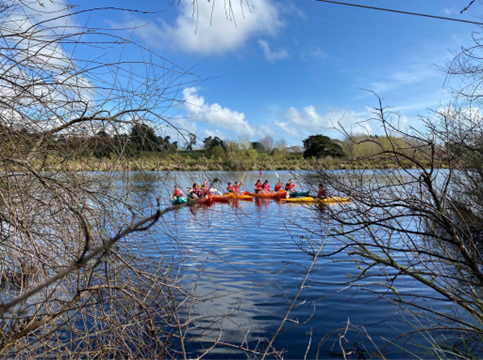
- RASING THE STANDARD OF GIVING <figure class=" sqs-block-image-figure intrinsic " > ‘Raising the standard of giving’ – describes the thoughtful re-examination of our giving as an important expression for our faith. We give meaningfully, not because the Church needs it (it does, of course) but because as Christians we need to give it for our own sake spiritually. Our giving connected to our: Discipleship Shared mission and vision Expression of generosity in proportion to our means. Together we are encouraging one another to think about our values, to examine or re-examine our giving habits accordingly, to make carefully thought-out decisions, and to re-arrange our priorities in using money to enable us to carry out these decisions. Money is a real responsibility. The more we have of it, the greater our responsibility. The place we give it in our lives, the purposes to which we put it, are very relevant to our Christian life. Our attitude to money and possessions provides a practical test of our love of God and for others. Often our money may be taken as a yardstick measuring the value we put upon our beliefs. Our attitudes to money, the place we give it in our lives, provide a telling clue to our Christian character. What is ‘token giving’? Giving is not primarily token by the size of the gift, but by its relationship to the financial means of the giver and how it relates to her/his intention in making it. What about ‘sacrificial giving’? Graham Redding recently wrote: “Has the concept of sacrificial giving had its day? For as long as people deem the act of giving to be an integral part of their sense of vocation, then the answer to that question must be no. What is freely and abundantly given, even at a sacrificial level, can be a joy, not a burden.”1 Sacrificial giving is best understood as generous enough to involve substantial cost, and so has real meaning to the giver. It brings to the giver a sense of fulfilment - of responsibilities faced and met. It comes only after careful thought, realisation of the issues involved, prayer and the planning that makes such a gift practicable. It makes a significant impression on the giver’s spiritual life because it brings into sharp focus the importance of spiritual values in life. So, as we move forward on the journey of faith together, let us re-examination our giving as we put our faith into action every day. [1] ‘Time to talk about responsible rather than sacrificial giving?’ Graham Redding, Otago Daily Times, 29th April 2022. https://www.odt.co.nz/opinion/time-talk-about-responsible-rather-sacrificial-giving LUMINARY Luminary is a sculptural installation by artist Auckland Karen Sewell which was installed in St John’s chapel from 29 July to 7 August this year, having earlier been shown as part of the collateral projects programme of the Venice Biennale 2022 in Italy and in Auckland, Dunedin and Christchurch. It explored the metaphor of light and light giving bodies and was an effort to revive the long-standing tradition of placing art in churches, in this case with contemporary art. It involved a large sphere illuminated in white and gold light high in the ceiling of the chapel, accompanied by a display of lumen prints, showing another aspect of light. We saw it as more than that. While providing an opportunity for people to reflect on creation and light, it was also an opportunity for St John’s to connect with the wider community and tell people about our own historic building, with its own art works of high interest such as our stained-glass window of the Good Samaritan on our north wall or Christ’s last supper, shown in the chapel. It worked well. With support from the Congregation contributing to expenses and volunteers helping to open Church, more than 300 people saw the work, including more than 200 from beyond the Congregation. Some stayed for up to half an hour and engaged well about St Johns and what we do on site. A good range of people showed interest, including many students and younger people, some who just wanted to see inside the Church which is normally not open. The sale of Karen Sewell’s donated artworks raised $207 for DCM’s work with the homeless too. A big thank you to all who helped, including to show us some other ways to connect with our community, as we want to fulfil our vision for St John’s. See the video production of the installation at St John’s in the city https://www.luminaryvenice.com/luminary-wellington-video See more at www.luminaryvenice.com David Galt <figure class=" sqs-block-image-figure intrinsic " > CHURCH CAMP 2022 This month saw our church whānau join together at Forest Lakes campground for Church Camp 2022. We were treated to lovely spring weather, a plethora of activities, and meaningful worship sessions all packed into just 2 nights! <figure class=" sqs-block-image-figure intrinsic " > Arriving on Friday night, we quickly stowed our things in our cabins, then started camp right with icebreaker games, and a session in the chapel. We got to sing along with the combined worship band and hear more about our theme of “Journeying together”. It felt apt knowing that not only had we all journeyed to Otaki to be together, but we’ve all been on our own journeys through COVID and a rapidly changing world. Games and movies and supper sufficiently tired us all out ready for what we hoped would be a good nights’ sleep in cold cabins. Saturday dawned bright and the whole day stretched before us. After breakfast it was time to welcome our day campers and get stuck into more worship. Truly, guitars and clapping and singing - such a great way to wake up! Then came a life auction; working together in multi-generational teams and trying to build a meaningful life on a (imaginary) budget created rich conversations for sure. Being a part of a ‘poorer’ group really did make our group focus on just a few, top priority qualities that make a huge difference to a good life. Digesting this while hearing more stories of people on a journey brought home how lucky we are, and how we can keep going towards more. Free time in the sun followed our time together, with kayaking, golfing, archery and more. Kids entertained and happy campers mingling together and chatting through life with smiles beaming. <figure class=" sqs-block-image-figure intrinsic " > After more games and then dinner, it was time for the long-awaited camp concert. What talent our church whānau possesses! From dancing to singing to karate to hose trumpets, it all ended with a blow out youth band jam session. What do you do when you’re alone in an elevator?? And of course, camp wouldn’t be complete without the bonfire. We saw roaring flames, gooey marshmallows, and warmth all on a beautifully still night. A perfect chance to be real, and engage with one another. <figure class=" sqs-block-image-figure intrinsic " > Sunday morning worship and we tied together our journeying theme of the weekend. All tied together like a fairy tale.Church camp had been just another casualty of the COVID cancellation era last year, and it was fantastic that we got to pick it up and revive it for this year. It seemed extra rewarding that it came following a big time of post-pandemic change and busy-ness in our lives. A huge thanks to the team of volunteers who helped plan and organise to get it going, and to all those that helped while we were there to keep things running smoothly for us all. God is definitely close when we’re moving towards Him together. Amanda Fitch A FUTURE IN THE CITY In 1853 St John’s was surrounded by paddocks, on the fringe of a new settlement town. Down the road was Te Aro Pa, and in and around Dixon St were ramshackle shanty buildings and an abattoir. Muddy roads, typhoid outbreaks and a British immigrant population were seeking a new beginning having bought land from the unscrupulous NZ Company. Meanwhile Tangata Whenua hailing from Taranaki Whanui and Te Ati Awa were slowly being disenfranchised from their land. The history of Wellington’s settlement is far from pretty. By 1893 women had the vote and there was a strong movement for social improvement. As expressed in the NZ Presbyterian magazine the ‘Christian Outlook’, the place of cities, their influence, the call to be a part of the social fabric and be Christ ‘where you are’ was strong. To ‘Make that one corner, room, house, office as like heaven as you can.’… to “Beautify it, ventilate it, drain it.’… Educate it, Amuse it, Church it. Christianise capital; dignify labour.’’ In 1895, the church was calling members to get involved in the nitty gritty and dirty parts of life, to use their capital for good. To be involved in the hard stuff, to engage in social issues and matters of justice. Not to sit back and watch, but to “Join councils and committees. Provide for the poor, the sick, and the widow. So will you serve the city." This is the whakapapa of St Johns – In the City. Fast forward to 2022. 169 years later we are asking ourselves once again, what does it mean to be part of the City? How do we be Christ’s hands and feet amongst the high-rises, the apartments, and the shadows of the City where loneliness is common? How do we provide a place of restoration in a world of hard tarmac and where open spaces are rare? How do we meaningfully share the knowledge of a loving, hope-filled God to a understandably cynical generation, who have heard more about the damage meted out by religious authority, and never had firsthand experience of the church as a loving, accepting and generous community? This is what we have been grappling with for the last year. We’ve been asking ourselves what is our future? Who do we need to be for a new generation? How do we demonstrate Christ’s message of love, hope and create a place where people feel they belong and can find respite, in order to recharge for whatever life throws at them?After much deliberation, prayerful, presbyterian debate and discussion, we agreed the following statement captured our Vision for the future:We explore and share the gospel with our dynamic neighbourhood. We create safe spaces to be, to belong, and to navigate the tough stuff. Getting to know God is a team sport – that’s why we do this together, not alone. <figure class=" sqs-block-image-figure intrinsic " > The Pohutukawa tree represents our community, our hopes and aspirations – with strong roots in God’s love building faith together, a trunk with many strands that is a place of acceptance and belonging, reaching out our branches in many diverse ways to connect with the dynamic community that surrounds our site and explore the Gospel together.Quickly moving onto Actions, we have tried to put legs on good intentions, and turn theory into practical actions providing a renewed sense of community purpose post-COVID. An interactive workshop where members got a chance to choose a project team they wanted to participate in kicked off this stage. Site and Space TeamChristmas in the Courtyard - a celebration with food, music and carols Friday 9 DecemberContact Rob Anderson or Judi Ferguson , Phone: 021 239 1702 Community Rebuild Supporting Attendance at Church Camp and Talent Show. 20 older congregation members came to church camp for the day! Awesome job team!! Whānau Night ExtensionYouth Lead Code Breaker Night, 20 November 2022 – Come along! Vision Communication and ConnectionsImproving Signage and Billboards, Contact: Elizabeth Gibbs. This group has met and made plans. Now…full steam ahead! Getting to Know our Neighbours / Understanding Our Eco System/CommunityParticipating in Wellington Heritage Week (with our Open Day on 5 November), connecting with local property developers to understand future populations. Contact: Pamela Cohen Phone: 027 440 1838 Fiona Purchas NOTABLE MENTIONS New MembersAnjali George, Robyn Albertson Pearse Lane for receiving the Chief Scout Award, as well as a Karori Youth Award and MVP for his Football season with Wellington College. Alice Carter won Hutt singing competition and sang in the national Memorial Service for QEII Leon Scohpa (Son of Richard Hpa and Chantelle Scoon) for his Baptism. Bhanu Pancha for her Baptism
- Accepted from News - St John's in the City Presbyterian Church by feedreader
- Tagged as:
- karori
- covid-19
St John's, Willis Street, Te Aro, Wellington, Wellington City, Wellington, 6011, New Zealand (OpenStreetMap)
-
-
-
Ngā Kōrero - Latest Stories from DCM
- Downtown Community Ministry
- 96 Ngā Kōrero - Latest Stories from DCM p{ margin:10px 0; padding:0; } table{ border-collapse:collapse; } h1,h2,h3,h4,h5,h6{ display:block; margin:0; padding:0; } img,a img{ border:0; height:auto; outline:none; text-decoration:none; } body,#bodyTable,#bodyCell{ height:100%; margin:0; padding:0; width:100%; } .mcnPreviewText{ display:none !important; } #outlook a{ padding:0; } img{ -ms-interpolation-mode:bicubic; } table{ mso-table-lspace:0pt; mso-table-rspace:0pt; } .ReadMsgBody{ width:100%; } .ExternalClass{ width:100%; } p,a,li,td,blockquote{ mso-line-height-rule:exactly; } a[href^=tel],a[href^=sms]{ color:inherit; cursor:default; text-decoration:none; } p,a,li,td,body,table,blockquote{ -ms-text-size-adjust:100%; -webkit-text-size-adjust:100%; } .ExternalClass,.ExternalClass p,.ExternalClass td,.ExternalClass div,.ExternalClass span,.ExternalClass font{ line-height:100%; } a[x-apple-data-detectors]{ color:inherit !important; text-decoration:none !important; font-size:inherit !important; font-family:inherit !important; font-weight:inherit !important; line-height:inherit !important; } .templateContainer{ max-width:600px !important; } a.mcnButton{ display:block; } .mcnImage,.mcnRetinaImage{ vertical-align:bottom; } .mcnTextContent{ word-break:break-word; } .mcnTextContent img{ height:auto !important; } .mcnDividerBlock{ table-layout:fixed !important; } h1{ color:#222222; font-family:Helvetica; font-size:40px; font-style:normal; font-weight:bold; line-height:150%; letter-spacing:normal; text-align:center; } h2{ color:#222222; font-family:Helvetica; font-size:34px; font-style:normal; font-weight:bold; line-height:150%; letter-spacing:normal; text-align:center; } h3{ color:#444444; font-family:Helvetica; font-size:22px; font-style:normal; font-weight:bold; line-height:150%; letter-spacing:normal; text-align:center; } h4{ color:#949494; font-family:Georgia; font-size:20px; font-style:italic; font-weight:normal; line-height:125%; letter-spacing:normal; text-align:center; } #templateHeader{ background-color:#07486a; background-image:none; background-repeat:no-repeat; background-position:50% 50%; background-size:cover; border-top:0; border-bottom:0; padding-top:54px; padding-bottom:54px; } .headerContainer{ background-color:transparent; background-image:none; background-repeat:no-repeat; background-position:center; background-size:cover; border-top:0; border-bottom:0; padding-top:0; padding-bottom:0; } .headerContainer .mcnTextContent,.headerContainer .mcnTextContent p{ color:#757575; font-family:Helvetica; font-size:16px; line-height:150%; text-align:left; } .headerContainer .mcnTextContent a,.headerContainer .mcnTextContent p a{ color:#007C89; font-weight:normal; text-decoration:underline; } #templateBody{ background-color:#transparent; background-image:none; background-repeat:no-repeat; background-position:center; background-size:cover; border-top:0; border-bottom:0; padding-top:27px; padding-bottom:54px; } .bodyContainer{ background-color:#transparent; background-image:none; background-repeat:no-repeat; background-position:center; background-size:cover; border-top:0; border-bottom:0; padding-top:0; padding-bottom:0; } .bodyContainer .mcnTextContent,.bodyContainer .mcnTextContent p{ color:#757575; font-family:Helvetica; font-size:16px; line-height:150%; text-align:left; } .bodyContainer .mcnTextContent a,.bodyContainer .mcnTextContent p a{ color:#007C89; font-weight:normal; text-decoration:underline; } #templateFooter{ background-color:#07486a; background-image:none; background-repeat:no-repeat; background-position:center; background-size:cover; border-top:0; border-bottom:0; padding-top:45px; padding-bottom:63px; } .footerContainer{ background-color:transparent; background-image:none; background-repeat:no-repeat; background-position:center; background-size:cover; border-top:0; border-bottom:0; padding-top:0; padding-bottom:0; } .footerContainer .mcnTextContent,.footerContainer .mcnTextContent p{ color:#FFFFFF; font-family:Helvetica; font-size:12px; line-height:150%; text-align:center; } .footerContainer .mcnTextContent a,.footerContainer .mcnTextContent p a{ color:#FFFFFF; font-weight:normal; text-decoration:underline; } @media only screen and (min-width:768px){ .templateContainer{ width:600px !important; } } @media only screen and (max-width: 480px){ body,table,td,p,a,li,blockquote{ -webkit-text-size-adjust:none !important; } } @media only screen and (max-width: 480px){ body{ width:100% !important; min-width:100% !important; } } @media only screen and (max-width: 480px){ .mcnRetinaImage{ max-width:100% !important; } } @media only screen and (max-width: 480px){ .mcnImage{ width:100% !important; } } @media only screen and (max-width: 480px){ .mcnCartContainer,.mcnCaptionTopContent,.mcnRecContentContainer,.mcnCaptionBottomContent,.mcnTextContentContainer,.mcnBoxedTextContentContainer,.mcnImageGroupContentContainer,.mcnCaptionLeftTextContentContainer,.mcnCaptionRightTextContentContainer,.mcnCaptionLeftImageContentContainer,.mcnCaptionRightImageContentContainer,.mcnImageCardLeftTextContentContainer,.mcnImageCardRightTextContentContainer,.mcnImageCardLeftImageContentContainer,.mcnImageCardRightImageContentContainer{ max-width:100% !important; width:100% !important; } } @media only screen and (max-width: 480px){ .mcnBoxedTextContentContainer{ min-width:100% !important; } } @media only screen and (max-width: 480px){ .mcnImageGroupContent{ padding:9px !important; } } @media only screen and (max-width: 480px){ .mcnCaptionLeftContentOuter .mcnTextContent,.mcnCaptionRightContentOuter .mcnTextContent{ padding-top:9px !important; } } @media only screen and (max-width: 480px){ .mcnImageCardTopImageContent,.mcnCaptionBottomContent:last-child .mcnCaptionBottomImageContent,.mcnCaptionBlockInner .mcnCaptionTopContent:last-child .mcnTextContent{ padding-top:18px !important; } } @media only screen and (max-width: 480px){ .mcnImageCardBottomImageContent{ padding-bottom:9px !important; } } @media only screen and (max-width: 480px){ .mcnImageGroupBlockInner{ padding-top:0 !important; padding-bottom:0 !important; } } @media only screen and (max-width: 480px){ .mcnImageGroupBlockOuter{ padding-top:9px !important; padding-bottom:9px !important; } } @media only screen and (max-width: 480px){ .mcnTextContent,.mcnBoxedTextContentColumn{ padding-right:18px !important; padding-left:18px !important; } } @media only screen and (max-width: 480px){ .mcnImageCardLeftImageContent,.mcnImageCardRightImageContent{ padding-right:18px !important; padding-bottom:0 !important; padding-left:18px !important; } } @media only screen and (max-width: 480px){ .mcpreview-image-uploader{ display:none !important; width:100% !important; } } @media only screen and (max-width: 480px){ h1{ font-size:30px !important; line-height:125% !important; } } @media only screen and (max-width: 480px){ h2{ font-size:26px !important; line-height:125% !important; } } @media only screen and (max-width: 480px){ h3{ font-size:20px !important; line-height:150% !important; } } @media only screen and (max-width: 480px){ h4{ font-size:18px !important; line-height:150% !important; } } @media only screen and (max-width: 480px){ .mcnBoxedTextContentContainer .mcnTextContent,.mcnBoxedTextContentContainer .mcnTextContent p{ font-size:14px !important; line-height:150% !important; } } @media only screen and (max-width: 480px){ .headerContainer .mcnTextContent,.headerContainer .mcnTextContent p{ font-size:16px !important; line-height:150% !important; } } @media only screen and (max-width: 480px){ .bodyContainer .mcnTextContent,.bodyContainer .mcnTextContent p{ font-size:16px !important; line-height:150% !important; } } @media only screen and (max-width: 480px){ .footerContainer .mcnTextContent,.footerContainer .mcnTextContent p{ font-size:14px !important; line-height:150% !important; } } Supporting the most marginalised this Christmas communities where whānau are housed, connected, valued and thriving About Us Contact Supporting the most marginalised this Christmas We have almost made it through another challenging year at DCM. I am proud of the way our team has delivered our vision – for communities where whānau are housed, connected, valued and thriving – regardless of everything the ongoing pandemic has thrown at us. I am also proud of the courage displayed by the people we work with. They come to DCM because they genuinely feel welcome here, and because the practical mahi we do makes a huge difference in their lives. But it is when whānau are housed that true transformation takes place. This is why DCM has always believed in ‘Housing First’ – dramatically improved wellbeing comes from having a permanent roof over your head. You shouldn’t have to earn a home – you have a human right to have one. At DCM, it all starts at Te Hāpai, our hauora-focussed, week day services at 2 Lukes Lane. Read on for the story of just one day at Te Hāpai, where the most marginalised and vulnerable people in our city come. Stephen <!-- --> Another day in the life of Te Hāpai Te Hāpai – which means “to lift up” – is a safe, welcoming place where people who are rough sleeping in Wellington are supported on a journey to housing and wellbeing. DCM began Te Hāpai in 2015 amid growing concerns from the community when a number of Wellington drop-in services closed. But nobody just ‘drops in’ to DCM – our hope is that everyone who walks through our door is lifted up, so they can then engage with the services available at Te Hāpai every week day. These services have a hauora-focus – by providing a safe and supportive environment, we build relationships to encourage people to take the steps needed to be well, and to thrive. Tea, coffee and kai helps, and Tanoa has carefully set up everything for the day. Our team know that kai is a great way to build connections with people. It can be easier to have a chat about someone’s housing needs over a cuppa, especially on a cold Wellington day. DCM’s on-site team gather at 8:45am for a briefing. Rowan is our team leader today, and talks us through what’s happening. We have a carving course upstairs, some manuhiri visiting, and Jo from MSD will also join us, to work through any issues people may have, from getting on a benefit or on the housing waitlist, through to accessing a special needs grant. There are a couple of whānau the team are looking out for today, including someone Rowan and Jenny need to catch up with. Everyone is welcome at Te Hāpai, even if they are excluded from other services. We employ a ‘high tolerance, low threshold’ approach. If someone is having a bad day, they are still welcome to come back on another day. Accessibility and inclusivity are important parts of DCM’s kaupapa. At 9am, Clifton, who is taking part in the carving course, calls us to waiata with one of the instruments the team has created. We know that these sounds were once heard frequently around our building on Lukes Lane, which sits on the site of the historic Te Aro Pā. The entire DCM team gathers outside for waiata. Whaea Jenny, DCM’s Toa, leads the gathering crowd, letting us know what is happening at Te Hāpai today. Jenny reminds everyone to treat each other with respect – “Remember – manaakitanga, whānau!” “Kia ora, nan.” At the door, everyone’s name is recorded. Kaimahi ask how everyone is feeling; if anyone says they’re unwell, we will chat to them out in the courtyard. COVID is still a feature in Aotearoa, and DCM takes extra precautions. For example, if someone would like to see one of the Te Aro Health nurses, they will need to mask up. At the welcome desk, things quickly get busy. A man walks up – “I need to talk to someone about my housing.” Kaimahi take him to a private space to talk through the issues he is facing. Someone else says he has a toothache and needs to see the dentist. DCM has its own emergency dental service, but because it relies on the expertise of volunteer dentists, is only available once or twice a week. He is booked in to come back for treatment on another day. Others are here today for kai, but especially for kōrero. Carl likes to make and share his own crosswords, but today he shares an anagram – ‘DUMP OLD RANT’. Carl says the words are a hint at who this political figure may be. Te Hāpai is a place where DCM’s teams can both refer, and – helpfully – find people. DCM’s Toru Atu (Outreach) team connects with people who are rough sleeping and street begging wherever they may happen to be. They often send people down to Te Hāpai, where members of their team provide familiar faces. Kai helps as a drawcard, as does the free internet, and all the practical programmes DCM provides. Need ID? A bank account? Food parcel? Housing? Nurse, audiologist, dentist? You’ve come to the right place! DCM does it all, and does whatever it takes, to connect whānau to the supports they need. Other DCM teams pop by Te Hāpai to find whānau. Aro Mai Housing First kaimahi catch up with people here, especially if they need to access one of the many on-site health services. Today Johnny has dropped in, and Jenny gives his key worker Penny a call to come by and see him. Penny works with DCM’s Noho Pai (Sustaining Tenancies) team, supporting newly housed and vulnerable tenants within their own communities. Penny encourages some of these whānau to come to Te Hāpai on a Monday or Friday when Te Awatea – which means “the awakening of the dawn” – is running. Te Awatea is a group that aims to reduce the harm associated with substance abuse. People are welcome to come and go from the meeting, but 1-1 counselling is also available when people are ready to take the next step and talk to one of DCM’s expert AOD practitioners. DCM also receives visitors from many other agencies and services. Often nurses from TACT (Team for Assertive Community Treatment) come by, looking for whānau in need of their monthly depot – slow-release medication to help treat people for mental illnesses. Just as we have with MSD today, DCM will make a private room available for the TACT Team. Accessibility is what it’s all about at Te Hāpai, but perhaps most important is inclusivity. No one is judged here – and everyone is made to feel welcome. DCM takes this inclusivity to the next level by employing people who have been homeless themselves – their commitment to doing what it takes to become well and then go on to support others on a journey to housing and wellbeing is inspiring. Our day is winding down at Te Hāpai, and participants in the carving course are ready for some lunch. Like many of the endeavours we undertake at Te Hāpai, this mahi is only possible thanks to donations from the people of Wellington. One example is the St. John’s in the City Outreach Committee who funded our carving course, providing access to culture that is often absent for the whānau DCM works with. We have enjoyed seeing the participants in the carving course thrive – having grown in confidence, they will now go on to share their knowledge with others. Carving course at DCM: Sam from Wānanga Taonga Puoro ki Pōneke led us with his beautiful and gentle way of teaching, while we grew in confidence sharing this experience together. Outside in the courtyard Matt bumps into Piripi, who is currently rough sleeping. “What do you think of Te Hāpai – do you feel lifted up when you come here?” Piripi gets straight to the point: “DCM is awesome – you’re always there when we need you. It’s a place where everyone can come, because everyone is welcome. There are people out there who are kind of stuck, but your staff never give up on anyone.” For DCM’s kaimahi, it’s never just another day at the office. Our vision is for communities where whānau are housed, connected, valued, and thriving. We feel privileged to see this vision become a reality each and every day at the very special place that is Te Hāpai. <!-- --> We need your help more than ever We are worried about our whānau in the face of the rising cost of living. When you already have so little to begin with, the shocks from global crises will have a greater impact in every way. But DCM will be here to support them, and we know you will too. Our Te Hāpai service is not funded by central or local government contracts – but by YOU. This is why DCM’s byline is “Together we can end homelessness”. If you are in a position to help, here are some ways you can support us: Support DCM Together, in these most challenging of times, we will continue to empower those who are homeless or at risk of becoming homeless to reach their housing and social aspirations. Ngā mihi o te tau hou ki a tātou, Stephen Turnock Manahautū <!-- --> Nāku te rourou, nāu te rourou, ka ora ai te iwi. With your basket and my basket, the people will thrive. <!-- --> Copyright © 2022 DCM. All rights reserved. Our mailing address is: DCMPO Box 6133Marion SqWellington, Wellington 6011 New ZealandAdd us to your address book Want to change how you receive these emails? You can update your preferences or unsubscribe from this list.
- Accepted from DCM alerts archive by feedreader
- Tagged as:
- covid-19
-
-
-
November Update from DCM - Together we can end homelessness
- Downtown Community Ministry
- 96 November Update from DCM - Together we can end homelessness p{ margin:10px 0; padding:0; } table{ border-collapse:collapse; } h1,h2,h3,h4,h5,h6{ display:block; margin:0; padding:0; } img,a img{ border:0; height:auto; outline:none; text-decoration:none; } body,#bodyTable,#bodyCell{ height:100%; margin:0; padding:0; width:100%; } .mcnPreviewText{ display:none !important; } #outlook a{ padding:0; } img{ -ms-interpolation-mode:bicubic; } table{ mso-table-lspace:0pt; mso-table-rspace:0pt; } .ReadMsgBody{ width:100%; } .ExternalClass{ width:100%; } p,a,li,td,blockquote{ mso-line-height-rule:exactly; } a[href^=tel],a[href^=sms]{ color:inherit; cursor:default; text-decoration:none; } p,a,li,td,body,table,blockquote{ -ms-text-size-adjust:100%; -webkit-text-size-adjust:100%; } .ExternalClass,.ExternalClass p,.ExternalClass td,.ExternalClass div,.ExternalClass span,.ExternalClass font{ line-height:100%; } a[x-apple-data-detectors]{ color:inherit !important; text-decoration:none !important; font-size:inherit !important; font-family:inherit !important; font-weight:inherit !important; line-height:inherit !important; } .templateContainer{ max-width:600px !important; } a.mcnButton{ display:block; } .mcnImage,.mcnRetinaImage{ vertical-align:bottom; } .mcnTextContent{ word-break:break-word; } .mcnTextContent img{ height:auto !important; } .mcnDividerBlock{ table-layout:fixed !important; } h1{ color:#222222; font-family:Helvetica; font-size:40px; font-style:normal; font-weight:bold; line-height:150%; letter-spacing:normal; text-align:center; } h2{ color:#222222; font-family:Helvetica; font-size:34px; font-style:normal; font-weight:bold; line-height:150%; letter-spacing:normal; text-align:center; } h3{ color:#444444; font-family:Helvetica; font-size:22px; font-style:normal; font-weight:bold; line-height:150%; letter-spacing:normal; text-align:center; } h4{ color:#949494; font-family:Georgia; font-size:20px; font-style:italic; font-weight:normal; line-height:125%; letter-spacing:normal; text-align:center; } #templateHeader{ background-color:#07486a; background-image:none; background-repeat:no-repeat; background-position:50% 50%; background-size:cover; border-top:0; border-bottom:0; padding-top:54px; padding-bottom:54px; } .headerContainer{ background-color:transparent; background-image:none; background-repeat:no-repeat; background-position:center; background-size:cover; border-top:0; border-bottom:0; padding-top:0; padding-bottom:0; } .headerContainer .mcnTextContent,.headerContainer .mcnTextContent p{ color:#757575; font-family:Helvetica; font-size:16px; line-height:150%; text-align:left; } .headerContainer .mcnTextContent a,.headerContainer .mcnTextContent p a{ color:#007C89; font-weight:normal; text-decoration:underline; } #templateBody{ background-color:#transparent; background-image:none; background-repeat:no-repeat; background-position:center; background-size:cover; border-top:0; border-bottom:0; padding-top:27px; padding-bottom:54px; } .bodyContainer{ background-color:#transparent; background-image:none; background-repeat:no-repeat; background-position:center; background-size:cover; border-top:0; border-bottom:0; padding-top:0; padding-bottom:0; } .bodyContainer .mcnTextContent,.bodyContainer .mcnTextContent p{ color:#757575; font-family:Helvetica; font-size:16px; line-height:150%; text-align:left; } .bodyContainer .mcnTextContent a,.bodyContainer .mcnTextContent p a{ color:#007C89; font-weight:normal; text-decoration:underline; } #templateFooter{ background-color:#07486a; background-image:none; background-repeat:no-repeat; background-position:center; background-size:cover; border-top:0; border-bottom:0; padding-top:45px; padding-bottom:63px; } .footerContainer{ background-color:transparent; background-image:none; background-repeat:no-repeat; background-position:center; background-size:cover; border-top:0; border-bottom:0; padding-top:0; padding-bottom:0; } .footerContainer .mcnTextContent,.footerContainer .mcnTextContent p{ color:#FFFFFF; font-family:Helvetica; font-size:12px; line-height:150%; text-align:center; } .footerContainer .mcnTextContent a,.footerContainer .mcnTextContent p a{ color:#FFFFFF; font-weight:normal; text-decoration:underline; } @media only screen and (min-width:768px){ .templateContainer{ width:600px !important; } } @media only screen and (max-width: 480px){ body,table,td,p,a,li,blockquote{ -webkit-text-size-adjust:none !important; } } @media only screen and (max-width: 480px){ body{ width:100% !important; min-width:100% !important; } } @media only screen and (max-width: 480px){ .mcnRetinaImage{ max-width:100% !important; } } @media only screen and (max-width: 480px){ .mcnImage{ width:100% !important; } } @media only screen and (max-width: 480px){ .mcnCartContainer,.mcnCaptionTopContent,.mcnRecContentContainer,.mcnCaptionBottomContent,.mcnTextContentContainer,.mcnBoxedTextContentContainer,.mcnImageGroupContentContainer,.mcnCaptionLeftTextContentContainer,.mcnCaptionRightTextContentContainer,.mcnCaptionLeftImageContentContainer,.mcnCaptionRightImageContentContainer,.mcnImageCardLeftTextContentContainer,.mcnImageCardRightTextContentContainer,.mcnImageCardLeftImageContentContainer,.mcnImageCardRightImageContentContainer{ max-width:100% !important; width:100% !important; } } @media only screen and (max-width: 480px){ .mcnBoxedTextContentContainer{ min-width:100% !important; } } @media only screen and (max-width: 480px){ .mcnImageGroupContent{ padding:9px !important; } } @media only screen and (max-width: 480px){ .mcnCaptionLeftContentOuter .mcnTextContent,.mcnCaptionRightContentOuter .mcnTextContent{ padding-top:9px !important; } } @media only screen and (max-width: 480px){ .mcnImageCardTopImageContent,.mcnCaptionBottomContent:last-child .mcnCaptionBottomImageContent,.mcnCaptionBlockInner .mcnCaptionTopContent:last-child .mcnTextContent{ padding-top:18px !important; } } @media only screen and (max-width: 480px){ .mcnImageCardBottomImageContent{ padding-bottom:9px !important; } } @media only screen and (max-width: 480px){ .mcnImageGroupBlockInner{ padding-top:0 !important; padding-bottom:0 !important; } } @media only screen and (max-width: 480px){ .mcnImageGroupBlockOuter{ padding-top:9px !important; padding-bottom:9px !important; } } @media only screen and (max-width: 480px){ .mcnTextContent,.mcnBoxedTextContentColumn{ padding-right:18px !important; padding-left:18px !important; } } @media only screen and (max-width: 480px){ .mcnImageCardLeftImageContent,.mcnImageCardRightImageContent{ padding-right:18px !important; padding-bottom:0 !important; padding-left:18px !important; } } @media only screen and (max-width: 480px){ .mcpreview-image-uploader{ display:none !important; width:100% !important; } } @media only screen and (max-width: 480px){ h1{ font-size:30px !important; line-height:125% !important; } } @media only screen and (max-width: 480px){ h2{ font-size:26px !important; line-height:125% !important; } } @media only screen and (max-width: 480px){ h3{ font-size:20px !important; line-height:150% !important; } } @media only screen and (max-width: 480px){ h4{ font-size:18px !important; line-height:150% !important; } } @media only screen and (max-width: 480px){ .mcnBoxedTextContentContainer .mcnTextContent,.mcnBoxedTextContentContainer .mcnTextContent p{ font-size:14px !important; line-height:150% !important; } } @media only screen and (max-width: 480px){ .headerContainer .mcnTextContent,.headerContainer .mcnTextContent p{ font-size:16px !important; line-height:150% !important; } } @media only screen and (max-width: 480px){ .bodyContainer .mcnTextContent,.bodyContainer .mcnTextContent p{ font-size:16px !important; line-height:150% !important; } } @media only screen and (max-width: 480px){ .footerContainer .mcnTextContent,.footerContainer .mcnTextContent p{ font-size:14px !important; line-height:150% !important; } } Fiona's story Fiona's story My name is Fiona, and I am very proud to be part of the team at DCM. I can’t tell you how much it has meant to me to have this job, and I just love it! But I have always been a worker. I was born in Christchurch in 1962; I was the only girl and grew up with my six brothers. We had to earn our own money because mum and dad were pretty broke. Dad was a slaughter man but it was seasonal work, and my mum was a nurse. We used to go around the streets with home grown veges in a wheelbarrow, my brothers and I. We did raspberry picking on weekends, and I had a paper round. I then went into the shearing sheds, shearing sheep with my brothers. From the age of 15, I was a gang member. Robert Muldoon set up a scheme to help gangs back then, to help them get into work and off the street. I started my apprenticeship to become a chef – it took four years: the first year in the vege room, the second year washing dishes, third year kitchen-hand and in the fourth year I went from third cook, to second to first cook. My gangster career ended when I got a long prison sentence. I made the decision right there and then: I don’t need the gang. I would stand on my own two feet – finally. I used the system to better myself. I joined kapa haka which built my confidence and self-esteem. I put my head down, supported myself in prison by bone carving, and went to all the groups I could think of to sort out my issues. I sat School Cert and academically I grew. But after all those years in jail, when I got out, I realised I still needed to grow emotionally. DCM was there for me when I needed them most. Let me tell you about that. I moved to Wellington 12 years ago where I married my husband. He got cancer and I looked after him for 3 months before he passed away. That led to me abusing alcohol. I moved to a one bedroom flat in Island Bay where I thought I could start over but things went downhill from there. I lost my job, didn’t pay my rent and found myself on the verge of homelessness, and suicide. My power was getting cut off and I was told that I couldn’t go on a benefit for 13 weeks. I heard about this organisation in the city called DCM, so I walked in from Island Bay, asking for help along the way. I believe if I didn’t come down Lukes Lane that day, I would have given up there and then. That’s when my life changed. DCM worked with me to help me get into a new place which I’m still in today. I got on to DCM’s money management programme which helped me pay my rent and bills on time, and debts as well. I’m debt-free today! And I have savings for the first time too. It’s amazing. There are many other great memories of my time as taumai at DCM. The Te Reo classes were very special, and I just loved being part of the DCM Ukes - the rehearsals at Wesley Church, performing at Thanksgiving and other events at DCM. I got a lot out of the self-management for health and wellbeing course I did at DCM too. Yup, DCM supported me when I needed it most, and now I am honoured to be able to support other taumai. I began by volunteering to cook at the DCM Bookfair. On Christmas Day I was part of the team at Te Aro Community Centre feeding the whānau. Then DCM started running peer support courses, and several of the team suggested that I should take part. After the course, I finished off my CV and applied for some of the roles going. I started as a paid support worker – a kaiawhina – at DCM in February 2020, just before the COVID lock-down. During the first lock-down I was working with taumai in emergency housing. We were mainly at the old Night Shelter, doing welfare checks, and other peer support work. Back at DCM, it has just been brilliant. I love the whānau! And especially the equality – being treated the same. I’ve worked all my life but I have never before been in an environment where people are treated as equally as they are at DCM. Peer support can cover a whole lot of tasks. I can be working in Te Hāpai in the mornings, interacting with taumai. I’m there to listen, observe and support. In the afternoons, I may be out with other kaimahi on home visits. We have a lot of taumai who have recently been housed, and we go in to support them. I do the basics – cleaning and showing taumai how to clean. We’ve dealt with hoarders, people who have a lot of challenges, and people who don’t even know how to cook a piece of toast. But generally our taumai take great pride in their whare. They just need the utensils. I ask them what their favourite food is. If it’s scrambled eggs, we make sure they have a frying pan and a whisk, along with some of the basics we take for granted, like a toaster or a microwave. And I love the “Welcome to Your Whare” packs which DCM puts together for people moving in to a home. All those cleaning items are expensive for taumai. Providing them with the basics, and seeing the pride on their faces when they ki te hoe (pick up the paddle), and take care of their own whare, that is a special privilege. I am able to do more and more, to take the initiative. I have a clean driver’s licence, so I can help with driving, shopping, deliveries and home visits. I have finished a Literacy Aotearoa course and am three-quarters of the way through achieving a certificate in health and wellbeing which Paula has been helping me with. I want to do to anything I can to keep developing my skills. Because DCM has given me an amazing opportunity, and I want to grab it with both hands, and to really play my part on this very special team. Most of my work now is with the Aro Mai Housing First team, supporting people who have long histories of homelessness. Photo shoot by Gabrielle McKone. Let me tell you about one man we have housed recently. Patrick* is a long-term rough sleeper who struggles with a critical mental health condition and severe substance abuse, as well as the after-effects of traumatic experiences from his childhood. Now he has his own home – thanks to a local landlord who provided the team with a whare. Twice each week I head out with Patrick’s keyworker to check in on him; we make sure he is doing okay and looking after his whare. To begin with, there was so much about living in a house that he didn’t understand. He didn’t know how to take the washing out of the machine, hold a vacuum cleaner or wipe the benches down. It is the simple stuff that we can show him, and which makes such a difference. Things like what to do with cigarette butts – you don’t drop them on the floor when you have a whare. And we celebrate the small changes – like rather than leaving his dirty clothes scattered all over the floor, he now puts them into his washing basket. Yes, now he is really looking after his home – it looks great. This year I have also been double vaccinated – right here at DCM. It wasn’t easy for me, and it took a while to make the decision. But then we had a vaccine day with Bronwyn from Te Aro Health. I know and trust her and her team, and then I saw taumai who were getting their vaccines and they were so brave. Finally, my fellow kaiawhina Rochelle encouraged me, and we decided to do it together. I am so pleased that we did, because we can now support our taumai, and we know how much they are going to need our support when COVID hits Wellington. Our work will be even more important, and much needed. Our ultimate goal is to end homelessness and I believe we will get there. We’re all part of the solution. And the work we do here at DCM is a major part of that solution. I am proud and privileged to be part of this team. <!-- --> Jordon Jordon was recently housed thanks to another local landlord who provided a whare, and the support of our Aro Mai Housing First team. This is the first time Jordon has been housed in over a decade. When her keyworker Bella asked her what the best part of having her own whare is, she shared “Having my very own bed - being on the streets is really hard”. We love to be able to lift up taumai like Jordon who have done the hard mahi needed to get housed. Bella was able to take her out shopping thanks to those of you have have donated vouchers. Jordon got herself some items for her bathroom, sheets and two new pillows. “I am excited to be able to put bedding on the spare bed so that I can have family to come stay, hopefully my youngest son... Thank you so much guys, I really appreciate it.” Ka mau te wehi Jordon! <!-- --> Acknowledging David Zwartz At DCM’s AGM this month, we were able to acknowledge the contribution of retiring board member, David Zwartz, who joined the DCM board in 2005. A member of Temple Sinai and a past President of the New Zealand Jewish Council, David has been a passionate advocate for interfaith cooperation. He is proud of the different perspectives which are now involved in DCM’s governance, and hopes that this will continue to widen. Thank you David for all your mahi on behalf of the most marginalised people in our community. <!-- --> Re-stocking our Foodbank Kia ora rawa atu ki a koutou! Thank you to everyone who purchased items for our Foodbank re-stock on Saturday, to New World Chaffers and Wesley Church for providing the venues, and to our lovely team of volunteers who gave up their time to collect the items and sort them. If you weren’t able to get down to the city last weekend, we would love any groceries you are able to drop in to our collection bin at New World Chaffers. And our friends at Ngaio Union Church accept donations for our Foodbank on the first Saturday morning of each month. That means that you can drop some items to them this weekend. <!-- --> How can I help? As we look ahead to 2022, and a time when COVID will be in our communities and a part of our daily lives, we know that the people DCM supports will be the most impacted. They will need our support more than ever as they experience illness and isolation, many of them without any family support. If you would like to make a donation to DCM this Christmas so that we can continue to provide this level of support to the most vulnerable in the year ahead, please visit our website. If you are, or know, a landlord who would like to speak with us about providing a home for people like Patrick and Jordon, our Director, Stephen Turnock would love to hear from you. Together, and at the most challenging of times, we will continue to do something very special. <!-- --> *Not his real name. We call the people we work with taumai, meaning to settle. This reflects the journey we set out on together – to become settled, stable and well. Support DCM! Nāku te rourou, nāu te rourou, ka ora ai te iwi With your basket and my basket, the people will thrive <!-- --> Copyright © 2021 DCM. All rights reserved. Our mailing address is: DCMPO Box 6133Marion SqWellington, Wellington 6011 New ZealandAdd us to your address book Want to change how you receive these emails? You can update your preferences or unsubscribe from this list.
- Accepted from DCM alerts archive by feedreader
- Tagged as:
- island-bay
- ngaio
- covid-19
Ngaio, Wellington, Wellington City, Wellington, New Zealand (OpenStreetMap)
-
-
-
Ngā Kōrero - Latest stories from DCM
- Downtown Community Ministry
- 96 Ngā Kōrero - Latest stories from DCM p{ margin:10px 0; padding:0; } table{ border-collapse:collapse; } h1,h2,h3,h4,h5,h6{ display:block; margin:0; padding:0; } img,a img{ border:0; height:auto; outline:none; text-decoration:none; } body,#bodyTable,#bodyCell{ height:100%; margin:0; padding:0; width:100%; } .mcnPreviewText{ display:none !important; } #outlook a{ padding:0; } img{ -ms-interpolation-mode:bicubic; } table{ mso-table-lspace:0pt; mso-table-rspace:0pt; } .ReadMsgBody{ width:100%; } .ExternalClass{ width:100%; } p,a,li,td,blockquote{ mso-line-height-rule:exactly; } a[href^=tel],a[href^=sms]{ color:inherit; cursor:default; text-decoration:none; } p,a,li,td,body,table,blockquote{ -ms-text-size-adjust:100%; -webkit-text-size-adjust:100%; } .ExternalClass,.ExternalClass p,.ExternalClass td,.ExternalClass div,.ExternalClass span,.ExternalClass font{ line-height:100%; } a[x-apple-data-detectors]{ color:inherit !important; text-decoration:none !important; font-size:inherit !important; font-family:inherit !important; font-weight:inherit !important; line-height:inherit !important; } .templateContainer{ max-width:600px !important; } a.mcnButton{ display:block; } .mcnImage,.mcnRetinaImage{ vertical-align:bottom; } .mcnTextContent{ word-break:break-word; } .mcnTextContent img{ height:auto !important; } .mcnDividerBlock{ table-layout:fixed !important; } h1{ color:#222222; font-family:Helvetica; font-size:40px; font-style:normal; font-weight:bold; line-height:150%; letter-spacing:normal; text-align:center; } h2{ color:#222222; font-family:Helvetica; font-size:34px; font-style:normal; font-weight:bold; line-height:150%; letter-spacing:normal; text-align:center; } h3{ color:#444444; font-family:Helvetica; font-size:22px; font-style:normal; font-weight:bold; line-height:150%; letter-spacing:normal; text-align:center; } h4{ color:#949494; font-family:Georgia; font-size:20px; font-style:italic; font-weight:normal; line-height:125%; letter-spacing:normal; text-align:center; } #templateHeader{ background-color:#07486a; background-image:none; background-repeat:no-repeat; background-position:50% 50%; background-size:cover; border-top:0; border-bottom:0; padding-top:54px; padding-bottom:54px; } .headerContainer{ background-color:transparent; background-image:none; background-repeat:no-repeat; background-position:center; background-size:cover; border-top:0; border-bottom:0; padding-top:0; padding-bottom:0; } .headerContainer .mcnTextContent,.headerContainer .mcnTextContent p{ color:#757575; font-family:Helvetica; font-size:16px; line-height:150%; text-align:left; } .headerContainer .mcnTextContent a,.headerContainer .mcnTextContent p a{ color:#007C89; font-weight:normal; text-decoration:underline; } #templateBody{ background-color:#transparent; background-image:none; background-repeat:no-repeat; background-position:center; background-size:cover; border-top:0; border-bottom:0; padding-top:27px; padding-bottom:54px; } .bodyContainer{ background-color:#transparent; background-image:none; background-repeat:no-repeat; background-position:center; background-size:cover; border-top:0; border-bottom:0; padding-top:0; padding-bottom:0; } .bodyContainer .mcnTextContent,.bodyContainer .mcnTextContent p{ color:#757575; font-family:Helvetica; font-size:16px; line-height:150%; text-align:left; } .bodyContainer .mcnTextContent a,.bodyContainer .mcnTextContent p a{ color:#007C89; font-weight:normal; text-decoration:underline; } #templateFooter{ background-color:#07486a; background-image:none; background-repeat:no-repeat; background-position:center; background-size:cover; border-top:0; border-bottom:0; padding-top:45px; padding-bottom:63px; } .footerContainer{ background-color:transparent; background-image:none; background-repeat:no-repeat; background-position:center; background-size:cover; border-top:0; border-bottom:0; padding-top:0; padding-bottom:0; } .footerContainer .mcnTextContent,.footerContainer .mcnTextContent p{ color:#FFFFFF; font-family:Helvetica; font-size:12px; line-height:150%; text-align:center; } .footerContainer .mcnTextContent a,.footerContainer .mcnTextContent p a{ color:#FFFFFF; font-weight:normal; text-decoration:underline; } @media only screen and (min-width:768px){ .templateContainer{ width:600px !important; } } @media only screen and (max-width: 480px){ body,table,td,p,a,li,blockquote{ -webkit-text-size-adjust:none !important; } } @media only screen and (max-width: 480px){ body{ width:100% !important; min-width:100% !important; } } @media only screen and (max-width: 480px){ .mcnRetinaImage{ max-width:100% !important; } } @media only screen and (max-width: 480px){ .mcnImage{ width:100% !important; } } @media only screen and (max-width: 480px){ .mcnCartContainer,.mcnCaptionTopContent,.mcnRecContentContainer,.mcnCaptionBottomContent,.mcnTextContentContainer,.mcnBoxedTextContentContainer,.mcnImageGroupContentContainer,.mcnCaptionLeftTextContentContainer,.mcnCaptionRightTextContentContainer,.mcnCaptionLeftImageContentContainer,.mcnCaptionRightImageContentContainer,.mcnImageCardLeftTextContentContainer,.mcnImageCardRightTextContentContainer,.mcnImageCardLeftImageContentContainer,.mcnImageCardRightImageContentContainer{ max-width:100% !important; width:100% !important; } } @media only screen and (max-width: 480px){ .mcnBoxedTextContentContainer{ min-width:100% !important; } } @media only screen and (max-width: 480px){ .mcnImageGroupContent{ padding:9px !important; } } @media only screen and (max-width: 480px){ .mcnCaptionLeftContentOuter .mcnTextContent,.mcnCaptionRightContentOuter .mcnTextContent{ padding-top:9px !important; } } @media only screen and (max-width: 480px){ .mcnImageCardTopImageContent,.mcnCaptionBottomContent:last-child .mcnCaptionBottomImageContent,.mcnCaptionBlockInner .mcnCaptionTopContent:last-child .mcnTextContent{ padding-top:18px !important; } } @media only screen and (max-width: 480px){ .mcnImageCardBottomImageContent{ padding-bottom:9px !important; } } @media only screen and (max-width: 480px){ .mcnImageGroupBlockInner{ padding-top:0 !important; padding-bottom:0 !important; } } @media only screen and (max-width: 480px){ .mcnImageGroupBlockOuter{ padding-top:9px !important; padding-bottom:9px !important; } } @media only screen and (max-width: 480px){ .mcnTextContent,.mcnBoxedTextContentColumn{ padding-right:18px !important; padding-left:18px !important; } } @media only screen and (max-width: 480px){ .mcnImageCardLeftImageContent,.mcnImageCardRightImageContent{ padding-right:18px !important; padding-bottom:0 !important; padding-left:18px !important; } } @media only screen and (max-width: 480px){ .mcpreview-image-uploader{ display:none !important; width:100% !important; } } @media only screen and (max-width: 480px){ h1{ font-size:30px !important; line-height:125% !important; } } @media only screen and (max-width: 480px){ h2{ font-size:26px !important; line-height:125% !important; } } @media only screen and (max-width: 480px){ h3{ font-size:20px !important; line-height:150% !important; } } @media only screen and (max-width: 480px){ h4{ font-size:18px !important; line-height:150% !important; } } @media only screen and (max-width: 480px){ .mcnBoxedTextContentContainer .mcnTextContent,.mcnBoxedTextContentContainer .mcnTextContent p{ font-size:14px !important; line-height:150% !important; } } @media only screen and (max-width: 480px){ .headerContainer .mcnTextContent,.headerContainer .mcnTextContent p{ font-size:16px !important; line-height:150% !important; } } @media only screen and (max-width: 480px){ .bodyContainer .mcnTextContent,.bodyContainer .mcnTextContent p{ font-size:16px !important; line-height:150% !important; } } @media only screen and (max-width: 480px){ .footerContainer .mcnTextContent,.footerContainer .mcnTextContent p{ font-size:14px !important; line-height:150% !important; } } This month’s update takes a slightly different form as we look into New Zealand’s housing crisis from different angles. Building communities where whānau are housed, connected, valued and thriving About Us Contact New Zealand’s housing crisis This month’s update takes a slightly different form as we look into New Zealand’s housing crisis from different angles. We have been talking to everyone from the decision makers, to private landlords helping solve the housing crisis, to those impacted by homelessness – the people we work with at DCM each and every day. Parties agree on supply, differ on other solutions New Zealand’s main political parties are continuing to debate solutions to the country’s housing crisis as new research shows that bipartisan housing intensification law changes are long overdue. Research by the New Zealand Infrastructure Commission, Te Waihanga, reveals that house prices have accelerated since 1980 because New Zealand cities stopped expanding and didn’t develop enough infill housing. Both Labour and National supported legislation in December 2021 allowing buildings of up to three storeys in cities without any need for resource consent. Houses in the Lyall Bay suburb of Wellington, New Zealand. Photographer: Mark Coote/Bloomberg. CC BY. But the parties disagree on other solutions to the housing crisis, and National plan to reduce the bright-line test from 10 years to two, and revisit interest deductibility rule changes for property investors, should they be elected in 2023. National Party Housing Spokesperson Chris Bishop says advice from officials is that the bright-line and interest deductibility changes put pressure on the private rental market. Housing Minister Megan Woods disputes this. “There is no evidence that those measures are putting pressure on the market,” says Woods. “We know that rather than leaving the rental market, multiple property owners account for 36.2% of activity (Q3 2022), close to the long-term average since 2017 of 36.5%. “It’s important to note the changes were made to discourage speculators and even the playing field for first home buyers.” In early 2018, the Labour-led government also banned foreign speculators from buying housing in New Zealand, but Bishop says they were never a big part of the market. “Labour for quite a long time didn’t want to deal with the underlying issue, which is supply. They have this thing around foreign buyers, and they have this thing around landlords – who they call speculators – when the actual issue is just supply,” Bishop says. Supply is where the parties agree, though the bipartisan housing intensification law changes are facing opposition from local councils, and National leader Christopher Luxon has also hinted at revisiting the rules. Bishop says National is committed to housing intensification. “The importance of this is that it gives certainty to the market. To developers, and people doing housing, that there’s now a shared commitment across the two main political parties that housing supply is really important.” Woods agrees. “That’s why this Government brought in the National Policy Statement on Urban Development (NPS-UD) to allow more housing in areas where people want to live. In urban centres close to work, schools, public transport, and other amenities. “Similarly, the legislation that Parliament passed last year with near-unanimity, and acceleration of the NPS-UD, allows for more housing types and density to be built to meet the needs of New Zealanders.” Despite the progress made with private builds, public housing has lagged, with emergency housing a dire prospect for some, as revealed in Rotorua after an investigation by TVNZ’s Sunday programme. Labour has built 10,328 additional public homes since coming into office to date, but with 26,664 applicants on the housing register as of 30 June 2022, permanent housing remains out of reach for many. Bishop says he plans to eliminate housing waitlists altogether, but that it must be done through supply. “The ultimate answer to everything related to housing in New Zealand is more houses. Everything comes back to that,” says Bishop. “You don’t have enough houses for people to buy, they end up renting. When you have more people renting – and less rental properties – rents go up. Some people can’t afford those rents, they end up on the waitlist. The waitlist goes up – there’s not enough social housing – people end up in motels.” Kiwibank has predicted that New Zealand will have a housing surplus at some stage over the next 12 months while building activity outstrips demand. Bishop says he laughed out loud when he heard the Kiwibank prediction. “My response is we will have a surplus when no one lives in a car and no one lives in a motel. And everyone who needs a social house can get one.” Woods looks to the record level of consents made – 50,736 dwellings consented in the year to June 2022, compared to 30,453 in the year to June 2017 – as significant progress. “We’re also mindful that a consent is not a house until it is completed. We’re closely monitoring building activity, particularly as there are headwinds due to global supply issues and other economic factors,” says Woods. “There is more work still to be done to ensure that the right types of dwellings are built where they are needed, and that they are affordable – whether for homeowners or renters.” This article was written by DCM's Kaiarataki Pūrongo Matthew Mawkes as part of a journalism course at Massey University. Special thanks to Lee-Ann Duncan for the newswriting tips. <!-- --> The landlords helping solve the housing crisis Matthew Ryan has been in the news a lot lately – you might have read about him on Stuff talking about property prices, or heard him on his fortnightly Hot Property podcast on Newstalk ZB. Often referred to as a ‘mega landlord’, what may surprise many is that Matthew is helping solve New Zealand’s housing crisis by providing properties to DCM’s Aro Mai Housing First team. Matthew Ryan is our largest landlord, currently providing housing for 17 taumai. Matthew was born in Wellington in 1964. He has a lot of love for the city, where he has spent most of his life. He grew up in a working-class family, working at McDonald’s in Porirua from 1981-1985, where he made $4.34 an hour. “I’ve probably come from a bit of a dysfunctional family,” Matthew reflects. “It was a hard upbringing. I guess in adversity sometimes you have to rise above it. You can go two ways with things. You can decide to be a part of it, or you can make it work for you.” By 1987, Matthew had brought his first property with a friend. In the late 1980s, he relocated to London where he sold real estate. “It was a recession time in the United Kingdom, but it was fascinating living in a big city like that – all the opportunity,” Matthew says. “I was in my early 20s. I arrived with $5,000 – about £2,500 – and I ended up buying three properties by the end of it. I wish I had them now of course!” Back in New Zealand Matthew continued working in real estate – becoming a bona fide property expert in the process – and his focus is now on Wellington. “It’s a bit easier to manage houses where you live,” he says. Matthew is Aro Mai Housing First’s largest landlord, currently providing housing for 17 taumai. Our Housing First team started by taking a few properties, and when that worked out, Matthew offered more – in particular in the Hutt Valley, where a large number of taumai have been housed. “The relationship blossomed,” Matthew says. “Because it makes sense. “It’s taken a while to understand how it all works. Like a lot of things, it evolves as it goes, but I now have a better understanding of how Aro Mai works, and who’s responsible for what.” It takes support from DCM, Emerge Aotearoa as a CHP (Community Housing Provider), and property owners, to make Aro Mai Housing First work. And there are challenges, such as obtaining insurance, which infuriates Matthew. “If an insurance company is prepared to insure a building on the basis that I pick John and Mary Smith, they’re happy enough to rent on that basis, but if I give it to Emerge Aotearoa, and they pick the same John and Mary Smith, they go, ‘No we don’t want them’. “That has to be discrimination. And that is not on, really.” But Matthew says Housing First is an attractive option for landlords, because not only are they helping solve the housing crisis by renting to people who have experienced homelessness, properties are managed for them, and they can benefit from changes to tax deductibility rules. Matthew would like to see the government step in to address the insurance issue. “If they can’t force their hand they probably need to say OK, well, we need to assist here.” In the meantime, Matthew continues to offer properties to DCM's Aro Mai Housing First team. Our vision is for a community where whānau are housed, connected, valued, and thriving. In the middle of a housing crisis, we need many more landlords just like Matthew who are truly making that vision become a reality. If you would like to know more about how you can provide homes for the people we are supporting out of homelessness, please get in touch with our Kaiārahi Whiwhinga (Property Procurement Officer) Shaun. For more information about how Housing First works, visit our website and check out the story of Dev. <!-- --> Challenging perceptions about homelessness The phone call to police was simple, but urgent – “Someone’s dead on the side of the street.” So began John’s day rough sleeping in Wellington, as social workers from DCM woke him up, the police close by their side. It was a turning point for John, who is now housed in a property provided by Wellington landlord Matthew Ryan through Aro Mai Housing First, a government-funded initiative that helps people who have experienced homelessness for at least a year get into permanent housing. Aged only 27, John has experienced a decade of living rough, and challenges the perceptions people have about homelessness, which he says is not always about addictions and mental health – though these issues have crossed his path too. For John, homelessness came about as a direct result of being kicked out of home. “Family life was rough. Especially due to the religious abuse of my mother,” says John. “I got disowned two weeks before I turned 16.” John, 27, pictured in Te Aro Park. He is now housed after a decade of homelessness through the Aro Mai Housing First initiative that recognises that it’s easier for people to deal with complex issues if they have a stable place to live. Raised Jehovah’s Witness, Martin’s teenage rebellion saw him take to the streets of Whangarei. He started self-harming and was on a suicide watch for four years. “I’ve been pissed on, I’ve been shat on, I’ve been spat on. Been abused – physically and emotionally.” Wanting a fresh start, John hitchhiked to Wellington where the lure of free coffee and internet brought him to DCM. John was able to access emergency housing and, through DCM's Aro Mai Housing First team, a permanent place of his own. “I have my own bed, a couch, a TV. I’ve never physically owned any of this stuff. My prized possession has always been my skateboard. Living inside, it’s kind of like – what am I going to do now?” John’s key focus is on his health, and he is currently going through very serious medical treatments. He looks forward to doing some training and getting into work, helping others his age who have also experienced homelessness. “Years ago I was hustling with a little sign out and this guy yells at me – ‘Get a fucking job!’ An hour or so later he comes back, sits down beside me, and we chat. I explained my history and he had suggestions. He found out I had done the yards. I said bro – don’t judge a book by its cover.” We are relieved that John has a whare of his own, where he can recuperate and focus on his wellbeing. To support people like John, we need many more staff, especially for our large and growing Aro Mai Housing First team. Not only does this team procure properties, they provide the wraparound support needed to ensure those properties are maintained, and that taumai are able to thrive. Do you know anyone who would love to work for our amazing organisation? Visit our website for more info. <!-- --> Support DCM We call the people we work with taumai, meaning to settle. This reflects the journey we set out on together – to become settled, stable and well. Nāku te rourou, nāu te rourou, ka ora ai te iwi. With your basket and my basket, the people will thrive. <!-- --> Copyright © 2022 DCM. All rights reserved. Our mailing address is: DCMPO Box 6133Marion SqWellington, Wellington 6011 New ZealandAdd us to your address book Want to change how you receive these emails? You can update your preferences or unsubscribe from this list.
- Accepted from DCM alerts archive by feedreader
- Tagged as:
- hutt-valley
- lyall-bay
- porirua
Porirua, Wellington Region, New Zealand (OpenStreetMap)
-
-
-
DCM Bookfair 2018 - One Week to Go!
- Downtown Community Ministry
- 96 DCM Bookfair 2018 - One Week to Go! p{ margin:10px 0; padding:0; } table{ border-collapse:collapse; } h1,h2,h3,h4,h5,h6{ display:block; margin:0; padding:0; } img,a img{ border:0; height:auto; outline:none; text-decoration:none; } body,#bodyTable,#bodyCell{ height:100%; margin:0; padding:0; width:100%; } .mcnPreviewText{ display:none !important; } #outlook a{ padding:0; } img{ -ms-interpolation-mode:bicubic; } table{ mso-table-lspace:0pt; mso-table-rspace:0pt; } .ReadMsgBody{ width:100%; } .ExternalClass{ width:100%; } p,a,li,td,blockquote{ mso-line-height-rule:exactly; } a[href^=tel],a[href^=sms]{ color:inherit; cursor:default; text-decoration:none; } p,a,li,td,body,table,blockquote{ -ms-text-size-adjust:100%; -webkit-text-size-adjust:100%; } .ExternalClass,.ExternalClass p,.ExternalClass td,.ExternalClass div,.ExternalClass span,.ExternalClass font{ line-height:100%; } a[x-apple-data-detectors]{ color:inherit !important; text-decoration:none !important; font-size:inherit !important; font-family:inherit !important; font-weight:inherit !important; line-height:inherit !important; } #bodyCell{ padding:10px; } .templateContainer{ max-width:600px !important; } a.mcnButton{ display:block; } .mcnImage,.mcnRetinaImage{ vertical-align:bottom; } .mcnTextContent{ word-break:break-word; } .mcnTextContent img{ height:auto !important; } .mcnDividerBlock{ table-layout:fixed !important; } body,#bodyTable{ background-color:#FAFAFA; } #bodyCell{ border-top:0; } .templateContainer{ border:0; } h1{ color:#202020; font-family:Helvetica; font-size:26px; font-style:normal; font-weight:bold; line-height:125%; letter-spacing:normal; text-align:left; } h2{ color:#202020; font-family:Helvetica; font-size:22px; font-style:normal; font-weight:bold; line-height:125%; letter-spacing:normal; text-align:left; } h3{ color:#202020; font-family:Helvetica; font-size:20px; font-style:normal; font-weight:bold; line-height:125%; letter-spacing:normal; text-align:left; } h4{ color:#202020; font-family:Helvetica; font-size:18px; font-style:normal; font-weight:bold; line-height:125%; letter-spacing:normal; text-align:left; } #templatePreheader{ background-color:#fafafa; background-image:none; background-repeat:no-repeat; background-position:center; background-size:cover; border-top:0; border-bottom:0; padding-top:9px; padding-bottom:9px; } #templatePreheader .mcnTextContent,#templatePreheader .mcnTextContent p{ color:#656565; font-family:Helvetica; font-size:12px; line-height:150%; text-align:left; } #templatePreheader .mcnTextContent a,#templatePreheader .mcnTextContent p a{ color:#656565; font-weight:normal; text-decoration:underline; } #templateHeader{ background-color:#FFFFFF; background-image:none; background-repeat:no-repeat; background-position:center; background-size:cover; border-top:0; border-bottom:0; padding-top:9px; padding-bottom:0; } #templateHeader .mcnTextContent,#templateHeader .mcnTextContent p{ color:#202020; font-family:Helvetica; font-size:16px; line-height:150%; text-align:left; } #templateHeader .mcnTextContent a,#templateHeader .mcnTextContent p a{ color:#2BAADF; font-weight:normal; text-decoration:underline; } #templateBody{ background-color:#FFFFFF; background-image:none; background-repeat:no-repeat; background-position:center; background-size:cover; border-top:0; border-bottom:2px solid #EAEAEA; padding-top:0; padding-bottom:9px; } #templateBody .mcnTextContent,#templateBody .mcnTextContent p{ color:#202020; font-family:Helvetica; font-size:16px; line-height:150%; text-align:left; } #templateBody .mcnTextContent a,#templateBody .mcnTextContent p a{ color:#2BAADF; font-weight:normal; text-decoration:underline; } #templateFooter{ background-color:#FAFAFA; background-image:none; background-repeat:no-repeat; background-position:center; background-size:cover; border-top:0; border-bottom:0; padding-top:9px; padding-bottom:9px; } #templateFooter .mcnTextContent,#templateFooter .mcnTextContent p{ color:#656565; font-family:Helvetica; font-size:12px; line-height:150%; text-align:center; } #templateFooter .mcnTextContent a,#templateFooter .mcnTextContent p a{ color:#656565; font-weight:normal; text-decoration:underline; } @media only screen and (min-width:768px){ .templateContainer{ width:600px !important; } } @media only screen and (max-width: 480px){ body,table,td,p,a,li,blockquote{ -webkit-text-size-adjust:none !important; } } @media only screen and (max-width: 480px){ body{ width:100% !important; min-width:100% !important; } } @media only screen and (max-width: 480px){ #bodyCell{ padding-top:10px !important; } } @media only screen and (max-width: 480px){ .mcnRetinaImage{ max-width:100% !important; } } @media only screen and (max-width: 480px){ .mcnImage{ width:100% !important; } } @media only screen and (max-width: 480px){ .mcnCartContainer,.mcnCaptionTopContent,.mcnRecContentContainer,.mcnCaptionBottomContent,.mcnTextContentContainer,.mcnBoxedTextContentContainer,.mcnImageGroupContentContainer,.mcnCaptionLeftTextContentContainer,.mcnCaptionRightTextContentContainer,.mcnCaptionLeftImageContentContainer,.mcnCaptionRightImageContentContainer,.mcnImageCardLeftTextContentContainer,.mcnImageCardRightTextContentContainer,.mcnImageCardLeftImageContentContainer,.mcnImageCardRightImageContentContainer{ max-width:100% !important; width:100% !important; } } @media only screen and (max-width: 480px){ .mcnBoxedTextContentContainer{ min-width:100% !important; } } @media only screen and (max-width: 480px){ .mcnImageGroupContent{ padding:9px !important; } } @media only screen and (max-width: 480px){ .mcnCaptionLeftContentOuter .mcnTextContent,.mcnCaptionRightContentOuter .mcnTextContent{ padding-top:9px !important; } } @media only screen and (max-width: 480px){ .mcnImageCardTopImageContent,.mcnCaptionBottomContent:last-child .mcnCaptionBottomImageContent,.mcnCaptionBlockInner .mcnCaptionTopContent:last-child .mcnTextContent{ padding-top:18px !important; } } @media only screen and (max-width: 480px){ .mcnImageCardBottomImageContent{ padding-bottom:9px !important; } } @media only screen and (max-width: 480px){ .mcnImageGroupBlockInner{ padding-top:0 !important; padding-bottom:0 !important; } } @media only screen and (max-width: 480px){ .mcnImageGroupBlockOuter{ padding-top:9px !important; padding-bottom:9px !important; } } @media only screen and (max-width: 480px){ .mcnTextContent,.mcnBoxedTextContentColumn{ padding-right:18px !important; padding-left:18px !important; } } @media only screen and (max-width: 480px){ .mcnImageCardLeftImageContent,.mcnImageCardRightImageContent{ padding-right:18px !important; padding-bottom:0 !important; padding-left:18px !important; } } @media only screen and (max-width: 480px){ .mcpreview-image-uploader{ display:none !important; width:100% !important; } } @media only screen and (max-width: 480px){ h1{ font-size:22px !important; line-height:125% !important; } } @media only screen and (max-width: 480px){ h2{ font-size:20px !important; line-height:125% !important; } } @media only screen and (max-width: 480px){ h3{ font-size:18px !important; line-height:125% !important; } } @media only screen and (max-width: 480px){ h4{ font-size:16px !important; line-height:150% !important; } } @media only screen and (max-width: 480px){ .mcnBoxedTextContentContainer .mcnTextContent,.mcnBoxedTextContentContainer .mcnTextContent p{ font-size:14px !important; line-height:150% !important; } } @media only screen and (max-width: 480px){ #templatePreheader{ display:block !important; } } @media only screen and (max-width: 480px){ #templatePreheader .mcnTextContent,#templatePreheader .mcnTextContent p{ font-size:14px !important; line-height:150% !important; } } @media only screen and (max-width: 480px){ #templateHeader .mcnTextContent,#templateHeader .mcnTextContent p{ font-size:16px !important; line-height:150% !important; } } @media only screen and (max-width: 480px){ #templateBody .mcnTextContent,#templateBody .mcnTextContent p{ font-size:16px !important; line-height:150% !important; } } @media only screen and (max-width: 480px){ #templateFooter .mcnTextContent,#templateFooter .mcnTextContent p{ font-size:14px !important; line-height:150% !important; } } Saturday 4 August, Shed 6, Queen's Wharf, 8am-6pm. DCM Bookfair 2018 - One Week to Go! View this email in your browser DCM's annual, fundraising Bookfair is ONE week away! Saturday 4 August, Shed 6, Queen's Wharf, 8am-6pm. Wellington's annual DCM Bookfair has been raising funds for vulnerable Wellingtonians for 23 years - but unless a new storage venue is found, this year's event will be the last. Our thanks to Lee-Anne Duncan for this story, published in today's Your Weekend. There's never a shortage of donations but the storage unit DCM has relied on will not be available next year, leaving the future of the book fair in doubt. Every year, book lovers flock to the DCM Bookfair on Wellington's waterfront to grab an armful of bargains in support of vulnerably housed citizens. But unless a new storage venue is found, this year's event will be the last. Lee-Anne Duncan reports. It's catnip to bibliophiles, that smell. It's the bouquet of books, heavy with dust and knowledge, to be stacked and sorted, packed then transported to Wellington's Shed 6 for next Saturday's DCM Bookfair. This year is the 23rd time hundreds of volunteers have poured thousands of hours into collecting, sorting, boxing and setting out nearly 100,000 books for the country's biggest book fair. The event is also DCM's biggest single fundraiser. Formerly known as the Downtown Community Ministry, DCM works "at the serious end" of homelessness. Along with supporting people to find sustainable accommodation, DCM provides a variety of services to support vulnerable Wellingtonians. The organisation calls the people they work with "taumai", meaning "to settle", preferring it to the less personal "client". While DCM receives funds from local and central government to carry out some of its work, donations and fundraising events like this one are its lifeblood. If this book fair is as successful as those past, a near quarter century of book fairs will have collectively raised at least $2 million to fund DCM's work. "That's $2 million we haven't had to ask of central or local government agencies," says Stephanie McIntyre, DCM's director for the past 14 years. "The only reason we have been able to raise that money is through the generosity of Wellingtonians who donate their books, the people who buy them, and of course the volunteers who give their time to make it all happen." A fundraiser's success often comes down to those volunteers, especially for an event as large and complex as DCM's annual book fair. But this year's event might be its last, as the planned development of Shelly Bay means the Wellington City Council-owned warehouse used to store and sort donated books won't be available next year. "All this is absolutely at risk," says McIntyre. "We have had zero response trying to find another warehouse. We'd love to have another book fair as it's become such a classic Wellington thing and it's essential fundraising for us. Next year is our 50th birthday and it would be a great shame not to have a book fair in such an important year." DCM director Stephanie McIntyre. Many – if not most – of the fair's volunteers give their time year after year. A core group of about 30 helpers travel to the warehouse on Thursdays or Saturdays, or both, for generally five or six hours a day every week between April and August. There, wrapped up against the winter chill, they receive donations, sort the books into categories, then into subcategories, and sometimes even into micro-categories. "I've found quite a few books on grief. I'm hoping I can get enough together to make a section of its own," says long-time volunteer Wendy Nelson. "And I've got all these diet books. This year we seem to have a lot of paleo books." Spirited exchanges have been known to happen over categories. All Blacks Don't Cry by John Kirwan, for example: "Is that sport or mental health? I even found copy in Psychology earlier," says Nelson. If there's more than one copy – and often there is – the books can be allotted wherever book seekers may think to find it. A marine biologist, Nelson works full time as a principal scientist at Niwa but spends her Saturdays sorting. She's been involved in the book fair every year since the first, in 1996. "The then director, Helen Walch, said she'd had this great idea to hold a second-hand book fair as a fundraiser that would engage the volunteers and community. "I thought it sounded like a good idea – I like books, so why not get involved? DCM does such important work, and is such an important part of Wellington. Sometimes it's hard to know how to contribute, but this is a way for us to do our own small bit." Volunteer Wendy Nelson, a marine biologist and book lover. Each year DCM supports about 1000 people who are experiencing homelessness or in danger of becoming homeless. But the work DCM does goes far beyond putting a roof over their heads. Every DCM day begins with a karakia and waiata. DCM kaimahi (staff) and their taumai gather to give thanks for the new day at 9am when the organisation's doors open in Te Aro's Lukes Lane. Social workers are on hand to talk to taumai to get to the heart of why they're experiencing homelessness. They support the person to access a benefit and manage their money, find and sustain housing, and connect to whānau and culture, health and other services. Statistics New Zealand defines homelessness as: "Living situations where people with no other options to acquire safe and secure housing are without shelter, in temporary accommodation, sharing accommodation with a household, or living in uninhabitable housing." Research by Otago School of Medicine in 2016 put the number of New Zealanders living this way at more than 40,000 people, nearly 1 per cent of our total population – the highest rate of homelessness in the OECD. It's difficult to accurately quantify homelessness. During this year's census, DCM staff worked with Statistics NZ staff to encourage and support people who were homeless to complete the census forms. "We explained that government funding decisions are made on census data, so filling out the census made sure they were counted," says McIntyre. DCM's own data vividly describes the increase in demand. Over the past five years, the number of people who are homeless that come to DCM for support has increased by more than a third. "Even more worrying, the number of people we see who are actually without shelter – so rough sleeping, or sleeping in cars – has more than doubled." McIntyre expects the number of people DCM supports to increase this year. "When you get a severe housing crisis, as we have now, it's the most vulnerable who are kicked to the end of the line. As housing gets harder for everyone it gets especially hard for these people, which makes our work even more necessary." In May, the Government announced $100 million to address homelessness – $37 million of that was allocated to find places by the end of this winter, with the rest spent over four years on the Housing First programme. While DCM will be at the forefront of delivering Housing First in Wellington, the organisation will continue to rely on volunteers and donations to pay for its core services. We visit four Saturdays from sale day. There's a stiff nor'wester whipping the waves a few metres from the warehouse. Out in the harbour, a rare southern right whale is leading the news. Te Amo Roberts, another volunteer and someone DCM has supported, reports he saw the whale on his way in. He stirs himself a coffee between breaking down cardboard boxes and helping with some of the "grunt work". Volunteer Te Amo Roberts received assistance from DCM in the past. Today, he's an important part of the book fair team. "There are some biscuits on the sideboard, Te Amo – Cameo Cremes," says McIntyre, who's holding a brief meeting with a small group of volunteers, a long, tightly written to-do list on her crossed knee. Cut sandwiches and fruit are boxed on the sideboard, along with those Cameo Cremes. Everyone knows a volunteer army sorts and packs on its stomach. Most of the fair's book-sorting volunteers stick to their areas of expertise – a retired anaesthetist is set to work deciding which medical books are still useful, and a war buff flicks through the military books. They determine which books will sell and for how much, which subjects are likely to be "in"' this year, and which – judging by the number of those donated – are on their way out. The volunteers' knowledge also means they're well-placed to spot a valuable book. Then, with the aid of local auction house expertise and internet bookseller searches, a price is applied and the book is included in the high-value stack. "We do get some amazing finds where people might not have realised they've gifted us an extraordinary treasure, but we have no way of reuniting it with its owner," says McIntyre, who, drawing on her own pre DCM music industry career knowledge, found a rare Beatles book some fairs back. "At the same time I'm sure we've had books we've sold for $2 that may have been worth hundreds. But you've got to be philosophical." A hand-drawn diagram of the Shed 6 book fair layout is pinned to the wall. Each table has a number assigned to a book category: children's, history, health, fiction (so much fiction), New Zealand, art, and so on. The more work done now, the better 100 or so volunteers on set-up day know exactly where everything fits. Taking too many books to fit a category's allocated section would lead to chaos – setting out 90,000 books is a precise science. "We've got a phenomenally good offering of children's books this year, so we've had to shuffle up some other things to accommodate that," says McIntyre, scrutinising the diagram. "The foreign languages are fine but the music is the big headache at the moment," says one volunteer, popping in to give McIntyre a quick update on her areas. The team is following a packing plan with scheduled revision points. According to the plan, by this day 75 per cent of books must be sorted, tallied and packed on pallets (each holding about 800 books) ready for transportation to Shed 6 at dawn the day before fair day. With clipboard in hand, Alexi Manouilenko is responsible for the tally. DCM stepped in when he needed support a couple of years ago, which led to him volunteering on fair day in 2016. "As well as wanting to give back to DCM, I'd been out of work for a while and people are reluctant to hire you when you don't have anything to explain your time off. I realised the best way to get back into work was to volunteer to show I could work. I already knew DCM so I volunteered for two years. That led to some paid work and now I have a full-time job with DCM." Part of Manouilenko's job is to decide how many books in each category should go to the fair and use his maths skills to keep tabs on the packing. "I look at the previous two years to see how many books were taken in each category and how many were sold. From that I try to guess at what we should take this year, and I tell the volunteers how many boxes in each category to pack." This level of organisation is why DCM must close the book on donations four weeks out from the fair. Even on the last day, every few minutes book-toting donors poke their heads around the peeling-painted door. "I just want to drop some books," says a man, setting down his burden. "Thank you, mate," says McIntyre. "Come to the fair and buy a whole lot more, won't you?" Surely he will – book lovers only clear their shelves to fill them with new finds. While the DCM Bookfair is certainly about finding new homes for old books, it's also about raising funds to support marginalised Wellingtonians into homes of their own. Nelson remembers when the team was ecstatic to raise $15,000 – now the book fair raises around $100,000, which goes directly into funding DCM's work with people experiencing homelessness. It's that work, as well as their shared love of books, that motivates the volunteers. Volunteer Tamara Morton with stacks of books ready for the fair. Tamara Morton is a consulate advisor at the Ministry of Foreign Affairs and Trade, but spends her Saturday mornings in the warehouse's fiction section, estimating the book-buying public's appetite for Philippa Gregory and Dan Brown. "When I was living overseas, circumstances happened that I found myself looking for a place to live. It was short-lived and I've never been truly homeless, but I can't forget the anguish that came with thinking, 'What am I going to do? I've got nowhere to go.' To be able to help an organisation with the resources to address that is why I do this for DCM. "There's also the huge bonus of making connections with people you wouldn't meet in a lifetime of routine days. The people who work here come from all sorts of backgrounds and different stages of life. It's really cute to see the cheeky banter that goes on between a Millennial and a Baby Boomer. It's really delightful to be a part of that." Nelson is busy assessing travel guides (nothing published before 2010 goes on sale). "What I love about the book fair is that everyone's winning," she says. "The people off-loading their books feel they're going to a good place, the people who rock up to the book fair get fantastic bargains, and the people who volunteer get satisfaction from contributing to something. And it's about making connections into the community." Our thanks to Lee-Anne Duncan for this story, published in today's Your Weekend. Feel free get in touch with us at DCM over the coming week if you have any questions about the Bookfair on (04) 384 7699 or events@dcm.org.nz Click Here to Donate Now! <!-- --> Copyright © 2018 DCM, All rights reserved. Want to change how you receive these emails? You can update your preferences or unsubscribe from this list
- Accepted from DCM alerts archive by feedreader
- Tagged as:
- waterfront
- accommodation
- water
- government
- transport
- media
- music
- events
- internet
- health
- books
- wellington
- art
- housing
- boxing
- coffee
- people
-
-
-

A city with a vision? AKL x WLG
- Talk Wellington
- Wellington’s got a lot of bustle and noise (Let’s Get Wellington Moving – Spatial Plan – new subdivisions – convention centre – library) but where’s the coherent vision? Hey Auckland – can we learn some things? The Wellington Urbanerds invited some insightful Aucklanders to talk about the Auckland City Centre Masterplan (CCMP) because it’s getting a lot of positive interest in nerdy circles nationwide, and we thought “Wellington needs one of those to galvanise our progress!” But it turns out that the CCMP is not the cause of Auckland’s progress – it’s a milestone marker of a bigger evolution in Tāmaki. Auckland City Centre’s chief urban designer George Weeks was insightful, visually engaging and occasionally very funny. Auckland city centre’s chief transport designer Daniel Newcombe injected insights that were pithy and thought-provoking. All up it’s worth watching the video – details at the bottom. But this post has some of the big insights for Wellington that we took away. Hat tip to Charles Dawson for invaluable note taking. A galvanising vision, with a strong whakapapa What makes the CCMP unusual as an official planning document, Weeks told us, is that it’s not “a planner’s plan” – 2,000 pages of vision down to prescriptive requirements. Instead it’s “the brochure for the city centre”. He told us that “with the 2012 CCMP, we thought it was better to have a 200 page document that 10,000 people see, or at least have skimmed, than a 2,000 page document that 100 people read in detail. We have used this approach to shape the 2020 CCMP.” It has had a major refresh in the last 8 years and the 2020 version is quite something. Galvanising vision Weeks took us through how the updated CCMP works: how it delivers on the Auckland Plan’s promise of life in Auckland, through the city centre’s form and function. It’s worth laying these out because while we definitely have bits of the formula, there’s some powerful elements we’re missing. Experience of being there The Auckland Plan (essentially the Tāmaki-Makaurau 30-year plan) sets out ten Outcomes for the city – effectively the promise of life experience that you should get, being in Auckland. The whole super-city is supposed to fulfil these promises, and the city centre’s no exception. In the CCMP, the ten citywide Outcomes or life promises are intertwined with eight place-specific Transformational Moves. The latter are the major initiatives to change the physical environment of the city centre so it can deliver those outcomes – the good Auckland experiences – for anyone who’s there. A lot of this has come into the 2020 CCMP thanks to Access for Everyone (A4E), the city centre’s transport programme done to support the CCMP refresh process (more on A4E later). Street forms and place shapes… So the 2020 CCMP has street explainers that show – conceptually but with a lot of verisimilitude – the components of the streets and buildings, the overall shape of the whole public realm that’s needed for the city centre to give people that great experience. a generic “transit street” explainer – from the CCMP These explainers are conceptual, but are tied enough to specific places, that everyone can see the trajectory of how their specific bit of the city will be changing, but crucially they can see a really solid why. …because This means “X street, and its environment, should have Y shape and form because…”. We saw, for example, that one of the biggest streets in the Learning Quarter, Symonds Street, will be a transit street for all these reasons: Symonds St, for example, needs to become a transit street not because of some abstracted notion of “sorting out the transport” but because it is at the heart of Auckland’s city centre universities, and “transit street” is the form for Symonds Street that will let it best serve people in the Learning Quarter with the good experience the Auckland Plan promises. Weeks flicked through a few examples of how the CCMP is signalling change to the built environment of Tāmaki’s city centre (which is pretty interesting – have a play here, the 2020 version is fully digital!) Our impression of all this was that the CCMP, thanks to the Auckland Plan and Access For Everyone (the transport dimension), has pretty well integrated two things that any self-respecting city needs to integrate. This is the roles of movement (transport) and place or exchange (destination activity) in any given area of the city centre. And Auckland manages to integrate these with a nice clear Why and Because for each set of changes. [Hold on, is that anything special? We know about this stuff… This tight integration – of form to function, place with movement, built form to people’s lived experience – seems pretty elementary for self-respecting cities. And you’d be forgiven for assuming Wellington has that integration in place. Indeed, things like the street concepts in Auckland’s 2020 (refreshed) CCMP don’t look too dissimilar to what LGWM put out for the Golden Mile. And the material coming out from LGWM and the Central City elements of the Spatial Plan and Wellington 2040 use a lot of the right words. Golden Mile concept from LGWM But in listening to Weeks’ presentation, we realised just how explicit and unequivocal the CCMP and A4E are about the why, the because for the physical city changes they describe, anchored home to that lived experience promised in the Auckland Plan. And the locked-in coupling between the place / destination train and the movement / transport train so they’re pulling each part of the city in the same direction towards that better experience for all Aucklanders. This coupling is something we’re muddling around in Wellington. We’re hedging our bets on saying explicitly what lived experiences we want to prioritise and privilege in our city centre. This means the transport planning and place planning are making (at best) vague bows in each other’s direction, with lots of hedging our bets about whether and how we’re prioritising “drive-through” vs “go-to” in our city centre. OK back to the presentation…] Galvanising and enabling Weeks told us that in the CCMP, when you combine the Auckland Plan’s Outcomes and the CCMP’s Transformational Moves, the product is the city centre “Opportunities”. Opportunities are projects, quite specific things, and there are quite a few listed. click on the image to have a play in the CCMP Opportunities But they’re not a set of business-case investments that clamp tunnel-vision onto ambition. They seemed to be as much illustrating the kinds of projects that would make the city centre better at giving people that great experience of Auckland living. As Weeks emphasised: “anyone can come up with an Opportunity”. (We imagine the galvanising could run like this… Hello, I’m a developer looking at buying or developing neighbouring Building X and Building Y, I can see the direction of profitable change and unprofitable change that I could make to that property, given the trajectory of change in its environment. And I can make up a project that creates a much better laneway space between them, plus better delivery access, better stormwater handling, and augmented residential-plus-commercial uses… This bundle of investments will make me money, and enhance really well that little corner of the city – so public investment and other private are likelier to come join me… ) CCMP’s generic laneways explainer (click to expand) Lesson for Wellington: let the vision be the vision, get other activity making it reality A big lesson for Wellington, Weeks said, was to “be clear about what different plans are to do. The City Centre Masterplan sets the vision, which allows many actors to work out how to deliver its different facets, or to develop their own ideas too.” The CCMP is only the green-circled bits in this picture. CCMP: a strong whakapapa The CCMP’s technical pedigree is strong – it makes good application of internationally-accepted principles of urban physics and urban dynamics. But – as Weeks put it – if the CCMP can “see further, it’s because [it is] standing on the shoulders of giants”. Complementing the CCMP’s technical pedigree is its collective human ancestry: the people, organisations, and relationships that have coalesced around it, the support that it’s known and seen to have, and the mana that this contributes to its strong legitimacy and mandate today. From the presentation a few points stood out on each of these… The technical pedigree of the CCMP Weeks and Newcombe gave us a whistle-stop tour of the set of transport and urban planning documents of which the 2020 CCMP is the progeny. Auckland Unitary Plan – The supercity’s first joined up District Plan, the “rulebook” for implementing the Auckland Plan. Forced much more collaboration in planning, for everything. City Centre Future Access Study – NZTA, Ministry of Transport, Auckland Council, Treasury, Auckland Transport found the City Rail Link would blitz all other 46 options for getting people to and from the city centre. The City Rail Link (CRL) – an underground railway link turning the city centre heavy rail terminus into a through-station, building 4 new underground stations. Doubles the number of Aucklanders with 30min access to city centre. After years of arguing, finally underway once tax was to pay 50% (thanks ATAP). Auckland Transport Alignment Project (ATAP) (2016-17, updated 2018) Auckland-region-wide (not just one bit) merit-based priority list of all the big-ticket transport projects, costed and agreed by all funders and deliverers. Crucially: first acknowledgement by central government that Auckland couldn’t road-build its way out of its traffic problems Business Case for Walking – first quantification of the value of city centre walking to Auckland’s economy, done in 2017. [Hey “walkable capital”, where’s ours?] The creation of documents always sounds more coherent in retrospect, but Weeks and Newcombe emphasised that it’s not been a nice clean sequential progress. Key principles of urban physics (like the role of people walking) have only been given oxygen relatively late in the sequence. The need to get tax funding to co-fund megaprojects has meant a lot of back-and-forth raruraru with central government, and between the various bits of Auckland’s council family. And some great documents – like the Business Case for Walking mentioned above – have no official legal weight: a decision-making body can completely ignore them if it wants. But we heard that the various documents have meant that amongst the bureaucracy and other government power-holders, there’s been an accumulation of key principles of good urban physics, akin to accumulation of organic matter. Sometimes it’s just leaves falling, but sometimes there’s a large trunk. These accumulations in the establishment’s hivemind make it much harder to go back and relitigate, as there’s been some crystallisation in the thinking. (Though, of course, as Newcombe noted, that doesn’t stop people trying!) Access for Everyone – the complementary transport element of the City Centre Masterplan which was developed as part of the CCMP refresh – is a great example. In traditionally car-mad Auckland, the entire Auckland Council voted unanimously to begin A4E trials “enabling a decisive mode shift away from private vehicles, to make better use of finite city centre space and improve the quality of the environment.” Wow. Access For Everyone’s car-free Queen Street / Horotiu Valley with Low Traffic Neighbourhoods around. And no more driving through the city centre! The human side of CCMP’s whakapapa We heard that a major benefit of the sequence of documents was the relationships and conversations that a document creates a pretext to have. There’s been a lot of investment in behind-the-scenes engagement, with big stakeholders in the city. This has paid off in an unusual level of big players’ trust and buy-in to the vision and the big moves to get there. From large developers, through Heart of the City (the inner city Business Improvement District), through the AA, NZTA, to the City Centre Residents’ Group (fun fact: 40,000 people live in Auckland’s city centre alone). This good stakeholder engagement bears fruit: it enabled councillors to support the 2020 CCMP relatively easily, despite it having relatively little engagement from the wider public (a few hundred submissions compared with the Unitary Plan’s ~10,000). It’s not a coincidence that Precinct Properties has seen fit to drop a billion (with a B) dollars of its shareholders’ money into the Commercial Bay development – Weeks observed that it’s on the strength of the new trust and joined-up thinking developed through the CCMP process. Daniel Newcombe spoke from experience about the collaboration that had eventually started to come, once “you can get people to stop introducing competing plans” and come together. Sometimes this requires biding your time, working by osmosis, and finding the sensible individuals in an organisation on whom to work, and building coalitions that chip away at antipathetic organisations. Getting people to issue formal letters of support on behalf of their organisations can be extremely powerful, he said. Iwi influence We heard that one major improvement of the 2020 refreshed CCMP over the 2012 original is the inclusion of Māori outcomes. For the refresh, the ADO worked closely in partnership with Auckland’s Mana Whenua Kaitiaki Forum to develop a Māori outcomes plan. This work shaped Transformational Move 1: Māori Outcomes, with proposals for a papa kōkiri at the waterfront and a whare tāpere at Aotea Square. The 2020 CCMP manifests the Auckland Plan’s Māori Identity and Wellbeing outcome and Te Aranga Māori Design Principles via Outcome 1: Tāmaki Makaurau – Our place in the world. It sets out the big interventions and systemic changes to bring mana whenua presence, Māori identity and life into the city centre and waterfront. There are some big-ticket, high-visibility things and pervasive, interwoven ones. To our (Pākehā) ears this sounded pretty great… Attack of the roadcones! Plans are essential, but how do you get them going, especially when there’s so many large, cumbersome players with inertia? Weeks had peppered the presentation with cool before-and-after shots of some iconic Auckland changes, including Te Ara i Whiti / the (pink) LightPath, and localised street improvements like our favourite, O’Connell Street (below). O’Connell Street. oh.yes.melbourne We know (though the webinar didn’t go in depth here) that much of Auckland city centre’s evolution that you and I can see today was driven by the Auckland Design Office, with Auckland Transport and Auckland Council partners. Their projects opened people’s eyes to how good street change could be done, and that actually the good “urban physics” did apply in Auckland too. And they gave Auckland council family a chance to practice delivering street change together, and figure out how it can be done without anyone losing an eye. They did it with a combination of a figurehead / champion / lightning rod / air cover for the ground troops (AKA Ludo-Campbell-Reid) plus a ninja team of designers, engagers and doers, doing on-the-ground projects that brought to life the good practice of urban design. Projects like Fort Street, O’Connell Street, Fort Lane, and Jean Batten Place showed that – contrary to received wisdom – replacement of on-street car parking with high-quality streetscape was good for business. Collaboration with Auckland Transport led to the creation of a pop-up cycleway along Quay Street (well before the Innovating Streets for People pilots) which is now being incorporated into a permanent street redesign that will finish this year. It’s not been an easy road: by now, ten pilots of the street changes for Access for Everyone were supposed to be underway, following that unanimous Council vote, but just one (High Street) has been. And the ADO has now been disbanded, allegedly due to their irritating conservative parts of the establishment with cost-cutting as a pretext. But there’s momentum now… Auckland’s changing, and has lessons for us Throughout the session the Zoom chat pane had been running hot with questions and comments from the “floor” (aka the online audience). Weeks and Newcombe took questions from the pane and from the Urbanerds presenters, and a few highlights stood out including lessons for Pōneke… Lesson for Wellington: get partners on the same transport page Weeks’ and Newcombe’s first lesson was to get a multi agency agreement on transport together. It can’t just be the city council or regional council. It has to have central government buy-in; they can’t be pulling in the other direction from the city or region with their ambitions for the city’s transport. Updated ATAP, with all the partners This consensus shifts the conversation from “Do we need that good stuff replacing the bad stuff?” to “When do we need it?”. You have to keep the focus at that “when” level, not allowing relitigation of the fundamental principle of urban physics that you’ve achieved consensus on. We wonder: is this LGWM? Is it shifting our conversation? Is NZTA pulling in the same direction as the city, as the regional council? Lesson for Wellington: generate the brochure, together A second big lesson is that you have to have the vision, the brochure, the clear picture of the good life that your city wants to give everyone who’s in the city centre, whatever they’re doing there. This has to be the rationale for any the physical changes that you entertain or consider. The Auckland Plan’s 8 outcomes – promises of the experience of life in Auckland, that the CCMP too must deliver This “brochure” must be developed hand in glove with the actors we want to be supporting it, building on any public mandate you already have but not driven by the wider public. This conversation with the big players should not feel like it’s led by any one player (developers, or transport-planners, or inner-city-residents, or businesses – nor even, we wonder, council?). What it must be is very good quality engagement that builds a strong trust and instils a foundation layer of commitment to (or at least grudging acknowledgement of) solid urban physics, and the trajectory of change needed throughout the city. Lesson for Wellington: CBDs are doomed Listener Sally asked whether a focus on a city centre had been overtaken by COVID and its boost to working from home, and localism, especially in Wellington where there’s such a large commuter population. Weeks’ answer put it in much more professional terms, but the message came through clearly: if your city centre is mostly a Central Business District, where “business” is the dominant activity, it’s doomed. Monocultures always make a system vulnerable to shocks, in agriculture, horticulture and in cities If it’s a central city, with a hundred or a thousand different reasons for people of all different walks of life to be there, then it’ll be fine – it’ll change and adapt, but the power of people wanting to be there is the lifeblood of a city. “The death of the city has been predicted since the invention of the city, in the Bronze Age” Weeks observed – “and if you’ve got an actual city, it won’t happen.” We wonder… how much of Wellington’s central city is a dead zone by 6.30pm? How much are we reinvigorating and diversifying the reasons to be there? Lesson for Wellington: lock all good plans to something with teeth Weeks emphasised that the power of these plans comes from linking area plans and other non-statutory plans to ones with statutory power. So despite being a non-statutory document, the City Centre Masterplan carries weight because they mapped its outcomes tightly against the Auckland Plan (the statutory 30-year plan for the whole city) and councillors have voted overwhelmingly in favour of it. diagram showing how the CCMP is making good on the Auckland Plan’s promises, in the city centre We definitely don’t yet have the vision and its trust, nor the solid hook between statutory and non-statutory … but we have some elements of the recipe. We wonder… how much of the CCMP-style whakapapa do we have, if not the actual document? Could we build these levels of trust and vision together? Some Wellington City Council planning and design gurus attended the session and helpfully fielded some questions about where Wellington was at. Our one-liner summary was: it’s not going to hell in a handcart, but it’s definitely all up in the air. Smart engagement from Urbanerds listeners and Talk Wellington readers is really needed. We’ll pick up “so what for us?” in the next post. Here’s the video: link, passcode SUa&tOC5 Meantime… where have you seen signs of a clear vision of good Wellington city life, for everyone?
- Accepted from Talk Wellington posts by feedreader
- Tagged as:
- draft-spatial-plan
- supercity
- waterfront
- island-bay-cycle-way
- covid-19
- libraries
- convention-centre
- lets-get-wellington-moving
-
-
-
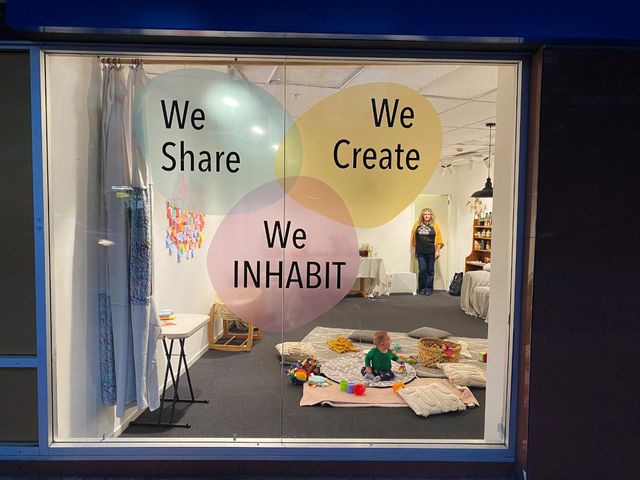
The artist as many other things first
- Urban Dream Brokerage
- Holly McEntegart in conversation with Anne Noble, facilitated by Mark Amery <figure class=" sqs-block-image-figure intrinsic " > Image: Anne Noble Merging her work as an artist, mother and full spectrum doula, Holli McEntegart recently brought something remarkably different to the bustle of Wellington’s Courtenay Place, in an exploration of art as a social practice. Providing a warm, calm space for participation, Inhabit brought together mothers and their infants to examine how community, cultural and whānau postpartum care has changed in Aotearoa, sharing experiences in real-time and as oral history. A private issue was brought into a public realm. Rethinking the artist’s role in society, McEntegart was supported by artist Anne Noble in a project commissioned by Letting Space for vacant space activators Urban Dream Brokerage. McEntegart now has plans to bring the project to Auckland. Here are Holli and Anne in conversation. Mark Amery Anne Noble: Letting Space and Urban Dream Brokerage have made a really remarkable contribution to the Wellington art scene. Letting Space positioned itself as an entity that sits outside the conventional domain of the gallery, where the artist is mostly defined e as a producer of objects and artefacts. They offered an experimental space and an invitation to artists to expand the ecology of contemporary art and provide support for them to provide a new kind of experience for communities and publics to engage with contemporary art I see Inhabit as a perfect example of the kind of project that Letting Space and Urban Dream Brokerage were established to nurture, enable and support. When I first thought about your ambition for Inhabit: to marry both your practices as an artist and a full spectrum doula, one of my first questions was about the expanded role of the artist in a social practice. How is your work first and foremost art while being shaped by other practices and concerns? What came to mind was a book [^1] I’ve had on my bookshelf, which has on its cover The Artist As followed by a list: that includes such descriptors of the artist as .. producer; the artist as… archivist; the artist as… ethnographer; the artist as… catalyst; the artist as… orchestrator; the artist as… poet; the artist as… curator. And it ends with this really beautiful phrase in capital letters: AND MANY OTHER THINGS FIRST. This points to the fundamental premise of your art practice - driven and formed by another whole domain of expertise, professional practice, experience and activist concerns. <figure class=" sqs-block-image-figure intrinsic " > Image: Anne Noble | Infant massage with Jo Chambers. From left: Megan Rodgers and Jasper, Jo Chambers from Blissful Bubs You define yourself as a social practice artist but you also practice as a full spectrum doula. How did you arrive at the idea of merging your practice as an artist with your life as a mother, your interest in the post-partum experience and your activism in this space? Holli McEntegart: You and I talked a lot about the artist as a conduit; or as activator. As a young artist I was always really interested in capturing images of moments that had complicated stories behind them. I realised that my interest was often more in the story; how we got to this point; the full stop. The work was always, for me, in the negotiation of getting to that image - with the image itself feeling lacklustre in comparison to that journey. Then when I moved to Pittsburgh to complete my Masters I found that there was a greater focus on social practice as a role for the artmaker. The driving need for me has always been to build relationships, and therefore community. So when I was taking photographs I would spend months getting to know people, navigating the permission, not just to be there, but to be accepted; to belong. I’ve joined every group under the sun! A loon (an aquatic bird) counting group in Maine, a porcelain painting group in Mt Albert, a bluegrass group, banjo club and a barbershop quartet in Pittsburgh, and a cake decorating group in Otara, to name a few. But I didn't feel like I had the right to be there unless I was really an accepted part of the community. That came to a head for me in Pittsburgh when I joined a semi-gated spiritualist community called Lily Dale, and began making work out of the readings they were doing for me. I would spend eight months with them before I could make that work. By the time I was living in New York there were many grants, residencies and galleries supporting a socially engaged framework of art making. My eyes were opened to the fact that this community exchange and the energy I was investing into relationship building was not only valid, it was the work.That really gave me permission to move past just documenting my work with photographs or videos and writing and to pull the focus back to the process, the making and the relationship tending. Research is a huge part of my process, whatever I’m working on I’m always off down a research tunnel. So, when I got pregnant in New York with my first child Arlo I went on a huge journey to understand pregnancy, birth and everything that was happening to my body. I discovered that in New York City, the maternal mortality rate in pregnancy, birth and early postpartum is astoundingly high, and that black women are 12 times more likely to die in childbirth than white women. OB’s are often pushing for a lot of unnecessary interventions within the hospital system and midwives are not as commonly used, though that is changing. I come from a family of home birthers in New Zealand, it was normalised and seemed like the obvious place for me to birth, but only around 1.5% of people give birth at home in the US, so it's quite a radical thing to do in that context. I was so lucky that I had a neighbour and friend who was training to be a midwife and was working as a birth doula. Through her I discovered this group of folks called doulas. I started learning about the role they play in birth work, about reproductive and birth justice advocacy, and about everything I was going to need to know to birth my baby at home while being supported by a midwife and doula team. <figure class=" sqs-block-image-figure intrinsic " > Image: Anne Noble New York City is so compact, we had a tiny apartment and I had a home studio. My son, Arlo, was born underwater, in a birth pool on my studio floor. At that point I had been working for some time within these spiritualist communities. I had been really delving into why people were seeking healing in these communities and what it meant to be constantly practising these healing rituals. Birthing my son in my studio was like an epiphany, I was on a healing journey myself and this was a part of the work. Birth was incredibly healing for me at that point in my life and then, like many people, postpartum was a completely different beast. Like most people experiencing giving birth far from their home and family, I just felt an intense lack of support from the world. And with that a deep loneliness. I was so homesick. My parents came to visit for two weeks which was incredible, but it went so fast. A few good friends showed up as best they could but I was living and working as an artist in New York, I didn’t know anyone with babies or even young kids. People are busy - for everyone else, life goes on. It’s the postpartum person that is stuck in stillness, but constantly working. It was a totally different world. You get the sense that everybody shows up for birth, everyones interested, you learn so much about pregnancy and childbirth, tracking the changes in your body all the way through to this kind of event, and then everyone leaves, and you’re left in charge of a human. It’s wild, uncharted territory and no-one’s told you that much, or what they have told you is irrelevant, biassed, outdated and sometimes even harmful. I longed for my family, mostly for my mum. I found myself floating out to sea, and there was a realisation that no one was going to rescue me - I had to rescue myself. And to do that I needed to dive even deeper into what was happening to me, go down that research tunnel again and find out what support there was in the world and how I could heal. That led to me doing Seen, a postpartum doula mentorship programme with Birdsong Brooklyn, and learning constantly - four or five months too late - what could have rescued me before I needed rescuing! It was eye opening and there was a lot of deep grief about the care I had missed out on, and the ways I could have been supported. I was diving deeply into the profoundness of becoming a mother and the reality of how much is lacking in the world in supporting new parents. I just fell in love with this idea that we could be healing collectively if we just looked after each other better and shared our knowledge. I built my community from that in New York in that first year of parenting. At that point I had been working for three years as the studio manager for an incredible artist, Janine Antoni, who is also a parent and understands that mothering work. It was a huge question for me: how do I keep working in the world as an artist, be able to show up as a mother and earn enough money to live? How do I juggle all of this and stay tethered to myself? I gave birth to my son when I was 38 and I was being called a geriatric mother by the medical system. It scared me. I wanted to breathe in my baby, just inhale him and not miss a second. But how do I do that and keep up my practice? Well… I just gave birth to my son in my studio…. It was these layers of realisation: this labour is the work. I have to reframe my life so that this labour of the home, the labour of care, of mothering, is seen and valued. So I left my job in the studio with Janine and went straight into postpartum doula training. I needed to be immersed in the community in the same way I had been with the spiritualists or the cake decorators or the bird counters in Maine. <figure class=" sqs-block-image-figure intrinsic " > Image: Holli McEntegart | Multiples Feeding Support Group. From left: Jessie Lee Broadbent, anon Anne: You have talked about your journey as a photographer engaging with communities, and how the outcome can be separated from those experiences that feel like part of the work. That is n true for many documentary photography projects.You’ve also described beautifully your dissatisfaction with being both outside a subject and yet needing to be right in the heart of it. The notion of a social practice artist is less common in New Zealand than in the US. It has currency in art schools, but my instinct when we first met and talked was that you have a really highly evolved practice in which you prioritise your relationship as an artist to the post-partum communities you engage with Your work begins with you your life as a mother and your practice as a doula being the site of public art activism, of making the post-partum world experience shared and visible. How have you then addressed the visibility of this as an artwork? You only need to look at the project website to see the level of community engagement and the number of people you have drawn into this space. It’s really significant. Those workshops - people flocked to them. But to make it public, visible to participants and to audiences how does that work? Holli: What comes first for me is the relationship, being a good community member and trust. I come at relationship building and getting people involved with their whole heart; with a genuine interest and respect. I have to have something at risk as well. Inhabit was a year in the making, but the day we opened, with a multiples lactation support workshop. We had six twin mums and probably six assistants or helpers, including grandmas, friends, lactation and doula support. That's 12 babies plus Indigo [Holli’s own baby]. Over 24 bodies breathing life into the space. That was the moment that the work became art; that it became an artwork. It was activated by the community of people in the room and their energy. Up until then there’s a lot of risk on my part because I don’t know who is going to show up and what they will bring on the day. The work is filled with intention but it has to meet people where they are and vice versa, and for that reason, it’s never the same, it evolves and unfolds and, much like mothering, I must surrender to it. I think I’m comfortable leaning into the unknown. Within a socially engaged practice you really don’t know how your participants or your audience (the public) are going to enter the work. I consider the folks facilitating workshops my co-creators. There were six months of emailing and zoom conversations about what I was making with that final group of people, so many conversations about what the community needed. And then there was a point when they came to me with a plan to set up this specific workshop for multiples families. They were asking for my permission, and I was overjoyed because, it was at that point that they took ownership and really began to have agency within the work. That was the moment when the community was activated, they started creating what they needed under the umbrella that I offered - this community activation was where the social practice aspect of the work really came into play. <figure class=" sqs-block-image-figure intrinsic " > Image: Milan Maric | Combined yoga and Infant massage workshop with Emma Chen Flitcroft and Jo Chambers I was coming to Wellington, into a community I’m not from, so I’m constantly asking myself, how do I leave this space better than when I got here? Within social practice I think there is a very real responsibility to care for the community you're working in and to make sure there are ongoing care agreements in that community. Everyone that provided a workshop for Inhabit offers free or sliding scale services that could continue to be accessed after Inhabit closed for example. Anne: That’s a beautiful description of the artist as catalyst. I’m very fond of the notion that when an artist plays those roles, the artist in a conventional sense disappears to become a generating and catalysing force Holli: I’m interested in the way my role shifted from facilitator to participant, or mother , or host. Hourly that changed. Originally I thought I would be facilitating some workshops but I didn't end up doing that because so many people wanted to facilitate their own. At the beginning of each workshop I would introduce the project and really ground it back into the context of an artwork, to remind people they were participating in something both bigger than them, but also inherently generated by them, and then I would participate alongside them. I was never an observer, I was a participant. I think it’s really important I have the ability to be part of what’s happening as opposed to being an outsider. Learning, participating and being vulnerable. That vulnerability permissions other people in the space to also be vulnerable. It’s not like, as you’re describing Anne, that ‘‘you’re the artist and you’re over there’ on a pedestal. The process is about me sinking back into the work. It’s a dance between making sure people feel like they are being held and acknowledged and the space is being tended to in the correct way, but not dominating it. <figure class=" sqs-block-image-figure intrinsic " > Image: Anne Noble Anne: As a public artwork, positioned in Courtenay Place, it was a really beautiful intervention with really subtle signage and this glowing light masked by a wall of handmade stitched together nappies! It offered a surprising encounter that was intriguingly signposted and people were welcomed to just stop and to consider what it might be - as a public art project. Sometimes I was amazed at the number of people participating and how the work created an opportunity for a community to assemble. How did you introduce participants to the process of being part of something for them but also part of something larger? Of being participants and collaborators in Inhabit as an artwork. Holli: That was definitely one of my biggest challenges. There were a couple of things I did practically. Even before Inhabit opened I worked very hard to centre the project in the community with this drawing project that involved - six Love Note posters that were plastered repetitively around the city in the two weeks leading up to our opening. I was documenting them in situ and sending images of them to people when they were signing up for the workshops as well as using them in social media. So there was a centring of it as an art project before they arrived. Most people had seen these drawings and then saw the wall of Love Notes growing on the wall when they came into the space. I introduced that as a collaborative drawing project and really impressed the importance of adding everyone's voice to that growing archive. <figure class=" sqs-block-image-figure intrinsic " > Image: Lily Dowd I constantly was re-centring it as an artwork in this way all the time, and encouraging the public to participate, reminding them of what they are a part of. I see the Love Notes as the beginning of an archive of postpartum stories - a collection. And that maybe this is how we start something: a movement, a book, an archive - we just have to start putting our stories on the wall. I think that grew really organically and became a way for people to gently be reminded of the fact that they were a part of an artwork, and then they forgot about it - which was great. Someone hands them a bowl of soup, nourishes them, checks in and makes sure they’re OK. Offers to hold their baby. and that energy of care flows into the space and people feel really comfortable. And that comfort was there in part because I was there visibly parenting, making the work. Creating a space that makes visible the lived experience of parenting, and artmaking at the same time. <figure class=" sqs-block-image-figure intrinsic " > Image: Anne Noble As it transpired there was very little foot traffic, and actually the space needed to be very protected, intimate and gate kept. So the curtain that I made really provided a level of intimacy. It is another drawing project I had been working on as a part of the show, but I didn’t quite know where it would fit. I’ve been collecting these used flat nappies. They are very identifiable, heavily washed and starched white cotton with a red stripe down the side. They are the kind of do everything cloth of motherhood. So representative of the labour of the home. Soaking up the mess of it all. I’ve been stamping all over them with my own mother at my kitchen table, “Ssshhhhhh sshhh shhh ssshhh shh shh shh…” On the first day of installation it was clear to me that we needed to be able to transform the space into a private, intimate one, and to open it up to the world. Sewing the nappies together to make a curtain was a wonderful way to create that boundary between public and private. And then at the end of the last workshop I was really inspired to “pull back that curtain” and be seen. I called you and asked you to document this moment of being seen in parenting and artmaking. It was such a moment of connectivity and community connection. There’s now two groups I believe that came together at Inhabit and are continuing to meet. It was great to cultivate this level of nurturance and community engagement in a place like Courtenay Place - buses, cars and people with so much going-to-work energy, once we pulled back that curtain I think people were taken aback by it “there are so many babies!” <figure class=" sqs-block-image-figure intrinsic " > Image: Milan Maric | Combined yoga and Infant massage workshop with Emma Chen Flitcroft and Jo Chambers Anne: Yes it was a brightly lit window that glowed like a little jewel! And was such a surprising experience walking by. You’ve described the artist as a generator and how there is a legacy for participants beyond the exhibition space. What were some of the highpoints during Inhabit and some of those legacies? Holli: The highest high was our opening, that first day. 13 babies in the space. One of the sets of twins was only five weeks old and it was their first time out of the house and their mum had driven an hour to get there, they spent all day with us. Any future Inhabit projects will always open with a multiples workshop because these folks are the least catered for within the system. The world was not made for people birthing two or three babies at a time… So to have this space where people were surrounded by support and advice and understanding. It was so magic and it was so clear there was a need for that. I think that in the current Covid climate people are feeling so much more isolated and unable to get out of the house. Opportunities for connection that were available to parents pre covid often aren't now, like community or library meetups and coffee groups. Many people were speaking of coming to Inhabit as the first time they’d been to a group outside the home, there is a lot of isolation and fear out there, and a deep lack in support services. A few people who weren’t parents had some very interesting interactions with the space as an artwork, which I found fascinating. Some really generative conversations came from them being confronted: that they were coming to a public exhibition, and were questioning ‘what is this?!’ I had very interesting conversations with other artists about what participation looks like when you’re not a parent. For parents their participation was organic but for others, it felt very different. They accessed it through my facilitation and it was interesting seeing them sink into comfort because they were being cared for; getting down on the floor and playing with Indigo. Having some soup, and learning about traditions of postpartum care and methodologies. I’m interested in pulling back the veil on this kind of care work because we can all benefit from learning how to tend to our communities and families. <figure class=" sqs-block-image-figure intrinsic " > Image: Milan Maric Another highlight was my involvement with Little Shadow. They run perinatal mental health support groups in the Wellington region and virtually across the motu. They were so supportive of this project. They really saw the power of what Inhabit created in offering an entrance point to conversations about perinatal mental health that are softer and more nurturing than how it’s often tackled when people are looking for support within a healthcare system. Inhabit provides nourishing food, a space to express yourself creatively, a place to move your postpartum body, and a room full of folks on a similar path. Once there, we are able to get into the nitty gritty of what we are all experiencing because the space itself is so tended to. Something that I repeat all the time is that I’m examining patterns of care, whilst caring for our communities. I want to decolonise postpartum care so that we may all gain the knowledge of how to care for each other. Then there was that final reveal, pulling back that curtain. I felt I was truly being seen as my whole self in the work. Before that point I was a shapeshifter facilitating everybody else's journey. But at that moment I was in my deeply creative space of making and mothering as I finished the project. It felt like closure and an answer to that question of how I can be an artist, make work and be a parent. It struck me how that question has deeply impacted my relationships with people and how I move in the world. In my first few days in Wellington I had a clear vision of that image we captured at the end. I saw the room glowing with light, semi dark outside and the interior being a place of making and of process. A gallery, and a living room and a studio and a feeding place. Where bums are getting changed, a place where all of life is happening at the same time. And that the public are walking past and peeking in. The labour of parenthood and of artmaking is usually so invisible. That moment at the end just felt like: let’s get it all on display! <figure class=" sqs-block-image-figure intrinsic " > Image: Milan Maric <figure class=" sqs-block-image-figure intrinsic " > Image: Milan Maric Anne: I love what you say about risk. Because if art doesn't involve risk it doesn't leave the opportunity for engagement - If it's there and says it all it doesn’t ask very much of people. The way both your processes of making and lived experience are entirely central to the work raises questions for people coming in off the street - challenging their notions about art - and confronts them with the invisibility of the post-partum experience. Can you talk about how Inhabit is an evolving work? How it’s more than a one-off event where communities come together and are potentially transformed. How is the website a part of the evolution of the work? Holli: If you are thinking about community engagement and looking at different types of communities' needs then you’ve got to move around those communities. My vision for Inhabit was always that it would move around the motu. One of the things I thought was important about the experience in Wellington was that it felt disruptive. It felt radical. It was an interesting way to inhabit vacant space in the CBD and disrupt a community. It ignited something that people were aware they needed, but no-one knew how to connect on and build. <figure class=" sqs-block-image-figure intrinsic " > Image: Anne Noble I think there’s a lot of power in Inhabit travelling around regionally and disrupting systems in ways that are really positive and ignite connection. I think of little things growing, sprouting. And of having this homebase of an archive online where we can collect and hold these postpartum stories and learn from what we’ve been doing here to better support communities. Anne: Thanks Holli - for the pleasure of being a small part of this project with you. Anne Noble (Laureate), ONZM, is a photographer and curator whose work spans still and moving image, installation and international curatorial commissions. Over multiple projects Annne Noble has considered the significance of memory and imagination to personal and cultural narratives of place and belonging.Holli McEntegart is an interdisciplinary artist using social practice, video, performance, photography and text. She holds a Bachelor of Visual Arts in Photography (NZ), and a Masters of Visual Art and Design from Auckland University of Technology (NZ), which included a one year MFA scholarship at Carnegie Mellon School of Art, Pittsburgh (USA). In 2014 she was an artist in residence at the Skowhegan School of Painting & Sculpture in Maine (USA). Her work has been performed and exhibited throughout the USA and New Zealand. In 2018 she trained as a Full Spectrum Doula after giving birth to her first son in Brooklyn, New York. Returning to Aotearoa in 2020, where she continues her work as an artist and as a Reproductive Justice Advocate. Holli is now an island named Mother to two boys, aged 4 and 9 months. <figure class=" sqs-block-image-figure intrinsic " > Image: Holli McEntegart | Multiples Feeding Support Group - From left; Anon, Georgie Manning, Jessie [^1]: Aileen Burns, Tara McDowell, and Johan Lundh, The Artist As Producer, Quarry, Thread, Director, Writer, Orchestrator, Ethnographer, Choreographer, Poet, Archivist, Forger, Curator, and Many Other Things First. Institute of Modern Art, Brisbane, Curatorial Practice at Monash University, Melbourne and Sternberg Press, 2018.
- Accepted from Urban Dream Brokerage Blog by feedreader
- Tagged as:
- brooklyn
- covid-19
- exhibitions
- libraries
Brooklyn, Wellington, New Zealand (OpenStreetMap)
-
691 - 698 of 698
Matching websites
-
-
Wellington Free Ambulance
- Wellington Free Ambulance, the only recognised free ambulance service in a major New Zealand city, has been assisting the people of greater Wellington since 1927.
- Tagged as:
- emergency-services
-
-
-
Sarah Free
- I started this site as a forum to discuss all sorts of things related to urban Wellington living, and so it will continue. I hope at least some people are finding it interesting and/or useful!
- Submitted by tonytw1
- Tagged as:
- people
-
-
-
The Free Store
- We freely redistribute quality, fresh surplus food from Wellington's eateries directly to those in need of it. Everyone is welcome.
- Submitted by tonytw1
- Tagged as:
- community-groups
The Free Store, 211, Willis Street, Te Aro, Wellington, Wellington City, Wellington, 6011, New Zealand (OpenStreetMap)
-
-
-
Predator Free Wellington
- Submitted by tonytw1
- Tagged as:
- conservation
-
-
-
Predator Free Mt Cook Newtown and Berhampore
- We are a backyard trapping community group working towards Predator Free Mt Cook, Newtown, and Berhampore in Wellington, NZ. Contact us for a free rat trap for your place and help to bring native birds back.
- Submitted by tonytw1
- Tagged as:
- conservation
- mount-cook
- newtown
-
-
-
Free online market appraisal of your home
- David Garratt is a residential real estate marketing manager with ten years of experience selling homes in Wellington's Northern Suburbs. If you live in this area and would like an accurate indication of market value for your home with accompanying sales statistics, visit www.northernsuburbs.co.nz today and register
- Tagged as:
- johnsonville
- estate-agents
-
-
-
Car Dealers
- Automarket.com.au is a free car dealership advertising website provides a free car dealership advertising service for new or used car dealers, car yards in Australia. Browse site, register your car dealership and advertise your car for free.
- Tagged as:
- automotive
-
-
-
Andrew Duncan - Wellington's Northern Suburbs Real Estate Specialist
- Are you looking to buy or sell property in Wellington's Northern Suburbs? Check out this website for a number of useful resources like free home evaluations, free email updates of new listings, free recent sales info, and much more.
- Tagged as:
- estate-agents
-
-
-
Sea Cat Ferries
- 2day.com - Free domain name registration and name parking
- Tagged as:
- ferry
-
-
-
Smart Newtown
- Free Community Based Computing. Welcome to Smart Newtown, where residents of Newtown and the wider Wellington community can learn computer skills, use computers and access the Internet for free.
- Tagged as:
- community-groups
- newtown
- wcn-hosted
-
-
-
Regional Wines & Spirits
- Wine, beer and spirits, large organic range. Free advice, wine education and instore tastings. Functions, glass hire, free delivery in CBD, online shop or bricks & mortar. NZ wide and International delivery.
- Tagged as:
- retail
-
-
-
Karori Golf Club
- Free of the City's traffic noise and distractions, Karori Golf Club is Wellington region's quietest golf course.
- Tagged as:
- golf
- karori
-
-
-
The Shape of Money
- A free and comprehensive residential property investment calculator from Wellington-based financial planners, the Shape of Money.
- Tagged as:
- real-estate
-
-
-
Ammi Floral Design Ltd
- Poriruas premier florist. Free same day delivery on local orders. We cover all of North Wellington and Kapati.
- Tagged as:
- business
-
-
-
ROBO Design
- ROBO Design develop search engine friendly e-commerce solutions. We are based in Wellington, New Zealand. Try our free demo.
- Tagged as:
- design
-
-
-
At Home Wellington City
- Newest downtown accommodation. With large balconies, harbour views, in house restaurant and gym. Feel free to email us with any questions.
- Tagged as:
- accommodation
-
-
-
The Performance Arcade
- Founded in 2011, The Performance Arcade is a free, award-winning festival of live art, music and performance on the Wellington Waterfront.
- Submitted by tonytw1
- Tagged as:
- events
- waterfront
-
-
-
Wellington Model Aeroplane Club
- The Wellington Model Aeroplane Club has approximately 90 members who fly radio controlled planes, gliders, slope soarers, helicopters, as well as free flight and control line models.
- Tagged as:
- aviation
-
-
-
City Bed and Breakfast
- Modern bed and breakfast homestay within a few minutes walk of Courtney Place and down-town Wellington. Queen bedroom with attached bathroom. All day continental breakfast, free parking and wireless internet.
- Tagged as:
- bed-and-breakfasts
-
-
-
Unlimited Potential
- Unlimited Potential is a Wellington-based not-for-profit ICT network that connects ICT professionals in Wellington, New Zealand. UP exists to provide it's members with great free events and networking opportunities.
- Submitted by tonytw1
- Not tagged
-
-
-
Musical Stars
- Musical Stars is an after school musical and performing theatre class for children aged 5-16 years. We teach singing, dancing and drama in a positive, warm, pressure-free environment from two central Wellington locations.
- Tagged as:
- performing-arts
- education
-
-
-
Wellington City Bed and Breakfast
- Ensuite queen accommodation with all day continental breakfast, unlimited internet and free parking. Bed and Breakfast homestay within 10 minutes walk of all Wellington city attractions. Modern townhouse in quite street. $120 for double room.
- Tagged as:
- mount-victoria
- bed-and-breakfasts
-
-
-
Hopper
- Located at the top end of Cuba Street, Hopper is situated just outside of the busy city centre. With free parking, Hopper is a sanctuary where you can slow down and stock up on everyday essentials.
- Submitted by tonytw1
- Not tagged
Hopper, 11, Hopper Street, Mount Cook, Wellington, Wellington City, Wellington, 6011, New Zealand (OpenStreetMap)
-
-
-
YWCA of Wellington & Hutt Valley
- The YWCA of Wellington and Hutt Valley focuses on providing education, training and support. We offer most services free, and have a particular emphasis on helping women on low incomes, young women, and those women with least access to resources
- Tagged as:
- womens
-
-
-
Collective Community Hub
- The Collective Community Hub is a free to use space to bring people, businesses, groups, students and much more together without the barrier of cost. Collective First National Real Estate are the developers and funders of this amazing space to bring community together.
- Submitted by tonytw1
- Tagged as:
- johnsonville
-
-
-
Onslow Cricket Club
- Our home ground is Nairnville Park in Khandallah which is right in the heart of the city's Western Suburbs. If you're a visitor to our club then please feel free to browse the links above. We welcome new members, both playing and non-playing.
- Submitted by wellynews
- Tagged as:
- khandallah
- johnsonville
- cricket
Nairnville Park, Khandallah, Wellington, Wellington City, Wellington, 6035, New Zealand/Aotearoa
-
-
-
Miramar Uniting Church
- We are a friendly and welcoming faith community based in Miramar, Wellington, New Zealand. We are a small and diverse congregation which we expect to grow. Please feel free to explore our website to learn a bit more about who we are and what we do.
- Submitted by tonytw1
- Tagged as:
- miramar
- religious-groups
-
-
-
Kapiti Women's Centre
- KWC is a warm, friendly, safe and caring environment for women to come and enjoy. We provide a range of services either free or at very low cost. KWC prides itself on the supportive and confidential service we provide for the women on the Kapiti Coast.
- Tagged as:
- kapiti
- wcn-hosted
- womens
-
-
-
Wellington Thai Boxing
- At Wellington Thai Boxing, we leave egos at the door. We are a not-for-profit gym offering fun, high-intensity classes to the Wellington region. Our small team give up their time for free to help others discover their own love for the art of Muay Thai.
- Submitted by tonytw1
- Tagged as:
- martial-arts
-
-
-
Poneke Kyokushin Karate Dojo
- A world class karate dojo offering traditional Japanese Kyokushin Karate and more to kids and adults in Wellington NZ For black belt or tournament training right through to casual fitness classes. We offer two weeks absolutely FREE with no obligation! Check out our website for more details www.mtvicdojo.org.nz
- Tagged as:
- karate
- mount-cook
-