Libraries and Government
-
-

Welcome to our new catalogue
- Upper Hutt City Council
- We're excited to launch a brand new, modern catalogue for browsing and accessing our library collections and services.
- Accepted from Upper Hutt City news 2021 by feedreader
- Tagged as:
- libraries
-
-
-

Catalogue and system upgrade: key details and information
- Upper Hutt City Council
- As part of our upgrade to a new catalogue and computer system, some library services will be limited from 13-24 June 2025. Read our detailed update with key dates and information.
- Accepted from Upper Hutt City news 2021 by feedreader
- Tagged as:
- libraries
-
-
-

Coming soon: a new online catalogue is on the way
- Upper Hutt City Council
- We are preparing for a major software upgrade, including the launch of a new online catalogue for searching and browsing library resources at the end of June.
- Accepted from Upper Hutt City news 2021 by feedreader
- Tagged as:
- libraries
-
-
-

Setting the scene in Upper Hutt: five questions with author Cat Connor
- Upper Hutt City Council
- Ahead of her book launch at Central Library on 11 April 2025, local author Cat Connor shares insights into character development and her choice to set a book series in Upper Hutt.
- Accepted from Upper Hutt City news 2021 by feedreader
- Tagged as:
- upper-hutt
- central-library-closure
Upper Hutt, Upper Hutt City, Wellington, 5218, New Zealand (OpenStreetMap)
-
-
-

Back to school: supporting our local ākonga (learners) together
- Upper Hutt City Council
- From lunch box ideas to tailored learning support, STEM fun for kids, and a wealth of resources for teens, Upper Hutt Libraries is here to support local families.
- Accepted from Upper Hutt City news 2021 by feedreader
- Tagged as:
- upper-hutt
- libraries
Upper Hutt, Upper Hutt City, Wellington, 5218, New Zealand (OpenStreetMap)
-
-
-

New Click & Collect locker first of its kind in New Zealand
- Upper Hutt City Council
- Upper Hutt Libraries has launched an innovative Click & Collect service to give customers more choice and convenience when requesting and borrowing items.
- Accepted from Upper Hutt City news 2021 by feedreader
- Tagged as:
- upper-hutt
- libraries
Upper Hutt, Upper Hutt City, Wellington, 5218, New Zealand (OpenStreetMap)
-
-
-
Seniors Week Around Wellington
- Age Concern Wellington
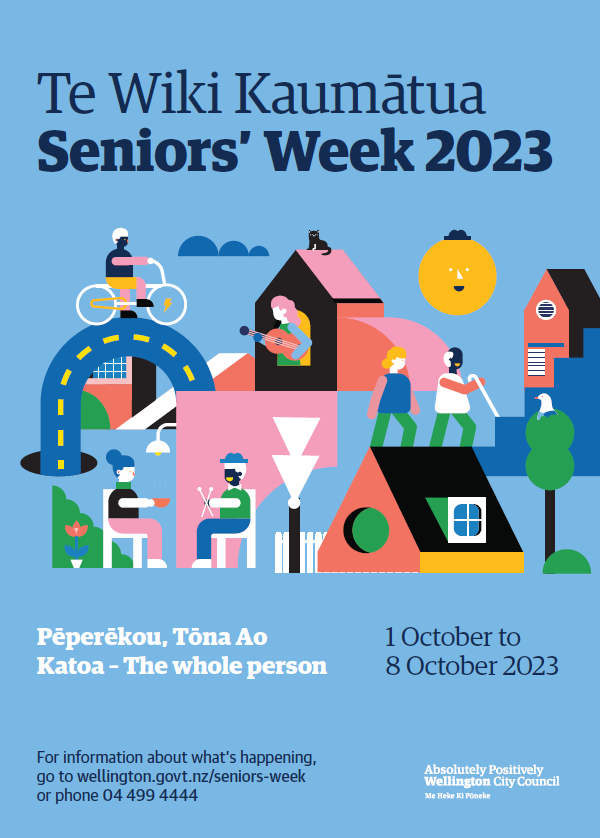
- For Seniors’ Week (first week of October), Wellington City Council has put together a fantastic booklet packed with loads of activities and events around Wellington. Pick up your copy at a library around Wellington, or call us on 04 499 6648 and we’ll post a copy to you. You can also view the booklet here: ... Read more
- Accepted from Age Concern Wellington feed by feedreader
- Tagged as:
- libraries
- wellington-city-council
-
-
-
Toilets for Carrara Park
- Newtown Residents' Association
- Our Association has made a submission to Wellington City Council on Te Awe Māpara – The draft Community Facilities Plan, asking again for toilets in the Park. Back in 2020 James Barber wrote a Scoop article about the lack of toilets in Carrara Park – https://wellington.scoop.co.nz/?p=132403 – well worth reading! Nothing has changed since then. We are … Continue reading Toilets for Carrara Park →
- Accepted from NRA news by feedreader
- Tagged as:
- te-awe
- wellington-city-council
- consultation
Carrara Park Play Area, Regent Street, Newtown, Wellington, Wellington City, Wellington, 6242, New Zealand (OpenStreetMap)
-
-
-
Te Awe Māpara | Community Facilities Plan - consultation open till Mon 7 August
- Inner-City Wellington
- From WCC Te Awe Māpara | Community Facilities Plan Many thanks to those of you who managed to complete our survey about your use and feelings about our community facilities in November last year.
- Accepted from News - ICW by tonytw1
- Tagged as:
- consultation
- te-awe
- wellington-city-council
Te Awe Library, Brandon Street, Paekākā, Wellington Central, Wellington, Wellington City, Wellington, 6145, New Zealand (OpenStreetMap)
-
-
-
Ngā Kōrero - Latest Stories from DCM
- Downtown Community Ministry
- 96 Ngā Kōrero - Latest Stories from DCM p{ margin:10px 0; padding:0; } table{ border-collapse:collapse; } h1,h2,h3,h4,h5,h6{ display:block; margin:0; padding:0; } img,a img{ border:0; height:auto; outline:none; text-decoration:none; } body,#bodyTable,#bodyCell{ height:100%; margin:0; padding:0; width:100%; } .mcnPreviewText{ display:none !important; } #outlook a{ padding:0; } img{ -ms-interpolation-mode:bicubic; } table{ mso-table-lspace:0pt; mso-table-rspace:0pt; } .ReadMsgBody{ width:100%; } .ExternalClass{ width:100%; } p,a,li,td,blockquote{ mso-line-height-rule:exactly; } a[href^=tel],a[href^=sms]{ color:inherit; cursor:default; text-decoration:none; } p,a,li,td,body,table,blockquote{ -ms-text-size-adjust:100%; -webkit-text-size-adjust:100%; } .ExternalClass,.ExternalClass p,.ExternalClass td,.ExternalClass div,.ExternalClass span,.ExternalClass font{ line-height:100%; } a[x-apple-data-detectors]{ color:inherit !important; text-decoration:none !important; font-size:inherit !important; font-family:inherit !important; font-weight:inherit !important; line-height:inherit !important; } .templateContainer{ max-width:600px !important; } a.mcnButton{ display:block; } .mcnImage,.mcnRetinaImage{ vertical-align:bottom; } .mcnTextContent{ word-break:break-word; } .mcnTextContent img{ height:auto !important; } .mcnDividerBlock{ table-layout:fixed !important; } h1{ color:#222222; font-family:Helvetica; font-size:40px; font-style:normal; font-weight:bold; line-height:150%; letter-spacing:normal; text-align:center; } h2{ color:#222222; font-family:Helvetica; font-size:34px; font-style:normal; font-weight:bold; line-height:150%; letter-spacing:normal; text-align:center; } h3{ color:#444444; font-family:Helvetica; font-size:22px; font-style:normal; font-weight:bold; line-height:150%; letter-spacing:normal; text-align:center; } h4{ color:#949494; font-family:Georgia; font-size:20px; font-style:italic; font-weight:normal; line-height:125%; letter-spacing:normal; text-align:center; } #templateHeader{ background-color:#07486a; background-image:none; background-repeat:no-repeat; background-position:50% 50%; background-size:cover; border-top:0; border-bottom:0; padding-top:54px; padding-bottom:54px; } .headerContainer{ background-color:transparent; background-image:none; background-repeat:no-repeat; background-position:center; background-size:cover; border-top:0; border-bottom:0; padding-top:0; padding-bottom:0; } .headerContainer .mcnTextContent,.headerContainer .mcnTextContent p{ color:#757575; font-family:Helvetica; font-size:16px; line-height:150%; text-align:left; } .headerContainer .mcnTextContent a,.headerContainer .mcnTextContent p a{ color:#007C89; font-weight:normal; text-decoration:underline; } #templateBody{ background-color:#transparent; background-image:none; background-repeat:no-repeat; background-position:center; background-size:cover; border-top:0; border-bottom:0; padding-top:27px; padding-bottom:54px; } .bodyContainer{ background-color:#transparent; background-image:none; background-repeat:no-repeat; background-position:center; background-size:cover; border-top:0; border-bottom:0; padding-top:0; padding-bottom:0; } .bodyContainer .mcnTextContent,.bodyContainer .mcnTextContent p{ color:#757575; font-family:Helvetica; font-size:16px; line-height:150%; text-align:left; } .bodyContainer .mcnTextContent a,.bodyContainer .mcnTextContent p a{ color:#007C89; font-weight:normal; text-decoration:underline; } #templateFooter{ background-color:#07486a; background-image:none; background-repeat:no-repeat; background-position:center; background-size:cover; border-top:0; border-bottom:0; padding-top:45px; padding-bottom:63px; } .footerContainer{ background-color:transparent; background-image:none; background-repeat:no-repeat; background-position:center; background-size:cover; border-top:0; border-bottom:0; padding-top:0; padding-bottom:0; } .footerContainer .mcnTextContent,.footerContainer .mcnTextContent p{ color:#FFFFFF; font-family:Helvetica; font-size:12px; line-height:150%; text-align:center; } .footerContainer .mcnTextContent a,.footerContainer .mcnTextContent p a{ color:#FFFFFF; font-weight:normal; text-decoration:underline; } @media only screen and (min-width:768px){ .templateContainer{ width:600px !important; } } @media only screen and (max-width: 480px){ body,table,td,p,a,li,blockquote{ -webkit-text-size-adjust:none !important; } } @media only screen and (max-width: 480px){ body{ width:100% !important; min-width:100% !important; } } @media only screen and (max-width: 480px){ .mcnRetinaImage{ max-width:100% !important; } } @media only screen and (max-width: 480px){ .mcnImage{ width:100% !important; } } @media only screen and (max-width: 480px){ .mcnCartContainer,.mcnCaptionTopContent,.mcnRecContentContainer,.mcnCaptionBottomContent,.mcnTextContentContainer,.mcnBoxedTextContentContainer,.mcnImageGroupContentContainer,.mcnCaptionLeftTextContentContainer,.mcnCaptionRightTextContentContainer,.mcnCaptionLeftImageContentContainer,.mcnCaptionRightImageContentContainer,.mcnImageCardLeftTextContentContainer,.mcnImageCardRightTextContentContainer,.mcnImageCardLeftImageContentContainer,.mcnImageCardRightImageContentContainer{ max-width:100% !important; width:100% !important; } } @media only screen and (max-width: 480px){ .mcnBoxedTextContentContainer{ min-width:100% !important; } } @media only screen and (max-width: 480px){ .mcnImageGroupContent{ padding:9px !important; } } @media only screen and (max-width: 480px){ .mcnCaptionLeftContentOuter .mcnTextContent,.mcnCaptionRightContentOuter .mcnTextContent{ padding-top:9px !important; } } @media only screen and (max-width: 480px){ .mcnImageCardTopImageContent,.mcnCaptionBottomContent:last-child .mcnCaptionBottomImageContent,.mcnCaptionBlockInner .mcnCaptionTopContent:last-child .mcnTextContent{ padding-top:18px !important; } } @media only screen and (max-width: 480px){ .mcnImageCardBottomImageContent{ padding-bottom:9px !important; } } @media only screen and (max-width: 480px){ .mcnImageGroupBlockInner{ padding-top:0 !important; padding-bottom:0 !important; } } @media only screen and (max-width: 480px){ .mcnImageGroupBlockOuter{ padding-top:9px !important; padding-bottom:9px !important; } } @media only screen and (max-width: 480px){ .mcnTextContent,.mcnBoxedTextContentColumn{ padding-right:18px !important; padding-left:18px !important; } } @media only screen and (max-width: 480px){ .mcnImageCardLeftImageContent,.mcnImageCardRightImageContent{ padding-right:18px !important; padding-bottom:0 !important; padding-left:18px !important; } } @media only screen and (max-width: 480px){ .mcpreview-image-uploader{ display:none !important; width:100% !important; } } @media only screen and (max-width: 480px){ h1{ font-size:30px !important; line-height:125% !important; } } @media only screen and (max-width: 480px){ h2{ font-size:26px !important; line-height:125% !important; } } @media only screen and (max-width: 480px){ h3{ font-size:20px !important; line-height:150% !important; } } @media only screen and (max-width: 480px){ h4{ font-size:18px !important; line-height:150% !important; } } @media only screen and (max-width: 480px){ .mcnBoxedTextContentContainer .mcnTextContent,.mcnBoxedTextContentContainer .mcnTextContent p{ font-size:14px !important; line-height:150% !important; } } @media only screen and (max-width: 480px){ .headerContainer .mcnTextContent,.headerContainer .mcnTextContent p{ font-size:16px !important; line-height:150% !important; } } @media only screen and (max-width: 480px){ .bodyContainer .mcnTextContent,.bodyContainer .mcnTextContent p{ font-size:16px !important; line-height:150% !important; } } @media only screen and (max-width: 480px){ .footerContainer .mcnTextContent,.footerContainer .mcnTextContent p{ font-size:14px !important; line-height:150% !important; } } From a bus stop to a whare by the beach – Michelle’s story communities where whānau are housed, connected, valued and thriving About Us Contact Kia atawhai – Be kind On the road with DCM's Aro Mai Housing First Hutt Team DCM's Aro Mai Housing First Hutt Team led by Barrie (left), with Karen, Te Paki, Ashleigh, Cindel and Daniel, at the office in Kokiri, Seaview, Lower Hutt. (Not pictured: Luisa.) DCM is well-known for the work we do in Wellington, but did you know we have a team working in the Hutt? Since July 2020, our Hutt team have been part of the Tākiri Mai Te Ata Whānau Ora collective, providing services to people who are experiencing homelessness in the Hutt Valley. Based at Kōkiri Marae, our Hutt team are part of the wider Aro Mai Housing First whānau, and they remind us of an old DCM saying, “We might be small. But we are working on some of the biggest problems facing our city.” Along with providing Housing First services, the Hutt Team do Outreach work, and collaborate with Wā Kainga to ensure the whānau they are working with remain housed, and that no one falls through the cracks. In this month’s update, we are using the motto Kia atawhai (Be kind), and it is thanks to the kindness of the people of the Hutt Valley, and the hard mahi of our amazing Hutt Team, that we have been able to see people like Michelle thrive. <!-- --> From a bus stop to a whare by the beach – Michelle’s story It was just before the pandemic when Alex and Paula from DCM’s Aro Mai Housing First team managed to meet with Michelle at a Lower Hutt café. Michelle presented as very tidy, and happy to sign a consent form so the DCM team could work to help get her housed. She listed her address as ‘Waterloo bus stop’. Michelle was very thin, and it was clear she had been roughing it for a long time. The meeting came about due to the concern of the general public in the Hutt for Michelle’s wellbeing, which led to many calls to Hutt City Council for a response. Soon after the meeting, Michelle disappeared again, as her mental health challenges took hold once more. Alex did not give up, searching for Michelle at some of her favourite hot spots, such as MIX, a service supporting those experiencing mental health distress, where Michelle could have a hot meal and charge her phone. Michelle was also a regular at the local library, where the staff knew her well. Michelle with her current key worker Daniel Patelesio. It takes a team to support the whānau we engage with, and others who have supported Michelle include Alex, Paula, Charloh, Kat, and Te Paki. Michelle was sighted sleeping in doorways and on a mattress a member of the public had given her. The public continued to make multiple notifications to the Hutt City Council. Everyone was worried about her wellbeing. When Alex finally found her again, Michelle did not remember her – she could not even recall that they had met. This is a very familiar story for the DCM team. Mental health is an ongoing issue for many of the people we engage with, who often suffer from trauma and undiagnosed disorders. Another familiar story is how the pandemic helped many of our whānau move into housing for the first time in a long time. This was true for Michelle too – because without any of the usual supports available to people out on the street, and with services such as libraries closed, emergency housing suddenly became a necessity. DCM does not believe that emergency housing is a good solution for New Zealand’s housing crisis, and though it temporarily provided Michelle with a roof over her head, it was a struggle in many ways. Michelle became unwell and ended up in hospital, but by this time – mid-2020 – DCM had established a Housing First team in the Hutt Valley. While Michelle was in hospital, Vicki, an Emerge Aotearoa tenancy manager who works with DCM as part of the Aro Mai Housing First collaboration, found her a permanent whare. Michelle was delighted to be able to move in when she was discharged from hospital. This is where the hard work really started – and it took time for DCM’s vision for communities where whānau are housed, connected, valued and thriving – to become true for Michelle. By moving people from homelessness into housing, then providing wrap-around support and regular home visits, we uphold people’s mana – and their right to an adequate standard of living as per the UN Universal Declaration of Human Rights. But sometimes, once people are housed, we start to understand what led to their homelessness in the first place. For Michelle, much of our support has been to address her health and wellbeing – other cornerstones of the Housing First concept. Michelle is now housed by the beach, which she loves. Her neighbourhood is great for walking, which she often does during the day to keep fit and healthy. Michelle also enjoys a close relationship with her mother and two daughters who now live nearby. Michelle’s current key worker is Daniel, who visits regularly. Michelle says she is “Learning to trust people” again through her relationship with Daniel. She now sees how her life has changed in positive ways through her willingness to work with DCM. “I was homeless,” Michelle says, “There is no other way to describe it.” Daniel has seen Michelle grow, and observed how she has turned her whare into a home. Everything is so well organised. The Housing First team will eventually ‘graduate’ Michelle, as she becomes more confident – and independent. Meanwhile, the concern of the people of the Hutt Valley didn’t end when they stopped sighting Michelle out on the streets. A DCM staff member who worked with Michelle overheard concerned members of the public speaking about her one day, and was able to inform them that Michelle was now safe, and housed. It is good to Kia atawhai (Be kind) to people who are rough sleeping or street begging wherever we may see them. But how proud we are to see Michelle go from the Waterloo bus stop, to her very own whare by the beach. WORDS: MIRIAM HENDRY / PHOTOS: SUPPLIED. <!-- --> What to do if you are concerned about someone rough sleeping or street begging You can make a difference! Don't give people money or food when you see them out on the streets. Acknowledge people and, if appropriate, direct them to DCM services. But better still – if you are concerned about someone rough sleeping or street begging, call Hutt City Council on 0800 488 824 or Wellington City Council on 04 499 4444 – and they will notify our team. Together – with your help – we truly can end homelessness in our city. Support DCM <!-- --> <!-- --> Copyright © 2023 DCM. All rights reserved. Our mailing address is: DCMPO Box 6133Marion SqWellington, Wellington 6011 New ZealandAdd us to your address book Want to change how you receive these emails? You can update your preferences or unsubscribe from this list.
- Accepted from DCM alerts archive by feedreader
- Tagged as:
- libraries
- covid-19
- wellington-city-council
- lower-hutt
Lower Hutt, Lower Hutt City, Wellington, 5010, New Zealand (OpenStreetMap)
-
-
-

Decision 6 - Funding the Central Library rebuild | Kōrero mai | Wellington City Council
- Wellington City Council
- Wellington’s much-loved Central Library was closed in March 2019 following an engineering assessment saying that the way the floor was designed presented a high level of potential failure in a significant earthquake. It has a similar floor design to one used in the now demolished Statistics House, where a floor collapsed in the Kaikoura earthquakes. In 2020, we ran a six-week consultation in which we asked for public feedback on five options for restoring a Central Library service in Te Ngākau Civic Square. The options all considered the resilience of the building, future proofing the library service, the connection to Te Ngākau, and the overall costs.
- Submitted by tonytw1
- Tagged as:
- central-library-closure
Wellington Central Library, Civic Square, Te Aro, Wellington, Wellington City, Wellington, 6011, New Zealand (OpenStreetMap)
-
-
-

A city with a vision? AKL x WLG
- Talk Wellington
- Wellington’s got a lot of bustle and noise (Let’s Get Wellington Moving – Spatial Plan – new subdivisions – convention centre – library) but where’s the coherent vision? Hey Auckland – can we learn some things? The Wellington Urbanerds invited some insightful Aucklanders to talk about the Auckland City Centre Masterplan (CCMP) because it’s getting a lot of positive interest in nerdy circles nationwide, and we thought “Wellington needs one of those to galvanise our progress!” But it turns out that the CCMP is not the cause of Auckland’s progress – it’s a milestone marker of a bigger evolution in Tāmaki. Auckland City Centre’s chief urban designer George Weeks was insightful, visually engaging and occasionally very funny. Auckland city centre’s chief transport designer Daniel Newcombe injected insights that were pithy and thought-provoking. All up it’s worth watching the video – details at the bottom. But this post has some of the big insights for Wellington that we took away. Hat tip to Charles Dawson for invaluable note taking. A galvanising vision, with a strong whakapapa What makes the CCMP unusual as an official planning document, Weeks told us, is that it’s not “a planner’s plan” – 2,000 pages of vision down to prescriptive requirements. Instead it’s “the brochure for the city centre”. He told us that “with the 2012 CCMP, we thought it was better to have a 200 page document that 10,000 people see, or at least have skimmed, than a 2,000 page document that 100 people read in detail. We have used this approach to shape the 2020 CCMP.” It has had a major refresh in the last 8 years and the 2020 version is quite something. Galvanising vision Weeks took us through how the updated CCMP works: how it delivers on the Auckland Plan’s promise of life in Auckland, through the city centre’s form and function. It’s worth laying these out because while we definitely have bits of the formula, there’s some powerful elements we’re missing. Experience of being there The Auckland Plan (essentially the Tāmaki-Makaurau 30-year plan) sets out ten Outcomes for the city – effectively the promise of life experience that you should get, being in Auckland. The whole super-city is supposed to fulfil these promises, and the city centre’s no exception. In the CCMP, the ten citywide Outcomes or life promises are intertwined with eight place-specific Transformational Moves. The latter are the major initiatives to change the physical environment of the city centre so it can deliver those outcomes – the good Auckland experiences – for anyone who’s there. A lot of this has come into the 2020 CCMP thanks to Access for Everyone (A4E), the city centre’s transport programme done to support the CCMP refresh process (more on A4E later). Street forms and place shapes… So the 2020 CCMP has street explainers that show – conceptually but with a lot of verisimilitude – the components of the streets and buildings, the overall shape of the whole public realm that’s needed for the city centre to give people that great experience. a generic “transit street” explainer – from the CCMP These explainers are conceptual, but are tied enough to specific places, that everyone can see the trajectory of how their specific bit of the city will be changing, but crucially they can see a really solid why. …because This means “X street, and its environment, should have Y shape and form because…”. We saw, for example, that one of the biggest streets in the Learning Quarter, Symonds Street, will be a transit street for all these reasons: Symonds St, for example, needs to become a transit street not because of some abstracted notion of “sorting out the transport” but because it is at the heart of Auckland’s city centre universities, and “transit street” is the form for Symonds Street that will let it best serve people in the Learning Quarter with the good experience the Auckland Plan promises. Weeks flicked through a few examples of how the CCMP is signalling change to the built environment of Tāmaki’s city centre (which is pretty interesting – have a play here, the 2020 version is fully digital!) Our impression of all this was that the CCMP, thanks to the Auckland Plan and Access For Everyone (the transport dimension), has pretty well integrated two things that any self-respecting city needs to integrate. This is the roles of movement (transport) and place or exchange (destination activity) in any given area of the city centre. And Auckland manages to integrate these with a nice clear Why and Because for each set of changes. [Hold on, is that anything special? We know about this stuff… This tight integration – of form to function, place with movement, built form to people’s lived experience – seems pretty elementary for self-respecting cities. And you’d be forgiven for assuming Wellington has that integration in place. Indeed, things like the street concepts in Auckland’s 2020 (refreshed) CCMP don’t look too dissimilar to what LGWM put out for the Golden Mile. And the material coming out from LGWM and the Central City elements of the Spatial Plan and Wellington 2040 use a lot of the right words. Golden Mile concept from LGWM But in listening to Weeks’ presentation, we realised just how explicit and unequivocal the CCMP and A4E are about the why, the because for the physical city changes they describe, anchored home to that lived experience promised in the Auckland Plan. And the locked-in coupling between the place / destination train and the movement / transport train so they’re pulling each part of the city in the same direction towards that better experience for all Aucklanders. This coupling is something we’re muddling around in Wellington. We’re hedging our bets on saying explicitly what lived experiences we want to prioritise and privilege in our city centre. This means the transport planning and place planning are making (at best) vague bows in each other’s direction, with lots of hedging our bets about whether and how we’re prioritising “drive-through” vs “go-to” in our city centre. OK back to the presentation…] Galvanising and enabling Weeks told us that in the CCMP, when you combine the Auckland Plan’s Outcomes and the CCMP’s Transformational Moves, the product is the city centre “Opportunities”. Opportunities are projects, quite specific things, and there are quite a few listed. click on the image to have a play in the CCMP Opportunities But they’re not a set of business-case investments that clamp tunnel-vision onto ambition. They seemed to be as much illustrating the kinds of projects that would make the city centre better at giving people that great experience of Auckland living. As Weeks emphasised: “anyone can come up with an Opportunity”. (We imagine the galvanising could run like this… Hello, I’m a developer looking at buying or developing neighbouring Building X and Building Y, I can see the direction of profitable change and unprofitable change that I could make to that property, given the trajectory of change in its environment. And I can make up a project that creates a much better laneway space between them, plus better delivery access, better stormwater handling, and augmented residential-plus-commercial uses… This bundle of investments will make me money, and enhance really well that little corner of the city – so public investment and other private are likelier to come join me… ) CCMP’s generic laneways explainer (click to expand) Lesson for Wellington: let the vision be the vision, get other activity making it reality A big lesson for Wellington, Weeks said, was to “be clear about what different plans are to do. The City Centre Masterplan sets the vision, which allows many actors to work out how to deliver its different facets, or to develop their own ideas too.” The CCMP is only the green-circled bits in this picture. CCMP: a strong whakapapa The CCMP’s technical pedigree is strong – it makes good application of internationally-accepted principles of urban physics and urban dynamics. But – as Weeks put it – if the CCMP can “see further, it’s because [it is] standing on the shoulders of giants”. Complementing the CCMP’s technical pedigree is its collective human ancestry: the people, organisations, and relationships that have coalesced around it, the support that it’s known and seen to have, and the mana that this contributes to its strong legitimacy and mandate today. From the presentation a few points stood out on each of these… The technical pedigree of the CCMP Weeks and Newcombe gave us a whistle-stop tour of the set of transport and urban planning documents of which the 2020 CCMP is the progeny. Auckland Unitary Plan – The supercity’s first joined up District Plan, the “rulebook” for implementing the Auckland Plan. Forced much more collaboration in planning, for everything. City Centre Future Access Study – NZTA, Ministry of Transport, Auckland Council, Treasury, Auckland Transport found the City Rail Link would blitz all other 46 options for getting people to and from the city centre. The City Rail Link (CRL) – an underground railway link turning the city centre heavy rail terminus into a through-station, building 4 new underground stations. Doubles the number of Aucklanders with 30min access to city centre. After years of arguing, finally underway once tax was to pay 50% (thanks ATAP). Auckland Transport Alignment Project (ATAP) (2016-17, updated 2018) Auckland-region-wide (not just one bit) merit-based priority list of all the big-ticket transport projects, costed and agreed by all funders and deliverers. Crucially: first acknowledgement by central government that Auckland couldn’t road-build its way out of its traffic problems Business Case for Walking – first quantification of the value of city centre walking to Auckland’s economy, done in 2017. [Hey “walkable capital”, where’s ours?] The creation of documents always sounds more coherent in retrospect, but Weeks and Newcombe emphasised that it’s not been a nice clean sequential progress. Key principles of urban physics (like the role of people walking) have only been given oxygen relatively late in the sequence. The need to get tax funding to co-fund megaprojects has meant a lot of back-and-forth raruraru with central government, and between the various bits of Auckland’s council family. And some great documents – like the Business Case for Walking mentioned above – have no official legal weight: a decision-making body can completely ignore them if it wants. But we heard that the various documents have meant that amongst the bureaucracy and other government power-holders, there’s been an accumulation of key principles of good urban physics, akin to accumulation of organic matter. Sometimes it’s just leaves falling, but sometimes there’s a large trunk. These accumulations in the establishment’s hivemind make it much harder to go back and relitigate, as there’s been some crystallisation in the thinking. (Though, of course, as Newcombe noted, that doesn’t stop people trying!) Access for Everyone – the complementary transport element of the City Centre Masterplan which was developed as part of the CCMP refresh – is a great example. In traditionally car-mad Auckland, the entire Auckland Council voted unanimously to begin A4E trials “enabling a decisive mode shift away from private vehicles, to make better use of finite city centre space and improve the quality of the environment.” Wow. Access For Everyone’s car-free Queen Street / Horotiu Valley with Low Traffic Neighbourhoods around. And no more driving through the city centre! The human side of CCMP’s whakapapa We heard that a major benefit of the sequence of documents was the relationships and conversations that a document creates a pretext to have. There’s been a lot of investment in behind-the-scenes engagement, with big stakeholders in the city. This has paid off in an unusual level of big players’ trust and buy-in to the vision and the big moves to get there. From large developers, through Heart of the City (the inner city Business Improvement District), through the AA, NZTA, to the City Centre Residents’ Group (fun fact: 40,000 people live in Auckland’s city centre alone). This good stakeholder engagement bears fruit: it enabled councillors to support the 2020 CCMP relatively easily, despite it having relatively little engagement from the wider public (a few hundred submissions compared with the Unitary Plan’s ~10,000). It’s not a coincidence that Precinct Properties has seen fit to drop a billion (with a B) dollars of its shareholders’ money into the Commercial Bay development – Weeks observed that it’s on the strength of the new trust and joined-up thinking developed through the CCMP process. Daniel Newcombe spoke from experience about the collaboration that had eventually started to come, once “you can get people to stop introducing competing plans” and come together. Sometimes this requires biding your time, working by osmosis, and finding the sensible individuals in an organisation on whom to work, and building coalitions that chip away at antipathetic organisations. Getting people to issue formal letters of support on behalf of their organisations can be extremely powerful, he said. Iwi influence We heard that one major improvement of the 2020 refreshed CCMP over the 2012 original is the inclusion of Māori outcomes. For the refresh, the ADO worked closely in partnership with Auckland’s Mana Whenua Kaitiaki Forum to develop a Māori outcomes plan. This work shaped Transformational Move 1: Māori Outcomes, with proposals for a papa kōkiri at the waterfront and a whare tāpere at Aotea Square. The 2020 CCMP manifests the Auckland Plan’s Māori Identity and Wellbeing outcome and Te Aranga Māori Design Principles via Outcome 1: Tāmaki Makaurau – Our place in the world. It sets out the big interventions and systemic changes to bring mana whenua presence, Māori identity and life into the city centre and waterfront. There are some big-ticket, high-visibility things and pervasive, interwoven ones. To our (Pākehā) ears this sounded pretty great… Attack of the roadcones! Plans are essential, but how do you get them going, especially when there’s so many large, cumbersome players with inertia? Weeks had peppered the presentation with cool before-and-after shots of some iconic Auckland changes, including Te Ara i Whiti / the (pink) LightPath, and localised street improvements like our favourite, O’Connell Street (below). O’Connell Street. oh.yes.melbourne We know (though the webinar didn’t go in depth here) that much of Auckland city centre’s evolution that you and I can see today was driven by the Auckland Design Office, with Auckland Transport and Auckland Council partners. Their projects opened people’s eyes to how good street change could be done, and that actually the good “urban physics” did apply in Auckland too. And they gave Auckland council family a chance to practice delivering street change together, and figure out how it can be done without anyone losing an eye. They did it with a combination of a figurehead / champion / lightning rod / air cover for the ground troops (AKA Ludo-Campbell-Reid) plus a ninja team of designers, engagers and doers, doing on-the-ground projects that brought to life the good practice of urban design. Projects like Fort Street, O’Connell Street, Fort Lane, and Jean Batten Place showed that – contrary to received wisdom – replacement of on-street car parking with high-quality streetscape was good for business. Collaboration with Auckland Transport led to the creation of a pop-up cycleway along Quay Street (well before the Innovating Streets for People pilots) which is now being incorporated into a permanent street redesign that will finish this year. It’s not been an easy road: by now, ten pilots of the street changes for Access for Everyone were supposed to be underway, following that unanimous Council vote, but just one (High Street) has been. And the ADO has now been disbanded, allegedly due to their irritating conservative parts of the establishment with cost-cutting as a pretext. But there’s momentum now… Auckland’s changing, and has lessons for us Throughout the session the Zoom chat pane had been running hot with questions and comments from the “floor” (aka the online audience). Weeks and Newcombe took questions from the pane and from the Urbanerds presenters, and a few highlights stood out including lessons for Pōneke… Lesson for Wellington: get partners on the same transport page Weeks’ and Newcombe’s first lesson was to get a multi agency agreement on transport together. It can’t just be the city council or regional council. It has to have central government buy-in; they can’t be pulling in the other direction from the city or region with their ambitions for the city’s transport. Updated ATAP, with all the partners This consensus shifts the conversation from “Do we need that good stuff replacing the bad stuff?” to “When do we need it?”. You have to keep the focus at that “when” level, not allowing relitigation of the fundamental principle of urban physics that you’ve achieved consensus on. We wonder: is this LGWM? Is it shifting our conversation? Is NZTA pulling in the same direction as the city, as the regional council? Lesson for Wellington: generate the brochure, together A second big lesson is that you have to have the vision, the brochure, the clear picture of the good life that your city wants to give everyone who’s in the city centre, whatever they’re doing there. This has to be the rationale for any the physical changes that you entertain or consider. The Auckland Plan’s 8 outcomes – promises of the experience of life in Auckland, that the CCMP too must deliver This “brochure” must be developed hand in glove with the actors we want to be supporting it, building on any public mandate you already have but not driven by the wider public. This conversation with the big players should not feel like it’s led by any one player (developers, or transport-planners, or inner-city-residents, or businesses – nor even, we wonder, council?). What it must be is very good quality engagement that builds a strong trust and instils a foundation layer of commitment to (or at least grudging acknowledgement of) solid urban physics, and the trajectory of change needed throughout the city. Lesson for Wellington: CBDs are doomed Listener Sally asked whether a focus on a city centre had been overtaken by COVID and its boost to working from home, and localism, especially in Wellington where there’s such a large commuter population. Weeks’ answer put it in much more professional terms, but the message came through clearly: if your city centre is mostly a Central Business District, where “business” is the dominant activity, it’s doomed. Monocultures always make a system vulnerable to shocks, in agriculture, horticulture and in cities If it’s a central city, with a hundred or a thousand different reasons for people of all different walks of life to be there, then it’ll be fine – it’ll change and adapt, but the power of people wanting to be there is the lifeblood of a city. “The death of the city has been predicted since the invention of the city, in the Bronze Age” Weeks observed – “and if you’ve got an actual city, it won’t happen.” We wonder… how much of Wellington’s central city is a dead zone by 6.30pm? How much are we reinvigorating and diversifying the reasons to be there? Lesson for Wellington: lock all good plans to something with teeth Weeks emphasised that the power of these plans comes from linking area plans and other non-statutory plans to ones with statutory power. So despite being a non-statutory document, the City Centre Masterplan carries weight because they mapped its outcomes tightly against the Auckland Plan (the statutory 30-year plan for the whole city) and councillors have voted overwhelmingly in favour of it. diagram showing how the CCMP is making good on the Auckland Plan’s promises, in the city centre We definitely don’t yet have the vision and its trust, nor the solid hook between statutory and non-statutory … but we have some elements of the recipe. We wonder… how much of the CCMP-style whakapapa do we have, if not the actual document? Could we build these levels of trust and vision together? Some Wellington City Council planning and design gurus attended the session and helpfully fielded some questions about where Wellington was at. Our one-liner summary was: it’s not going to hell in a handcart, but it’s definitely all up in the air. Smart engagement from Urbanerds listeners and Talk Wellington readers is really needed. We’ll pick up “so what for us?” in the next post. Here’s the video: link, passcode SUa&tOC5 Meantime… where have you seen signs of a clear vision of good Wellington city life, for everyone?
- Accepted from Talk Wellington posts by feedreader
- Tagged as:
- draft-spatial-plan
- supercity
- waterfront
- island-bay-cycle-way
- covid-19
- libraries
- convention-centre
- lets-get-wellington-moving
-
-
-

Future of the Central Library consultation
- Wellington City Council
- The Central Library has been our city’s living room and a vital part of our vibrant inner city for decades. The building itself isn’t safe to use. There are several ways to make it safe for people to be in, which also brings new possibilities in using the space. This is our once-in-a-lifetime opportunity to set up the central library to continue to support Wellington's diverse communities for at least the next 50 years. Before decisions can be made on the future Central Library in October 2020 - we need to know what you think!
- Submitted by tonytw1
- Tagged as:
- central-library-closure
- consultation
Wellington Central Library, Civic Square, Te Aro, Wellington, Wellington City, Wellington, 6011, New Zealand (OpenStreetMap)
-
-
-

The law and the Library
- Wellington Scoop
- Our Central Library is hugely missed by so many of us, a place to go, to be, without cost or expectation, a place to learn, a place to find adventure in the pages of a good book, a place that added life to Te Ngakau Civic Square – the heart of our city. There is strong demand ‘to just reopen it.’ Problem is the Council cannot ‘just reopen it’.
- Accepted from Wellington Scoop features by feedreader
- Tagged as:
- central-library-closure
- wellington-city-council
Wellington Central Library, Civic Square, Te Aro, Wellington, Wellington City, Wellington, 6011, New Zealand (OpenStreetMap)
-
-
-
The rumours are true
- Wellington Scoop
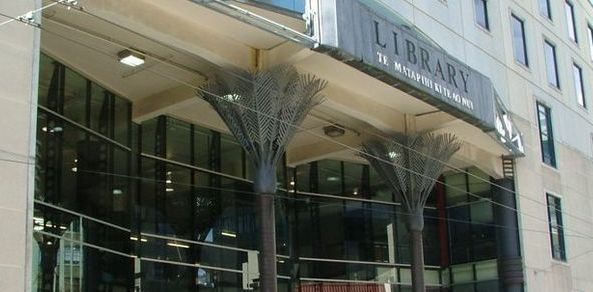
- The rumours are true. For ages, people have been telling me that the city council has been talking to developers about privatising the Central Library building. Each time, I’ve responded with doubt. But this week the plan has become public – and Councillor Fitzsimons who heads the council’s library portfolio says the news has surprised her.
- Accepted from Wellington Scoop features by feedreader
- Tagged as:
- central-library-closure
- wellington-city-council
Wellington Central Library, Civic Square, Te Aro, Wellington, Wellington City, Wellington, 6011, New Zealand (OpenStreetMap)
-
-
-
Pinehaven Notified Consent Application
- Greater Wellington Regional Council Have Your Say
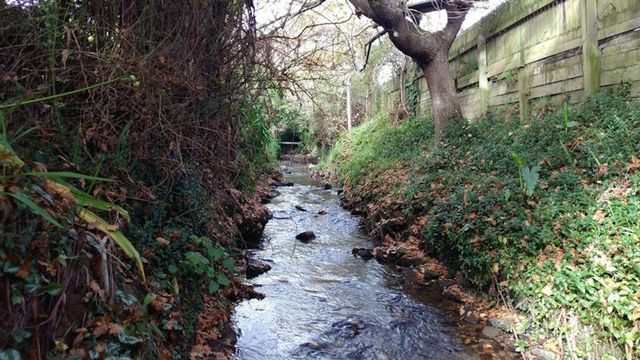
- Decision and Recommendation of the Hearing PanelThe Hearing Panel issued their decision on the resource consent application and recommendation on the Notice of Requirement on the 4th of September 2020Decision and Recommendation of the Hearing Panel 4 September 2020 - Pinehaven Streamworks (pdf)Appeal PeriodsPlease note that the appeal periods for the decision on the resource consent application and the recommendation on the Notice of Requirement are different as outlined below.Resource Consent granted by GWRCIf the applicant or any submitters are dissatisfied with the decision to grant the resource consent, they may appeal to the Environment Court under sections 120 and 121 of the Resource Management Act 1991 within 15 working days of the decision date (ie. by 25 September 2020). If no appeals are received by 25 September 2020 on the resource consent decision, GWRC will issue the applicant the consent certificates.Recommendation on the Notice of Requirement to UHCC The Committee have made a recommendation that the Notice of Requirement be approved under section 171 of the Act. This recommendation is to the Upper Hutt City as requiring authority. The Upper Hutt City Council will make a decision within the next 30 working days under section 172 of the Act as to whether to accept or reject the recommendation. When that decision has been made, the Upper Hutt City Council must issue a notice of decision to submitters within 15 working days under section 173 of the Act. Submitters who are dissatisfied with this decision may appeal to the Environment Court under s174 of the Act within 15 working days of receiving that decision. Upper Hutt City Council will therefore inform submitters by email as to when this decision has been made, and the relevant appeal period.Summary of the proposalThe works are proposed over a length of approximately 1,200m in the lower catchment of the Pinehaven Stream. This extends from the Pinehaven Reserve to the inlet where the Pinehaven Stream is piped to the Hulls Creek.The purpose of the works is to reduce flood risk from the Pinehaven Stream to the surrounding area. The works will increase the capacity of the stream and its tributaries to a 1 in 25 year return period, reduce risk of injury or harm from flood flows, integrate overland flow paths into the stormwater network, and enable efficient and effective construction and ongoing maintenance of the structures.The proposal includes changes to the Pinehaven Stream channel and crossing structures in the lower reaches to provide for a 25-year channel capacity. The proposed stream improvement works include the:Creation of natural channel sections with riparian plantingConstruction of vertically sided lined stream sectionsSecuring overland flow pathsRemoving, replacing and constructing new bridgesRemoving three dwellings (4 Sunbrae Drive, 28 and 48 Blue Mountains Road)Upgrading stormwater system inlet pipes and fit with debris screensConstruction of a low wall along the boundary of Willow Park and 10a Blue Mountains Road to divert floodwatersConstruction of a private road access to 30, 32, 34 and 36 Blue Mountains RoadRelocation of utilities which cross the streamThe proposed works are intended to be completed in stages. It is anticipated that construction for stream improvement works will occur over 18 months but may take up to 2 years to complete.Resource consents sought from GWRCThe applicant has applied for the following resource consents from GWRC:Land use consent for excavations within the streambedLand use consent for bank stabilisation works, erosion repair, structures in and over the streambed and earthworksLand use consent for the relocation of utility pipelines over the streambedWater permit for the temporary take, use, damming and diversion of water during worksWater permit for the permanent diversion of water by structures erected as part of the worksReclamation of approximately 50m of streambed as a result of the relocation of the streambedWater permit for the diversion of flood water outside of the streambedDischarge permit for the discharge of sediment-laden water during worksNotice of Requirement sought from UHCCThe proposed designation would cover the area of the proposed construction works described above and would allow for these works to occur. The designation boundary would be adjusted once the structural works are complete. It will be reduced to an extent that is required for the on-going maintenance of the works.The applicant has proposed a number of conditions for the designation to address the effects associated with the proposal. The Requiring Authority for the designation is Upper Hutt City Council.Application documentsThe application and all supporting information, including the Assessment of Environmental Effects (AEE), initial technical reviews, and formal correspondence has been provided. See the Document Library panel on the right side of this page.Index of superseded documentsSuperseded document:Replaced by:Appendices S to V received 19 Sept 2019 Note: Only Appendix U is superseded by Updated Flood Hazard Assessment 15 June 2020SUPERSEDED Appendix B - General Arrangement PlansAppendix B Updated General Arrangement Plans – received June 2020SUPERSEDED Appendix C - Designation Plans received 19 Sept 2019Appendix C - Designation Plan Set received 1 May 2020SUPERSEDED Flood Hazard Assessment Addendum 27-11-2019Updated Flood Hazard Assessment 15 June 2020SUPERSEDED Flood Hazard Assessment Addendum 14-11-2019Updated Flood Hazard Assessment 15 June 2020SUPERSEDED Mike Law, Flood Model and Flood Hazard Assessment 21-11-2019Mike Law Technical Review 4 - Flooding 30-06-2020SUPERSEDED Pinehaven Streamworks Prehearing Meeting Report 20-04-2020Pinehaven Streamworks Updated Prehearing Meeting Report 20-04-2020Pinehaven Notified Consent HearingThe hearing is set to take place August 3rd - 5th 2020 at the Upper Hutt Cosmopolitan Club, 11 Logan Street, Upper Hutt. The hearing is open to the public and you are welcome to come and view the proceedings.The order of appearances and speaking times are outlined in the Hearing Schedule (pdf).SubmissionsThe submission period closed on 4.30 pm on Thursday 18 December 2019.All submissions received have been summarised in the Summary of Submissions (pdf) document.Processing officersThe officers in charge of processing this application are:Notice of Requirement: James Beban, UHCC, 022 659 1996 or James@uep.co.nz, or planning@uhcc.govt.nzResource consent: Josie Burrows, Resource Advisor, Environmental Regulation, GWRC.Please address enquiries to the consent assistant, Claire McKevitt on 021 813 384 or Claire.mckevitt@gw.govt.nz .
- Accepted from Have your say projects by tonytw1
- Tagged as:
- libraries
-
-
-
Community invited to Waiohine River tour
- Greater Wellington Regional Council
- This week members of the Waiohine River and Greytown communities discussed the proposed floodplain management plan with members of the Waiohine River Floodplain Management Planning Advisory Committee and Greater Wellington Regional Council Flood Protection Engineers at a public drop in day at the Greytown Public Library.
- Accepted from GW Feed
- Tagged as:
- libraries
-
-
-
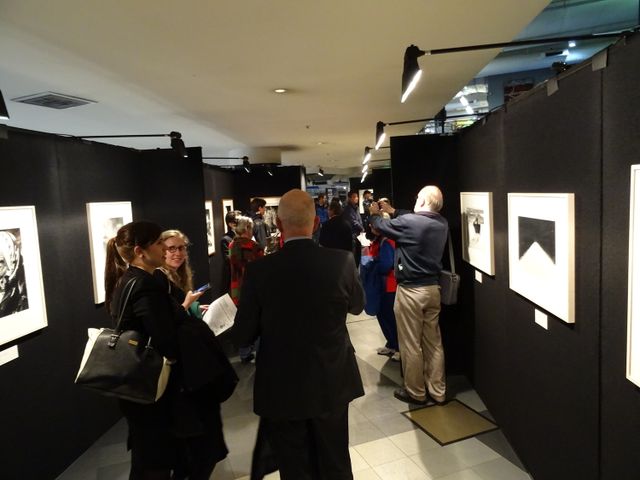
Tohoku photo exhibition opening – 3 June 2015
- Wellington Sakai Association
- The Embassy of Japan, in cooperation with the Wellington City Council hosted the “Tohoku – through the eyes of Japanese photographers” Photo Exhibition which was on display on the mezzanine floor of the Wellington Central Library from 3 June to 2 July 2015 with free admission.
- Accepted from Wellington Sakai Association feed by tonytw1
- Tagged as:
- central-library-closure
- exhibitions
- wellington-city-council
Wellington Central Library, Civic Square, Te Aro, Wellington, Wellington City, Wellington, 6011, New Zealand (OpenStreetMap)
-
-
-
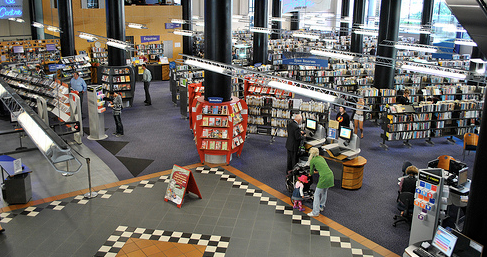
Wellington Library Coalition’s candidates survey results
- WCC Watch
- The Wellington Library Coalition have released the results of survey of Wellington City Council election candidates aimed at assessing awareness of library issues. It got a great response and is […]
- Accepted from WCC Watch feed
- Tagged as:
- libraries
-
-
-
Shared Library resources
- WCC Watch
- The Kapi-Mana reports that members of the Porirua, Lower Hutt, Kapiti Coast and Masterton libraries, as well as the Whitireia and WelTec polytechnic libraries, will soon all be able to reserve books from each other.
- Accepted from WCC Watch feed
- Tagged as:
- libraries
- porirua
- kapiti
Porirua, Wellington Region, New Zealand (OpenStreetMap)
-
-
-
Justin Lester responds to Library usage statistics
- WCC Watch
- Councillor Justin Lester has replied to our story on Tuesday.
- Tagged as:
- wellington-city-council
- libraries
-
-
-
Annual Plan: Central library changes
- WCC Watch
- A reader has sent through some interesting research they’ve done in support of their submission on the draft Annual Plan 2011/12.
- Tagged as:
- libraries
-
-
-
Links & Pieces
- WCC Watch
- Wellington City Libraries have now got a blog.
- Tagged as:
- libraries
-
-
-
Cost Cutting: Toi Poneke
- WCC Watch
- Following on from the story about potential cuts to library hours, another of the council’s cultural institutions seems to be under threat.
- Tagged as:
- libraries
-
-
-
Cost Cutting: library hours
- WCC Watch
- Reports are emerging of plans to reduce the opening hours of the Brooklyn, Wadestown and Khandallah libraries so they would only function for half of the current 10 hours they are open each day.
- Tagged as:
- khandallah
- wadestown
- brooklyn
- libraries
Brooklyn, Wellington, New Zealand (OpenStreetMap)
-
-
-
Cast your vote at the council offices or a library asap
- WCC Watch
- All voting documents must be in the hands of the Electoral Officer by 12 noon on Saturday, 9 October 2010.
- Tagged as:
- libraries
-
-
-
Council’s ’strategic priorities’ threaten to close suburban libraries in Wadestown, Brooklyn, Island Bay and Khandallah
- Wellington Scoop
- in the Wellington City Council’s draft annual plan for 2010/11 there is a major threat to our current library system – with potential for Wadestown, Brooklyn, Island Bay and Khandallah to lose their libraries.
- Tagged as:
- wadestown
- khandallah
- island-bay
- brooklyn
- wellington-city-council
- consultation
- libraries
Khandallah, Wellington, Wellington City, Wellington, 6035, New Zealand (OpenStreetMap)
-
-
-
Far Flung Adventures at your local Library
- Hutt City Council
- Know any kids aged 5 to 12 that are hungry for books? Get them into some far flung reading adventures these holidays. Win prizes while reading and earn a ticket to a grand finale adventure party.
- Tagged as:
- libraries
-