Search / “patrick bernardino issue latest”
Matching Newsitems
-
-
November Update from DCM - Together We Can End Homelessness
- Downtown Community Ministry
- 96 November Update from DCM - Together We Can End Homelessness p{ margin:10px 0; padding:0; } table{ border-collapse:collapse; } h1,h2,h3,h4,h5,h6{ display:block; margin:0; padding:0; } img,a img{ border:0; height:auto; outline:none; text-decoration:none; } body,#bodyTable,#bodyCell{ height:100%; margin:0; padding:0; width:100%; } .mcnPreviewText{ display:none !important; } #outlook a{ padding:0; } img{ -ms-interpolation-mode:bicubic; } table{ mso-table-lspace:0pt; mso-table-rspace:0pt; } .ReadMsgBody{ width:100%; } .ExternalClass{ width:100%; } p,a,li,td,blockquote{ mso-line-height-rule:exactly; } a[href^=tel],a[href^=sms]{ color:inherit; cursor:default; text-decoration:none; } p,a,li,td,body,table,blockquote{ -ms-text-size-adjust:100%; -webkit-text-size-adjust:100%; } .ExternalClass,.ExternalClass p,.ExternalClass td,.ExternalClass div,.ExternalClass span,.ExternalClass font{ line-height:100%; } a[x-apple-data-detectors]{ color:inherit !important; text-decoration:none !important; font-size:inherit !important; font-family:inherit !important; font-weight:inherit !important; line-height:inherit !important; } .templateContainer{ max-width:600px !important; } a.mcnButton{ display:block; } .mcnImage,.mcnRetinaImage{ vertical-align:bottom; } .mcnTextContent{ word-break:break-word; } .mcnTextContent img{ height:auto !important; } .mcnDividerBlock{ table-layout:fixed !important; } h1{ color:#222222; font-family:Helvetica; font-size:40px; font-style:normal; font-weight:bold; line-height:150%; letter-spacing:normal; text-align:center; } h2{ color:#222222; font-family:Helvetica; font-size:34px; font-style:normal; font-weight:bold; line-height:150%; letter-spacing:normal; text-align:left; } h3{ color:#444444; font-family:Helvetica; font-size:22px; font-style:normal; font-weight:bold; line-height:150%; letter-spacing:normal; text-align:left; } h4{ color:#949494; font-family:Georgia; font-size:20px; font-style:italic; font-weight:normal; line-height:125%; letter-spacing:normal; text-align:left; } #templateHeader{ background-color:#0f288b; background-image:none; background-repeat:no-repeat; background-position:50% 50%; background-size:cover; border-top:0; border-bottom:0; padding-top:54px; padding-bottom:54px; } .headerContainer{ background-color:transparent; background-image:none; background-repeat:no-repeat; background-position:center; background-size:cover; border-top:0; border-bottom:0; padding-top:0; padding-bottom:0; } .headerContainer .mcnTextContent,.headerContainer .mcnTextContent p{ color:#757575; font-family:Helvetica; font-size:16px; line-height:150%; text-align:left; } .headerContainer .mcnTextContent a,.headerContainer .mcnTextContent p a{ color:#007C89; font-weight:normal; text-decoration:underline; } #templateBody{ background-color:#transparent; background-image:none; background-repeat:no-repeat; background-position:center; background-size:cover; border-top:0; border-bottom:0; padding-top:27px; padding-bottom:54px; } .bodyContainer{ background-color:transparent; background-image:none; background-repeat:no-repeat; background-position:center; background-size:cover; border-top:0; border-bottom:0; padding-top:0; padding-bottom:0; } .bodyContainer .mcnTextContent,.bodyContainer .mcnTextContent p{ color:#757575; font-family:Helvetica; font-size:16px; line-height:150%; text-align:left; } .bodyContainer .mcnTextContent a,.bodyContainer .mcnTextContent p a{ color:#007C89; font-weight:normal; text-decoration:underline; } #templateFooter{ background-color:#333333; background-image:none; background-repeat:no-repeat; background-position:center; background-size:cover; border-top:0; border-bottom:0; padding-top:45px; padding-bottom:63px; } .footerContainer{ background-color:transparent; background-image:none; background-repeat:no-repeat; background-position:center; background-size:cover; border-top:0; border-bottom:0; padding-top:0; padding-bottom:0; } .footerContainer .mcnTextContent,.footerContainer .mcnTextContent p{ color:#FFFFFF; font-family:Helvetica; font-size:12px; line-height:150%; text-align:center; } .footerContainer .mcnTextContent a,.footerContainer .mcnTextContent p a{ color:#FFFFFF; font-weight:normal; text-decoration:underline; } @media only screen and (min-width:768px){ .templateContainer{ width:600px !important; } } @media only screen and (max-width: 480px){ body,table,td,p,a,li,blockquote{ -webkit-text-size-adjust:none !important; } } @media only screen and (max-width: 480px){ body{ width:100% !important; min-width:100% !important; } } @media only screen and (max-width: 480px){ .mcnRetinaImage{ max-width:100% !important; } } @media only screen and (max-width: 480px){ .mcnImage{ width:100% !important; } } @media only screen and (max-width: 480px){ .mcnCartContainer,.mcnCaptionTopContent,.mcnRecContentContainer,.mcnCaptionBottomContent,.mcnTextContentContainer,.mcnBoxedTextContentContainer,.mcnImageGroupContentContainer,.mcnCaptionLeftTextContentContainer,.mcnCaptionRightTextContentContainer,.mcnCaptionLeftImageContentContainer,.mcnCaptionRightImageContentContainer,.mcnImageCardLeftTextContentContainer,.mcnImageCardRightTextContentContainer,.mcnImageCardLeftImageContentContainer,.mcnImageCardRightImageContentContainer{ max-width:100% !important; width:100% !important; } } @media only screen and (max-width: 480px){ .mcnBoxedTextContentContainer{ min-width:100% !important; } } @media only screen and (max-width: 480px){ .mcnImageGroupContent{ padding:9px !important; } } @media only screen and (max-width: 480px){ .mcnCaptionLeftContentOuter .mcnTextContent,.mcnCaptionRightContentOuter .mcnTextContent{ padding-top:9px !important; } } @media only screen and (max-width: 480px){ .mcnImageCardTopImageContent,.mcnCaptionBottomContent:last-child .mcnCaptionBottomImageContent,.mcnCaptionBlockInner .mcnCaptionTopContent:last-child .mcnTextContent{ padding-top:18px !important; } } @media only screen and (max-width: 480px){ .mcnImageCardBottomImageContent{ padding-bottom:9px !important; } } @media only screen and (max-width: 480px){ .mcnImageGroupBlockInner{ padding-top:0 !important; padding-bottom:0 !important; } } @media only screen and (max-width: 480px){ .mcnImageGroupBlockOuter{ padding-top:9px !important; padding-bottom:9px !important; } } @media only screen and (max-width: 480px){ .mcnTextContent,.mcnBoxedTextContentColumn{ padding-right:18px !important; padding-left:18px !important; } } @media only screen and (max-width: 480px){ .mcnImageCardLeftImageContent,.mcnImageCardRightImageContent{ padding-right:18px !important; padding-bottom:0 !important; padding-left:18px !important; } } @media only screen and (max-width: 480px){ .mcpreview-image-uploader{ display:none !important; width:100% !important; } } @media only screen and (max-width: 480px){ h1{ font-size:30px !important; line-height:125% !important; } } @media only screen and (max-width: 480px){ h2{ font-size:26px !important; line-height:125% !important; } } @media only screen and (max-width: 480px){ h3{ font-size:20px !important; line-height:150% !important; } } @media only screen and (max-width: 480px){ h4{ font-size:18px !important; line-height:150% !important; } } @media only screen and (max-width: 480px){ .mcnBoxedTextContentContainer .mcnTextContent,.mcnBoxedTextContentContainer .mcnTextContent p{ font-size:14px !important; line-height:150% !important; } } @media only screen and (max-width: 480px){ .headerContainer .mcnTextContent,.headerContainer .mcnTextContent p{ font-size:16px !important; line-height:150% !important; } } @media only screen and (max-width: 480px){ .bodyContainer .mcnTextContent,.bodyContainer .mcnTextContent p{ font-size:16px !important; line-height:150% !important; } } @media only screen and (max-width: 480px){ .footerContainer .mcnTextContent,.footerContainer .mcnTextContent p{ font-size:14px !important; line-height:150% !important; } } Support DCM this Christmas Each year, Nota Bene hold a very special Christmas concert at Prefab Hall as a fundraiser for DCM’s work with people who are experiencing homelessness. Those of you who were able to visit our 50th birthday photo exhibition will have seen this image by Wellington photographer Mark Beehre which reflected the loyal support of these talented performers. We encourage you to head down and join us at Prefab for a glass of wine in the sun, some beautiful music and a chance to lift up these kaitautoko of our work. Please get the word out to all your contacts and networks! Tuesday 3 December, 6-8pm Prefab Hall, 14 Jessie Street No cover charge. Koha for DCM. <!-- --> Reaching out to the most marginalised DCM’s Outreach team helps support Wellington’s most marginalised people. It also gives Wellingtonians a way to make a real difference in the lives of people begging or sleeping rough in the city. It’s the bright blue sleeping bag that catches Natalia Cleland’s eye. The woman is lying on a wooden bench in the winter sun outside the McDonald’s on Manners Street. Her long brown hair falls over the backpack she’s using as a pillow as she tries to sleep, facing the back of the bench. While Rob Sarich stays back, both to not alarm the woman and to remain watchful, Natalia approaches and talks to her. After a few minutes, Natalia returns. "I know her. And I’m really glad to see her because she hasn’t been in for a while and I was starting to get worried. She told me she’s hungry, so I said to come in for a feed and a korero. I’ll also check where she is on the social housing register and see if there’s anything I can do." Natalia and Rob are social workers with DCM. Formerly known as the Downtown Community Ministry, for 50 years DCM has been working to end homelessness in Wellington. Offering a variety of services, one of their main focuses is on supporting their taumai (meaning ‘to settle’, and what DCM calls those who use its services) into sustainable housing and back into life. To ensure people who are experiencing homelessness get the support they need, each week day DCM social workers walk the capital’s streets, usually in pairs, on ‘Outreach’, looking for people who are begging or appear to be sleeping rough. While much of DCM’s work is funded by donors and fundraising, the Wellington City Council pays for DCM’s Outreach team as part of its commitment to ending homelessness and street begging. "Many people experiencing homelessness or street begging find their way here to DCM," says Natalia. "But there are others who we aren’t working with and who aren’t engaging with other services. So we go out to speak with them where they are, and to encourage them to spend some time with us at DCM. "We also get referrals from other social services. Like, the team at the Soup Kitchen might call to say there’s someone new in town and can we come talk to them about how DCM can support them? We take the approach that any door is the right door. We don’t mind how they get to us; we just want them to come in and spend time at DCM. Then we can begin to build a relationship with them, with the aim of getting them off the street and into a whare," says Natalia. Rob and Natalia clearly have great memories for names and faces. At Midland Park, on the lunchtime-busy Lambton Quay, the pair spot a man they’ve seen before. He’s sitting on a bench, his duffle bag tucked beside him. "To most people he looks like someone taking a rest, but we immediately see someone who’s not quite fitting in," says Rob. They both go over and talk; Natalia perches a polite distance away on the bench and Rob sits on a concrete step in front of him. They don’t talk long. "But that’s the longest we’ve managed to talk to him. Usually he doesn’t even let us sit down," says Natalia. "He just says, 'No thank you, no thank you,' and waves us off. But we usually get a bit more information each time." It takes a certain chutzpah to go up to someone sleeping rough and begging to talk about their situation. But it’s what Natalia, Rob and other members of DCM who go on Outreach do. "We’ll introduce ourselves and say where we’re from, and we’ll invite them down to DCM," says Natalia. And when they do come down, there’s a lot DCM can offer. They can talk to the physio about their aches from sleeping rough, see a dentist for the toothache that’s giving them constant pain or get something from the food bank. "We look for what’s going to interest them enough to engage, then we can start talking about housing," says Rob. There is some reciprocity expected. "That might be only that they open up to us a little too, that they give us their real name, or their real date of birth; something that shows some trust in us," says Rob. "What we do is about manaakitanga, which is about hospitality, but also about lifting up people’s mana. So we need to give them the space to show that they can do something too." There’s something the public can do as well, and it’s not about giving money or sandwiches. It’s calling the Wellington City Council if they see someone sleeping rough within the council’s boundaries. The council then calls DCM, who send one of their people out to engage with them, bashing through bush, scrambling up trees or down under bridges if that’s what it takes. "Often it’s people we would never have found on our own," says Natalia. "One time we got a call about a woman sleeping at the Freyberg Beach toilets, and another in the Balaena Bay toilets. We can’t go and knock on all the toilet doors so we wouldn’t have found them without someone calling us." While DCM certainly needs notifications from the public, the best ones come from the taumai themselves, concerned about someone new sleeping rough. "Often they will meet someone at the Night Shelter or somewhere on the streets and they’ll encourage them to come and see us, or they’ll bring them in. We love that. That shows real trust.’" – From the latest One Percent Collective Generosity Journal. Words by Lee-Anne Duncan. Images by Pat Shepherd. We are looking for new kaimahi (staff) to join DCM's Street Outreach Team. If you would love to be part of the amazing work you've just read about, please get in touch with Matt. <!-- --> Giving feels good! One Percent Collective helps to raise money for DCM and 13 other Kiwi-based charities. They’re a tiny crew of two people but they’re making a big difference. Since 2015 their regular givers have contributed $170,000 to DCM. 100% of that money has been passed on to us. One Percent Collective handles all of the admin so the money just shows up in our account – no strings attached. One Percent Collective’s running costs are covered by 50 generous individuals and corporate sponsors but they don’t have big marketing budgets. Between now and March 2020, they’re running a campaign with a target of 200 new givers. That could mean up to $10,000 extra raised per year for DCM! Their campaign celebrates those who give and the good feelings that giving brings. We encourage you to join One Percent Collective. If you already donate to us, please help One Percent Collective inspire generosity in more people by sharing this link via social media. Do good - feel good! Support One Percent Collective and DCM. <!-- --> Buy a gift for DCM We just can’t get by without a reliable freezer here at DCM. We store the wonderful donations of Pandoro products and other frozen goods which we receive from generous Wellingtonians in our foodbank freezers. But our trusty and ageing freezer is beginning to make strange noises, and we really need to replace it in the next few weeks. Can you or someone you know help us with this? A brand new chest freezer will cost us about $1,000.If this is something you'd like to purchase, or contribute toward, please get in touch. <!-- --> Please help us get the message out there! Forward this email on to everyone you can think of who may be interested in how to respond to homelessness, and just generally people who are passionate about Wellington. <!-- --> Read More Success Stories Nāku te rourou, nāu te rourou, ka ora ai te iwi With your basket and my basket, the people will thrive <!-- --> Copyright © 2019 DCM. All rights reserved. Our mailing address is: DCMPO Box 6133Marion SqWellington, Wellington 6011 New ZealandAdd us to your address book Want to change how you receive these emails? You can update your preferences or unsubscribe from this list.
- Accepted from DCM alerts archive by tonytw1
- Automatically tagged as:
- religious-groups
-
-
-

Circa 2015 Season - jam-packed with theatre for all audiences!
- Circa Theatre
- Red Riding Hood, the PantomimeBy Roger HallSongs by Paul Jenden and Michael Nicholas WilliamsDirected by Susan Wilson2-10 JanuaryCirca One What a big smile you’ll have …Don’t miss Circa’s fabulous Christmas panto! And this year Red Riding Hood is back with one of the great traditional stories – innocent Red Riding Hood, her poor, short sighted grandmother, and of course the handsome woodcutter and that villain of all villains, the Wolf!There’s lots of laughter, hilarious jokes and musical goodies in Red’s basket as she sets off on her journey to entertain young and old with this marvellous magical treat.“A great way to introduce kids to the magic of theatre, and Red Riding Hood is easily the ideal Christmas outing for the holdiays … a treat” – Salient“Roger Hall’s helter-skelter Red Riding Hood… is wonderfully exuberant seasonal fun” – The Dominion Post The Kitchen at the End of the WorldBy William ConnorDirected by Steffen Kreft16-25 JanuaryCirca Two “Something is coming. I don’t know what it is. And I don’t know if I should fight it or welcome it.” One snowy evening, an empty 83-room hotel on the edge of the Vastness receives a thin guest who has walked all the way from the City. Penniless, he is smuggled into the hotel kitchen where a kind cook works near an extraordinary thyme plant. He says that creativity is dying. Described as “intensely beautiful”, “provocative and moving”, The Kitchen at the End of the World is the story of marionettes who know they are limited by the extent of their strings – even kissing can tangle them – but they crave what lies beyond their reach. A story about home, the unknown, and the courage to face everything in between. The show captivated audiences at its sell-out debut season during the Greytown Festival 2012and is a powerful reminder that puppetry is not just a children's art form. SeedBy Elisabeth EastherDirected by Kerryn Palmer17 January – 14 FebruaryCirca One SEX & DRUGS, WITHOUT THE ROCK ‘N’ ROLL IVF isn’t foolproof and IUDs aren’t failsafe. iPhones come with ovulation apps and ‘choosing from the menu’ means selecting your sperm. Seed follows four women as they try to get pregnant, stay pregnant or become un-pregnant - the dilemmas of modern reproduction. Elisabeth Easther’s Seed is winner of the 2014 Adam New Zealand Play Award, which recognises and celebrates the best in new writing for the theatre. It’s a multi-narrative play about the mysterious business of fertility, with all of its challenges, heartaches and hormones. Seed is a drama that’ll have you laughing ‘til the tears are running down your face, and it’s a comedy that’ll make you cry. “Highly entertaining, funny and sophisticated” - Adam Play Award Judges “[A] sophisticated, witty and very contemporary meditation on the timeless processes of procreation.” - NZ Herald STARRING: Tess Jamieson-Karaha, Jamie McCaskill, Emily Regtien, Holly Shanahan and Amy Tarleton Warning: Adult themes and strong language. Demolition of the CenturyBased on the novel by Duncan SarkiesCreated by Duncan Sarkies and Sean O’Brien31 January – 21 FebruaryCirca Two Welcome to the world of Tom Spotswood, an insurance investigator who has lost his socks, his suitcase, his ex-wife and his son, Frank. Fresh from performances in the New Zealand Festival, Auckland Writers Festival, Tauranga Arts Festival and Nelson Arts Festival, Demolition of the Century sees author/performer Duncan Sarkies (Two Little Boys/Scarfies/Flight of the Conchords) stage a humorous and sometimes heartbreaking look at families, memories and the fragility of the human mind. He is accompanied by musician Joe Blossom, who plays a soundtrack that is both haunting and invigorating. “A series of brilliant vignettes, delivered in an inspired cabaret-style reading by the multi-talented Sarkies, and outstanding musician Joe Blossom… Blossom not only creates fluid and essential musical transitions, but his beautiful vocals, self-accompanied on piano and guitar, imbue this work with a powerful pathos that allow glimpses of the inner landscape of these characters. Demolitionis a fast-paced, darkly captivating cabaret-comedy, which leaves us fully entertained and tantalizingly close to solving a puzzle.” –Bay of Plenty Times Wake Up TomorrowPresented by Everybody Cool Lives HereIn association with ActiveDirected by Isobel MacKinnon21-28 FebruaryCirca One Welcome aboard Active Airlines! Join the eccentric passengers during this compelling, surreal and funny flight. Made under the guidance of Wellington theatre makers in collaboration with Active, a service for youth with an intellectual impairment, Wake Up Tomorrow was created from the minds of these incredible young people. Audiences will be transported from the mundane moments on a long haul flight to bizarre and hilarious scenarios. Please fasten your seat belts, make sure you are in the upright position and enjoy the journey. We may or may not arrive at the expected destination. “In a work of this kind there is always a delicate balance to be held between presenting a polished product at the same time as allowing for a playful improvised quality to emerge that allows the actors to perform to their strengths. This was very evident in the final few scenes …” – Madeline McNamara Yep, Still Got It!By Jane Keller and Sandy BrewerDirected by Alan PalmerMusical Director Michael Nicholas Williams28 February – 21 MarchCirca Two YOUTH IS A GIFT OF NATURE, BUT AGE IS A WORK OF ART – Stanislaw Jerzy Lec Following the huge success of BOOMERS BEHAVING BADLY, Jane Keller returns with another hilarious show. A little older, a little wiser, a lot sassier, and even more confused. Whatever happened to the days when a cloud was a cloud, when face time was over a G&T, and we punctuated our sentences with full stops - not smiley faces? From senior sex and those pesky STDs to shopping sprees and colonoscopies, Jane shares stories of abject embarrassment, medical (mis)adventures, empowerment, and acceptance. In YEP, STILL GOT IT! she embraces the power of an older woman with no FOMO. Together with the brilliant Michael Nicholas Williams on the piano Jane brings a brand-new show to Circa Two combining her special style of storytelling with her virtuoso Broadway voice. Capital E Kids FestivalCirca One CaterpillarsBy Kallo Collective Directed by Thomas MoncktonProduced by Show Pony7 March 10 am & 11.30am A tale of two puppeteers’ failed attempts at beautification. In the magical world of flitting butterflies, jumping eggs and giant swaying flowers, two lycra-clad puppeteers try their hardest to remain unseen and at service to their puppets: two enormous plump caterpillars. Caught in the wrong place at the wrong time, with nothing but their wits to cover up their escalating blunders, two appealingly hopeless clown puppeteers bring upbeat absurdity, slapstick silliness, and a good dose of reality to their hilarious and unpredictable antics. Beards! Beards! Beards!By Trick of the Light TheatreDirected by Hannah SmithWritten by Ralph McCubbin HowellProduced by Show Pony21 March 10am & 1pm Beatrix didn’t want a tiara. Beatrix wanted a BEARD! From Charles Darwin to Abraham Lincoln, Karl Marx to Mr Twit, it is said the secret to power and greatness is all in the size and shape of the beard. This is a tale of one young girl’s increasingly inventive efforts to grow the world’s most magnificent beard. Join a madcap and hilarious musical romp of physical comedy and clowning, as our plucky young heroine shakes up social rules and attempts to answer the questions that have puzzled mankind since the dawn of the beard. Suitable for children 5+. The PianistBy Circo Aereo (Fin) and Thomas Monckton (NZ)In conjunction with Show Pony (NZ)Directed by Sanna Silvennoinen and Thomas Monckton7-22 MarchCirca One Direct from Edinburgh Fringe and the London Mime Festival, last year’s hit returns to Circa! “It would be no exaggeration to declare Thomas Monckton nothing short of a genius.” – Broadway Baby (UK) “I doubt very much that you’ll see, in fact I am prepared to bet on it, a funnier show this year…miss him at your peril” – The Dominion Post (NZ) Fresh from a five-star reviewed season at the Edinburgh Festival Fringe and a sell-out season at Circa Two last year, award-winning performer Thomas Monckton returns with his smash hit The Pianist, this time at Circa One! The Pianist is a solo comic contemporary circus piece by Thomas Monckton (NZ) and Circo Aereo (Finland). The show is centered on, in, under, and around the magnificent grand piano. Accompanying this elegant apparatus is the poised pianist himself. Only he is so focused on impressing everyone that before he realises it, his show has transformed from the highbrow concert he hoped for, into a spectacularly amusing catastrophe. Suitable for all ages. The Mystery of Edwin DroodA musical by Rupert HolmesDirected by Lyndee-Jane Rutherford28 March – 25 AprilCirca One Who the Dickens did the deed? You decide! A non-stop ride of mystery, murder, and musical delight! Based on Charles Dickens’ final, unfinished novel, The Mystery of Edwin Drood is filled with clues, red herrings, villainy, and debauchery. Everyone on stage is a suspect – and it's up to you to decide how this mystery ends!Hot off Broadway, this Tony Award-winning theatrical genius is led by director Lyndee-Jane Rutherford (Midsummer (a play with songs)), who reunites with the artistic team that brought Grease and Mamma Mia to the Wellington stage. The cast includes beloved actor of stage, screen and radio, Lloyd Scott, and internationally renowned soprano, Barbara Graham (Christine, Phantom of the Opera). The Mystery of Edwin Drood boasts spectacular big dance numbers, rousing showtunes, stunning theatrics, magic, and illusions! Tony Awards for Best Musical, Best Book, and Best Score“One of the most inventive, inspired and rousing musicals ever devised.”—AM New York“Infectious fun!”—Time Out New York “Bawdy fun!”—Associated Press “Sheer fun!”—The Wall Street Journal Two MortalsDirected by Geoff PinfieldPerformed by Rachael Dyson-McGregor & Mike McEvoyComposed by Beatrice Lewis1-18 AprilCirca Two 'A powerful theatrical experience suffused with humour, beauty and emotional intelligence' – The Melbourne AgeTwo Mortals is a delicate, poetic and humorous exploration of life, death and the moment in between. Composed word-for-word from interviews with people who live and work at the ends of life – morticians, cryogenicists, palliative care workers and ministers – Two Mortals weaves these true stories and experiences into a richly theatrical exploration of mortality. This uplifting work about one of our society's most taboo subjects was directed by Chapman Tripp Director of the Year Geoff Pinfield. Created and performed by Rachael Dyson-MacGregor and Mike McEvoy, Two Mortals sold out two critically-acclaimed seasons at Melbourne's La Mama Theatre. Improv for KidsBy The Improvisors7-18 AprilCirca Two Kids love theatre that’s interactive. So do the Improvisors. Kids (and their grown-ups) loved the 2014 season of Improv For Kids, so we’re bringing it back. It’s a great opportunity to introduce your kids to the world of live theatre. We may not have millions of dollars worth of computer-generated effects, but we do listen to kids and we make their ideas central to what happens on stage. In Improv For Kids, imagination is the best special effect of them all! Don JuanBased on Don Juan by MoliereCreated by A Slightly Isolated DogDirected by Leo Gene Peters25 April – 23 MayCirca Two World Premiere A sexy, fierce, raucous celebration. Don Juan explodes with the energy of a music gig or a club. It’s a cabaret. It’s chaos. It’s a furious adrenalized romp through the games of attraction and sexuality. It’s the BEST… PARTY… EVER. Five mad performers use a variety of theatrical forms and styles to bring an adaptation of Moliere’s classic play to life. Loaded with pop songs and flirting, this imaginative work will continually intrigue, delight and surprise. While the bar keeps serving drinks. All night long. Created by A Slightly Isolated Dog, one of Wellington’s most innovative and exciting companies. Critically acclaimed and award winning shows include: Death and the Dreamlife of Elephants (2009, 2011), Perfectly Wasted (2012 - in partnership with Long Cloud Youth Theatre) and Settling (2007). A Servant to Two MastersBy Carlo GoldoniA new adaptation by Lee HallDirected by Ross Jolly2-30 MayCirca One NZ Premiere Love, passion and pandemonium Goldoni’s much-loved comic classic is a masterpiece starring a wily servant whose cheeky, inventive trickery gets the best of his masters, in a merry mix-up of mayhem and mistaken identity. Truffaldino, the scheming and perpetually hungry servant, concocts a zany scheme to double his wages (and his meals) by simultaneously serving two masters – the lovelorn Beatrice (disguised as a man) and her lost lover Florindo. Hilarity abounds In this sharp, new, rapid-fire adaptation by award winning dramatist Lee Hall (The Pitmen Painters, Billy Elliot). A delicious, madcap Italian comedy of lovers, disguises, tricks, traps, mishaps and meatballs! “A sparkling, wonder filled new version by Lee Hall... An evening to cherish” – Daily Mail “A hugely enjoyable night out" – Covent Garden Life TheatresportsBy The Improvisors3 May – 14 JuneCirca Two Part of NZ International Comedy Festival The Improvisors are back at Circa with another season of this very popular show. Each night two teams of Improvisors take suggestions from the audience and spin them into short scenes, songs, poems or whatever else takes their fancy. Each show is completely different – what does stay the same is that Theatresportsis always a great night’s entertainment for the whole family. We don’t know what ideas you are going to throw at us – we do know that our kind of improv magic has been keeping audiences laughing over many years. Theatresports – putting the “make up” on stage. Second AfterlifeBy Ralph McCubbin HowellDirected by Kerryn Palmer29 May – 13 JuneCirca Two Return Season of the 2014 Young and Hungry sensation!Dan was an internet junkie – now he’s calling it quits. But in order to forge a new profile, he must face up to his online history and it’s not going down without a fight.When Dan finds himself sucked into the Second Afterlife – a dark underworld of the internet, a very real and dangerous landscape of broken memes, deleted pages, and the ghosts of profiles past. Second Afterlife is a dark comedy about life (and death) in the digital age. Inspired by Dante's Inferno, and in the tradition of Scott Pilgrim vs. the World, it is a twisted allegory for the Facebook generation – a poetic, ass-kicking romp to the darkest corners of the web. “Ralph McCubbin Howell cements his status as one of NZ's best young playwrights with Second Afterlife and director Kerryn Palmer, her designers and crew, and her exemplary cast of six do him proud.” - TheatreviewBy arrangement with Playmarket.Edge/Turning PageBroadway Star, ANGELICA PAGE“An actress of the highest possible voltage” – Wall Street JournalPerforming two shows, alternate nights, two weeks only6-20 JuneCirca One EDGE written by PAUL ALEXANDER Set in 1963 on the day of Sylvia Plath’s death, Edge presents the self-told story of the troubled poet and author of The Bell Jar, The Colossus, Ariel and the Pulitzer-Prize winning Collected Poems. “… a resurrected Sylvia Plath… the showcase of a lifetime” NEW YORK TIMESRETURNING TO OUR STAGE 10 YEARS AFTER ITS SENSATIONAL 2005 CIRCA SEASON TURNING PAGE written by ANGELICA PAGEGeraldine Page’s sparkling career earned her a record-breaking eight Academy Award nominations, an Oscar for Best Actress in 1986, and made her one of the most influential American artists of the 20th century. Turning Page is the triumphant and heartbreaking true story of one of the most celebrated actresses of all time, written and performed by the person who knew her best: her own daughter. “A privilege” Los Angeles Times Matariki Development FestivalPresented by Tawata Productions22 June – 4 JulyCirca TwoAn international indigenous playwrights’ festival boasting an enviable whakapapa of the very best of contemporary Maori & Pasifika theatre. MDF 2015 features new writing by Natano Keni, James Nokise and Pikihuia Haenga. the beautiful onesWritten and Directed by Hone KoukeProduced by Tawata ProductionsMovement by Dolina Wehipeihana & Hone KoukaDesign by K*Saba, Tama Waipara, Johnson Witehira, Wai Mihinui, Jaimee Warda, Sopheak Seng, Laurie Dean 27 June – 11 JulyCirca One World Premiere A hyperreal digital love story. the beautiful ones is a story of young love. A promise Hana made to Ihia – a promise to return. Will she return? Will love triumph over temptation? the beautiful ones bursts from the late night sheen of a city club. Beautiful bodies & vital vocals. Defiant dance moves and the meaning of love. the beautiful ones features a dance floor for the audience to share the vibe. From the company that brought you I, George Nepia, Sunset Road and TŪ. Warning: Contains Big Beats & Dance Music. The Ugly OneWritten by Marius von Mayenburg; translated by Maja ZadaDirected by Giles Burton11 July – 8 AugustCirca Two A scalpel sharp, absurd comic fantasy about beauty. Lette thinks he is normal, but when he discovers that he is, in fact, unbelievably ugly he turns to a plastic surgeon for help. Suddenly he is the most beautiful man in the world. Fame and riches follow; women want to sleep with him and men want to look like him. And with surgery they can look like him. Exactly like him. Received around the world to great acclaim, The Ugly One now receives its NZ premiere. With writer von Mayenburg’s star very much in the ascendant, this show is a must see. "A stripped bare satire on the nature of beauty. If you are interested in theatrical story-telling see this show." – The Times (UK) “Savage social satire … A small but perfectly formed play” – The Guardian (UK) “The concept is simple but the philosophical implications are profound: What if money could buy the perfect face? It’s The Elephant Manmeets The Matrix” – Post City (Toronto) The Hound of the BaskervillesBy Arthur Conan DoyleAdapted for the stage by Clive FrancisDirected by Ross Jolly25 July – 29 AugustCirca One Sherlock Holmes vs the Powers of Evil A bloodcurdling howl is heard across a cold, moonlit moor; the horrifying, spectral hound has claimed another victim … When Sir Charles Baskerville is found dead on his remote estate, in eerie, seemingly supernatural circumstances, Sherlock Holmes, the legendary, world-famous detective and his assistant, the ever-reliable Dr Watson are called upon to unravel the extraordinary mystery of The Hound of the Baskervilles. Sir Arthur Conan Doyle's most famous and most popular story, in an exhilarating adaptation by Clive Francis (Our Man in Havana), sees four actors playing all the parts in this gripping, classic tale of terror. A thrilling, ripping good night of fun, drama and suspense! “A cracking good yarn … Excellent ... Highly enjoyable." - Daily Telegraph "Chillingly atmospheric... this fun show will really thrill. " - The Observer Downton AdlibBy The Improvisors2 August – 27 SeptemberCirca Two Quality costume drama – only funnier. An aristocratic English family and their servants face the challenges of life in the early twentieth century. A cast of Wellington’s top improv comedians face the challenge of making up a brand new episode every night. We supply the characters, you supply the key plot ingredients and the result is costume drama as you’ve never seen it before. Love, laughter, passion and a wide range of hats! The Travelling SquirrelBy Robert LordDirected by Susan Wilson5 September – 3 OctoberCirca One NZ Premiere “We that live to please must please to live” – Dr Samuel Johnson From Robert Lord, the author of the award-winning and much loved Joyful & Triumphant, comes The Travelling Squirrel, a romp through the fickle nature of the entertainment industry. Protagonist Bart compares his struggles as a writer to those of Roger the squirrel, a misunderstood painter. Hilarious and packed with larger-than-life characters, this play is a testament to Lord’s ability to write brilliant comedy. A satire tempered with deep affection, The Travelling Squirrel depicts a dangerous world in which fame and fortune are always temptingly just around the corner “This is surely one of Lord’s funniest plays, just as it is one of the most moving” – Philip Mann “For two decades, Robert Lord’s plays astonished and entertained theatre audiences with their sharp satire and flamboyant farce.” - David O’Donnell The BookbinderWritten by Ralph McCubbin HowellDirected by Hannah SmithPresented by Trick of the Light Theatre25 September – 10 OctoberCirca TwoThey say you can get lost in a good book. But it's worse to get lost in a bad one... From award-winning company Trick of the Light Theatre (The Road That Wasn’t There) comes a story of mystery, magic and mayhem. The Bookbinder weaves shadowplay, paper art, puppetry, and music into an original dark fairytale in the vein of Coraline and Jonathon Strange and Mr Norrell. An inventive one-man performance for curious children and adventurous adults... suitable for children 8+. Best Theatre and Best in the Fringe - NZ Fringe 2014 International Excellence Award - Sydney Fringe 2014 "Spell-binding storytelling at its purest and best..." - Theatreview"Absorbing and imaginative… a small gem of theatre" - The Dominion Post "Tuned to perfection... Bookworms of all stripes and ages will adore it."- The Age, Melbourne For more information visit www.trickofthelight.co.nz GiftedBy Patrick EvansBased on the novel of the same nameDirected by Conrad Newport10-31 OctoberCirca One It is 1955 and beyond the famous hedge something magic is about to happen. In his beloved garden the “Father of the Nations Fiction” Frank Sargeson is waiting for his old mate Harry to turn up. Instead, he encounters a young woman fresh from a mental institution. Her name is Janet Frame. Their world is about to change forever. From the director of Rita and Douglas comes this very funny and profoundly moving story. Touring the Arts Festivals in 2013 to incredible reviews and widespread acclaim it’s now Wellington’s chance to experience this celebrated New Zealand production. “Like an exquisite work of art, the play Gifted is honed to near perfection … go and see this gorgeous production.” – Taranaki “Superb performances by all … it is thrilling … it makes for astonishingly joyful, mischievous theatre.” – Dunedin “Sheer quality” – Christchurch Adventures in PianolandWritten and performed by JAN PRESTONDirected by GAYLENE PRESTON15-17 OctoberCirca Two How I learned to stop worrying and love the piano The irrepressible Jan Preston comes clean on her longstanding and sometimes bumpy road to piano stardom. Jan will spin yarns from dives in Soho to the concert halls of Europe, to stealing a piano in broad daylight from the 1860s Bar in Lambton Quay. She will accompany herself, of course, on Circa Theatres' lovingly cared for piano. You will hear Chopsticks as you have never heard it, with Jan's original songs and compositions providing perfect counterpoint to her story. AcheBy Pip HallDirected by Lyndee-Jane Rutherford24 October – 21 NovemberCirca Two Fate, chance and rooftop romance. Ache is a fateful comedy about two thirty-somethings trying to find their way through modern love, materialism and the Wellington dating-drought. At a time when we are promised happiness with the swipe of a card or the swig of a bottle, true joy and connection seems almost impossible. At crossroads and rooftop gardens, fate decides to surprise them. At last, connection, chemistry, charisma. He’s perfect, she’s gorgeous. Only timing’s not as kind – he’s taken. Is it just not meant to be or will she push timing aside and take fate into her own hands? Achingly-funny and heart-breakingly sad, Ache is a modern story of love, timing and seizing the day.Don’t miss this WELLINGTON PREMIERE, finally on our stage after its SOLD-OUT season at Christchurch’s Court Theatre. All Our SonsBy Witi IhimaeraPresented by Taki Rua5-14 NovemberCirca One World Premiere Courage and loyalty is tested in this new play by Witi Ihimaera “Once they fought each other, now shoulder to shoulder they fight together” Two generations go to war while a third fights a battle to keep her family at home. Waru Mataira and his two sons Tai and Rangi volunteer to represent the Maori iwi of Mataira Mountain in the New Zealand Native Contingent to Gallipoli. Under the guidance of their Pakeha leader Alec Campbell, they join the battle on the western front as part of the newly titled Pioneer Battalion where their courage is tested and so too are their loyalties. Taki Rua Productions presents the World Premiere of All Our Sons, a ground-breaking play by Witi Ihimaera. Roger Hall’s Robin Hood, the PantomimeSongs by Paul Jenden and Michael Nicholas WilliamsDirected by Susan Wilson21 November – 20 DecemberCirca One There he is! Oh no he isn’t. Oh, yes he is!! With loaded bow behind a treeYou never know where he will beHe moves like velvet, sleek and svelteAround the Wellington town belt His eye is quick, his aim is sureHe robs the rich to feed the poorHe’s always on the side of goodThe hero known as Robin Hood He lies in wait for those who ownA big estate and second homeFor millionaires who don’t pay tax For bankers who don’t watch their backs You’ll see them suffer their defeatIn Circa’s brand new summer treatA pantomime for one and allIt’s Robin Hood by Roger Hall “fabulously fast and furious ... A treat” - Capital Times “ACTION-PACKED… TONS OF FUN FOR YOUNG AND OLD!” - The Dominion Post A Child’s Christmas in Wales (and other memories of childhood)By Dylan ThomasDramatised and performed by Ray Henwood28 November – 20 DecemberCirca Two What has been described as one of the most magical of Christmas stories is brought to the stage by Ray Henwood. It is rounded out by other memories of childhood, first presented by Dylan Thomas in one of his regular talks on the BBC Welsh Home Service. Thomas had a very happy childhood and so many of his young experiences resonate still with us today.The town of Swansea which is the locale of his stories had changed little by the time Ray was growing up. While Dylan lived in more salubrious surroundings, Ray was a “Sandfields” boy referred to by Dylan- and played in many of the areas described in the stories. It is a truly timeless tale and family celebrations have changed little, even in countries that celebrate a summer Christmas. Dylan’s work brings back memories that resonate so well with young and old. it is a true celebration of our experiences growing up. www.circa.co.nz
- Accepted from drama* on the waterfront posts
- Tagged as:
- tawa
- town-belt
- snow
- matariki
Circa Theatre, Taranaki Street, Te Aro, Wellington, Wellington City, Wellington, 6011, New Zealand (OpenStreetMap)
-
-
-
Lifting up the most marginalised during Lockdown 2021
- Downtown Community Ministry
- 96 Lifting up the most marginalised during Lockdown 2021 p{ margin:10px 0; padding:0; } table{ border-collapse:collapse; } h1,h2,h3,h4,h5,h6{ display:block; margin:0; padding:0; } img,a img{ border:0; height:auto; outline:none; text-decoration:none; } body,#bodyTable,#bodyCell{ height:100%; margin:0; padding:0; width:100%; } .mcnPreviewText{ display:none !important; } #outlook a{ padding:0; } img{ -ms-interpolation-mode:bicubic; } table{ mso-table-lspace:0pt; mso-table-rspace:0pt; } .ReadMsgBody{ width:100%; } .ExternalClass{ width:100%; } p,a,li,td,blockquote{ mso-line-height-rule:exactly; } a[href^=tel],a[href^=sms]{ color:inherit; cursor:default; text-decoration:none; } p,a,li,td,body,table,blockquote{ -ms-text-size-adjust:100%; -webkit-text-size-adjust:100%; } .ExternalClass,.ExternalClass p,.ExternalClass td,.ExternalClass div,.ExternalClass span,.ExternalClass font{ line-height:100%; } a[x-apple-data-detectors]{ color:inherit !important; text-decoration:none !important; font-size:inherit !important; font-family:inherit !important; font-weight:inherit !important; line-height:inherit !important; } .templateContainer{ max-width:600px !important; } a.mcnButton{ display:block; } .mcnImage,.mcnRetinaImage{ vertical-align:bottom; } .mcnTextContent{ word-break:break-word; } .mcnTextContent img{ height:auto !important; } .mcnDividerBlock{ table-layout:fixed !important; } h1{ color:#222222; font-family:Helvetica; font-size:40px; font-style:normal; font-weight:bold; line-height:150%; letter-spacing:normal; text-align:center; } h2{ color:#222222; font-family:Helvetica; font-size:34px; font-style:normal; font-weight:bold; line-height:150%; letter-spacing:normal; text-align:center; } h3{ color:#444444; font-family:Helvetica; font-size:22px; font-style:normal; font-weight:bold; line-height:150%; letter-spacing:normal; text-align:center; } h4{ color:#949494; font-family:Georgia; font-size:20px; font-style:italic; font-weight:normal; line-height:125%; letter-spacing:normal; text-align:center; } #templateHeader{ background-color:#07486a; background-image:none; background-repeat:no-repeat; background-position:50% 50%; background-size:cover; border-top:0; border-bottom:0; padding-top:54px; padding-bottom:54px; } .headerContainer{ background-color:transparent; background-image:none; background-repeat:no-repeat; background-position:center; background-size:cover; border-top:0; border-bottom:0; padding-top:0; padding-bottom:0; } .headerContainer .mcnTextContent,.headerContainer .mcnTextContent p{ color:#757575; font-family:Helvetica; font-size:16px; line-height:150%; text-align:left; } .headerContainer .mcnTextContent a,.headerContainer .mcnTextContent p a{ color:#007C89; font-weight:normal; text-decoration:underline; } #templateBody{ background-color:#transparent; background-image:none; background-repeat:no-repeat; background-position:center; background-size:cover; border-top:0; border-bottom:0; padding-top:27px; padding-bottom:54px; } .bodyContainer{ background-color:#transparent; background-image:none; background-repeat:no-repeat; background-position:center; background-size:cover; border-top:0; border-bottom:0; padding-top:0; padding-bottom:0; } .bodyContainer .mcnTextContent,.bodyContainer .mcnTextContent p{ color:#757575; font-family:Helvetica; font-size:16px; line-height:150%; text-align:left; } .bodyContainer .mcnTextContent a,.bodyContainer .mcnTextContent p a{ color:#007C89; font-weight:normal; text-decoration:underline; } #templateFooter{ background-color:#07486a; background-image:none; background-repeat:no-repeat; background-position:center; background-size:cover; border-top:0; border-bottom:0; padding-top:45px; padding-bottom:63px; } .footerContainer{ background-color:transparent; background-image:none; background-repeat:no-repeat; background-position:center; background-size:cover; border-top:0; border-bottom:0; padding-top:0; padding-bottom:0; } .footerContainer .mcnTextContent,.footerContainer .mcnTextContent p{ color:#FFFFFF; font-family:Helvetica; font-size:12px; line-height:150%; text-align:center; } .footerContainer .mcnTextContent a,.footerContainer .mcnTextContent p a{ color:#FFFFFF; font-weight:normal; text-decoration:underline; } @media only screen and (min-width:768px){ .templateContainer{ width:600px !important; } } @media only screen and (max-width: 480px){ body,table,td,p,a,li,blockquote{ -webkit-text-size-adjust:none !important; } } @media only screen and (max-width: 480px){ body{ width:100% !important; min-width:100% !important; } } @media only screen and (max-width: 480px){ .mcnRetinaImage{ max-width:100% !important; } } @media only screen and (max-width: 480px){ .mcnImage{ width:100% !important; } } @media only screen and (max-width: 480px){ .mcnCartContainer,.mcnCaptionTopContent,.mcnRecContentContainer,.mcnCaptionBottomContent,.mcnTextContentContainer,.mcnBoxedTextContentContainer,.mcnImageGroupContentContainer,.mcnCaptionLeftTextContentContainer,.mcnCaptionRightTextContentContainer,.mcnCaptionLeftImageContentContainer,.mcnCaptionRightImageContentContainer,.mcnImageCardLeftTextContentContainer,.mcnImageCardRightTextContentContainer,.mcnImageCardLeftImageContentContainer,.mcnImageCardRightImageContentContainer{ max-width:100% !important; width:100% !important; } } @media only screen and (max-width: 480px){ .mcnBoxedTextContentContainer{ min-width:100% !important; } } @media only screen and (max-width: 480px){ .mcnImageGroupContent{ padding:9px !important; } } @media only screen and (max-width: 480px){ .mcnCaptionLeftContentOuter .mcnTextContent,.mcnCaptionRightContentOuter .mcnTextContent{ padding-top:9px !important; } } @media only screen and (max-width: 480px){ .mcnImageCardTopImageContent,.mcnCaptionBottomContent:last-child .mcnCaptionBottomImageContent,.mcnCaptionBlockInner .mcnCaptionTopContent:last-child .mcnTextContent{ padding-top:18px !important; } } @media only screen and (max-width: 480px){ .mcnImageCardBottomImageContent{ padding-bottom:9px !important; } } @media only screen and (max-width: 480px){ .mcnImageGroupBlockInner{ padding-top:0 !important; padding-bottom:0 !important; } } @media only screen and (max-width: 480px){ .mcnImageGroupBlockOuter{ padding-top:9px !important; padding-bottom:9px !important; } } @media only screen and (max-width: 480px){ .mcnTextContent,.mcnBoxedTextContentColumn{ padding-right:18px !important; padding-left:18px !important; } } @media only screen and (max-width: 480px){ .mcnImageCardLeftImageContent,.mcnImageCardRightImageContent{ padding-right:18px !important; padding-bottom:0 !important; padding-left:18px !important; } } @media only screen and (max-width: 480px){ .mcpreview-image-uploader{ display:none !important; width:100% !important; } } @media only screen and (max-width: 480px){ h1{ font-size:30px !important; line-height:125% !important; } } @media only screen and (max-width: 480px){ h2{ font-size:26px !important; line-height:125% !important; } } @media only screen and (max-width: 480px){ h3{ font-size:20px !important; line-height:150% !important; } } @media only screen and (max-width: 480px){ h4{ font-size:18px !important; line-height:150% !important; } } @media only screen and (max-width: 480px){ .mcnBoxedTextContentContainer .mcnTextContent,.mcnBoxedTextContentContainer .mcnTextContent p{ font-size:14px !important; line-height:150% !important; } } @media only screen and (max-width: 480px){ .headerContainer .mcnTextContent,.headerContainer .mcnTextContent p{ font-size:16px !important; line-height:150% !important; } } @media only screen and (max-width: 480px){ .bodyContainer .mcnTextContent,.bodyContainer .mcnTextContent p{ font-size:16px !important; line-height:150% !important; } } @media only screen and (max-width: 480px){ .footerContainer .mcnTextContent,.footerContainer .mcnTextContent p{ font-size:14px !important; line-height:150% !important; } } Lockdown 2021 has seen us working together once again to ensure that the most marginalised are supported at this challenging time. Lifting up the most marginalised during Lockdown 2021 Just as we did in 2020, Lockdown 2021 has seen us working together once again, to ensure that the most marginalised are supported at this challenging time. From DCM kaimahi, to our team of health professionals, to our wonderful supporters - here members of team DCM talk about their work supporting the most marginalised during the latest lockdown. Natalia Outreach team Natalia and Joanne headed out on outreach together during lockdown. “We had a pair on outreach every day during lockdown, following up on notifications sent to us from the council or the public. We had way more notifications in the three weeks at levels 3 and 4 than we had had in the previous entire month. During lockdown, everyone on team DCM works together, doing whatever it takes to support taumai* during these challenging times. Members of our Outreach team have manned the 0800 number, been scribe support for kaimahi who were on the ground, supported on-site sessions, and delivered food and welfare checks, all on top of following up on notifications. Members of other teams have also gone out with us when we have needed support. Joanne has been a fantastic member of team DCM for some years now; she is currently part of the Aro Mai Housing First team out at the Hutt. One afternoon during lockdown, Joanne and I were doing street outreach around the Wellington CBD. We had some notifications to check on, and as we were walking back to base we came across a taumai who everyone at DCM had been trying to find during the week – we wanted to get him into the emergency accommodation (EH) that had been booked for him. With appropriate social distancing, Joanne and I were able to bundle him and his blankets up and to walk him about a kilometre up the road to the EH where he happily checked in. It helped that Joanne bought him some coffee, sugar and milk and promised him that she would deliver a food parcel to him the next day; this was enough incentive for him to stay. It was a job very well done, and at last we were able to head back to the office. Just before we got to Dixon Street who did we see, but another taumai who everyone at DCM had been looking for and trying to get into the accommodation. After a bit of convincing (and half of Joanne’s cheese scone – boy she’s good!!), he too turned around and followed us up to the accommodation and happily checked in. What a long, but successful day that one was! When the rest of the city goes in to lockdown, DCM and our NGO colleagues continue to fill the void that other agencies and businesses leave when they close their doors. For example, people can contact MSD case managers by phone, but what if you don’t have a phone or any money to buy one? People who have no fixed abode and lose their Eftpos cards can’t access their money because the banks are closed and so they cannot go into a bank to order a new card. Rather they would have to log in to internet banking (a barrier for most of the people we work with) and have a bank card sent to their address (another barrier for many taumai). In these real life lockdown examples, DCM has stepped in to give people cell phones with credit, and to organise for benefits to be sent to DCM’s MMS account and taumai given DCM Eftpos cards in the meantime, so they can access their money. We leave the safety of our own homes and safe bubbles, to continue to offer face to face, daily support for people who cannot access some basic human rights, because those who provide the services aren’t able to offer a solution that meets the needs of their most marginalised clients.” George Aro Mai Housing First team George and Jay load up the car with food parcels to be delivered to taumai during lockdown. “I joined the team at DCM in June, so I was still a fairly new team member when we went back in to lockdown. We were immediately paired up with a bubble partner; I was paired with Jay and the two of us worked together throughout the lockdown period. I would begin my working day by checking flags and emails, before heading out to pick up Jay. We always had one in the front and one in the back when we were together in a car. We would arrive at DCM at our allocated time to load our food parcels into the car. Jay and I would make a plan as to where we should head first – delivering food parcels, checking in on someone who is isolated, ensuring people have their money cards, or getting a phone to someone who doesn’t have one. I would drive, Jay would sit in the back and keep checking our list of addresses and phone numbers for the taumai who needed our support. We called taumai when we arrived or we knocked. People were so pleased to see us and thankful for the food and social contact. DCM had allocated a scribe for the day to each pair bubble, so we would phone our scribe and get them to type up any notes for us into the database, or do any research we needed done. Often extra things came up, like one man who we were delivering a food parcel to who told us he needed his prescription renewed. We were able to sort this over the phone. When we were not going out to connect with taumai, we spent a lot of time working to get others into emergency housing. We connected people with the health and other supports they needed, supported them with budgeting and access to money, and found out things for them, like if they needed to go to court under level 3. We were involved in many meetings by Zoom. We were every bit as busy during lockdown as we would be on an average day at DCM, and we were able to provide the same level of support, safely – by being creative, committed and kind.” Delena Sustaining Tenancies team Delena is part of the Sustaining Tenancies team, working with vulnerable tenants at risk of falling back in to homelessness and delivering DCM’s community connections programme. Photo by Nikki Parlane. “During the lockdown period, DCM was divided into different bubbles. I enjoyed being in a bubble with Tabitha from the Aro Mai Housing First team. This was a great opportunity to get to know someone from another team. We would start our day by planning it out geographically – figure out who we needed to visit and where they lived to make things as smooth-sailing as possible. Food was definitely an important support for taumai during lockdown, and we were able to take food parcels to those who needed them, leaving them at their door. It can be a challenge for taumai to prepare their own meals. It’s not just the skills, but often they don’t have access to even basic items like can-openers. We had two taumai in their own bubble; I made it my mission to get them an appropriate food parcel so they could eat together. They have been a good example of how our taumai support one another, how important this has been during lockdown, and how a simple thing like preparing a meal together can give them such a sense of achievement. One other thing we discovered all over again was that our taumai were desperate for someone to talk to. Some of them would be calling over and over again on the 0800 number, and we knew they needed the reassurance of a visit to settle them. We were able to speak with them at a safe distance during lockdown. It’s in their faces – you can always see in the eyes of our taumai how important the time we spend with them is to them.” Sophie Lead Dentist Sophie ran a dental session at DCM as soon as we moved back to Level 2, providing emergency treatment to those taumai who were in the most pain. “At any level of lockdown I am just on the other end of the phone. We can triage taumai's needs and from what is being described, I'll quickly be able to tell if they need an urgent appointment at the hospital or if we can put a band aid on in the form of antibiotics, until DCM is able to open again. Fortunately emailing prescriptions has been made much easier nowadays. And as soon as we were back at level 2, we dentists were able to get back to DCM to run emergency dental sessions for those in the most pain. Taumai have been absolutely amazing, working in with DCM's level 2 safety guidelines, and as always, the people we're seeing here don't have easy access to dental care. It is great to be back on site here at DCM where they feel comfortable.” Stephen Director, DCM Stephen and Paula were one of the pair bubbles who led on site sessions at DCM, working differently to ensure support could be provided to the most marginalised in a safe way. Photo by Nikki Parlane. “At DCM, we were one of the few organisations able to continue to support the most marginalised people in our city face to face during alert level 4. We know that our taumai are even more vulnerable and isolated at times like this. How do we respond as an essential service, when others have closed their doors? The great news is that taumai were able to engage with us on our 0800 number, with some in-person mahi delivered at a safe distance. Another key focus for us has been to ensure taumai have access to the COVID vaccine. Offering the vaccine at DCM during alert level 4 was challenging, but also absolutely necessary. We know how very vulnerable these people are to the Delta variant. And yesterday, we were able to offer a third vaccine day at DCM, with even more of the most vulnerable receiving their first or second dose of the vaccine. If there are any ways we at DCM can ensure taumai are not even more marginalised as a result of COVID and lockdowns, we will search them out and deliver them. This has always been DCM’s kaupapa, and is what we are all about. We know this is why so many of you support our mahi, and why you have stepped up again during lockdown 2021, donating money and food so that we can carry on.” The Wellington community Together we can end homelessness During lockdown, taumai like Mahir were so appreciative of the groceries we were able to leave for them on their doorsteps. Lockdown 2021 has again reminded us that the people of Wellington really do have our backs, and the backs of our taumai. A number of you have made donations to DCM during this time, to enable us to continue to do the mahi which members of the team have shared with you here. During the lockdown levels, DCM has provided far more food support to the most vulnerable people than we usually would – and as a result, our foodbank shelves have been emptied. Many of you have understood this, and stepped up to help. From the Freemasons Charity, the St John’s Trust Op Shop and St. John's in the City who provided extra dollars for us to purchase food, to New World Chaffers who, when they received a large order from us, provided all of the items as a donation. Ngaio Union Church opened their doors to people who wanted to donate food items for DCM to re-stock our foodbank; the two women seen here with minister Sue Brown travelled all the way from Miramar where the Grind Health & Fitness gym had organised a collection. Ka mau te wehi! Last weekend, our friends at Ngaio Union Church opened their doors for local people to bring in food donations to restock our shelves. Yes, Lockdown 2021 has provided many examples of how the Wellington community comes together to support DCM and the people we work with. If you would also like to help in this way, remember that you can donate groceries at any time to our foodbank bin at New World Chaffers, and that there are a number of different ways in which you can make donations to our work. <!-- --> *We call the people we work with taumai, meaning to settle. This reflects the journey we set out on together – to become settled, stable and well. Support DCM! Nāku te rourou, nāu te rourou, ka ora ai te iwi With your basket and my basket, the people will thrive <!-- --> Copyright © 2021 DCM. All rights reserved. Our mailing address is: DCMPO Box 6133Marion SqWellington, Wellington 6011 New ZealandAdd us to your address book Want to change how you receive these emails? You can update your preferences or unsubscribe from this list.
- Accepted from DCM alerts archive by feedreader
- Tagged as:
- miramar
- ngaio
- covid-19
Ngaio, Wellington, Wellington City, Wellington, New Zealand (OpenStreetMap)
-
-
-

A city with a vision? AKL x WLG
- Talk Wellington
- Wellington’s got a lot of bustle and noise (Let’s Get Wellington Moving – Spatial Plan – new subdivisions – convention centre – library) but where’s the coherent vision? Hey Auckland – can we learn some things? The Wellington Urbanerds invited some insightful Aucklanders to talk about the Auckland City Centre Masterplan (CCMP) because it’s getting a lot of positive interest in nerdy circles nationwide, and we thought “Wellington needs one of those to galvanise our progress!” But it turns out that the CCMP is not the cause of Auckland’s progress – it’s a milestone marker of a bigger evolution in Tāmaki. Auckland City Centre’s chief urban designer George Weeks was insightful, visually engaging and occasionally very funny. Auckland city centre’s chief transport designer Daniel Newcombe injected insights that were pithy and thought-provoking. All up it’s worth watching the video – details at the bottom. But this post has some of the big insights for Wellington that we took away. Hat tip to Charles Dawson for invaluable note taking. A galvanising vision, with a strong whakapapa What makes the CCMP unusual as an official planning document, Weeks told us, is that it’s not “a planner’s plan” – 2,000 pages of vision down to prescriptive requirements. Instead it’s “the brochure for the city centre”. He told us that “with the 2012 CCMP, we thought it was better to have a 200 page document that 10,000 people see, or at least have skimmed, than a 2,000 page document that 100 people read in detail. We have used this approach to shape the 2020 CCMP.” It has had a major refresh in the last 8 years and the 2020 version is quite something. Galvanising vision Weeks took us through how the updated CCMP works: how it delivers on the Auckland Plan’s promise of life in Auckland, through the city centre’s form and function. It’s worth laying these out because while we definitely have bits of the formula, there’s some powerful elements we’re missing. Experience of being there The Auckland Plan (essentially the Tāmaki-Makaurau 30-year plan) sets out ten Outcomes for the city – effectively the promise of life experience that you should get, being in Auckland. The whole super-city is supposed to fulfil these promises, and the city centre’s no exception. In the CCMP, the ten citywide Outcomes or life promises are intertwined with eight place-specific Transformational Moves. The latter are the major initiatives to change the physical environment of the city centre so it can deliver those outcomes – the good Auckland experiences – for anyone who’s there. A lot of this has come into the 2020 CCMP thanks to Access for Everyone (A4E), the city centre’s transport programme done to support the CCMP refresh process (more on A4E later). Street forms and place shapes… So the 2020 CCMP has street explainers that show – conceptually but with a lot of verisimilitude – the components of the streets and buildings, the overall shape of the whole public realm that’s needed for the city centre to give people that great experience. a generic “transit street” explainer – from the CCMP These explainers are conceptual, but are tied enough to specific places, that everyone can see the trajectory of how their specific bit of the city will be changing, but crucially they can see a really solid why. …because This means “X street, and its environment, should have Y shape and form because…”. We saw, for example, that one of the biggest streets in the Learning Quarter, Symonds Street, will be a transit street for all these reasons: Symonds St, for example, needs to become a transit street not because of some abstracted notion of “sorting out the transport” but because it is at the heart of Auckland’s city centre universities, and “transit street” is the form for Symonds Street that will let it best serve people in the Learning Quarter with the good experience the Auckland Plan promises. Weeks flicked through a few examples of how the CCMP is signalling change to the built environment of Tāmaki’s city centre (which is pretty interesting – have a play here, the 2020 version is fully digital!) Our impression of all this was that the CCMP, thanks to the Auckland Plan and Access For Everyone (the transport dimension), has pretty well integrated two things that any self-respecting city needs to integrate. This is the roles of movement (transport) and place or exchange (destination activity) in any given area of the city centre. And Auckland manages to integrate these with a nice clear Why and Because for each set of changes. [Hold on, is that anything special? We know about this stuff… This tight integration – of form to function, place with movement, built form to people’s lived experience – seems pretty elementary for self-respecting cities. And you’d be forgiven for assuming Wellington has that integration in place. Indeed, things like the street concepts in Auckland’s 2020 (refreshed) CCMP don’t look too dissimilar to what LGWM put out for the Golden Mile. And the material coming out from LGWM and the Central City elements of the Spatial Plan and Wellington 2040 use a lot of the right words. Golden Mile concept from LGWM But in listening to Weeks’ presentation, we realised just how explicit and unequivocal the CCMP and A4E are about the why, the because for the physical city changes they describe, anchored home to that lived experience promised in the Auckland Plan. And the locked-in coupling between the place / destination train and the movement / transport train so they’re pulling each part of the city in the same direction towards that better experience for all Aucklanders. This coupling is something we’re muddling around in Wellington. We’re hedging our bets on saying explicitly what lived experiences we want to prioritise and privilege in our city centre. This means the transport planning and place planning are making (at best) vague bows in each other’s direction, with lots of hedging our bets about whether and how we’re prioritising “drive-through” vs “go-to” in our city centre. OK back to the presentation…] Galvanising and enabling Weeks told us that in the CCMP, when you combine the Auckland Plan’s Outcomes and the CCMP’s Transformational Moves, the product is the city centre “Opportunities”. Opportunities are projects, quite specific things, and there are quite a few listed. click on the image to have a play in the CCMP Opportunities But they’re not a set of business-case investments that clamp tunnel-vision onto ambition. They seemed to be as much illustrating the kinds of projects that would make the city centre better at giving people that great experience of Auckland living. As Weeks emphasised: “anyone can come up with an Opportunity”. (We imagine the galvanising could run like this… Hello, I’m a developer looking at buying or developing neighbouring Building X and Building Y, I can see the direction of profitable change and unprofitable change that I could make to that property, given the trajectory of change in its environment. And I can make up a project that creates a much better laneway space between them, plus better delivery access, better stormwater handling, and augmented residential-plus-commercial uses… This bundle of investments will make me money, and enhance really well that little corner of the city – so public investment and other private are likelier to come join me… ) CCMP’s generic laneways explainer (click to expand) Lesson for Wellington: let the vision be the vision, get other activity making it reality A big lesson for Wellington, Weeks said, was to “be clear about what different plans are to do. The City Centre Masterplan sets the vision, which allows many actors to work out how to deliver its different facets, or to develop their own ideas too.” The CCMP is only the green-circled bits in this picture. CCMP: a strong whakapapa The CCMP’s technical pedigree is strong – it makes good application of internationally-accepted principles of urban physics and urban dynamics. But – as Weeks put it – if the CCMP can “see further, it’s because [it is] standing on the shoulders of giants”. Complementing the CCMP’s technical pedigree is its collective human ancestry: the people, organisations, and relationships that have coalesced around it, the support that it’s known and seen to have, and the mana that this contributes to its strong legitimacy and mandate today. From the presentation a few points stood out on each of these… The technical pedigree of the CCMP Weeks and Newcombe gave us a whistle-stop tour of the set of transport and urban planning documents of which the 2020 CCMP is the progeny. Auckland Unitary Plan – The supercity’s first joined up District Plan, the “rulebook” for implementing the Auckland Plan. Forced much more collaboration in planning, for everything. City Centre Future Access Study – NZTA, Ministry of Transport, Auckland Council, Treasury, Auckland Transport found the City Rail Link would blitz all other 46 options for getting people to and from the city centre. The City Rail Link (CRL) – an underground railway link turning the city centre heavy rail terminus into a through-station, building 4 new underground stations. Doubles the number of Aucklanders with 30min access to city centre. After years of arguing, finally underway once tax was to pay 50% (thanks ATAP). Auckland Transport Alignment Project (ATAP) (2016-17, updated 2018) Auckland-region-wide (not just one bit) merit-based priority list of all the big-ticket transport projects, costed and agreed by all funders and deliverers. Crucially: first acknowledgement by central government that Auckland couldn’t road-build its way out of its traffic problems Business Case for Walking – first quantification of the value of city centre walking to Auckland’s economy, done in 2017. [Hey “walkable capital”, where’s ours?] The creation of documents always sounds more coherent in retrospect, but Weeks and Newcombe emphasised that it’s not been a nice clean sequential progress. Key principles of urban physics (like the role of people walking) have only been given oxygen relatively late in the sequence. The need to get tax funding to co-fund megaprojects has meant a lot of back-and-forth raruraru with central government, and between the various bits of Auckland’s council family. And some great documents – like the Business Case for Walking mentioned above – have no official legal weight: a decision-making body can completely ignore them if it wants. But we heard that the various documents have meant that amongst the bureaucracy and other government power-holders, there’s been an accumulation of key principles of good urban physics, akin to accumulation of organic matter. Sometimes it’s just leaves falling, but sometimes there’s a large trunk. These accumulations in the establishment’s hivemind make it much harder to go back and relitigate, as there’s been some crystallisation in the thinking. (Though, of course, as Newcombe noted, that doesn’t stop people trying!) Access for Everyone – the complementary transport element of the City Centre Masterplan which was developed as part of the CCMP refresh – is a great example. In traditionally car-mad Auckland, the entire Auckland Council voted unanimously to begin A4E trials “enabling a decisive mode shift away from private vehicles, to make better use of finite city centre space and improve the quality of the environment.” Wow. Access For Everyone’s car-free Queen Street / Horotiu Valley with Low Traffic Neighbourhoods around. And no more driving through the city centre! The human side of CCMP’s whakapapa We heard that a major benefit of the sequence of documents was the relationships and conversations that a document creates a pretext to have. There’s been a lot of investment in behind-the-scenes engagement, with big stakeholders in the city. This has paid off in an unusual level of big players’ trust and buy-in to the vision and the big moves to get there. From large developers, through Heart of the City (the inner city Business Improvement District), through the AA, NZTA, to the City Centre Residents’ Group (fun fact: 40,000 people live in Auckland’s city centre alone). This good stakeholder engagement bears fruit: it enabled councillors to support the 2020 CCMP relatively easily, despite it having relatively little engagement from the wider public (a few hundred submissions compared with the Unitary Plan’s ~10,000). It’s not a coincidence that Precinct Properties has seen fit to drop a billion (with a B) dollars of its shareholders’ money into the Commercial Bay development – Weeks observed that it’s on the strength of the new trust and joined-up thinking developed through the CCMP process. Daniel Newcombe spoke from experience about the collaboration that had eventually started to come, once “you can get people to stop introducing competing plans” and come together. Sometimes this requires biding your time, working by osmosis, and finding the sensible individuals in an organisation on whom to work, and building coalitions that chip away at antipathetic organisations. Getting people to issue formal letters of support on behalf of their organisations can be extremely powerful, he said. Iwi influence We heard that one major improvement of the 2020 refreshed CCMP over the 2012 original is the inclusion of Māori outcomes. For the refresh, the ADO worked closely in partnership with Auckland’s Mana Whenua Kaitiaki Forum to develop a Māori outcomes plan. This work shaped Transformational Move 1: Māori Outcomes, with proposals for a papa kōkiri at the waterfront and a whare tāpere at Aotea Square. The 2020 CCMP manifests the Auckland Plan’s Māori Identity and Wellbeing outcome and Te Aranga Māori Design Principles via Outcome 1: Tāmaki Makaurau – Our place in the world. It sets out the big interventions and systemic changes to bring mana whenua presence, Māori identity and life into the city centre and waterfront. There are some big-ticket, high-visibility things and pervasive, interwoven ones. To our (Pākehā) ears this sounded pretty great… Attack of the roadcones! Plans are essential, but how do you get them going, especially when there’s so many large, cumbersome players with inertia? Weeks had peppered the presentation with cool before-and-after shots of some iconic Auckland changes, including Te Ara i Whiti / the (pink) LightPath, and localised street improvements like our favourite, O’Connell Street (below). O’Connell Street. oh.yes.melbourne We know (though the webinar didn’t go in depth here) that much of Auckland city centre’s evolution that you and I can see today was driven by the Auckland Design Office, with Auckland Transport and Auckland Council partners. Their projects opened people’s eyes to how good street change could be done, and that actually the good “urban physics” did apply in Auckland too. And they gave Auckland council family a chance to practice delivering street change together, and figure out how it can be done without anyone losing an eye. They did it with a combination of a figurehead / champion / lightning rod / air cover for the ground troops (AKA Ludo-Campbell-Reid) plus a ninja team of designers, engagers and doers, doing on-the-ground projects that brought to life the good practice of urban design. Projects like Fort Street, O’Connell Street, Fort Lane, and Jean Batten Place showed that – contrary to received wisdom – replacement of on-street car parking with high-quality streetscape was good for business. Collaboration with Auckland Transport led to the creation of a pop-up cycleway along Quay Street (well before the Innovating Streets for People pilots) which is now being incorporated into a permanent street redesign that will finish this year. It’s not been an easy road: by now, ten pilots of the street changes for Access for Everyone were supposed to be underway, following that unanimous Council vote, but just one (High Street) has been. And the ADO has now been disbanded, allegedly due to their irritating conservative parts of the establishment with cost-cutting as a pretext. But there’s momentum now… Auckland’s changing, and has lessons for us Throughout the session the Zoom chat pane had been running hot with questions and comments from the “floor” (aka the online audience). Weeks and Newcombe took questions from the pane and from the Urbanerds presenters, and a few highlights stood out including lessons for Pōneke… Lesson for Wellington: get partners on the same transport page Weeks’ and Newcombe’s first lesson was to get a multi agency agreement on transport together. It can’t just be the city council or regional council. It has to have central government buy-in; they can’t be pulling in the other direction from the city or region with their ambitions for the city’s transport. Updated ATAP, with all the partners This consensus shifts the conversation from “Do we need that good stuff replacing the bad stuff?” to “When do we need it?”. You have to keep the focus at that “when” level, not allowing relitigation of the fundamental principle of urban physics that you’ve achieved consensus on. We wonder: is this LGWM? Is it shifting our conversation? Is NZTA pulling in the same direction as the city, as the regional council? Lesson for Wellington: generate the brochure, together A second big lesson is that you have to have the vision, the brochure, the clear picture of the good life that your city wants to give everyone who’s in the city centre, whatever they’re doing there. This has to be the rationale for any the physical changes that you entertain or consider. The Auckland Plan’s 8 outcomes – promises of the experience of life in Auckland, that the CCMP too must deliver This “brochure” must be developed hand in glove with the actors we want to be supporting it, building on any public mandate you already have but not driven by the wider public. This conversation with the big players should not feel like it’s led by any one player (developers, or transport-planners, or inner-city-residents, or businesses – nor even, we wonder, council?). What it must be is very good quality engagement that builds a strong trust and instils a foundation layer of commitment to (or at least grudging acknowledgement of) solid urban physics, and the trajectory of change needed throughout the city. Lesson for Wellington: CBDs are doomed Listener Sally asked whether a focus on a city centre had been overtaken by COVID and its boost to working from home, and localism, especially in Wellington where there’s such a large commuter population. Weeks’ answer put it in much more professional terms, but the message came through clearly: if your city centre is mostly a Central Business District, where “business” is the dominant activity, it’s doomed. Monocultures always make a system vulnerable to shocks, in agriculture, horticulture and in cities If it’s a central city, with a hundred or a thousand different reasons for people of all different walks of life to be there, then it’ll be fine – it’ll change and adapt, but the power of people wanting to be there is the lifeblood of a city. “The death of the city has been predicted since the invention of the city, in the Bronze Age” Weeks observed – “and if you’ve got an actual city, it won’t happen.” We wonder… how much of Wellington’s central city is a dead zone by 6.30pm? How much are we reinvigorating and diversifying the reasons to be there? Lesson for Wellington: lock all good plans to something with teeth Weeks emphasised that the power of these plans comes from linking area plans and other non-statutory plans to ones with statutory power. So despite being a non-statutory document, the City Centre Masterplan carries weight because they mapped its outcomes tightly against the Auckland Plan (the statutory 30-year plan for the whole city) and councillors have voted overwhelmingly in favour of it. diagram showing how the CCMP is making good on the Auckland Plan’s promises, in the city centre We definitely don’t yet have the vision and its trust, nor the solid hook between statutory and non-statutory … but we have some elements of the recipe. We wonder… how much of the CCMP-style whakapapa do we have, if not the actual document? Could we build these levels of trust and vision together? Some Wellington City Council planning and design gurus attended the session and helpfully fielded some questions about where Wellington was at. Our one-liner summary was: it’s not going to hell in a handcart, but it’s definitely all up in the air. Smart engagement from Urbanerds listeners and Talk Wellington readers is really needed. We’ll pick up “so what for us?” in the next post. Here’s the video: link, passcode SUa&tOC5 Meantime… where have you seen signs of a clear vision of good Wellington city life, for everyone?
- Accepted from Talk Wellington posts by feedreader
- Tagged as:
- draft-spatial-plan
- supercity
- waterfront
- island-bay-cycle-way
- covid-19
- libraries
- convention-centre
- lets-get-wellington-moving
-
-
-
DCM – together we can end homelessness – one very special story
- Downtown Community Ministry
- 96 DCM – together we can end homelessness – one very special story p{ margin:10px 0; padding:0; } table{ border-collapse:collapse; } h1,h2,h3,h4,h5,h6{ display:block; margin:0; padding:0; } img,a img{ border:0; height:auto; outline:none; text-decoration:none; } body,#bodyTable,#bodyCell{ height:100%; margin:0; padding:0; width:100%; } .mcnPreviewText{ display:none !important; } #outlook a{ padding:0; } img{ -ms-interpolation-mode:bicubic; } table{ mso-table-lspace:0pt; mso-table-rspace:0pt; } .ReadMsgBody{ width:100%; } .ExternalClass{ width:100%; } p,a,li,td,blockquote{ mso-line-height-rule:exactly; } a[href^=tel],a[href^=sms]{ color:inherit; cursor:default; text-decoration:none; } p,a,li,td,body,table,blockquote{ -ms-text-size-adjust:100%; -webkit-text-size-adjust:100%; } .ExternalClass,.ExternalClass p,.ExternalClass td,.ExternalClass div,.ExternalClass span,.ExternalClass font{ line-height:100%; } a[x-apple-data-detectors]{ color:inherit !important; text-decoration:none !important; font-size:inherit !important; font-family:inherit !important; font-weight:inherit !important; line-height:inherit !important; } .templateContainer{ max-width:600px !important; } a.mcnButton{ display:block; } .mcnImage,.mcnRetinaImage{ vertical-align:bottom; } .mcnTextContent{ word-break:break-word; } .mcnTextContent img{ height:auto !important; } .mcnDividerBlock{ table-layout:fixed !important; } h1{ color:#222222; font-family:Helvetica; font-size:40px; font-style:normal; font-weight:bold; line-height:150%; letter-spacing:normal; text-align:center; } h2{ color:#222222; font-family:Helvetica; font-size:34px; font-style:normal; font-weight:bold; line-height:150%; letter-spacing:normal; text-align:center; } h3{ color:#444444; font-family:Helvetica; font-size:22px; font-style:normal; font-weight:bold; line-height:150%; letter-spacing:normal; text-align:center; } h4{ color:#949494; font-family:Georgia; font-size:20px; font-style:italic; font-weight:normal; line-height:125%; letter-spacing:normal; text-align:center; } #templateHeader{ background-color:#07486a; background-image:none; background-repeat:no-repeat; background-position:50% 50%; background-size:cover; border-top:0; border-bottom:0; padding-top:54px; padding-bottom:54px; } .headerContainer{ background-color:transparent; background-image:none; background-repeat:no-repeat; background-position:center; background-size:cover; border-top:0; border-bottom:0; padding-top:0; padding-bottom:0; } .headerContainer .mcnTextContent,.headerContainer .mcnTextContent p{ color:#757575; font-family:Helvetica; font-size:16px; line-height:150%; text-align:left; } .headerContainer .mcnTextContent a,.headerContainer .mcnTextContent p a{ color:#007C89; font-weight:normal; text-decoration:underline; } #templateBody{ background-color:#transparent; background-image:none; background-repeat:no-repeat; background-position:center; background-size:cover; border-top:0; border-bottom:0; padding-top:27px; padding-bottom:54px; } .bodyContainer{ background-color:#transparent; background-image:none; background-repeat:no-repeat; background-position:center; background-size:cover; border-top:0; border-bottom:0; padding-top:0; padding-bottom:0; } .bodyContainer .mcnTextContent,.bodyContainer .mcnTextContent p{ color:#757575; font-family:Helvetica; font-size:16px; line-height:150%; text-align:left; } .bodyContainer .mcnTextContent a,.bodyContainer .mcnTextContent p a{ color:#007C89; font-weight:normal; text-decoration:underline; } #templateFooter{ background-color:#07486a; background-image:none; background-repeat:no-repeat; background-position:center; background-size:cover; border-top:0; border-bottom:0; padding-top:45px; padding-bottom:63px; } .footerContainer{ background-color:transparent; background-image:none; background-repeat:no-repeat; background-position:center; background-size:cover; border-top:0; border-bottom:0; padding-top:0; padding-bottom:0; } .footerContainer .mcnTextContent,.footerContainer .mcnTextContent p{ color:#FFFFFF; font-family:Helvetica; font-size:12px; line-height:150%; text-align:center; } .footerContainer .mcnTextContent a,.footerContainer .mcnTextContent p a{ color:#FFFFFF; font-weight:normal; text-decoration:underline; } @media only screen and (min-width:768px){ .templateContainer{ width:600px !important; } } @media only screen and (max-width: 480px){ body,table,td,p,a,li,blockquote{ -webkit-text-size-adjust:none !important; } } @media only screen and (max-width: 480px){ body{ width:100% !important; min-width:100% !important; } } @media only screen and (max-width: 480px){ .mcnRetinaImage{ max-width:100% !important; } } @media only screen and (max-width: 480px){ .mcnImage{ width:100% !important; } } @media only screen and (max-width: 480px){ .mcnCartContainer,.mcnCaptionTopContent,.mcnRecContentContainer,.mcnCaptionBottomContent,.mcnTextContentContainer,.mcnBoxedTextContentContainer,.mcnImageGroupContentContainer,.mcnCaptionLeftTextContentContainer,.mcnCaptionRightTextContentContainer,.mcnCaptionLeftImageContentContainer,.mcnCaptionRightImageContentContainer,.mcnImageCardLeftTextContentContainer,.mcnImageCardRightTextContentContainer,.mcnImageCardLeftImageContentContainer,.mcnImageCardRightImageContentContainer{ max-width:100% !important; width:100% !important; } } @media only screen and (max-width: 480px){ .mcnBoxedTextContentContainer{ min-width:100% !important; } } @media only screen and (max-width: 480px){ .mcnImageGroupContent{ padding:9px !important; } } @media only screen and (max-width: 480px){ .mcnCaptionLeftContentOuter .mcnTextContent,.mcnCaptionRightContentOuter .mcnTextContent{ padding-top:9px !important; } } @media only screen and (max-width: 480px){ .mcnImageCardTopImageContent,.mcnCaptionBottomContent:last-child .mcnCaptionBottomImageContent,.mcnCaptionBlockInner .mcnCaptionTopContent:last-child .mcnTextContent{ padding-top:18px !important; } } @media only screen and (max-width: 480px){ .mcnImageCardBottomImageContent{ padding-bottom:9px !important; } } @media only screen and (max-width: 480px){ .mcnImageGroupBlockInner{ padding-top:0 !important; padding-bottom:0 !important; } } @media only screen and (max-width: 480px){ .mcnImageGroupBlockOuter{ padding-top:9px !important; padding-bottom:9px !important; } } @media only screen and (max-width: 480px){ .mcnTextContent,.mcnBoxedTextContentColumn{ padding-right:18px !important; padding-left:18px !important; } } @media only screen and (max-width: 480px){ .mcnImageCardLeftImageContent,.mcnImageCardRightImageContent{ padding-right:18px !important; padding-bottom:0 !important; padding-left:18px !important; } } @media only screen and (max-width: 480px){ .mcpreview-image-uploader{ display:none !important; width:100% !important; } } @media only screen and (max-width: 480px){ h1{ font-size:30px !important; line-height:125% !important; } } @media only screen and (max-width: 480px){ h2{ font-size:26px !important; line-height:125% !important; } } @media only screen and (max-width: 480px){ h3{ font-size:20px !important; line-height:150% !important; } } @media only screen and (max-width: 480px){ h4{ font-size:18px !important; line-height:150% !important; } } @media only screen and (max-width: 480px){ .mcnBoxedTextContentContainer .mcnTextContent,.mcnBoxedTextContentContainer .mcnTextContent p{ font-size:14px !important; line-height:150% !important; } } @media only screen and (max-width: 480px){ .headerContainer .mcnTextContent,.headerContainer .mcnTextContent p{ font-size:16px !important; line-height:150% !important; } } @media only screen and (max-width: 480px){ .bodyContainer .mcnTextContent,.bodyContainer .mcnTextContent p{ font-size:16px !important; line-height:150% !important; } } @media only screen and (max-width: 480px){ .footerContainer .mcnTextContent,.footerContainer .mcnTextContent p{ font-size:14px !important; line-height:150% !important; } } Many of the people DCM supports die at a young age. Today we share the story of Russell, who died two days before Christmas last year. Remembering Russell Two days before Christmas, the team from DCM stood with two police representatives down on the waterfront, at the site where the body of a man they had all supported over the years had been found that morning. After a karakia led by the police iwi liaison kaimahi, the DCM team sang waiata, beginning with “Te Hokinga Mai”... ...TANGI ANA TE NGĀKAU I TE AROHA... How my heart weeps with sorrowful love... HEI ORANGA MO TE MŌREHU, TANGI MŌKAI NEI... The survivor cries out with loneliness... E RAPU ANA I TE ARA TIKA... Seeking out the right path... Russell Fleming was born in Palmerston North and spent his earliest years in Levin. Later the family moved to Lower Hutt. Russell had two older sisters and two older brothers. His mother describes him as her “surprise baby”. Growing up, Russell learned many skills from his father. He loved tinkering with bikes and as an adult, this continued to be something he enjoyed. On the morning of Russell’s funeral, there was a bike in his flat which he had been working on. He rode bikes; he rode scooters. This was part of who he was. His father Hugh helped him get his heavy truck driver’s license. Russell always saw himself as a worker. This had been one of his family’s core values. Drunk or sober-ish, he would say to us “I have to get a job!”; “I have to get my truck driver’s license back.” His mother recalls how, when they were together, he would say, “You sit down, Mum. I will make you a cup of tea.” His house was clean. Even on the day of his funeral, there was his washing drying on a clothes horse indoors. Russell’s undoing was his alcohol addiction. He kind of didn’t have a choice. He faced so many challenges – addictions, mental health, a back injury and a head injury, which he attempted to address through self-medication. Combining his prescription meds with alcohol led to a seizure. Being diagnosed as epileptic meant he lost his truck driver’s license and could not work, something that was so important to him. As a result of this complexity, Russell could not access or receive the support which he needed, something we often see with the taumai we support at DCM when they experience multiple, complex issues. He did not fit in one category; the fact that he needed support around all three (mental health, addiction, cognitive impairment through head injury) meant he slipped through the cracks of secondary health services. Russell lived a mobile life, but was always drawn back to Wellington, to this area, to “home”. And so many people in Wellington were connected to him and were part of his story: his friends in the street community, the street cleaners, the Wellington City Council local hosts, his lawyer, all the different tenancy managers, Mōkai Kāinga and the community gardens – even the police were fond of him! At DCM, Russell connected with and was supported by so many of the team over the years – from the dentists, eye doctor, and Te Aro Health nurses to many DCM kaimahi. Every team at DCM was part of his journey – the Outreach team when he was rough sleeping, the Sustaining Tenancies team when he was struggling to stay in a home, and towards the end of his life, he was housed again through the Aro Mai Housing First collaboration. Here a few of those he was closest to, share their memories and reflections about Russell. Russell loved spending time with Natalia and Rob. Natalia Natalia Cleland, DCM I was the first person Russell met when he came back to Wellington in 2018. He had been living at a campsite in Nelson, and he said to me, “I can’t keep living on the street! I need a house!” He connected with people well, and was able to voice his own aspirations well. I didn’t want to be the one who told him that there was no house for him. I wanted to be in his corner, supporting him. So I put him on the line to the MSD Social Housing team. He howled and screamed down the line – “I need a house! I am going to die out here!” He absolutely demanded a house – and he got one! This is when he got his first tenancy – at Lower Hutt, just around the corner from his parents. “Yes, the housing stuff; well, it’s stuffed!” – this was probably one of the most incredible things Russell said. He was really smart and could see what was going on in the broken system. Not just looking at his personal situation but seeing that he was caught in a system that was “stuffed”. I was blown away by his insight and how he didn’t complain about his homelessness necessarily but rather he called out the problem for everyone. He was such a friendly guy, so happy and gregarious. In every photo shown at his funeral, he is smiling, laughing. This was his strength, but also the challenge. He was so connected, he didn’t always know when to step back and give others some space. His personality could be too much for others at times. Russell was always connected to his family, even in his dis-connection. He always wanted to be re-connected to them all. There was a birthday card from his parents that he kept on his mantelpiece in his final home. When we mentioned this to his mother, she said that it would have been a card from several birthdays ago. He had carried it around with him while he slept on the streets and put it on display when he moved into that final house. “Yes, the housing stuff; well, it’s stuffed!” Russell Fleming Robert Robert Sarich, DCM How would I describe Russell? He was ENERGETIC – literally a ball of energy. And he was LOVING. He was also completely and utterly committed to social justice. I first met Russell on Lambton Quay. I was out on outreach, walking along the street en route to work early in the morning. I explained where DCM was and left him a card. “Please come down and see us,” was my kōrero. He was open to this, immediately, which was awesome. When he was housed out at the Hutt, I helped him move in. He was always positive. He was only ever negative when he was drinking. I guess that in a past time, he would have been the lovable town drunk. As I say, Russell was committed to social justice. If things were going wrong for other people, he would often raise it with us. He would tell us about the person, tell us that they needed help, tell us that it wasn’t “fair” how things were for this person. You often had to listen and reflect, wait to see what it was that Russell was getting at, what it was that was going on with the person he was concerned for. But often when you got to the heart of it, Russell was bang on. Russell was assaulted a few times, when his behaviour was just too big for others to deal with. He would advocate for himself too. I thought it was very brave; he would go to the police, name no names, but he understood he needed to do this – for himself, and for others. “If they could do it to me, they could do it to anyone, Rob!” he would reflect to me. My feeling is that Russell was a lot more settled in the final months of this life. Russell knew that he was loved, not merely tolerated. Yes, he was a loved ball of energy, dressed in a beautiful korowai. Hamish Hamish Knight, Police City Community team, Wellington I have been in the Police for 14 years, and Russell Fleming is one of those characters like Ben Hana, who you really connect with, who many people know and have connected with. He had that wow factor. He has evolved over time; he has grown and he has changed. And it’s not just that the numbers of bangles up his arm have been added to, the jewellery has changed. But some things have also stayed the same. Russell has always been pleasant to chat to. Banter. That’s the word. Russell and I enjoyed plenty of banter. He went through his camo stage, with that huge backpack, full of everything! I would pretend that I couldn’t see him in his camo gear. He would be calling out to me, and I would be going: “Who is that talking? I can’t see anyone!” Yarns – that’s another word. There were some big yarns about his life. I usually had to cut him off or we would be talking on and on and on – forever. He was talkative, yes, but he was never disrespectful of me, of police, of authority. I didn’t arrest him; there was no offending that I dealt with. I would take the alcohol off him. He would listen to reason. Like when I would explain that he was just being too loud. He knew he needed to tone it down; he just didn’t really know how to go about it. He didn’t go looking for trouble, but it did seem to find him at times. Russell seemed to be on the fringes. In so many ways. On the fringes of many friendship groups, but never at the heart; never quite experiencing the connections and close friendships he seemed to want. That was a bit sad, watching him try to find a place he belonged. “I am a homeless person. But I look out for others.” Russell Fleming Joe Pastor Joe Serevi, Salvation Army I first met Russell at DCM. He was sitting outside, and he wasn’t having a good day. I said to him, “Come on, let’s go for a walk and have a chat.” I took him for a cuppa. Russell just loved to talk, and that’s how I began to connect with him. Russell was such a character, with his great big backpack, and his military fatigues. He was intelligent, and this shone through whenever you had a kōrero with him, especially when he was sober. He was one of the more challenging people on the streets, and he found it very challenging when he got housed. Those four walls and living alone were difficult for him. Russell was someone who really needed and was always seeking connection with other people. I was privileged to be one of those people, and to be able to support him in different ways over the years. Russell Russell Fleming, in his own words Many of you have “met” Russell through DCM’s film clip. He was keen to be involved with this – he saw it as a way to lift up DCM and acknowledge the support he, and others, had received from the team. At the time, he was rough sleeping. In amongst all of the film footage which Ocular shot while making the DCM film clip are conversations which the film crew had with Russell. Producer Steph Miller pulled some of these reflections out for us this month. There is Russell, in his own words, talking about his life and about homelessness. He speaks about the complexity – of being so used to the street that he often felt more settled there: “It’s hard. Every time I go in to a house, I am used to being out here.” “A house. It’s just four walls, you just sit there and do nothing. Whereas out on the street… I guess it’s more of a social thing.” ...while at the same time being totally over it, and wanting to have a safe place to be – ”But then again, you want a house cos you are sick of it.” He asks the film crew – “If you were homeless...would you be able to go to sleep at night, in the cold, in the wind, in the rain?” Over and over again, Russell lifts up DCM. “Natalia is a lovely person; she has put me in to a few houses and stuff”; “Natalia and that; they are cool. DCM are cool fellows!” At the same time, he draws attention to the key underlying issue – too many people experiencing homelessness and too few houses: “Natalia and DCM; they are doing a really good job! But they have had to help so many people.” “DCM have so much on their plate, dealing with so many homeless people!” “Yes, the housing stuff; well, it’s stuffed!” And his own kaupapa and commitment to others also comes through, as he shares examples of times when he has been able to help others, especially young people experiencing homelessness and addictions. “I am a homeless person. But I look out for others”. Sia Sia To’omaga, DCM Russell was little, and loud, and often all over the place with his thoughts, with his kōrero. When he was referred to our team, he had a property in the Hutt, back when DCM’s Sustaining Tenancies team was still covering the Hutt. When he was living on the streets, he was bullied. I would go out and look for him, go out and find him. He found a safe space for himself, up by parliament. We knew where to find him. At DCM, we have housed him three or four times, and have tried some different options. The challenges were always around his drinking and his behaviour. He could get to a situation where he didn’t feel safe in the whare or living situation we had sorted for him, and then he would return to the street. One day a few months before his death, he came in to DCM; he was drunk and he was loud. He was calling out to me. “I am going on a course, Sia! Then I can get a job.” He had this card; he was anxious that he might have missed the course, the chance to do this. I was asking him to calm down and to explain what was going on slowly and carefully to me. Here I was trying to call the number on the card – and then a phone call came through! Magic, amazing timing. It wasn’t the same name or number as on the card, but it was a man named Tone, calling to ask DCM about Russell and the course. Tone and I figured out that we knew each other, and we were able to make sure there was a spot on the course reserved for Russell. But it wasn’t going to be easy. When I heard that this training course was going to be at a place at the bottom of Ngauranga Gorge, and that it was going to begin at 7.30am – well, I did not know how Russell was going to get to the right place at the right time. But you know what? He made it! And he completed the course! The last time I saw Russell, I congratulated him on passing the course. He showed me photos of his house on his phone. I said to him “Wow, Russell! You could eat off the floor. It is so tidy! Well done.” Russell kept a beautiful home. Yes, many things were going well for Russell in the final months of his life. He was housed – in a home provided by a private landlord. He was more settled and was feeling very hopeful that he would soon be able to work again. After his death, Tone called Sia to ask how he could forward on Russell’s certificate. Sia had to let him know that Russell had passed away, but that the team would love to pick up the certificate. Russell would have been so proud of this achievement, and sharing it with the team at DCM has been another way of acknowledging him, and all that he meant to so many. Two days before Christmas, the team from DCM stood with two police representatives down on the waterfront, at the spot where Russell’s body had been found that morning. With Rob Sarich on guitar, the team sang waiata, ending with “Ma te kahukura”... MAU ANA TĀKU AROHA Cloak yourself with my love WHAI AKE I NGĀ WHETU Follow the pathway to the stars RERE TŌTIKA RERE PAI Fly straight, fly true RERE RUNGA RAWA RĀ E Soar high towards the heavens. Russell Mark Fleming 31 Mar 1974 – 23 December 2021 “A loved ball of energy” <!-- --> Support DCM We call the people we work with taumai, meaning to settle. This reflects the journey we set out on together – to become settled, stable and well. Nāku te rourou, nāu te rourou, ka ora ai te iwi With your basket and my basket, the people will thrive <!-- --> Copyright © 2022 DCM. All rights reserved. Our mailing address is: DCMPO Box 6133Marion SqWellington, Wellington 6011 New ZealandAdd us to your address book Want to change how you receive these emails? You can update your preferences or unsubscribe from this list.
- Accepted from DCM alerts archive by feedreader
- Tagged as:
- waterfront
- lower-hutt
Lower Hutt, Lower Hutt City, Wellington, 5010, New Zealand (OpenStreetMap)
-
-
-
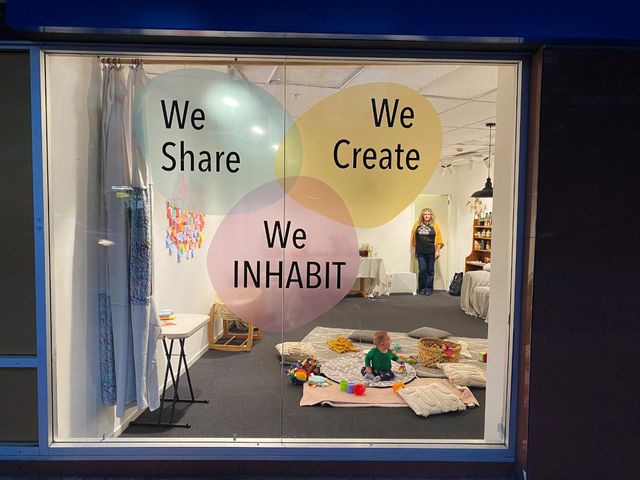
The artist as many other things first
- Urban Dream Brokerage
- Holly McEntegart in conversation with Anne Noble, facilitated by Mark Amery <figure class=" sqs-block-image-figure intrinsic " > Image: Anne Noble Merging her work as an artist, mother and full spectrum doula, Holli McEntegart recently brought something remarkably different to the bustle of Wellington’s Courtenay Place, in an exploration of art as a social practice. Providing a warm, calm space for participation, Inhabit brought together mothers and their infants to examine how community, cultural and whānau postpartum care has changed in Aotearoa, sharing experiences in real-time and as oral history. A private issue was brought into a public realm. Rethinking the artist’s role in society, McEntegart was supported by artist Anne Noble in a project commissioned by Letting Space for vacant space activators Urban Dream Brokerage. McEntegart now has plans to bring the project to Auckland. Here are Holli and Anne in conversation. Mark Amery Anne Noble: Letting Space and Urban Dream Brokerage have made a really remarkable contribution to the Wellington art scene. Letting Space positioned itself as an entity that sits outside the conventional domain of the gallery, where the artist is mostly defined e as a producer of objects and artefacts. They offered an experimental space and an invitation to artists to expand the ecology of contemporary art and provide support for them to provide a new kind of experience for communities and publics to engage with contemporary art I see Inhabit as a perfect example of the kind of project that Letting Space and Urban Dream Brokerage were established to nurture, enable and support. When I first thought about your ambition for Inhabit: to marry both your practices as an artist and a full spectrum doula, one of my first questions was about the expanded role of the artist in a social practice. How is your work first and foremost art while being shaped by other practices and concerns? What came to mind was a book [^1] I’ve had on my bookshelf, which has on its cover The Artist As followed by a list: that includes such descriptors of the artist as .. producer; the artist as… archivist; the artist as… ethnographer; the artist as… catalyst; the artist as… orchestrator; the artist as… poet; the artist as… curator. And it ends with this really beautiful phrase in capital letters: AND MANY OTHER THINGS FIRST. This points to the fundamental premise of your art practice - driven and formed by another whole domain of expertise, professional practice, experience and activist concerns. <figure class=" sqs-block-image-figure intrinsic " > Image: Anne Noble | Infant massage with Jo Chambers. From left: Megan Rodgers and Jasper, Jo Chambers from Blissful Bubs You define yourself as a social practice artist but you also practice as a full spectrum doula. How did you arrive at the idea of merging your practice as an artist with your life as a mother, your interest in the post-partum experience and your activism in this space? Holli McEntegart: You and I talked a lot about the artist as a conduit; or as activator. As a young artist I was always really interested in capturing images of moments that had complicated stories behind them. I realised that my interest was often more in the story; how we got to this point; the full stop. The work was always, for me, in the negotiation of getting to that image - with the image itself feeling lacklustre in comparison to that journey. Then when I moved to Pittsburgh to complete my Masters I found that there was a greater focus on social practice as a role for the artmaker. The driving need for me has always been to build relationships, and therefore community. So when I was taking photographs I would spend months getting to know people, navigating the permission, not just to be there, but to be accepted; to belong. I’ve joined every group under the sun! A loon (an aquatic bird) counting group in Maine, a porcelain painting group in Mt Albert, a bluegrass group, banjo club and a barbershop quartet in Pittsburgh, and a cake decorating group in Otara, to name a few. But I didn't feel like I had the right to be there unless I was really an accepted part of the community. That came to a head for me in Pittsburgh when I joined a semi-gated spiritualist community called Lily Dale, and began making work out of the readings they were doing for me. I would spend eight months with them before I could make that work. By the time I was living in New York there were many grants, residencies and galleries supporting a socially engaged framework of art making. My eyes were opened to the fact that this community exchange and the energy I was investing into relationship building was not only valid, it was the work.That really gave me permission to move past just documenting my work with photographs or videos and writing and to pull the focus back to the process, the making and the relationship tending. Research is a huge part of my process, whatever I’m working on I’m always off down a research tunnel. So, when I got pregnant in New York with my first child Arlo I went on a huge journey to understand pregnancy, birth and everything that was happening to my body. I discovered that in New York City, the maternal mortality rate in pregnancy, birth and early postpartum is astoundingly high, and that black women are 12 times more likely to die in childbirth than white women. OB’s are often pushing for a lot of unnecessary interventions within the hospital system and midwives are not as commonly used, though that is changing. I come from a family of home birthers in New Zealand, it was normalised and seemed like the obvious place for me to birth, but only around 1.5% of people give birth at home in the US, so it's quite a radical thing to do in that context. I was so lucky that I had a neighbour and friend who was training to be a midwife and was working as a birth doula. Through her I discovered this group of folks called doulas. I started learning about the role they play in birth work, about reproductive and birth justice advocacy, and about everything I was going to need to know to birth my baby at home while being supported by a midwife and doula team. <figure class=" sqs-block-image-figure intrinsic " > Image: Anne Noble New York City is so compact, we had a tiny apartment and I had a home studio. My son, Arlo, was born underwater, in a birth pool on my studio floor. At that point I had been working for some time within these spiritualist communities. I had been really delving into why people were seeking healing in these communities and what it meant to be constantly practising these healing rituals. Birthing my son in my studio was like an epiphany, I was on a healing journey myself and this was a part of the work. Birth was incredibly healing for me at that point in my life and then, like many people, postpartum was a completely different beast. Like most people experiencing giving birth far from their home and family, I just felt an intense lack of support from the world. And with that a deep loneliness. I was so homesick. My parents came to visit for two weeks which was incredible, but it went so fast. A few good friends showed up as best they could but I was living and working as an artist in New York, I didn’t know anyone with babies or even young kids. People are busy - for everyone else, life goes on. It’s the postpartum person that is stuck in stillness, but constantly working. It was a totally different world. You get the sense that everybody shows up for birth, everyones interested, you learn so much about pregnancy and childbirth, tracking the changes in your body all the way through to this kind of event, and then everyone leaves, and you’re left in charge of a human. It’s wild, uncharted territory and no-one’s told you that much, or what they have told you is irrelevant, biassed, outdated and sometimes even harmful. I longed for my family, mostly for my mum. I found myself floating out to sea, and there was a realisation that no one was going to rescue me - I had to rescue myself. And to do that I needed to dive even deeper into what was happening to me, go down that research tunnel again and find out what support there was in the world and how I could heal. That led to me doing Seen, a postpartum doula mentorship programme with Birdsong Brooklyn, and learning constantly - four or five months too late - what could have rescued me before I needed rescuing! It was eye opening and there was a lot of deep grief about the care I had missed out on, and the ways I could have been supported. I was diving deeply into the profoundness of becoming a mother and the reality of how much is lacking in the world in supporting new parents. I just fell in love with this idea that we could be healing collectively if we just looked after each other better and shared our knowledge. I built my community from that in New York in that first year of parenting. At that point I had been working for three years as the studio manager for an incredible artist, Janine Antoni, who is also a parent and understands that mothering work. It was a huge question for me: how do I keep working in the world as an artist, be able to show up as a mother and earn enough money to live? How do I juggle all of this and stay tethered to myself? I gave birth to my son when I was 38 and I was being called a geriatric mother by the medical system. It scared me. I wanted to breathe in my baby, just inhale him and not miss a second. But how do I do that and keep up my practice? Well… I just gave birth to my son in my studio…. It was these layers of realisation: this labour is the work. I have to reframe my life so that this labour of the home, the labour of care, of mothering, is seen and valued. So I left my job in the studio with Janine and went straight into postpartum doula training. I needed to be immersed in the community in the same way I had been with the spiritualists or the cake decorators or the bird counters in Maine. <figure class=" sqs-block-image-figure intrinsic " > Image: Holli McEntegart | Multiples Feeding Support Group. From left: Jessie Lee Broadbent, anon Anne: You have talked about your journey as a photographer engaging with communities, and how the outcome can be separated from those experiences that feel like part of the work. That is n true for many documentary photography projects.You’ve also described beautifully your dissatisfaction with being both outside a subject and yet needing to be right in the heart of it. The notion of a social practice artist is less common in New Zealand than in the US. It has currency in art schools, but my instinct when we first met and talked was that you have a really highly evolved practice in which you prioritise your relationship as an artist to the post-partum communities you engage with Your work begins with you your life as a mother and your practice as a doula being the site of public art activism, of making the post-partum world experience shared and visible. How have you then addressed the visibility of this as an artwork? You only need to look at the project website to see the level of community engagement and the number of people you have drawn into this space. It’s really significant. Those workshops - people flocked to them. But to make it public, visible to participants and to audiences how does that work? Holli: What comes first for me is the relationship, being a good community member and trust. I come at relationship building and getting people involved with their whole heart; with a genuine interest and respect. I have to have something at risk as well. Inhabit was a year in the making, but the day we opened, with a multiples lactation support workshop. We had six twin mums and probably six assistants or helpers, including grandmas, friends, lactation and doula support. That's 12 babies plus Indigo [Holli’s own baby]. Over 24 bodies breathing life into the space. That was the moment that the work became art; that it became an artwork. It was activated by the community of people in the room and their energy. Up until then there’s a lot of risk on my part because I don’t know who is going to show up and what they will bring on the day. The work is filled with intention but it has to meet people where they are and vice versa, and for that reason, it’s never the same, it evolves and unfolds and, much like mothering, I must surrender to it. I think I’m comfortable leaning into the unknown. Within a socially engaged practice you really don’t know how your participants or your audience (the public) are going to enter the work. I consider the folks facilitating workshops my co-creators. There were six months of emailing and zoom conversations about what I was making with that final group of people, so many conversations about what the community needed. And then there was a point when they came to me with a plan to set up this specific workshop for multiples families. They were asking for my permission, and I was overjoyed because, it was at that point that they took ownership and really began to have agency within the work. That was the moment when the community was activated, they started creating what they needed under the umbrella that I offered - this community activation was where the social practice aspect of the work really came into play. <figure class=" sqs-block-image-figure intrinsic " > Image: Milan Maric | Combined yoga and Infant massage workshop with Emma Chen Flitcroft and Jo Chambers I was coming to Wellington, into a community I’m not from, so I’m constantly asking myself, how do I leave this space better than when I got here? Within social practice I think there is a very real responsibility to care for the community you're working in and to make sure there are ongoing care agreements in that community. Everyone that provided a workshop for Inhabit offers free or sliding scale services that could continue to be accessed after Inhabit closed for example. Anne: That’s a beautiful description of the artist as catalyst. I’m very fond of the notion that when an artist plays those roles, the artist in a conventional sense disappears to become a generating and catalysing force Holli: I’m interested in the way my role shifted from facilitator to participant, or mother , or host. Hourly that changed. Originally I thought I would be facilitating some workshops but I didn't end up doing that because so many people wanted to facilitate their own. At the beginning of each workshop I would introduce the project and really ground it back into the context of an artwork, to remind people they were participating in something both bigger than them, but also inherently generated by them, and then I would participate alongside them. I was never an observer, I was a participant. I think it’s really important I have the ability to be part of what’s happening as opposed to being an outsider. Learning, participating and being vulnerable. That vulnerability permissions other people in the space to also be vulnerable. It’s not like, as you’re describing Anne, that ‘‘you’re the artist and you’re over there’ on a pedestal. The process is about me sinking back into the work. It’s a dance between making sure people feel like they are being held and acknowledged and the space is being tended to in the correct way, but not dominating it. <figure class=" sqs-block-image-figure intrinsic " > Image: Anne Noble Anne: As a public artwork, positioned in Courtenay Place, it was a really beautiful intervention with really subtle signage and this glowing light masked by a wall of handmade stitched together nappies! It offered a surprising encounter that was intriguingly signposted and people were welcomed to just stop and to consider what it might be - as a public art project. Sometimes I was amazed at the number of people participating and how the work created an opportunity for a community to assemble. How did you introduce participants to the process of being part of something for them but also part of something larger? Of being participants and collaborators in Inhabit as an artwork. Holli: That was definitely one of my biggest challenges. There were a couple of things I did practically. Even before Inhabit opened I worked very hard to centre the project in the community with this drawing project that involved - six Love Note posters that were plastered repetitively around the city in the two weeks leading up to our opening. I was documenting them in situ and sending images of them to people when they were signing up for the workshops as well as using them in social media. So there was a centring of it as an art project before they arrived. Most people had seen these drawings and then saw the wall of Love Notes growing on the wall when they came into the space. I introduced that as a collaborative drawing project and really impressed the importance of adding everyone's voice to that growing archive. <figure class=" sqs-block-image-figure intrinsic " > Image: Lily Dowd I constantly was re-centring it as an artwork in this way all the time, and encouraging the public to participate, reminding them of what they are a part of. I see the Love Notes as the beginning of an archive of postpartum stories - a collection. And that maybe this is how we start something: a movement, a book, an archive - we just have to start putting our stories on the wall. I think that grew really organically and became a way for people to gently be reminded of the fact that they were a part of an artwork, and then they forgot about it - which was great. Someone hands them a bowl of soup, nourishes them, checks in and makes sure they’re OK. Offers to hold their baby. and that energy of care flows into the space and people feel really comfortable. And that comfort was there in part because I was there visibly parenting, making the work. Creating a space that makes visible the lived experience of parenting, and artmaking at the same time. <figure class=" sqs-block-image-figure intrinsic " > Image: Anne Noble As it transpired there was very little foot traffic, and actually the space needed to be very protected, intimate and gate kept. So the curtain that I made really provided a level of intimacy. It is another drawing project I had been working on as a part of the show, but I didn’t quite know where it would fit. I’ve been collecting these used flat nappies. They are very identifiable, heavily washed and starched white cotton with a red stripe down the side. They are the kind of do everything cloth of motherhood. So representative of the labour of the home. Soaking up the mess of it all. I’ve been stamping all over them with my own mother at my kitchen table, “Ssshhhhhh sshhh shhh ssshhh shh shh shh…” On the first day of installation it was clear to me that we needed to be able to transform the space into a private, intimate one, and to open it up to the world. Sewing the nappies together to make a curtain was a wonderful way to create that boundary between public and private. And then at the end of the last workshop I was really inspired to “pull back that curtain” and be seen. I called you and asked you to document this moment of being seen in parenting and artmaking. It was such a moment of connectivity and community connection. There’s now two groups I believe that came together at Inhabit and are continuing to meet. It was great to cultivate this level of nurturance and community engagement in a place like Courtenay Place - buses, cars and people with so much going-to-work energy, once we pulled back that curtain I think people were taken aback by it “there are so many babies!” <figure class=" sqs-block-image-figure intrinsic " > Image: Milan Maric | Combined yoga and Infant massage workshop with Emma Chen Flitcroft and Jo Chambers Anne: Yes it was a brightly lit window that glowed like a little jewel! And was such a surprising experience walking by. You’ve described the artist as a generator and how there is a legacy for participants beyond the exhibition space. What were some of the highpoints during Inhabit and some of those legacies? Holli: The highest high was our opening, that first day. 13 babies in the space. One of the sets of twins was only five weeks old and it was their first time out of the house and their mum had driven an hour to get there, they spent all day with us. Any future Inhabit projects will always open with a multiples workshop because these folks are the least catered for within the system. The world was not made for people birthing two or three babies at a time… So to have this space where people were surrounded by support and advice and understanding. It was so magic and it was so clear there was a need for that. I think that in the current Covid climate people are feeling so much more isolated and unable to get out of the house. Opportunities for connection that were available to parents pre covid often aren't now, like community or library meetups and coffee groups. Many people were speaking of coming to Inhabit as the first time they’d been to a group outside the home, there is a lot of isolation and fear out there, and a deep lack in support services. A few people who weren’t parents had some very interesting interactions with the space as an artwork, which I found fascinating. Some really generative conversations came from them being confronted: that they were coming to a public exhibition, and were questioning ‘what is this?!’ I had very interesting conversations with other artists about what participation looks like when you’re not a parent. For parents their participation was organic but for others, it felt very different. They accessed it through my facilitation and it was interesting seeing them sink into comfort because they were being cared for; getting down on the floor and playing with Indigo. Having some soup, and learning about traditions of postpartum care and methodologies. I’m interested in pulling back the veil on this kind of care work because we can all benefit from learning how to tend to our communities and families. <figure class=" sqs-block-image-figure intrinsic " > Image: Milan Maric Another highlight was my involvement with Little Shadow. They run perinatal mental health support groups in the Wellington region and virtually across the motu. They were so supportive of this project. They really saw the power of what Inhabit created in offering an entrance point to conversations about perinatal mental health that are softer and more nurturing than how it’s often tackled when people are looking for support within a healthcare system. Inhabit provides nourishing food, a space to express yourself creatively, a place to move your postpartum body, and a room full of folks on a similar path. Once there, we are able to get into the nitty gritty of what we are all experiencing because the space itself is so tended to. Something that I repeat all the time is that I’m examining patterns of care, whilst caring for our communities. I want to decolonise postpartum care so that we may all gain the knowledge of how to care for each other. Then there was that final reveal, pulling back that curtain. I felt I was truly being seen as my whole self in the work. Before that point I was a shapeshifter facilitating everybody else's journey. But at that moment I was in my deeply creative space of making and mothering as I finished the project. It felt like closure and an answer to that question of how I can be an artist, make work and be a parent. It struck me how that question has deeply impacted my relationships with people and how I move in the world. In my first few days in Wellington I had a clear vision of that image we captured at the end. I saw the room glowing with light, semi dark outside and the interior being a place of making and of process. A gallery, and a living room and a studio and a feeding place. Where bums are getting changed, a place where all of life is happening at the same time. And that the public are walking past and peeking in. The labour of parenthood and of artmaking is usually so invisible. That moment at the end just felt like: let’s get it all on display! <figure class=" sqs-block-image-figure intrinsic " > Image: Milan Maric <figure class=" sqs-block-image-figure intrinsic " > Image: Milan Maric Anne: I love what you say about risk. Because if art doesn't involve risk it doesn't leave the opportunity for engagement - If it's there and says it all it doesn’t ask very much of people. The way both your processes of making and lived experience are entirely central to the work raises questions for people coming in off the street - challenging their notions about art - and confronts them with the invisibility of the post-partum experience. Can you talk about how Inhabit is an evolving work? How it’s more than a one-off event where communities come together and are potentially transformed. How is the website a part of the evolution of the work? Holli: If you are thinking about community engagement and looking at different types of communities' needs then you’ve got to move around those communities. My vision for Inhabit was always that it would move around the motu. One of the things I thought was important about the experience in Wellington was that it felt disruptive. It felt radical. It was an interesting way to inhabit vacant space in the CBD and disrupt a community. It ignited something that people were aware they needed, but no-one knew how to connect on and build. <figure class=" sqs-block-image-figure intrinsic " > Image: Anne Noble I think there’s a lot of power in Inhabit travelling around regionally and disrupting systems in ways that are really positive and ignite connection. I think of little things growing, sprouting. And of having this homebase of an archive online where we can collect and hold these postpartum stories and learn from what we’ve been doing here to better support communities. Anne: Thanks Holli - for the pleasure of being a small part of this project with you. Anne Noble (Laureate), ONZM, is a photographer and curator whose work spans still and moving image, installation and international curatorial commissions. Over multiple projects Annne Noble has considered the significance of memory and imagination to personal and cultural narratives of place and belonging.Holli McEntegart is an interdisciplinary artist using social practice, video, performance, photography and text. She holds a Bachelor of Visual Arts in Photography (NZ), and a Masters of Visual Art and Design from Auckland University of Technology (NZ), which included a one year MFA scholarship at Carnegie Mellon School of Art, Pittsburgh (USA). In 2014 she was an artist in residence at the Skowhegan School of Painting & Sculpture in Maine (USA). Her work has been performed and exhibited throughout the USA and New Zealand. In 2018 she trained as a Full Spectrum Doula after giving birth to her first son in Brooklyn, New York. Returning to Aotearoa in 2020, where she continues her work as an artist and as a Reproductive Justice Advocate. Holli is now an island named Mother to two boys, aged 4 and 9 months. <figure class=" sqs-block-image-figure intrinsic " > Image: Holli McEntegart | Multiples Feeding Support Group - From left; Anon, Georgie Manning, Jessie [^1]: Aileen Burns, Tara McDowell, and Johan Lundh, The Artist As Producer, Quarry, Thread, Director, Writer, Orchestrator, Ethnographer, Choreographer, Poet, Archivist, Forger, Curator, and Many Other Things First. Institute of Modern Art, Brisbane, Curatorial Practice at Monash University, Melbourne and Sternberg Press, 2018.
- Accepted from Urban Dream Brokerage Blog by feedreader
- Tagged as:
- brooklyn
- covid-19
- exhibitions
- libraries
Brooklyn, Wellington, New Zealand (OpenStreetMap)
-
721 - 726 of 726
Matching websites
-
-
Auckland Trains
- This site has the latest news & views of NZ transport issues & developments.
- Tagged as:
- trains
-
-
-
FillGood
- FillGood was born from a collective desire to address a growing issue in Wellington - the overwhelming reliance on single-use serviceware (think throwaway plates, cups and trays) for food and drink.
- Submitted by tonytw1
- Not tagged
-
-
-
Monterey cinema
- We're a four screen cinema offering a range of films from the latest and greatest blockbusters, to Aotearoa New Zealand local content, to alternative content and arthouse films.
- Submitted by tonytw1
- Tagged as:
- cinema
- upper-hutt
Monterey Cinema, Ashford Lane, Upper Hutt Central, Upper Hutt, Upper Hutt City, Wellington, 5218, New Zealand (OpenStreetMap)
-
-
-
Campaign for a Better City
- CBC is a voluntary community-based organisation, actively promoting the idea of Wellington as a living city. Check out the latest from the campaign against the Te Aro bypass, and find out how you can get involved.
- Tagged as:
- lobby-groups
- bypass
-
-
-
Kat Grooby Photography
- We specialise in commercial designs and creative images. We offer an array of services, flexible scheduling, and have the latest technology to produce high quality creations. Our photography services include portraits, products, property, corporate and events. Our design work includes advertising, business cards, brochures and stationery. We invite you to contact us for more information.
- Tagged as:
- photography
-
-
-
Mount Street Cemetery
- The Mount Street Cemetery was the first cemetery in Wellington for Catholic burials and contains the graves of the first nuns and priests in Wellington. It remained open until 1891 although burials continued in existing family plots until 1954. The earliest surviving grave marker dates from 1851, and the latest from 1954. Although only around 200 headstones survive, it is estimated that there could have been as many as 750 to 800 burials. Many of the early markers were simple wooden crosses, which have long since vanished.
- Submitted by tonytw1
- Tagged as:
- catholic
- kelburn
- local-history
Mount Street Cemetery, Aro Valley, Wellington, Wellington City, Wellington, New Zealand (OpenStreetMap)
-