Covid-19 and Government
-
-
Ngā Kōrero - Latest Stories from DCM
- Downtown Community Ministry
- Ngā Kōrero - Latest Stories from DCM Wellington Mayor Tory Whanau joins DCM's Outreach team, checking in with people who are rough sleeping in the city communities where whānau are housed, connected, valued and thriving About Us Contact Reaching out with the Mayor GUEST WRITER: LEE-ANNE DUNCAN DCM’s Toro Atu (Outreach) Team were delighted when Wellington Mayor, Tory Whanau, accompanied them as they checked on people sleeping rough on the city’s streets. She declared herself “an advocate” to see their heart, passion – and impact. “Kia ora, gidday, would you like to say hello to the Mayor?” says Rowan McCardle, introducing a man sitting in Te Aro Park to the Wellington Mayor, Tory Whanau. The man – who Rowan knows well from his visits to DCM – is keen to chat, almost flirtatious, from his spot in the bright afternoon sun. After a quick chat, Tory, Rowan, and her co-worker Clifton Raukawa, head down to Courtenay Place responding to a notification just through from the Wellington City Council. A woman has been rough sleeping outside a business on Courtenay Place, and while it’s sunny, it’s June, so it’s chilly. “She has only a thin blanket, and the person who notified the council about her is concerned,” says Clifton to Mayor Tory, reading off the email on his mobile phone. “We know this woman. She’s been away but must be back in town, so we will need to see how we can support her.” The WCC email notification is great timing as this is exactly what Rowan and Clifton, workers from DCM’s Toru Atu, or Outreach Team, want to show the mayor – how DCM responds when a member of the public calls the council to report concerns about someone sleeping rough. It’s a service the council helps fund. It’s also not great timing – the woman’s blankets are spread out in the lee of a post box, but she is nowhere to be seen. “It’s okay, I’ll circle back in a few hours. She won’t have gone far,” says Clifton. He’s troubled though. As the woman has been out of town for some time, she’s no longer eligible for emergency housing here and must start the process again. Clifton’s already thinking about how he can support her, ensuring she’s connected in with DCM’s Aro Mai Housing First team. Tory and Mere – Photo by Damon Keen. Rowan, Clifton and the Mayor (and, yes, a couple of photographers and journalists) continue down Courtenay Place. Within a few steps, Rowan spots another familiar face. “Nanny! I haven’t seen you in ages! Kia ora!” It’s Mere, whose face is also familiar to Wellingtonians who spend time at this end of town. However, for some weeks her usual spot outside the St. James Theatre has been vacant as she’s been settled into a rest home. Rowan introduces the Mayor, and Tory and Mere sit down on a bench to discover their whanaunga – who they know in common. It doesn’t take long to find connections, to the evident delight of both. “DCM worked with Mere for a long time to get her into the rest home,” says Clifton. “We had to build a lot of trust with her, but she agreed to go and it’s clearly agreeing with her. She’s looking really good.” Nonetheless, here she is back on Courtenay Place? “Yeah, but that’s her social connection. Coming here to chat to people, to connect with her friends, that’s what she knows. But now we know she’s well housed and cared for, so that’s okay,” says Clifton. Some of the people street begging are housed, but having a house costs money. Benefit payments don’t go far, and often street beggars aren’t physically or mentally able to work. Being on the street supplements their income, but, also, like Mere, gives them the chance to meet up with their mates. Clifton has his own experience of homelessness. Living and working in Auckland, he was visiting Wellington when the COVID-19 lockdowns began. Suddenly, he was homeless and jobless. Luckily, he found a flyer for DCM, which found him housing, then offered him a job as a peer support worker, as DCM values lived experience. Clifton is now studying to bring theory into his practice. Like Rowan, he loves his Outreach work, as tricky as it is at first to bowl up to people who – quite honestly – might tell you to bugger off in no uncertain terms… Clifton - Photo by Juan Zarama Perini. A little further down Courtenay Place, the trio have a quick chat with Mark. With everyone they meet it’s a quick, “Kia ora, how are you, how’s it going?” Much of their work is making repeated connections, building trust, finding the right supports at the right time, even after someone is housed, like Mark. He was rough sleeping but now is permanently housed and being supported by DCM’s Noho Pai (Sustaining Tenancies) Team, as keeping house is tough when you’ve not had to do housework, be a good neighbour, or pay bills for quite some time. The Outreach Team were lucky with the weather the day they took Mayor Tory for an up-close look at their mahi. On the streets of the capital city, the days are not always so clement. Wellingtonians are generally compassionate people, they want to help, and the way many action that support is by handing over food, money, blankets, clothes. “But that’s short-term assistance, which actually makes their situation more long-term,” says DCM Director, Stephen Turnock. “It teaches people they can get money and food by street begging or rough sleeping. At DCM, we are about providing long-term change. So we say, if you want to buy kai or provide support to people on the street, then look at donating to DCM. You’re still helping by ensuring people who are trained to engage will work with that person long term to get more sustained outcomes than just that brief moment where you give someone some lunch.” DCM’s Outreach Team approach street beggars and rough sleepers with nothing more than a warm smile – and often, like Clifton, their own lived experience of homelessness. Every week day they’re out on Wellington’s streets, in all weather, stopping and chatting to people they already know by name, and, importantly, scanning for people they don’t know. If so, they will approach them, encourage them to come to DCM to access the many support services available at Lukes Lane, and get connected with social agencies, all in the one place. Social Issues reporter Hanna McCallum (left) wrote this great article about Outreach in The Post – Photo by Damon Keen. The other thing Wellingtonians can do, especially as winter grips tighter, is call the Wellington City Council on 04 499 4444 if they spot someone sleeping rough on the street, in the bush or in a car. After that call, a ‘ticket’ is created and emailed to the Outreach Team. The team receive at least two a day, but sometimes 10, usually numbering between 90 and 120 notifications a quarter. Sometimes notifications are for the same person, showing people are really concerned. After receiving the notification, the team races off to try to connect with the person, wherever they are across the Wellington region, whether out on the streets or tucked in the bush. “The team’s tagline is ‘Whatever it takes’,” Stephen says. “If they’re told to go away, they’ll respectfully keep checking back in, and usually the person will come into DCM. When they do, that’s a great win for the team. “For people experiencing homelessness, the value our team brings is showing them that someone in the community cares. For the wider city, our team is about recognising that the people we see rough sleeping are people. Yes, they might have some issues, and they come with a history, but they’re so much more than that. Our team brings that insight and knowledge to the wider public.” Walking out with the team has also brought insight to Tory Whanau. The Outreach Team has been walking the streets since 2016, with Wellington City Council providing funding for the team since 2019. Mayor Tory is more than reassured it’s money well spent, and she – like DCM – is perplexed no other council in Aotearoa New Zealand does anything similar. Her walk-out with the team has spurred her to urge other Mayors to follow suit. “Until you come out here and see what the team does, you don’t really see the value. I can see that clearly. Until all the systems are fixed – mental health, welfare, housing, which are all long-term issues – homelessness won’t go away. As a society, we need to have more compassion and see the human side of homelessness. If more of us know the people sleeping rough on our streets, we would be more compassionate and understanding. This city is also where they live.” Tory and Rowan – Photo by Damon Keen. Stephen is equally warm about the council’s support. “Everyone there is truly invested in the social wellbeing of our people. There’s a continued and genuine passion that’s shared about these vulnerable communities. That, I would say, is the primary reason the Outreach mahi exists and is so well supported here in Wellington.” The final stop on Mayor Tory’s tour is for Rowan to check in on a young woman in her early 20s, ‘living’ behind a piece of cardboard down an alleyway an arm’s length from Wellington’s home of high culture, the Michael Fowler Centre. Her behaviour – caused by a history of trauma, mental illness and drug addiction – has seen her evicted from emergency housing, which means she’s no longer eligible for it. So, if she’s not on the psychiatric ward, she must live on the street or with her abusive boyfriend. Usually, she prefers the street. Rowan walks up to the cardboard, calling the young woman’s name. After a few words, Rowan’s back. She wasn’t up for talking today, but Rowan knows they’ll likely see her tomorrow at DCM, at Te Hāpai, where people can come for a cuppa, a chat, and have any health, addiction, housing, benefit and money issues dealt with, and maybe collect some kai from the Foodbank. “She’s engaged with us and we have a rapport with her. If we don’t see her, someone from our team will look for her. We’ve got her working with Aro Mai Housing First, so hopefully we can find her a permanent home soon.” And from there, the Sustaining Tenancies team will step in, guiding this traumatised young woman to keep her home. Photo by Juan Zarama Perini. Back at DCM in Lukes Lane, Mayor Tory Whanau is vocal in her admiration of what she’s witnessed. And she’s hopeful more Wellingtonians will call the council if they see someone street begging or sleeping rough this winter, rather than handing over food, money, blankets, clothes. “It’s been great to be here and see the notification process in action, and then to see the heart Rowan and Clifton have when they approach people in response. That’s how they deserve to be treated. I was already a big supporter of DCM but being out here today has taken it to the next level. “Seeing what’s happening here, and meeting the people, hearing the stories, it brings it home to me even more. If more Wellingtonians could experience what the Outreach Team sees each day, they would have a greater understanding of homelessness, and how we must protect our most vulnerable.” Lee-Anne Duncan is a freelance writer and editor who has written many stories for DCM, such as ‘We count, we matter – and we vote’, the 2020 General Election at DCM, and ‘Right at Home’, the story of Arthur. Thank you Lee-Anne for hitting the streets with Tory and the DCM team. It’s getting cold out there As we have shown in this story, help is just a phone call away. If you spot someone sleeping rough on the street, in the bush or in a car, call Wellington City Council on 04 499 4444 and they will notify us. You can also help by telling all your friends and whānau about DCM and our important work in Wellington with those who need us most. Please forward this email on. Because together – with your help – we truly can end homelessness in our city. Support DCM Copyright © 2023 DCM. All rights reserved. Our mailing address is: DCM PO Box 6133 Marion Sq Wellington, Wellington 6011 New Zealand Add us to your address book Want to change how you receive these emails? You can update your preferences or unsubscribe from this list.
- Accepted from DCM alerts archive by feedreader
- Tagged as:
- covid-19
- theatre
- wellington-city-council
-
-
-
Ngā Kōrero - Latest Stories from DCM
- Downtown Community Ministry
- 96 Ngā Kōrero - Latest Stories from DCM p{ margin:10px 0; padding:0; } table{ border-collapse:collapse; } h1,h2,h3,h4,h5,h6{ display:block; margin:0; padding:0; } img,a img{ border:0; height:auto; outline:none; text-decoration:none; } body,#bodyTable,#bodyCell{ height:100%; margin:0; padding:0; width:100%; } .mcnPreviewText{ display:none !important; } #outlook a{ padding:0; } img{ -ms-interpolation-mode:bicubic; } table{ mso-table-lspace:0pt; mso-table-rspace:0pt; } .ReadMsgBody{ width:100%; } .ExternalClass{ width:100%; } p,a,li,td,blockquote{ mso-line-height-rule:exactly; } a[href^=tel],a[href^=sms]{ color:inherit; cursor:default; text-decoration:none; } p,a,li,td,body,table,blockquote{ -ms-text-size-adjust:100%; -webkit-text-size-adjust:100%; } .ExternalClass,.ExternalClass p,.ExternalClass td,.ExternalClass div,.ExternalClass span,.ExternalClass font{ line-height:100%; } a[x-apple-data-detectors]{ color:inherit !important; text-decoration:none !important; font-size:inherit !important; font-family:inherit !important; font-weight:inherit !important; line-height:inherit !important; } .templateContainer{ max-width:600px !important; } a.mcnButton{ display:block; } .mcnImage,.mcnRetinaImage{ vertical-align:bottom; } .mcnTextContent{ word-break:break-word; } .mcnTextContent img{ height:auto !important; } .mcnDividerBlock{ table-layout:fixed !important; } h1{ color:#222222; font-family:Helvetica; font-size:40px; font-style:normal; font-weight:bold; line-height:150%; letter-spacing:normal; text-align:center; } h2{ color:#222222; font-family:Helvetica; font-size:34px; font-style:normal; font-weight:bold; line-height:150%; letter-spacing:normal; text-align:center; } h3{ color:#444444; font-family:Helvetica; font-size:22px; font-style:normal; font-weight:bold; line-height:150%; letter-spacing:normal; text-align:center; } h4{ color:#949494; font-family:Georgia; font-size:20px; font-style:italic; font-weight:normal; line-height:125%; letter-spacing:normal; text-align:center; } #templateHeader{ background-color:#07486a; background-image:none; background-repeat:no-repeat; background-position:50% 50%; background-size:cover; border-top:0; border-bottom:0; padding-top:54px; padding-bottom:54px; } .headerContainer{ background-color:transparent; background-image:none; background-repeat:no-repeat; background-position:center; background-size:cover; border-top:0; border-bottom:0; padding-top:0; padding-bottom:0; } .headerContainer .mcnTextContent,.headerContainer .mcnTextContent p{ color:#757575; font-family:Helvetica; font-size:16px; line-height:150%; text-align:left; } .headerContainer .mcnTextContent a,.headerContainer .mcnTextContent p a{ color:#007C89; font-weight:normal; text-decoration:underline; } #templateBody{ background-color:#transparent; background-image:none; background-repeat:no-repeat; background-position:center; background-size:cover; border-top:0; border-bottom:0; padding-top:27px; padding-bottom:54px; } .bodyContainer{ background-color:#transparent; background-image:none; background-repeat:no-repeat; background-position:center; background-size:cover; border-top:0; border-bottom:0; padding-top:0; padding-bottom:0; } .bodyContainer .mcnTextContent,.bodyContainer .mcnTextContent p{ color:#757575; font-family:Helvetica; font-size:16px; line-height:150%; text-align:left; } .bodyContainer .mcnTextContent a,.bodyContainer .mcnTextContent p a{ color:#007C89; font-weight:normal; text-decoration:underline; } #templateFooter{ background-color:#07486a; background-image:none; background-repeat:no-repeat; background-position:center; background-size:cover; border-top:0; border-bottom:0; padding-top:45px; padding-bottom:63px; } .footerContainer{ background-color:transparent; background-image:none; background-repeat:no-repeat; background-position:center; background-size:cover; border-top:0; border-bottom:0; padding-top:0; padding-bottom:0; } .footerContainer .mcnTextContent,.footerContainer .mcnTextContent p{ color:#FFFFFF; font-family:Helvetica; font-size:12px; line-height:150%; text-align:center; } .footerContainer .mcnTextContent a,.footerContainer .mcnTextContent p a{ color:#FFFFFF; font-weight:normal; text-decoration:underline; } @media only screen and (min-width:768px){ .templateContainer{ width:600px !important; } } @media only screen and (max-width: 480px){ body,table,td,p,a,li,blockquote{ -webkit-text-size-adjust:none !important; } } @media only screen and (max-width: 480px){ body{ width:100% !important; min-width:100% !important; } } @media only screen and (max-width: 480px){ .mcnRetinaImage{ max-width:100% !important; } } @media only screen and (max-width: 480px){ .mcnImage{ width:100% !important; } } @media only screen and (max-width: 480px){ .mcnCartContainer,.mcnCaptionTopContent,.mcnRecContentContainer,.mcnCaptionBottomContent,.mcnTextContentContainer,.mcnBoxedTextContentContainer,.mcnImageGroupContentContainer,.mcnCaptionLeftTextContentContainer,.mcnCaptionRightTextContentContainer,.mcnCaptionLeftImageContentContainer,.mcnCaptionRightImageContentContainer,.mcnImageCardLeftTextContentContainer,.mcnImageCardRightTextContentContainer,.mcnImageCardLeftImageContentContainer,.mcnImageCardRightImageContentContainer{ max-width:100% !important; width:100% !important; } } @media only screen and (max-width: 480px){ .mcnBoxedTextContentContainer{ min-width:100% !important; } } @media only screen and (max-width: 480px){ .mcnImageGroupContent{ padding:9px !important; } } @media only screen and (max-width: 480px){ .mcnCaptionLeftContentOuter .mcnTextContent,.mcnCaptionRightContentOuter .mcnTextContent{ padding-top:9px !important; } } @media only screen and (max-width: 480px){ .mcnImageCardTopImageContent,.mcnCaptionBottomContent:last-child .mcnCaptionBottomImageContent,.mcnCaptionBlockInner .mcnCaptionTopContent:last-child .mcnTextContent{ padding-top:18px !important; } } @media only screen and (max-width: 480px){ .mcnImageCardBottomImageContent{ padding-bottom:9px !important; } } @media only screen and (max-width: 480px){ .mcnImageGroupBlockInner{ padding-top:0 !important; padding-bottom:0 !important; } } @media only screen and (max-width: 480px){ .mcnImageGroupBlockOuter{ padding-top:9px !important; padding-bottom:9px !important; } } @media only screen and (max-width: 480px){ .mcnTextContent,.mcnBoxedTextContentColumn{ padding-right:18px !important; padding-left:18px !important; } } @media only screen and (max-width: 480px){ .mcnImageCardLeftImageContent,.mcnImageCardRightImageContent{ padding-right:18px !important; padding-bottom:0 !important; padding-left:18px !important; } } @media only screen and (max-width: 480px){ .mcpreview-image-uploader{ display:none !important; width:100% !important; } } @media only screen and (max-width: 480px){ h1{ font-size:30px !important; line-height:125% !important; } } @media only screen and (max-width: 480px){ h2{ font-size:26px !important; line-height:125% !important; } } @media only screen and (max-width: 480px){ h3{ font-size:20px !important; line-height:150% !important; } } @media only screen and (max-width: 480px){ h4{ font-size:18px !important; line-height:150% !important; } } @media only screen and (max-width: 480px){ .mcnBoxedTextContentContainer .mcnTextContent,.mcnBoxedTextContentContainer .mcnTextContent p{ font-size:14px !important; line-height:150% !important; } } @media only screen and (max-width: 480px){ .headerContainer .mcnTextContent,.headerContainer .mcnTextContent p{ font-size:16px !important; line-height:150% !important; } } @media only screen and (max-width: 480px){ .bodyContainer .mcnTextContent,.bodyContainer .mcnTextContent p{ font-size:16px !important; line-height:150% !important; } } @media only screen and (max-width: 480px){ .footerContainer .mcnTextContent,.footerContainer .mcnTextContent p{ font-size:14px !important; line-height:150% !important; } } From a bus stop to a whare by the beach – Michelle’s story communities where whānau are housed, connected, valued and thriving About Us Contact Kia atawhai – Be kind On the road with DCM's Aro Mai Housing First Hutt Team DCM's Aro Mai Housing First Hutt Team led by Barrie (left), with Karen, Te Paki, Ashleigh, Cindel and Daniel, at the office in Kokiri, Seaview, Lower Hutt. (Not pictured: Luisa.) DCM is well-known for the work we do in Wellington, but did you know we have a team working in the Hutt? Since July 2020, our Hutt team have been part of the Tākiri Mai Te Ata Whānau Ora collective, providing services to people who are experiencing homelessness in the Hutt Valley. Based at Kōkiri Marae, our Hutt team are part of the wider Aro Mai Housing First whānau, and they remind us of an old DCM saying, “We might be small. But we are working on some of the biggest problems facing our city.” Along with providing Housing First services, the Hutt Team do Outreach work, and collaborate with Wā Kainga to ensure the whānau they are working with remain housed, and that no one falls through the cracks. In this month’s update, we are using the motto Kia atawhai (Be kind), and it is thanks to the kindness of the people of the Hutt Valley, and the hard mahi of our amazing Hutt Team, that we have been able to see people like Michelle thrive. <!-- --> From a bus stop to a whare by the beach – Michelle’s story It was just before the pandemic when Alex and Paula from DCM’s Aro Mai Housing First team managed to meet with Michelle at a Lower Hutt café. Michelle presented as very tidy, and happy to sign a consent form so the DCM team could work to help get her housed. She listed her address as ‘Waterloo bus stop’. Michelle was very thin, and it was clear she had been roughing it for a long time. The meeting came about due to the concern of the general public in the Hutt for Michelle’s wellbeing, which led to many calls to Hutt City Council for a response. Soon after the meeting, Michelle disappeared again, as her mental health challenges took hold once more. Alex did not give up, searching for Michelle at some of her favourite hot spots, such as MIX, a service supporting those experiencing mental health distress, where Michelle could have a hot meal and charge her phone. Michelle was also a regular at the local library, where the staff knew her well. Michelle with her current key worker Daniel Patelesio. It takes a team to support the whānau we engage with, and others who have supported Michelle include Alex, Paula, Charloh, Kat, and Te Paki. Michelle was sighted sleeping in doorways and on a mattress a member of the public had given her. The public continued to make multiple notifications to the Hutt City Council. Everyone was worried about her wellbeing. When Alex finally found her again, Michelle did not remember her – she could not even recall that they had met. This is a very familiar story for the DCM team. Mental health is an ongoing issue for many of the people we engage with, who often suffer from trauma and undiagnosed disorders. Another familiar story is how the pandemic helped many of our whānau move into housing for the first time in a long time. This was true for Michelle too – because without any of the usual supports available to people out on the street, and with services such as libraries closed, emergency housing suddenly became a necessity. DCM does not believe that emergency housing is a good solution for New Zealand’s housing crisis, and though it temporarily provided Michelle with a roof over her head, it was a struggle in many ways. Michelle became unwell and ended up in hospital, but by this time – mid-2020 – DCM had established a Housing First team in the Hutt Valley. While Michelle was in hospital, Vicki, an Emerge Aotearoa tenancy manager who works with DCM as part of the Aro Mai Housing First collaboration, found her a permanent whare. Michelle was delighted to be able to move in when she was discharged from hospital. This is where the hard work really started – and it took time for DCM’s vision for communities where whānau are housed, connected, valued and thriving – to become true for Michelle. By moving people from homelessness into housing, then providing wrap-around support and regular home visits, we uphold people’s mana – and their right to an adequate standard of living as per the UN Universal Declaration of Human Rights. But sometimes, once people are housed, we start to understand what led to their homelessness in the first place. For Michelle, much of our support has been to address her health and wellbeing – other cornerstones of the Housing First concept. Michelle is now housed by the beach, which she loves. Her neighbourhood is great for walking, which she often does during the day to keep fit and healthy. Michelle also enjoys a close relationship with her mother and two daughters who now live nearby. Michelle’s current key worker is Daniel, who visits regularly. Michelle says she is “Learning to trust people” again through her relationship with Daniel. She now sees how her life has changed in positive ways through her willingness to work with DCM. “I was homeless,” Michelle says, “There is no other way to describe it.” Daniel has seen Michelle grow, and observed how she has turned her whare into a home. Everything is so well organised. The Housing First team will eventually ‘graduate’ Michelle, as she becomes more confident – and independent. Meanwhile, the concern of the people of the Hutt Valley didn’t end when they stopped sighting Michelle out on the streets. A DCM staff member who worked with Michelle overheard concerned members of the public speaking about her one day, and was able to inform them that Michelle was now safe, and housed. It is good to Kia atawhai (Be kind) to people who are rough sleeping or street begging wherever we may see them. But how proud we are to see Michelle go from the Waterloo bus stop, to her very own whare by the beach. WORDS: MIRIAM HENDRY / PHOTOS: SUPPLIED. <!-- --> What to do if you are concerned about someone rough sleeping or street begging You can make a difference! Don't give people money or food when you see them out on the streets. Acknowledge people and, if appropriate, direct them to DCM services. But better still – if you are concerned about someone rough sleeping or street begging, call Hutt City Council on 0800 488 824 or Wellington City Council on 04 499 4444 – and they will notify our team. Together – with your help – we truly can end homelessness in our city. Support DCM <!-- --> <!-- --> Copyright © 2023 DCM. All rights reserved. Our mailing address is: DCMPO Box 6133Marion SqWellington, Wellington 6011 New ZealandAdd us to your address book Want to change how you receive these emails? You can update your preferences or unsubscribe from this list.
- Accepted from DCM alerts archive by feedreader
- Tagged as:
- libraries
- covid-19
- wellington-city-council
- lower-hutt
Lower Hutt, Lower Hutt City, Wellington, 5010, New Zealand (OpenStreetMap)
-
-
-
The unsung heroes of DCM
- Downtown Community Ministry
- 96 The unsung heroes of DCM p{ margin:10px 0; padding:0; } table{ border-collapse:collapse; } h1,h2,h3,h4,h5,h6{ display:block; margin:0; padding:0; } img,a img{ border:0; height:auto; outline:none; text-decoration:none; } body,#bodyTable,#bodyCell{ height:100%; margin:0; padding:0; width:100%; } .mcnPreviewText{ display:none !important; } #outlook a{ padding:0; } img{ -ms-interpolation-mode:bicubic; } table{ mso-table-lspace:0pt; mso-table-rspace:0pt; } .ReadMsgBody{ width:100%; } .ExternalClass{ width:100%; } p,a,li,td,blockquote{ mso-line-height-rule:exactly; } a[href^=tel],a[href^=sms]{ color:inherit; cursor:default; text-decoration:none; } p,a,li,td,body,table,blockquote{ -ms-text-size-adjust:100%; -webkit-text-size-adjust:100%; } .ExternalClass,.ExternalClass p,.ExternalClass td,.ExternalClass div,.ExternalClass span,.ExternalClass font{ line-height:100%; } a[x-apple-data-detectors]{ color:inherit !important; text-decoration:none !important; font-size:inherit !important; font-family:inherit !important; font-weight:inherit !important; line-height:inherit !important; } .templateContainer{ max-width:600px !important; } a.mcnButton{ display:block; } .mcnImage,.mcnRetinaImage{ vertical-align:bottom; } .mcnTextContent{ word-break:break-word; } .mcnTextContent img{ height:auto !important; } .mcnDividerBlock{ table-layout:fixed !important; } h1{ color:#222222; font-family:Helvetica; font-size:40px; font-style:normal; font-weight:bold; line-height:150%; letter-spacing:normal; text-align:center; } h2{ color:#222222; font-family:Helvetica; font-size:34px; font-style:normal; font-weight:bold; line-height:150%; letter-spacing:normal; text-align:center; } h3{ color:#444444; font-family:Helvetica; font-size:22px; font-style:normal; font-weight:bold; line-height:150%; letter-spacing:normal; text-align:center; } h4{ color:#949494; font-family:Georgia; font-size:20px; font-style:italic; font-weight:normal; line-height:125%; letter-spacing:normal; text-align:center; } #templateHeader{ background-color:#07486a; background-image:none; background-repeat:no-repeat; background-position:50% 50%; background-size:cover; border-top:0; border-bottom:0; padding-top:54px; padding-bottom:54px; } .headerContainer{ background-color:transparent; background-image:none; background-repeat:no-repeat; background-position:center; background-size:cover; border-top:0; border-bottom:0; padding-top:0; padding-bottom:0; } .headerContainer .mcnTextContent,.headerContainer .mcnTextContent p{ color:#757575; font-family:Helvetica; font-size:16px; line-height:150%; text-align:left; } .headerContainer .mcnTextContent a,.headerContainer .mcnTextContent p a{ color:#007C89; font-weight:normal; text-decoration:underline; } #templateBody{ background-color:#transparent; background-image:none; background-repeat:no-repeat; background-position:center; background-size:cover; border-top:0; border-bottom:0; padding-top:27px; padding-bottom:54px; } .bodyContainer{ background-color:#transparent; background-image:none; background-repeat:no-repeat; background-position:center; background-size:cover; border-top:0; border-bottom:0; padding-top:0; padding-bottom:0; } .bodyContainer .mcnTextContent,.bodyContainer .mcnTextContent p{ color:#757575; font-family:Helvetica; font-size:16px; line-height:150%; text-align:left; } .bodyContainer .mcnTextContent a,.bodyContainer .mcnTextContent p a{ color:#007C89; font-weight:normal; text-decoration:underline; } #templateFooter{ background-color:#07486a; background-image:none; background-repeat:no-repeat; background-position:center; background-size:cover; border-top:0; border-bottom:0; padding-top:45px; padding-bottom:63px; } .footerContainer{ background-color:transparent; background-image:none; background-repeat:no-repeat; background-position:center; background-size:cover; border-top:0; border-bottom:0; padding-top:0; padding-bottom:0; } .footerContainer .mcnTextContent,.footerContainer .mcnTextContent p{ color:#FFFFFF; font-family:Helvetica; font-size:12px; line-height:150%; text-align:center; } .footerContainer .mcnTextContent a,.footerContainer .mcnTextContent p a{ color:#FFFFFF; font-weight:normal; text-decoration:underline; } @media only screen and (min-width:768px){ .templateContainer{ width:600px !important; } } @media only screen and (max-width: 480px){ body,table,td,p,a,li,blockquote{ -webkit-text-size-adjust:none !important; } } @media only screen and (max-width: 480px){ body{ width:100% !important; min-width:100% !important; } } @media only screen and (max-width: 480px){ .mcnRetinaImage{ max-width:100% !important; } } @media only screen and (max-width: 480px){ .mcnImage{ width:100% !important; } } @media only screen and (max-width: 480px){ .mcnCartContainer,.mcnCaptionTopContent,.mcnRecContentContainer,.mcnCaptionBottomContent,.mcnTextContentContainer,.mcnBoxedTextContentContainer,.mcnImageGroupContentContainer,.mcnCaptionLeftTextContentContainer,.mcnCaptionRightTextContentContainer,.mcnCaptionLeftImageContentContainer,.mcnCaptionRightImageContentContainer,.mcnImageCardLeftTextContentContainer,.mcnImageCardRightTextContentContainer,.mcnImageCardLeftImageContentContainer,.mcnImageCardRightImageContentContainer{ max-width:100% !important; width:100% !important; } } @media only screen and (max-width: 480px){ .mcnBoxedTextContentContainer{ min-width:100% !important; } } @media only screen and (max-width: 480px){ .mcnImageGroupContent{ padding:9px !important; } } @media only screen and (max-width: 480px){ .mcnCaptionLeftContentOuter .mcnTextContent,.mcnCaptionRightContentOuter .mcnTextContent{ padding-top:9px !important; } } @media only screen and (max-width: 480px){ .mcnImageCardTopImageContent,.mcnCaptionBottomContent:last-child .mcnCaptionBottomImageContent,.mcnCaptionBlockInner .mcnCaptionTopContent:last-child .mcnTextContent{ padding-top:18px !important; } } @media only screen and (max-width: 480px){ .mcnImageCardBottomImageContent{ padding-bottom:9px !important; } } @media only screen and (max-width: 480px){ .mcnImageGroupBlockInner{ padding-top:0 !important; padding-bottom:0 !important; } } @media only screen and (max-width: 480px){ .mcnImageGroupBlockOuter{ padding-top:9px !important; padding-bottom:9px !important; } } @media only screen and (max-width: 480px){ .mcnTextContent,.mcnBoxedTextContentColumn{ padding-right:18px !important; padding-left:18px !important; } } @media only screen and (max-width: 480px){ .mcnImageCardLeftImageContent,.mcnImageCardRightImageContent{ padding-right:18px !important; padding-bottom:0 !important; padding-left:18px !important; } } @media only screen and (max-width: 480px){ .mcpreview-image-uploader{ display:none !important; width:100% !important; } } @media only screen and (max-width: 480px){ h1{ font-size:30px !important; line-height:125% !important; } } @media only screen and (max-width: 480px){ h2{ font-size:26px !important; line-height:125% !important; } } @media only screen and (max-width: 480px){ h3{ font-size:20px !important; line-height:150% !important; } } @media only screen and (max-width: 480px){ h4{ font-size:18px !important; line-height:150% !important; } } @media only screen and (max-width: 480px){ .mcnBoxedTextContentContainer .mcnTextContent,.mcnBoxedTextContentContainer .mcnTextContent p{ font-size:14px !important; line-height:150% !important; } } @media only screen and (max-width: 480px){ .headerContainer .mcnTextContent,.headerContainer .mcnTextContent p{ font-size:16px !important; line-height:150% !important; } } @media only screen and (max-width: 480px){ .bodyContainer .mcnTextContent,.bodyContainer .mcnTextContent p{ font-size:16px !important; line-height:150% !important; } } @media only screen and (max-width: 480px){ .footerContainer .mcnTextContent,.footerContainer .mcnTextContent p{ font-size:14px !important; line-height:150% !important; } } Solving problems with Fahimeh communities where whānau are housed, connected, valued and thriving About Us Contact 2023 – a year of challenges and opportunities Kia ora koutou We hope you have had a great start to your year. Here at DCM, there isn’t a closing down time, as we continue to support the most marginalised and vulnerable members of our community throughout the Christmas and New Year period. You may have seen other social services in the news talking about how they are finding that people are harder off than ever before. We’re finding this too at DCM. While milestones are being met, we know that the housing crisis is not over yet, and the people we meet here at DCM continue to be among the most economically-impacted members of our community. Fortunately, our incredible team – DCM’s hard-working kaimahi – makes sure that our whānau are not left on the bottom rung of the housing ladder. While our people may face significant challenges amidst the cost of living crisis, our team ensures they have access to the supports they need to thrive. We have two significant opportunities this year to ensure our whānau also have a voice on the national stage – the March census and October general election. We will do everything we can to make these opportunities accessible for our people, including having a polling booth right here at DCM, just as we did in 2020 when over 100 whānau voted, many for the very first time. We hope you will also ensure your voice is heard at the general election, so that the progress that has been made to tackle homelessness in Aotearoa is maintained. Behind our team are the many unsung heroes of DCM. In this update we share the story of Fahimeh, who has been collaborating with DCM to build our capability, so that we can continue doing what we do – but do it even better. Perhaps her story might spark some ideas about how you too can support DCM in 2023? Stephen Turnock Manahautū DCM Manahautū Stephen (centre) leads karakia and waiata in Te Aro Park. DCM is taking part in Neighbours Aotearoa and will be leading waiata in the park every Monday and Friday at 9am for the next few months. If you're in the neighbourhood, join us! <!-- --> Unsung heroes of DCM Solving problems with Fahimeh Fahimeh McGregor loves to solve problems. And she certainly has the skills to do so – with a doctorate in the adoption of IT for performance and productivity improvement from AUT (Auckland University of Technology), she has 19 publications and 42 citations to her original family name, which is Zaeri. Fahimeh was born in Iran in the strategic town of Bandarabbas, on the Persian Gulf. Fahimeh was the youngest of seven siblings, and describes her early family life as very difficult. “I’m a revolution baby. The Iran Revolution happened in 1978 and was followed by a war between Iran and Iraq, which makes me part of the war generation as well. This took place during my primary schooling, and as my city is located in the south, close to the border – a port on the Gulf – it had a huge impact.” There was a lot of trauma for Fahimeh and her family. She describes nights without power, with all access to utilities cut for hours, while having to do her homework next to a little oil lamp. “Years later, I realised that I never had any wishes as a child. We had family wishes, which were to make sure that in the morning all of us would get to have another day together. There was no certainty, or an understanding of what a stable life is. Here in New Zealand, people have got a very natural stability – unless, perhaps, they are experiencing hardship and homelessness.” Fahimeh at five years old - the only photo from her childhood. Fahimeh’s big inspiration was her father. He was highly educated for his time, leaving his farming background to do a diploma in literacy and accounting. As Bandarabbas is such a significant port city, the Iran government feared it could be lost, and though 90% of trade came through the port, profits only went to the capital, Tehran. Fahimeh’s father tried to protect the rights of his community. “But after the revolution, he came under a lot of pressure,” Fahimeh reflects. “He had to give up everything. The only memory I have from when I was two years old was the night we had to burn his books. That picture is still in my head. I am always asking myself, ‘Why? What’s wrong with his books?’” Fahimeh’s father died from a heart attack at a young age, but he continued to inspire her. “He loved his community. He believed in change. That’s why when I got my first job, I put my community's rights at the top of my list.” Fahimeh went to university in Iran, where she met many people appointed to their first position by her father. She started volunteering – always a passion of Fahimeh’s – and later got a job working for the Ministry of Housing and Urban Design, where she worked hard to introduce transparency within a corrupt system. “I was quite hot-headed. I was young and thought I could change everything. I did my best, whatever I could, but my mum realised it wasn’t a safe environment for me. She tapped me on the shoulder one day and said, ‘You need to leave this country’.” Realising she wouldn't be safe any longer, Fahimeh left Iran. She moved to Malaysia in 2010, where she continued studying toward her Master's Degree. This was supposed to take two years, but Fahimeh finished her Master's in 14 months. Despite not knowing anyone, Fahimeh’s next destination was New Zealand, where in 2013 she picked up her studies at AUT thanks to a scholarship. With a doctorate added to her name, Fahimeh soon turned her attention to giving back. “I want to be utilised for the community. That’s the most important thing for me. I want to make sure that wherever there are challenges, I can help people and organisations.” Fahimeh started her industry experience by applying her research in a large infrastructure project, Waterview Well-Connected Alliance. She was then offered an innovative leadership role by Fletcher Building, to lead a continuous improvement culture in the New Zealand International Convention Centre (NZICC) project. Always wanting to create her own consulting business, Fahimeh later formed a company called DELTA Informed Decisions, which brought her to DCM. Fahimeh met with DCM Manahautū Stephen, to collaborate on solving the challenges of DCM’s processes and systems. “I had regular meetings with Stephen,” Fahimeh says. “I needed to hear what he is passionate about. He is a very driven person and wants to deliver quality outcomes that drive improvement.” Fahimeh with DCM's Kaiarataki Kāhui. From there, Fahimeh met with DCM’s Kaiarataki Kāhui (leadership group), guiding them through a collaborative process to identify how DCM can best work towards its strategic goals. While Fahimeh has the knowledge and expertise, it was the leadership team that needed to ensure everything was moving in the right direction, to allow DCM to engage in a meaningful way with whānau and other stakeholders. Fahimeh also spent time with many other kaimahi. “First is people. I listen to the language, and pick up different lenses people have got. Everyone is like a big ocean to me. There’s so much you can discover to help shape a better practice model.” With DCM’s new organisational model and strategic goals implemented, it was time to look at some technology solutions to help pull this 53-year-old social service into the modern world. One of Fahimeh’s first projects was tackling DCM’s long-time Money Management Service. Fahimeh started with a diagnostic phase, analysing the efficiency of the processes to gain an understanding of where opportunities for improvement may lie. While DCM’s kaimahi may not have known it, all of Fahimeh’s tools are science-based. “Everyone downloads their knowledge to the table,” Fahimeh says. “People around the table will often say, ‘Oh! I thought it was this way, not that way?’ And it can be frustrating in a way, because I have to ask a lot of questions!” Another project Fahimeh has undertaken is the adoption of an entirely new database system for DCM – Exess. While it may not sound very exciting, DCM is completely reliant on data and evidence to gain insights into the whānau they are working with, and trends that are happening with homelessness in Wellington. For example, did you know that DCM engaged with 1,085 whānau last year, of whom 647 experienced homelessness, and 230 went without shelter altogether at some point during the year? Or that 71.6% of all DCM whānau are male, and that 52.8% are Māori? Importantly, it is this kind of data that DCM needs to report back to the powers-that-be. Exess is now in its testing phase, and DCM looks forward to the massive improvements this information management system will achieve for the organisation, especially with its whānau-centric outcomes model. Fahimeh has enjoyed her time at DCM, which is why she has given back by donating her valuable time in-kind. “DCM has its challenges, but this has been the most enjoyable and rewarding project I’ve done,” Fahimeh shares. “You guys have got a passion for people. I can feel your heart beating for your whānau. That’s quite fascinating to me – everything is about them. Businesses often say they are customer-centric, but it’s not as tangible as you experience at DCM.” Fahimeh and Stephen. Fahimeh is saddened by the current situation in Iran. She recently went to Turkey to help two of her nieces escape the country. Both are now safely in Istanbul – one registered at high school, and the other at university, continuing the family’s passion for education. “It’s another revolutionary time in Iran. It’s really sad to see what is happening. What I always say is that I wish for peace in the world. And not just for the Iranian people – everyone deserves a peaceful life. And that is true for the whānau DCM is supporting too. Living outside, sleeping out, is so damaging for your health. I hope that the tools DCM now has will help your kaimahi achieve amazing results for them.” <!-- --> Can you help? There are many ways that you can be part of our work here at DCM. One way is – like Fahimeh – through offering your professional expertise. Volunteer dentist Shennae (left) with dental assistant Ella (right) at a session at DCM in January. Oral health care is one of the most significant unmet needs of the people DCM works with. We are looking forward to celebrating the 7th anniversary of DCM's emergency dental service in March 2023 – read about our 5th anniversary here. But we haven't been able to do as many dental sessions as we'd like since the pandemic arrived. Are you a dentist, or do you know a dentist who may like to do a session with us? If you can help, or if you know someone who can, please get in touch. Support DCM <!-- --> Nāku te rourou, nāu te rourou, ka ora ai te iwi. With your basket and my basket, the people will thrive. <!-- --> Copyright © 2023 DCM. All rights reserved. Our mailing address is: DCMPO Box 6133Marion SqWellington, Wellington 6011 New ZealandAdd us to your address book Want to change how you receive these emails? You can update your preferences or unsubscribe from this list.
- Accepted from DCM alerts archive by feedreader
- Tagged as:
- convention-centre
- covid-19
-
-
-

Weekly Bulletin: Staying connected as a church - 11 September 2022
- St John's in the City
- Kia ora St John’s whānau, This Sunday’s date recalls a day of terror, which for most of us was within living memory: September 11 <figure class=" sqs-block-image-figure intrinsic " > Stephen Harris is our Guest Preacher, and will be reflecting on how the scriptures speak to the current perils of our world. His sermon is titled ‘Biblical Times’. If you want to read the Bible readings before Sunday, they are: Jeremiah 4:11-12, 22-28 and 2 Timothy 3: 1-5, 14-17 Our youth and kids will start at 10am in their peer groups (in the Centre) and join together in the Church for Communion. After the service we have our Quarterly Communion Lunch, so please bring food to share If you can’t get into the city, and you want to join the worship service via Zoom, here are the details to access the live-stream: Zoom Meeting ID: 370 260 759Passcode: worship The link to join the Zoom worship service is below. https://us02web.zoom.us/j/370260759?pwd=b2ZkajZ5d28rTy9EN1VKZDJUM3N4dz09 If using your phone: dial 04 886 0026 (Meeting ID: 370 260 759#, Passcode: 1560107#) This is the link to the printable Service Sheet <a href="https://www.dropbox.com/s/kzpicbcfm4xq4j4/11%20September%202022%20Order%20of%20Service.pdf?dl=0" class="sqs-block-button-element--medium sqs-button-element--primary sqs-block-button-element" > Printable Service Sheet <a href="https://us02web.zoom.us/j/370260759?pwd=b2ZkajZ5d28rTy9EN1VKZDJUM3N4dz09" class="sqs-block-button-element--medium sqs-button-element--primary sqs-block-button-element" > Link to Zoom Service ELECTION OF NEW ELDERS At last week’s Congregational Meeting we elected two new elders: Jason Fyfe and Nisha George. We thank God for their sense of call and look forward to their ordination to this leadership role in our church ST JOHN’S CHURCH CAMP This is a special weekend for all of us! 16th – 18th September 2022The theme is ‘Journeying Together’. Online registrations are closed. But we might be able to squeeze in some extras. Please contact Naomi to enquire. Contact: Naomi Contact: Naomi <form method="POST" novalidate data-form-id="631949492645ee7c5a5dcd8e" data-success-redirect="" autocomplete="on" action="https://stjohnsinthecity.squarespace.com" data-dynamic-strings onsubmit="return (function (form) { Y.use('squarespace-form-submit', 'node', function usingFormSubmit(Y) { (new Y.Squarespace.FormSubmit(form)).submit({ formId: '631949492645ee7c5a5dcd8e', collectionId: '5eaba2aa9758022539788d0f', objectName: 'item-63194863e1325949ba993a7e' }); }); return false; })(this);" > Name * <input data-title="First" spellcheck="false" maxlength="30" name="fname" aria-required="true" type="text" class="field-element field-control" x-autocompletetype="given-name" /> First Name <input data-title="Last" spellcheck="false" maxlength="30" name="lname" aria-required="true" type="text" class="field-element field-control" x-autocompletetype="surname" /> Last Name Email * <input autocomplete="email" spellcheck="false" name="email" aria-required="true" id="email-yui_3_17_2_1_1662601295138_56015-field" type="email" class="field-element" /> Subject * <input aria-required="true" id="text-yui_3_17_2_1_1662601295138_56016-field" type="text" class="field-element text" /> Message * <textarea aria-required="true" id="textarea-yui_3_17_2_1_1662601295138_56017-field" class="field-element " > <input type="submit" class="button sqs-system-button sqs-editable-button sqs-button-element--primary" value="Submit" /> Thank you! <figure class=" sqs-block-image-figure intrinsic " > VISION TO ACTION <figure class=" sqs-block-image-figure intrinsic " > Our Vision: We explore and share the gospel with our dynamic neighbourhood. We create safe spaces to be, to belong, and to navigate the tough stuff. Getting to know God is a team sport – that’s why we do this together, not alone. How to get involved… Join a project team – everyone is welcome!!Site and Space – Get involved in exploring how the St John’s site can be used in an outreach capacity. This could involve physical changes, projects, use of the Centre.Current Project: Community Christmas MarketContact Rob Anderson or Judi Ferguson Community Rebuild – Help re-establish and build back internal relationships and friendship in the St John’s community post COVID.Current Project: Supporting Attendance at Church Camp and Talent ShowContact: Margaret Gilkison or Jemma August Caring for Specific Groups of Need in the St John’s Community – Help us intentionally build connections between generations and serve specific groups of need e.g. young, elderly, youth.Contact: TBC Whānau Night Extension – Get involved in building on the success of Whānau Night. Held each month during school terms in the St John’s Centre or in homes. Food, fun, faith and focus.Current Project: Youth Lead Code Breaker Night, 20 November 2022Coordinator contacts for 20 November Whanau Night: Antonia Milkop and Bronwyn Wood with St John’s Youth GroupWhat we need: In order for the church to carry on running Whanau Nights from 2023 onwards, we will need to find a committed leader to help orchestrate and organise teams to run future Whanau nights. Does this sound like you? Vision Communication and Connections – Ensuring St John’s is communicating our Vision with the wider community and supporting the project teams.Current Project: Improving Signage and BillboardsContact: Elizabeth Gibbs Getting to Know our Neighbours /Understanding Our - Eco System/Community – Building direct relationships with our immediate neighbourhood i.e. business and organisations, Victoria University of Wellington and Massey University, Kaianga Ora, building developers, WCC, neighbouring Churches, schools.Current Projects: Follow-up event from Art Installation and Connecting with local property developers to understand future populations.Contact: Pamela Cohen The St John’s Vision is a key focus for Session Leaders so feel free to contact any one of them about this. In particular you can contact the Session Clerk, Rob Anderson New IdeasSt John’s wants to innovate and try new things that fit in with our Vision. If you have a creative idea the following information might help you work out how to progress that from a thought to action. <figure class=" sqs-block-image-figure intrinsic " > If needed, talk to Ino Pasullean so he can connect you with the right project team or provide further advice. NAME TAGS As we turn our Vision into action, one very easy and practical way we can build community is to wear a name tag.This Sunday all those who wear a name tag (or sign up to get one) will get a chocolate!Please keep your name tag on when you come over for Morning Tea in the Centre, and there will be a receptacle to drop your name tag into before you leave. LEADERSHIP FOR OUR MINISTRY WITH YOUNG PEOPLE We are looking for new paid leadership to support our ministry with Children & Families and Youth. These are important and life-giving ministries for us at St John’s and we remain committed to these ministries as an expression of our faith shared and grown together.While we have existing position descriptions for these roles (half-time for the Children & Families role, and full-time for the Youth Pastor role), we are also wanting to be flexible and shape the responsibilities of these roles, where appropriate, to match a) the strengths of suitable applicants, and b) with the emerging needs at St John’s.Our St John’s Vision is encouraging us to focus on being intergenerational, having safe spaces for people to belong, being flexible and responsive, with an open-minded and positive culture.We are open to explore possibilities with anyone who has a passion and aptitude for these ministries.If you, or someone you know, might consider these roles, please contact Rev Allister Lane for more information, including the current position descriptions (Ph: 021 466 526).Applications close 23rd September 2022. including a CV and a covering letter that lays out your vision for the role. <figure class=" sqs-block-image-figure intrinsic " > FREE GAMELAN CONCERT <figure class=" sqs-block-image-figure intrinsic " > FELLOWSHIP GROUP “Seeing the Invisible: Black Holes, the Universe and our place in it”This was the title of a presentation given last month at a Science & Faith seminar at St John’s by Prof Jeff Tallon.At this month’s Fellowship Group you can hear this presentation again, along with the wondrous images from the deepest parts of space.Tuesday 27th September, 11am in the Hall. ONE CONFERENCE This leadership training conference for the Presbyterian Church is being hosted at St John’s in November (2pm 17th of November - 2:30pm Saturday the 19th of November).We will have many folks travelling from out of town and many have asked if there any possibility of being billeted. Would you like to consider billeting out-of-town attendees to the conference?Conference attendees will have all meals provided at the conference except breakfast. If you can offer billeting please fill in this form One Conference Billet Host Form or email grace@presbyterian.org.nz <figure class=" sqs-block-image-figure intrinsic " > The grace and peace of our Lord Jesus Christ be with you.Allister
- Accepted from News - St John's in the City Presbyterian Church by feedreader
- Tagged as:
- covid-19
- wellington-city-council
St John's, Willis Street, Te Aro, Wellington, Wellington City, Wellington, 6011, New Zealand (OpenStreetMap)
-
-
-

Glass collections to resume
- Island Bay Residents' Association
- From WCC: After a two-week break due to the impacts of COVID-19, glass collections will resume on Monday 11 July. Collections are fortnightly, so please check the recycling calendar for your next collection date. There may be a backlog of glass as people have been stockpiling. Please put it out in stages, only in glass crates, soContinue reading "Glass collections to resume"
- Accepted from Island Bay Residents' Association feed by feedreader
- Tagged as:
- covid-19
- recycling
- wellington-city-council
-
-
-

Upcoming Road works in Island Bay
- Island Bay Residents' Association
- Please find attached the July 2022 Council maintenance and minor works programme. While rain and other factors do impact on the programme, the ‘other factor’ at the moment is definitely Covid. For the latest information please check out the weekly roadworks report on the WCC website. Roads – Road works and road closures – WellingtonContinue reading "Upcoming Road works in Island Bay"
- Accepted from Island Bay Residents' Association feed by feedreader
- Tagged as:
- island-bay
- covid-19
- road-stopping
- wellington-city-council
Island Bay, Wellington, Wellington City, Wellington, New Zealand/Aotearoa (OpenStreetMap)
-
-
-
WCC Glass Collections
- Ngaio Progressive Association
- This information has been recieved from Wellington City Council – glass collections are again on hold. “Unfortunately, our waste collection contractors are once again operating at reduced capacity due to COVID-19. As a result, glass collections will be put on … Continue reading →
- Accepted from Ngaio PA News 2020 by feedreader
- Tagged as:
- covid-19
- wellington-city-council
-
-
-
Greater Wellington and Metlink flying the flag for climate action at Round the Bays
- Greater Wellington Regional Council
- With the region back to COVID-19 Alert Level 1, Greater Wellington councillors are getting ready, getting set, and raring to go represent the council’s climate goals at Brendan Foot Supersite (BFS) Round the Bays.
- Accepted from GW media releases 2019 by feedreader
- Tagged as:
- covid-19
-
-
-
Parkside Article August 2020
- Greater Wellington Regional Council
- Unfortunately at the time of writing we all find ourselves back at COVID level 2, this may change by the time we go to print.
- Accepted from GW media releases 2019 by feedreader
- Tagged as:
- covid-19
-
-
-

A city with a vision? AKL x WLG
- Talk Wellington
- Wellington’s got a lot of bustle and noise (Let’s Get Wellington Moving – Spatial Plan – new subdivisions – convention centre – library) but where’s the coherent vision? Hey Auckland – can we learn some things? The Wellington Urbanerds invited some insightful Aucklanders to talk about the Auckland City Centre Masterplan (CCMP) because it’s getting a lot of positive interest in nerdy circles nationwide, and we thought “Wellington needs one of those to galvanise our progress!” But it turns out that the CCMP is not the cause of Auckland’s progress – it’s a milestone marker of a bigger evolution in Tāmaki. Auckland City Centre’s chief urban designer George Weeks was insightful, visually engaging and occasionally very funny. Auckland city centre’s chief transport designer Daniel Newcombe injected insights that were pithy and thought-provoking. All up it’s worth watching the video – details at the bottom. But this post has some of the big insights for Wellington that we took away. Hat tip to Charles Dawson for invaluable note taking. A galvanising vision, with a strong whakapapa What makes the CCMP unusual as an official planning document, Weeks told us, is that it’s not “a planner’s plan” – 2,000 pages of vision down to prescriptive requirements. Instead it’s “the brochure for the city centre”. He told us that “with the 2012 CCMP, we thought it was better to have a 200 page document that 10,000 people see, or at least have skimmed, than a 2,000 page document that 100 people read in detail. We have used this approach to shape the 2020 CCMP.” It has had a major refresh in the last 8 years and the 2020 version is quite something. Galvanising vision Weeks took us through how the updated CCMP works: how it delivers on the Auckland Plan’s promise of life in Auckland, through the city centre’s form and function. It’s worth laying these out because while we definitely have bits of the formula, there’s some powerful elements we’re missing. Experience of being there The Auckland Plan (essentially the Tāmaki-Makaurau 30-year plan) sets out ten Outcomes for the city – effectively the promise of life experience that you should get, being in Auckland. The whole super-city is supposed to fulfil these promises, and the city centre’s no exception. In the CCMP, the ten citywide Outcomes or life promises are intertwined with eight place-specific Transformational Moves. The latter are the major initiatives to change the physical environment of the city centre so it can deliver those outcomes – the good Auckland experiences – for anyone who’s there. A lot of this has come into the 2020 CCMP thanks to Access for Everyone (A4E), the city centre’s transport programme done to support the CCMP refresh process (more on A4E later). Street forms and place shapes… So the 2020 CCMP has street explainers that show – conceptually but with a lot of verisimilitude – the components of the streets and buildings, the overall shape of the whole public realm that’s needed for the city centre to give people that great experience. a generic “transit street” explainer – from the CCMP These explainers are conceptual, but are tied enough to specific places, that everyone can see the trajectory of how their specific bit of the city will be changing, but crucially they can see a really solid why. …because This means “X street, and its environment, should have Y shape and form because…”. We saw, for example, that one of the biggest streets in the Learning Quarter, Symonds Street, will be a transit street for all these reasons: Symonds St, for example, needs to become a transit street not because of some abstracted notion of “sorting out the transport” but because it is at the heart of Auckland’s city centre universities, and “transit street” is the form for Symonds Street that will let it best serve people in the Learning Quarter with the good experience the Auckland Plan promises. Weeks flicked through a few examples of how the CCMP is signalling change to the built environment of Tāmaki’s city centre (which is pretty interesting – have a play here, the 2020 version is fully digital!) Our impression of all this was that the CCMP, thanks to the Auckland Plan and Access For Everyone (the transport dimension), has pretty well integrated two things that any self-respecting city needs to integrate. This is the roles of movement (transport) and place or exchange (destination activity) in any given area of the city centre. And Auckland manages to integrate these with a nice clear Why and Because for each set of changes. [Hold on, is that anything special? We know about this stuff… This tight integration – of form to function, place with movement, built form to people’s lived experience – seems pretty elementary for self-respecting cities. And you’d be forgiven for assuming Wellington has that integration in place. Indeed, things like the street concepts in Auckland’s 2020 (refreshed) CCMP don’t look too dissimilar to what LGWM put out for the Golden Mile. And the material coming out from LGWM and the Central City elements of the Spatial Plan and Wellington 2040 use a lot of the right words. Golden Mile concept from LGWM But in listening to Weeks’ presentation, we realised just how explicit and unequivocal the CCMP and A4E are about the why, the because for the physical city changes they describe, anchored home to that lived experience promised in the Auckland Plan. And the locked-in coupling between the place / destination train and the movement / transport train so they’re pulling each part of the city in the same direction towards that better experience for all Aucklanders. This coupling is something we’re muddling around in Wellington. We’re hedging our bets on saying explicitly what lived experiences we want to prioritise and privilege in our city centre. This means the transport planning and place planning are making (at best) vague bows in each other’s direction, with lots of hedging our bets about whether and how we’re prioritising “drive-through” vs “go-to” in our city centre. OK back to the presentation…] Galvanising and enabling Weeks told us that in the CCMP, when you combine the Auckland Plan’s Outcomes and the CCMP’s Transformational Moves, the product is the city centre “Opportunities”. Opportunities are projects, quite specific things, and there are quite a few listed. click on the image to have a play in the CCMP Opportunities But they’re not a set of business-case investments that clamp tunnel-vision onto ambition. They seemed to be as much illustrating the kinds of projects that would make the city centre better at giving people that great experience of Auckland living. As Weeks emphasised: “anyone can come up with an Opportunity”. (We imagine the galvanising could run like this… Hello, I’m a developer looking at buying or developing neighbouring Building X and Building Y, I can see the direction of profitable change and unprofitable change that I could make to that property, given the trajectory of change in its environment. And I can make up a project that creates a much better laneway space between them, plus better delivery access, better stormwater handling, and augmented residential-plus-commercial uses… This bundle of investments will make me money, and enhance really well that little corner of the city – so public investment and other private are likelier to come join me… ) CCMP’s generic laneways explainer (click to expand) Lesson for Wellington: let the vision be the vision, get other activity making it reality A big lesson for Wellington, Weeks said, was to “be clear about what different plans are to do. The City Centre Masterplan sets the vision, which allows many actors to work out how to deliver its different facets, or to develop their own ideas too.” The CCMP is only the green-circled bits in this picture. CCMP: a strong whakapapa The CCMP’s technical pedigree is strong – it makes good application of internationally-accepted principles of urban physics and urban dynamics. But – as Weeks put it – if the CCMP can “see further, it’s because [it is] standing on the shoulders of giants”. Complementing the CCMP’s technical pedigree is its collective human ancestry: the people, organisations, and relationships that have coalesced around it, the support that it’s known and seen to have, and the mana that this contributes to its strong legitimacy and mandate today. From the presentation a few points stood out on each of these… The technical pedigree of the CCMP Weeks and Newcombe gave us a whistle-stop tour of the set of transport and urban planning documents of which the 2020 CCMP is the progeny. Auckland Unitary Plan – The supercity’s first joined up District Plan, the “rulebook” for implementing the Auckland Plan. Forced much more collaboration in planning, for everything. City Centre Future Access Study – NZTA, Ministry of Transport, Auckland Council, Treasury, Auckland Transport found the City Rail Link would blitz all other 46 options for getting people to and from the city centre. The City Rail Link (CRL) – an underground railway link turning the city centre heavy rail terminus into a through-station, building 4 new underground stations. Doubles the number of Aucklanders with 30min access to city centre. After years of arguing, finally underway once tax was to pay 50% (thanks ATAP). Auckland Transport Alignment Project (ATAP) (2016-17, updated 2018) Auckland-region-wide (not just one bit) merit-based priority list of all the big-ticket transport projects, costed and agreed by all funders and deliverers. Crucially: first acknowledgement by central government that Auckland couldn’t road-build its way out of its traffic problems Business Case for Walking – first quantification of the value of city centre walking to Auckland’s economy, done in 2017. [Hey “walkable capital”, where’s ours?] The creation of documents always sounds more coherent in retrospect, but Weeks and Newcombe emphasised that it’s not been a nice clean sequential progress. Key principles of urban physics (like the role of people walking) have only been given oxygen relatively late in the sequence. The need to get tax funding to co-fund megaprojects has meant a lot of back-and-forth raruraru with central government, and between the various bits of Auckland’s council family. And some great documents – like the Business Case for Walking mentioned above – have no official legal weight: a decision-making body can completely ignore them if it wants. But we heard that the various documents have meant that amongst the bureaucracy and other government power-holders, there’s been an accumulation of key principles of good urban physics, akin to accumulation of organic matter. Sometimes it’s just leaves falling, but sometimes there’s a large trunk. These accumulations in the establishment’s hivemind make it much harder to go back and relitigate, as there’s been some crystallisation in the thinking. (Though, of course, as Newcombe noted, that doesn’t stop people trying!) Access for Everyone – the complementary transport element of the City Centre Masterplan which was developed as part of the CCMP refresh – is a great example. In traditionally car-mad Auckland, the entire Auckland Council voted unanimously to begin A4E trials “enabling a decisive mode shift away from private vehicles, to make better use of finite city centre space and improve the quality of the environment.” Wow. Access For Everyone’s car-free Queen Street / Horotiu Valley with Low Traffic Neighbourhoods around. And no more driving through the city centre! The human side of CCMP’s whakapapa We heard that a major benefit of the sequence of documents was the relationships and conversations that a document creates a pretext to have. There’s been a lot of investment in behind-the-scenes engagement, with big stakeholders in the city. This has paid off in an unusual level of big players’ trust and buy-in to the vision and the big moves to get there. From large developers, through Heart of the City (the inner city Business Improvement District), through the AA, NZTA, to the City Centre Residents’ Group (fun fact: 40,000 people live in Auckland’s city centre alone). This good stakeholder engagement bears fruit: it enabled councillors to support the 2020 CCMP relatively easily, despite it having relatively little engagement from the wider public (a few hundred submissions compared with the Unitary Plan’s ~10,000). It’s not a coincidence that Precinct Properties has seen fit to drop a billion (with a B) dollars of its shareholders’ money into the Commercial Bay development – Weeks observed that it’s on the strength of the new trust and joined-up thinking developed through the CCMP process. Daniel Newcombe spoke from experience about the collaboration that had eventually started to come, once “you can get people to stop introducing competing plans” and come together. Sometimes this requires biding your time, working by osmosis, and finding the sensible individuals in an organisation on whom to work, and building coalitions that chip away at antipathetic organisations. Getting people to issue formal letters of support on behalf of their organisations can be extremely powerful, he said. Iwi influence We heard that one major improvement of the 2020 refreshed CCMP over the 2012 original is the inclusion of Māori outcomes. For the refresh, the ADO worked closely in partnership with Auckland’s Mana Whenua Kaitiaki Forum to develop a Māori outcomes plan. This work shaped Transformational Move 1: Māori Outcomes, with proposals for a papa kōkiri at the waterfront and a whare tāpere at Aotea Square. The 2020 CCMP manifests the Auckland Plan’s Māori Identity and Wellbeing outcome and Te Aranga Māori Design Principles via Outcome 1: Tāmaki Makaurau – Our place in the world. It sets out the big interventions and systemic changes to bring mana whenua presence, Māori identity and life into the city centre and waterfront. There are some big-ticket, high-visibility things and pervasive, interwoven ones. To our (Pākehā) ears this sounded pretty great… Attack of the roadcones! Plans are essential, but how do you get them going, especially when there’s so many large, cumbersome players with inertia? Weeks had peppered the presentation with cool before-and-after shots of some iconic Auckland changes, including Te Ara i Whiti / the (pink) LightPath, and localised street improvements like our favourite, O’Connell Street (below). O’Connell Street. oh.yes.melbourne We know (though the webinar didn’t go in depth here) that much of Auckland city centre’s evolution that you and I can see today was driven by the Auckland Design Office, with Auckland Transport and Auckland Council partners. Their projects opened people’s eyes to how good street change could be done, and that actually the good “urban physics” did apply in Auckland too. And they gave Auckland council family a chance to practice delivering street change together, and figure out how it can be done without anyone losing an eye. They did it with a combination of a figurehead / champion / lightning rod / air cover for the ground troops (AKA Ludo-Campbell-Reid) plus a ninja team of designers, engagers and doers, doing on-the-ground projects that brought to life the good practice of urban design. Projects like Fort Street, O’Connell Street, Fort Lane, and Jean Batten Place showed that – contrary to received wisdom – replacement of on-street car parking with high-quality streetscape was good for business. Collaboration with Auckland Transport led to the creation of a pop-up cycleway along Quay Street (well before the Innovating Streets for People pilots) which is now being incorporated into a permanent street redesign that will finish this year. It’s not been an easy road: by now, ten pilots of the street changes for Access for Everyone were supposed to be underway, following that unanimous Council vote, but just one (High Street) has been. And the ADO has now been disbanded, allegedly due to their irritating conservative parts of the establishment with cost-cutting as a pretext. But there’s momentum now… Auckland’s changing, and has lessons for us Throughout the session the Zoom chat pane had been running hot with questions and comments from the “floor” (aka the online audience). Weeks and Newcombe took questions from the pane and from the Urbanerds presenters, and a few highlights stood out including lessons for Pōneke… Lesson for Wellington: get partners on the same transport page Weeks’ and Newcombe’s first lesson was to get a multi agency agreement on transport together. It can’t just be the city council or regional council. It has to have central government buy-in; they can’t be pulling in the other direction from the city or region with their ambitions for the city’s transport. Updated ATAP, with all the partners This consensus shifts the conversation from “Do we need that good stuff replacing the bad stuff?” to “When do we need it?”. You have to keep the focus at that “when” level, not allowing relitigation of the fundamental principle of urban physics that you’ve achieved consensus on. We wonder: is this LGWM? Is it shifting our conversation? Is NZTA pulling in the same direction as the city, as the regional council? Lesson for Wellington: generate the brochure, together A second big lesson is that you have to have the vision, the brochure, the clear picture of the good life that your city wants to give everyone who’s in the city centre, whatever they’re doing there. This has to be the rationale for any the physical changes that you entertain or consider. The Auckland Plan’s 8 outcomes – promises of the experience of life in Auckland, that the CCMP too must deliver This “brochure” must be developed hand in glove with the actors we want to be supporting it, building on any public mandate you already have but not driven by the wider public. This conversation with the big players should not feel like it’s led by any one player (developers, or transport-planners, or inner-city-residents, or businesses – nor even, we wonder, council?). What it must be is very good quality engagement that builds a strong trust and instils a foundation layer of commitment to (or at least grudging acknowledgement of) solid urban physics, and the trajectory of change needed throughout the city. Lesson for Wellington: CBDs are doomed Listener Sally asked whether a focus on a city centre had been overtaken by COVID and its boost to working from home, and localism, especially in Wellington where there’s such a large commuter population. Weeks’ answer put it in much more professional terms, but the message came through clearly: if your city centre is mostly a Central Business District, where “business” is the dominant activity, it’s doomed. Monocultures always make a system vulnerable to shocks, in agriculture, horticulture and in cities If it’s a central city, with a hundred or a thousand different reasons for people of all different walks of life to be there, then it’ll be fine – it’ll change and adapt, but the power of people wanting to be there is the lifeblood of a city. “The death of the city has been predicted since the invention of the city, in the Bronze Age” Weeks observed – “and if you’ve got an actual city, it won’t happen.” We wonder… how much of Wellington’s central city is a dead zone by 6.30pm? How much are we reinvigorating and diversifying the reasons to be there? Lesson for Wellington: lock all good plans to something with teeth Weeks emphasised that the power of these plans comes from linking area plans and other non-statutory plans to ones with statutory power. So despite being a non-statutory document, the City Centre Masterplan carries weight because they mapped its outcomes tightly against the Auckland Plan (the statutory 30-year plan for the whole city) and councillors have voted overwhelmingly in favour of it. diagram showing how the CCMP is making good on the Auckland Plan’s promises, in the city centre We definitely don’t yet have the vision and its trust, nor the solid hook between statutory and non-statutory … but we have some elements of the recipe. We wonder… how much of the CCMP-style whakapapa do we have, if not the actual document? Could we build these levels of trust and vision together? Some Wellington City Council planning and design gurus attended the session and helpfully fielded some questions about where Wellington was at. Our one-liner summary was: it’s not going to hell in a handcart, but it’s definitely all up in the air. Smart engagement from Urbanerds listeners and Talk Wellington readers is really needed. We’ll pick up “so what for us?” in the next post. Here’s the video: link, passcode SUa&tOC5 Meantime… where have you seen signs of a clear vision of good Wellington city life, for everyone?
- Accepted from Talk Wellington posts by feedreader
- Tagged as:
- draft-spatial-plan
- supercity
- waterfront
- island-bay-cycle-way
- covid-19
- libraries
- convention-centre
- lets-get-wellington-moving
-
-
-
Greater Wellington calls for post COVID-19 public transport protection
- Greater Wellington Regional Council
- In a remit to the 2020 Local Government New Zealand (LGNZ) Annual General Meeting, the Greater Wellington Regional Council, acknowledges the Government’s strong support for public transport during the response to the COVID-19 pandemic emergency.
- Accepted from GW media releases 2019 by feedreader
- Tagged as:
- covid-19
- transport
-
-
-

WCC Services and Facilities - Alert Level 2
- Hataitai Community Website
- Under Alert Level 2, most of Council’s services and facilities will remain the same, but contact tracing and some restrictions will be in place to keep staff and the community safe.
- Accepted from Hataitai Community website posts by feedreader
- Tagged as:
- covid-19
- wellington-city-council
-
-
-
Region gets $11m flood protection, resilience and jobs boost
- Greater Wellington Regional Council
- Greater Wellington’s flood protection and resilience is getting a vital $11m boost from the Government’s post-Covid-19 infrastructure fund, which will lead to more jobs and better protection for flood prone communities.
- Accepted from GW media releases 2019 by feedreader
- Tagged as:
- covid-19
-
-
-
Greater Wellington wetland and rivers get $10m boost
- Greater Wellington Regional Council
- Greater Wellington wetlands and rivers are getting a vital $10m boost from the Government’s post-Covid-19 jobs for nature programme.
- Accepted from GW media releases 2019 by feedreader
- Tagged as:
- covid-19
- government
- wellington
-
-
-
Economic research charts sharp fall then slow growth until 2030
- Greater Wellington Regional Council
- More information is emerging on the likely shape of the Wellington region’s post-COVID-19 economy.
- Accepted from GW media releases 2019 by feedreader
- Tagged as:
- art
- covid-19
- wellington
-
-
-
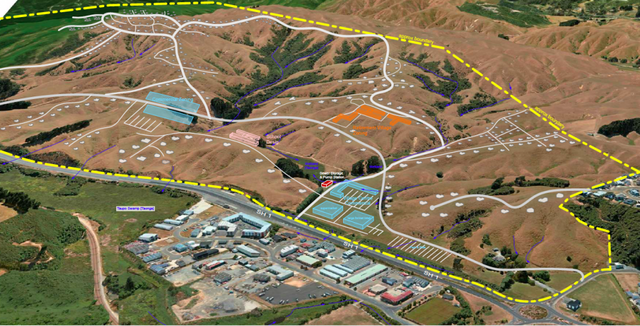
Plimmerton Farm: getting greenfields right
- Talk Wellington
- If we’re hellbent on doing more residential development in greenfields, what does “decent” look like in Plimmerton, hilly land near an existing suburb – like most of our region’s greenfields? This post is basically a guide for anyone who cares about Plimmerton, good urban development, or healthy wetlands, streams and coast, but is time-poor and can’t face going through the truckloads of documents they’ve stuck up without any specific meta-guidance (some FAQ are here). Hopefully this will help you pop in a submission! PCC’s “information” pages they suggest you use for submitting. Every one of these is a large PDF document, 90% written in technical language… aargh! The background: what where and how For those who don’t know, Plimmerton Farm’s a big proposed subdivision of hilly farmland draining into the significant Taupō Wetland and to Plimmerton Beach, just over the train line and highway from Plimmerton village (original Ngāti Toa name: Taupō). It’s going through a Streamlined Planning Process, a pre-COVID government scheme for accelerating development. The key step is the requisite change of the land’s zoning in the Porirua District Plan (“rural” zone to “residential” and other “urban” zones) that sets out what kind of stuff can then be built, where. It’s mostly streamlined because there’s just one shot for the public to have input on the plan change. One shot. Why submit? I was born and raised in Plimmerton, live here now, and intend to for the rest of my days. I’d love to see it grow, well. I would love Plimmerton to get more wallets, more hearts and minds, more faces (more diverse ones too!). But not with more traffic, and pointless damage to our environment. Right now, the proposal has some serious flaws which need sorting. I say Sorting because the changes won’t make it crazy innovative, just good enough for a development in the spot it is, being kicked off in 2020. Time matters too: there’a a bunch of good things happening imminently (and some bad Porirua trends that need to be reversed). I cover these in Get it right, below. It’s worth submitting because given the situation, a 1990s-grade development just won’t cut it. So what about Plimmerton Farm needs to change? It boils down to two themes: dial down the driveability and dial up the liveabilitymake Local the logical and easy choice for daily needs I’ll outline what needs to change in each. NOTE: There’s a third – don’t stuff the wetlands and streams. This is really important as Taupō Wetland is regionally significant, and all our streams and harbours have suffered from frankly shameful mismanagement of sediment from earthworks-heavy subdivisions like Aotea and Duck Creek, and from the earthworks-a-rama of Transmission Gully. Friends of Taupo Swamp have an excellent submission guide for you – add in some of their suggested bits to your submission. I: Dial down the driveability, dial up the liveability There aren’t many truly black-and-white things in life, but there’s one for towns: If a street is nice to drive in, it’ll be a crappy place to do anything else in (walk / eat / hang out / have a conversation / play / scoot or cycle / shop / have a pint). If it’s nice to do anything else in, it’ll be a crappy place to drive in. Mostly this is because of the nature of the automobile: big solid things that smash into our soft bodies if someone makes a mistake (75% odds of death if that’s at 50km/hour, 10% odds of death if at 30km/hour) big objects that need lots of space for manoeuvering and especially parking – which offstreet can be crazy expensive and push up the cost of a home, and onstreet hoover up valuable public space. big solid things driven by us real humans (for a while at least) who respond to the environment but also get distracted, and generally aren’t good at wielding these big solid things safely. The transport setup proposed for Plimmerton Farm makes for a much too driveable and poorly liveable place. 1. Narrow down all the roads. The current proposal’s roading setup has roads and streets that are too big, and there’s too much of them. Right sized roads for a liveable community The cross-sections for the roads include on-street parking and really wide lane widths. This is really gobsmacking for a consortium that talked a big talk about good practice. For all the reasons that Low Traffic Neighbourhoods are good, this is bad. (And it’s especially nuts when you realise that the excessively wide “arterial” roads (11 metres!) will need earthworked platforms built for them where they’re drawn running up the sharp ridges and across the tops of gullies. Expensive, damaging for the environment, and … what were they thinking?) So recommended changes: NARROW DOWN THE ROADS. Seriously. Design all the living-area streets and roads, and the centre, to be self-explaining for an operating traffic speed of 30km or less – that’s the speed where mistakes are rarely fatal. What does that look like? The designers will know and if they don’t they should be fired. Narrower crossing distances; chicanes (great way to incorporate green infrastructure and trees and seating!); narrowed sight-lines (trees! sculpture!) so no-one driving feels inclined to zoom. Reduced trafficked lanes (rori iti on the larger roads!), with properly wide and friendly footpaths. Threshold treatments, humps, modal filters, all the things we know very well are the natural ways to slow us down when driving, and make streets nicer for people. The beauty of all this “restriction” on driving is how much it frees us up for making everything else appealing. Streets become hospitable for kids to walk, scoot, bike to school safely, using the road not the footpath. Older people and those with impairments can walk and wheelchair safely. Teens coming home from town of an evening can scoot or bike home, safely. Popping down to the shops or for a coffee or to the train becomes a pleasure to do on foot, or on a scooter or bike. And you’re moving in a legitimate way – seeing and being seen, not stuck off in the bush on a “recreational” track like what they’ve described. The ordinary streets and roads are walkable, bikeable, scootable, mobility-scootable, and perfectly driveable, equally safe and useable in all weathers and anytime of day or night. Used to be a big, fast road. Now, kids bike to school and old people can chill out on it. (Mark Kerrison) (And in case you’re worried about firetrucks / rubbish trucks / buses, recall that on even Wellington City’s far more winding, narrower hilly streets everyone gets their rubbish collected and fires fought just fine. On public transport, smaller buses, like those that community transport operators use, are the way of the future for less densely-populated areas like this). Don’t build the through and loop roads. You don’t need signs like this when the only people who bother to drive in are those who live there, or who are visiting friends, because you just have to drive out again the way you came. When it’s the place you live, you’re invested in not being a dick far more than if you’re just out for a drive – or worse, out for a bit of a boyrace hoon on a massive loop route through a whole place. So just don’t build those big connector roads that enable people to drive easily from one residential area to the next, especially the ones up in the hilltops (section C) that just say “come for a hoon!” Instead, connect the living spaces heavily with bikeable, walkable, scootable, disability-friendly streets and lanes, and as much as possible, only one way in and out for cars from each living area. II: Make local logical and easy Plimmerton is a true village, with a great little centre (including a train station!) but Plimmerton Farm is ultimately a damn big area. The way to go is to enable people to get the basics of life – like school, groceries, a coffee – with a little local trip on foot, bike or scooter – it’s more of a bother to get in the car. Right now though, it needs two changes: 1. Provide for a second centre “Bumping into” spaces are known to be crucial to a feeling of neighbourhood, and in the (initial) absence of third places (worship places, community hall, sports club, cafe/pub, a supermarket is a vital social centre. Yet the north end of Plimmerton Farm is currently a deadzone for anything except residential. What things will probably look like under current layout. Like in Edwards Scissorhands without the interest of a castle. There’s no provision for a place to do your household groceries, so people will drive to Mana New World – more car trips – and less opportunity to bump into people who live nearby. (There’ll be no school in Plimmerton Farm for a while, because Ministry of Education isn’t allowed by the Education Act to build a school somewhere until there’s a certain population density of kids to fill it. A shitty Catch-22 for developments which is hopefully going to be fixed … sometime. Just another reason to make walking, biking and scooting really kid-friendly, as extra dropoff traffic for kids going to St Theresa’s, Plimmerton School, Paremata and Pukerua Bay schools will be a nightmare.) So they should provide for an additional centre in the north, including a groceries place of some kind. 2. Intensify within walking distance of Plimmerton proper. We should intensify properly, with lots of medium and even some high density (6 storeys of nicely laid-out density done well!) in the area that’s within a 5-minute walk of Plimmerton Village. The more people can live and work with access to all its many amenities, and its rail station (10 min to Porirua, 30 min to Wellington), the better. But there’s not enough density provided for there. Plimmerton Railway station: buzzing in 1916 and has only got bigger. (Photo: Pātaka Porirua Museum) So they should add another zone – E – of higher density in that 5-minute walking catchment of Plimmerton Village. What could it look like? A good example is 3333 Main, Vancouver . Submission tips On the site they ask you to fill in a Word or PDF form, saying which specific bit of the gazillion proposals you are talking about and the specific changes you want. This is a BS way to treat the vast majority of people submitting: normal non-professionals, just regular people who care about good development and liveable places. So just don’t worry about that. In those question 6 column boxes just put “Transport” and “Layout”. It’s the professional planners’ job to figure out specifically how to change a planning document. Just be specific enough that they know what you want to see. The text above is worth copying and pasting – it’ll be enough. And don’t forget the Friends of Taupo Swamp and Catchment advice is essential – definitely go read and use. That’s all you really need – just go submit! But if you’re keen to know more reasons why they should be doing this better, here’s some… Get it right, now Once this plan change is through, traditional developers like Gillies like to whack in all the infrastructure – hello, massive earthworks. And yet the place will take decades to fill with actual people – those hearts and minds and wallets. (Note even before COVID, Porirua’s growth rate was 0.1% per year. Yep, one tenth of one percent.) And extra pressure’s on to do this better because all these things are features of the next one to three years: the One Network Road Classification (sets the design specs for roads of different types) is being updated right now to be more people-friendly in the specs for roads in residential and centre areas, so designs like Plimmerton Farm’s will soon be Officially Bad Practice Sales and riding of e-bikes and e-scooters are going through the roof, continuing through and beyond COVID – this shows no signs of slowing, and prices are dropping. E-power flattens the hills of Plimmerton Farm and makes wheely active travel a breeze for the middle-class people who’ll be living here, if the streets and roads are hospitablePlimmerton Railway Station (on the most popular Wellington train line) is being upgraded to be a terminus station – i.e. better servicesThe Wellington Regional Growth Framework is setting a bunch of directions for councils on how to grow well, including well-known but often well-ignored issues like intensifying around public transport hubs Councils will soon be required to do to a bunch of a bunch of international good practice including get rid of many minimum parking requirements (in the news lately), and to upzone (enable intensification) of landuse in the walking catchment of public transport hubs. (5 min walk = approx 400 metres, 10 min = 800m).Bad trends we need to stop: Porirua’s really high car-dependency (we own cars a lot and drive a lot) is continuing, due to car-dependent urban form [PDF]– despite nice words in council’s strategic intentions.People living outside Wellington City are mostly to blame for our region’s 14% increase in emissions from transport in just 10 years. OK go submit now – and share with anyone who you think might care!
- Accepted from Talk Wellington posts by feedreader
- Tagged as:
- paremata
- porirua
- transmission-gully
- sculpture
- government
- parking
- design
- covid-19
- law
- planning
- wellington
- education
- developments
- sport
- buses
- coffee
- zoo
- people
Transmission Gully Motorway, Kenepuru, Porirua, Porirua City, Wellington, 5022, New Zealand (OpenStreetMap)
-
-
-
Weekly Wrap Up (Week 11, Term 2)
- Wellington High School
- Important Dates Monday 29 June: Open Evening 6pm Wednesday 1 July: Music Evening 7pm Friday 3 July: End of Term 2 Monday 20 July: Start of Term 3 Wednesday 22 July: Parents’ Evening (Senior Students) Monday 27 July: Parents’ Evening (Junior Students) Important Information Board of Trustees by-election results As a result of the recent Board of Trustees by-election, Dr Wyatt Page has been elected to the Board. Wyatt will join the Board with effect from the next meeting on Monday 27 July. Reports and parent-teacher meetings Learning Profile reports for Term 2 are now available for download from the Parent Portal (see Results > Reports). Parent Teacher meetings will take place on Wednesday 22 July (Senior students) and Monday 27 July (Junior students). To make appointments go to: Go to: https://www.schoolinterviews.co.nz/ Enter the code: vdm7q (Juniors) or 5yjhn (Seniors) Choose the SUBJECT then the TEACHER. Please leave a five minute gap between bookings. Note that we are only able to run one conversation with each teacher per student. If you are hearing impaired the Riley Centre can be a challenging environment: please email admin@whs.school.nz and we will aim to accommodate your bookings separately. Revised guidance on testing for COVID-19 The Ministry of Education has circulated the following information to all schools: At a time where there are increasing numbers of colds and other winter illnesses, the Ministry of Health has revised its guidance on who might need testing for COVID-19. It is important to note that there is currently no known community transmission of COVID-19 in New Zealand. The vast majority of adults, children and young people with symptoms consistent with COVID-19 will not have COVID-19. Symptoms of COVID-19 can include new onset or worsening of one or more of the following: Cough Fever Sore throat Runny nose Shortness of breath/difficulty breathing Temporary loss of smell Health’s information on who should get tested notes that people with any of the COVID-19 symptoms who are close contacts of confirmed cases, have recently travelled overseas, or been in contact with recent travellers, should get assessed. If anyone has symptoms but is unsure if they have been exposed to COVID-19, they should ring Healthline on 0800 358 5453 or their GP for advice. Over winter there are many other viruses about that can cause people to feel unwell and have symptoms similar to those of COVID-19. Some people with symptoms consistent with COVID-19 may be tested as part of Health’s ongoing surveillance to ensure that there is no community transmission in New Zealand. If they are not close contacts of confirmed cases, have not recently travelled overseas, or have not been in contact with recent travellers, then there is no need for them to self-isolate while awaiting the test result, and they can return to school once they are feeling well. If not recommended for testing, they will be able to return to school or their early learning service when they are feeling well and no longer displaying symptoms. Wallace Street roadworks update The current phase of the Wallace Street roadworks is due for completion by the end of the month. As long as the rain holds off, Wallace Street should be re-opened to through traffic on 1 July. Following this, however, works will need to get underway along Wallace Street, near Massey University’s entrance, to upgrade wastewater pipes. This will take place in off peak hours (9.00am-4.00pm) on weekdays and traffic will often be reduced to a single lane with Stop / Go control. This is likely to take two months to complete. What’s happening? Economists breakfast with Dr Allan Bollard On Thursday, Year 13 Economics students Sarah Bennett and Rachel Woolcott, attended a Cullen Breakfast at the Wellington Club. Speaking at this week’s breakfast was Dr Alan Bollard, who has held numerous senior positions in Government and interGovernmental agencies. Dr Bollard discussed the economic impact of the covid epidemic and then participated in a question and answer session. Sarah said “the range of angles in the topic discussed was thought provoking”. Rachel commented “it was a very interesting discussion and I enjoyed listening to his jokes and insight.” Year 13 performance of ‘Girls like that’ Evan Placey’s Girls Like That is an ensemble play that explores the pressures young people face today in the face of advancing technologies. Year 13 Drama students produced and performed this play this week. The students are to be congratulated for their sophisticated performance which was an enduring piece of theatre, an achievement all the more impressive when considering that much of this production was conceived and developed during lockdown. Congratulations to all, and to Drama teacher Roger Mantel. He Kākano The He Kākano students have been engaged in a range of creative activities, cognitive thinking skills and maths throughout the week. Winter in the garden The weather over the past few weeks has seen our horticulture students spend time on maintenance, cleaning and repairing tools including secateurs. They will be well prepared for winter pruning and work outside once the weather improves. Instrumental & vocal lessons update If your Junior student is interested in taking instrumental / vocal lessons but has not yet enrolled, please download the form from the Student Hub and hand in or email the completed form to Fritz Wollner Lessons will be reorganised for Terms 3 and 4. If students have not been attending regularly, they need to see Mr Wollner as soon as possible to ensure they do not lose their spot. Achievements National Bridge Speech competition place secured Year 13 Amelia Smith qualified for a place in the National Bridge Speech competition following her success in the regional Chinese speech competition last week. Amelia will represent the North Island outside Auckland region in the competition, to be held at Victoria University on Sunday 2 August. At that event, each qualified candidate will need to present a speech, perform to demonstrate a skill and answer questions in Chinese. Finalists will represent New Zealand and compete with candidates from all over the world in October. We wish Amelia luck as she progresses through the competition. Sports Junior girls football For the first time in many years WHS has a junior girls football team out in competition. Their most recent game resulted in a very close 2-1 loss but the girls had fun and were very impressive despite some players not having very much experience. This team could not have gone ahead without the support of parents who helped with both transport and officiating. Special thanks to Bea Gladding and Jennifer Argyle who are the coach/manager dream team who make this team possible. Below are some photos of the action and sideline support. Basketball Basketball is underway with all teams at WHS having played at least one game so far. Big thanks to Jason Reddish who is taking on the entire boys programme at school which includes four teams and doing a great job. Another big thanks to Nick Andrews who along with a parent is coaching the Senior girls team. Junior Boys play on a Tuesday and another junior team plays on a Thursday. All Senior teams play on Fridays, with the top boys and girls team playing at the ASB Centre. Below are some photos from the first junior basketball game. Boys 1st XI football The 1st XI played their first game of the season, bringing home a 5-1 victory against St Patrick’s Silverstream. Their next fixture is against Newlands College this coming weekend.
- Accepted from WHS news by feedreader
- Tagged as:
- newlands
- water
- government
- transport
- music
- covid-19
- theatre
- wellington
- education
- art
- basketball
- people
Wellington High School, Taranaki Street, Mount Cook, Wellington, Wellington City, Wellington, 6011, New Zealand (OpenStreetMap)
-
-
-
Some in the media need to calm down
- Victoria University of Wellington
- Journalists slamming the New Zealand Government over new cases of COVID-19 are over-reacting, writes Professor Jack Vowles.
- Accepted from VUW News feed by feedreader
- Tagged as:
- covid-19
- government
- media
-
-
-
Movin’March rallies student numbers despite COVID-19
- Greater Wellington Regional Council
- Names have been drawn and winners have been announced for Greater Wellington Regional Council’s month-long initiative that encouraged students to walk, cycle and scoot to school.
- Accepted from GW media releases 2019 by feedreader
- Tagged as:
- covid-19
- wellington
-
-
-
Accelerating change the aim for Greater Wellington’s Climate Committee
- Greater Wellington Regional Council
- The inaugural meeting of Greater Wellington’s climate committee, delayed by COVID-19, will focus on how regional government can help lead the response to our fast-changing climate, the greatest challenge facing Aotearoa New Zealand.
- Accepted from GW media releases 2019 by feedreader
- Tagged as:
- covid-19
- government
- wellington
-
-
-
Wellington infrastructure fast tracked to stimulate economy
- Greater Wellington Regional Council
- The Government is fast tracking two Wellington infrastructure projects to help stimulate the region’s economy post COVID-19.
- Accepted from GW media releases 2019 by feedreader
- Tagged as:
- covid-19
- government
- wellington
-
-
-
Wellbeing, employment and COVID-19
- Victoria University of Wellington
- A key test of the New Zealand Government's wellbeing focus over coming weeks will be the extent and nature of its support for firms to survive, writes Professor Arthur Grimes.
- Accepted from VUW News feed by feedreader
- Tagged as:
- art
- covid-19
- government
-
-
-
Council reduces rating level increase in light of COVID-19 community impact
- Greater Wellington Regional Council
- Greater Wellington Regional Council agreed to reduce its 2020/21 regional rates increase from an average of 6.
- Accepted from GW media releases 2019 by feedreader
- Tagged as:
- covid-19
- rates
- wellington
-
-
-
May update from DCM - together we can end homelessness
- Downtown Community Ministry
- 96 May update from DCM - together we can end homelessness p{ margin:10px 0; padding:0; } table{ border-collapse:collapse; } h1,h2,h3,h4,h5,h6{ display:block; margin:0; padding:0; } img,a img{ border:0; height:auto; outline:none; text-decoration:none; } body,#bodyTable,#bodyCell{ height:100%; margin:0; padding:0; width:100%; } .mcnPreviewText{ display:none !important; } #outlook a{ padding:0; } img{ -ms-interpolation-mode:bicubic; } table{ mso-table-lspace:0pt; mso-table-rspace:0pt; } .ReadMsgBody{ width:100%; } .ExternalClass{ width:100%; } p,a,li,td,blockquote{ mso-line-height-rule:exactly; } a[href^=tel],a[href^=sms]{ color:inherit; cursor:default; text-decoration:none; } p,a,li,td,body,table,blockquote{ -ms-text-size-adjust:100%; -webkit-text-size-adjust:100%; } .ExternalClass,.ExternalClass p,.ExternalClass td,.ExternalClass div,.ExternalClass span,.ExternalClass font{ line-height:100%; } a[x-apple-data-detectors]{ color:inherit !important; text-decoration:none !important; font-size:inherit !important; font-family:inherit !important; font-weight:inherit !important; line-height:inherit !important; } .templateContainer{ max-width:600px !important; } a.mcnButton{ display:block; } .mcnImage,.mcnRetinaImage{ vertical-align:bottom; } .mcnTextContent{ word-break:break-word; } .mcnTextContent img{ height:auto !important; } .mcnDividerBlock{ table-layout:fixed !important; } h1{ color:#222222; font-family:Helvetica; font-size:40px; font-style:normal; font-weight:bold; line-height:150%; letter-spacing:normal; text-align:center; } h2{ color:#222222; font-family:Helvetica; font-size:34px; font-style:normal; font-weight:bold; line-height:150%; letter-spacing:normal; text-align:center; } h3{ color:#444444; font-family:Helvetica; font-size:22px; font-style:normal; font-weight:bold; line-height:150%; letter-spacing:normal; text-align:center; } h4{ color:#949494; font-family:Georgia; font-size:20px; font-style:italic; font-weight:normal; line-height:125%; letter-spacing:normal; text-align:center; } #templateHeader{ background-color:#0f288b; background-image:none; background-repeat:no-repeat; background-position:50% 50%; background-size:cover; border-top:0; border-bottom:0; padding-top:54px; padding-bottom:54px; } .headerContainer{ background-color:transparent; background-image:none; background-repeat:no-repeat; background-position:center; background-size:cover; border-top:0; border-bottom:0; padding-top:0; padding-bottom:0; } .headerContainer .mcnTextContent,.headerContainer .mcnTextContent p{ color:#757575; font-family:Helvetica; font-size:16px; line-height:150%; text-align:left; } .headerContainer .mcnTextContent a,.headerContainer .mcnTextContent p a{ color:#007C89; font-weight:normal; text-decoration:underline; } #templateBody{ background-color:#transparent; background-image:none; background-repeat:no-repeat; background-position:center; background-size:cover; border-top:0; border-bottom:0; padding-top:27px; padding-bottom:54px; } .bodyContainer{ background-color:#transparent; background-image:none; background-repeat:no-repeat; background-position:center; background-size:cover; border-top:0; border-bottom:0; padding-top:0; padding-bottom:0; } .bodyContainer .mcnTextContent,.bodyContainer .mcnTextContent p{ color:#757575; font-family:Helvetica; font-size:16px; line-height:150%; text-align:left; } .bodyContainer .mcnTextContent a,.bodyContainer .mcnTextContent p a{ color:#007C89; font-weight:normal; text-decoration:underline; } #templateFooter{ background-color:#333333; background-image:none; background-repeat:no-repeat; background-position:center; background-size:cover; border-top:0; border-bottom:0; padding-top:45px; padding-bottom:63px; } .footerContainer{ background-color:transparent; background-image:none; background-repeat:no-repeat; background-position:center; background-size:cover; border-top:0; border-bottom:0; padding-top:0; padding-bottom:0; } .footerContainer .mcnTextContent,.footerContainer .mcnTextContent p{ color:#FFFFFF; font-family:Helvetica; font-size:12px; line-height:150%; text-align:center; } .footerContainer .mcnTextContent a,.footerContainer .mcnTextContent p a{ color:#FFFFFF; font-weight:normal; text-decoration:underline; } @media only screen and (min-width:768px){ .templateContainer{ width:600px !important; } } @media only screen and (max-width: 480px){ body,table,td,p,a,li,blockquote{ -webkit-text-size-adjust:none !important; } } @media only screen and (max-width: 480px){ body{ width:100% !important; min-width:100% !important; } } @media only screen and (max-width: 480px){ .mcnRetinaImage{ max-width:100% !important; } } @media only screen and (max-width: 480px){ .mcnImage{ width:100% !important; } } @media only screen and (max-width: 480px){ .mcnCartContainer,.mcnCaptionTopContent,.mcnRecContentContainer,.mcnCaptionBottomContent,.mcnTextContentContainer,.mcnBoxedTextContentContainer,.mcnImageGroupContentContainer,.mcnCaptionLeftTextContentContainer,.mcnCaptionRightTextContentContainer,.mcnCaptionLeftImageContentContainer,.mcnCaptionRightImageContentContainer,.mcnImageCardLeftTextContentContainer,.mcnImageCardRightTextContentContainer,.mcnImageCardLeftImageContentContainer,.mcnImageCardRightImageContentContainer{ max-width:100% !important; width:100% !important; } } @media only screen and (max-width: 480px){ .mcnBoxedTextContentContainer{ min-width:100% !important; } } @media only screen and (max-width: 480px){ .mcnImageGroupContent{ padding:9px !important; } } @media only screen and (max-width: 480px){ .mcnCaptionLeftContentOuter .mcnTextContent,.mcnCaptionRightContentOuter .mcnTextContent{ padding-top:9px !important; } } @media only screen and (max-width: 480px){ .mcnImageCardTopImageContent,.mcnCaptionBottomContent:last-child .mcnCaptionBottomImageContent,.mcnCaptionBlockInner .mcnCaptionTopContent:last-child .mcnTextContent{ padding-top:18px !important; } } @media only screen and (max-width: 480px){ .mcnImageCardBottomImageContent{ padding-bottom:9px !important; } } @media only screen and (max-width: 480px){ .mcnImageGroupBlockInner{ padding-top:0 !important; padding-bottom:0 !important; } } @media only screen and (max-width: 480px){ .mcnImageGroupBlockOuter{ padding-top:9px !important; padding-bottom:9px !important; } } @media only screen and (max-width: 480px){ .mcnTextContent,.mcnBoxedTextContentColumn{ padding-right:18px !important; padding-left:18px !important; } } @media only screen and (max-width: 480px){ .mcnImageCardLeftImageContent,.mcnImageCardRightImageContent{ padding-right:18px !important; padding-bottom:0 !important; padding-left:18px !important; } } @media only screen and (max-width: 480px){ .mcpreview-image-uploader{ display:none !important; width:100% !important; } } @media only screen and (max-width: 480px){ h1{ font-size:30px !important; line-height:125% !important; } } @media only screen and (max-width: 480px){ h2{ font-size:26px !important; line-height:125% !important; } } @media only screen and (max-width: 480px){ h3{ font-size:20px !important; line-height:150% !important; } } @media only screen and (max-width: 480px){ h4{ font-size:18px !important; line-height:150% !important; } } @media only screen and (max-width: 480px){ .mcnBoxedTextContentContainer .mcnTextContent,.mcnBoxedTextContentContainer .mcnTextContent p{ font-size:14px !important; line-height:150% !important; } } @media only screen and (max-width: 480px){ .headerContainer .mcnTextContent,.headerContainer .mcnTextContent p{ font-size:16px !important; line-height:150% !important; } } @media only screen and (max-width: 480px){ .bodyContainer .mcnTextContent,.bodyContainer .mcnTextContent p{ font-size:16px !important; line-height:150% !important; } } @media only screen and (max-width: 480px){ .footerContainer .mcnTextContent,.footerContainer .mcnTextContent p{ font-size:14px !important; line-height:150% !important; } } Here at DCM, we have been determined to do whatever it takes to support our taumai during the COVID crisis. Doing things differently Here at DCM, we have been determined to do whatever it takes to support our taumai during the COVID crisis. For many of us, this has meant taking on different roles and tasks. In our March update, we saw Rob from our Outreach Team manning DCM’s new 0800 number phone support service for our taumai from his home. In our April update, we saw how DCM and Westpac kaimahi immediately worked together to enable our taumai to access their money during lock-down. Today we talk to Paula, a team leader on our Aro Mai team, about the fantastic work she and her team have been doing during this time... Paula As soon as we learned that lock-down was imminent, my team and I had to rapidly shift our focus – from supporting people with long histories of homelessness into permanent housing, to getting people off the streets and in to emergency housing. Together we can end homelessness – yes, this is always what it comes down to. The success of this work has been built on collaboration – in particular, between the government, government agencies and organisations like DCM. Prior to the lock-down, the whole process around emergency housing was slow and complex, but to respond rapidly to the COVID challenge, we were able to work together to rapidly improve and expedite the process. HUD* immediately stepped up; like us, they quickly shifted their focus, organising emergency housing and entering in to contracts with motels and the like, to ensure that the spaces we needed would be available. MSD were regularly in touch with us, asking us what we needed and supporting our work every step of the way. We received referrals from many different sources – from DCM kaimahi and our Outreach Team, but also from Wellington City Council, the police, Probation Services, the hospital and from mental health nurses and services. When it came to placing these people in emergency housing, I was able to work closely with Regina – another key to our success. Reg has been at DCM since 2011; she knows a lot about the most marginalised people, and often knows their story. She offers insight into what will work for them, and what the issues are. Together we could determine the right location, mix of people and a plan for the management of each location. Regina You asked me what success has looked like. To begin with, people have settled and stayed in their emergency housing, and this has actually enabled us to be true to our kaupapa, and to our commitment to Housing First. We have been able to engage with taumai, see them regularly and go forward together. People who have been homeless and who were not on our radar at all have stepped forward. With street begging not an option, limited toilet facilities and with drop-in spaces closed, emergency housing has become much more attractive to those who have been rough sleeping in our city. Now we are in touch with them, building relationships, getting their names on the housing register and – yes! – moving the first of them on in to permanent housing. So it has been a change in focus for me and my team, but ultimately, it has totally supported our over-riding goal as a team and an organisation which is committed to a Housing First kaupapa. *Ministry of Housing and Urban Development (HUD) <!-- --> From emergency housing to a permanent home DCM kaimahi helping taumai move into a permanent home Yes, as Paula says, we can now begin to share the stories of people who have already moved from emergency housing into their own whare. A has had a long history of engagement with DCM; he has been a regular at Te Hāpai, we have supported him to sort his benefit and to get his name on the housing register, he has had dental appointments, seen Te Aro Health nurses and received food support at DCM. A is a very pleasant, quiet and unassuming man who doesn’t ask for support and values his independence. We initially got an emergency housing room for him at AC International; it was immediately clear that a shared place like this didn’t work for him. There were too many people – A was accustomed to living in the bush on his own. We were then able to get him a self-contained place where he could be independent, but where there are also other taumai we are working with. Together, they have formed a very supportive community. They have been company for one another, and have been able to provide advice and support to one another. Dominic from our Aro Mai team then stepped up to support A in to a permanent home. DCM has a strong relationship with Wellington City Housing, and we were able to get A a WCH tenancy – yes, last week, he moved in to his own home. He can walk in to town, and has friends and supports close by. Dominic will continue to check in with him regularly, but A is enjoying the independence that is so important to him. <!-- --> Please help us get the message out there! Forward this email on to everyone you can think of who may be interested in how to respond to homelessness, and just generally people who are passionate about Wellington. <!-- --> Read More Success Stories Nāku te rourou, nāu te rourou, ka ora ai te iwi With your basket and my basket, the people will thrive <!-- --> Copyright © 2020 DCM. All rights reserved. Our mailing address is: DCMPO Box 6133Marion SqWellington, Wellington 6011 New ZealandAdd us to your address book Want to change how you receive these emails? You can update your preferences or unsubscribe from this list.
- Accepted from DCM alerts archive by feedreader
- Tagged as:
- government
- media
- dental
- covid-19
- wellington
- art
- housing
- hospital
- people
-
-
-
Waiting game continues for community rugby
- Wellington Club Weekly
- Community rugby will just have to keep waiting, but there is hope. Last Thursday’s announcement by Government of what Level 2 in the Covid response would look like seemingly opened the door for rugby activities to resume. Although gatherings would be limited to 100, the guidance from Government and Sport NZ made it clear that...
- Accepted from Club Weekly 2020 by feedreader
- Tagged as:
- covid-19
- government
- rugby
-
-
-
The future of New Zealand’s state sector
- Victoria University of Wellington
- Central government has abdicated responsibility and accountability by decentralising its decision-making and when the dust clears from the COVID-19 crisis we should look at bringing back specialised departments headed by real experts, writes Dr Geoff Bertram.
- Accepted from VUW News feed by feedreader
- Tagged as:
- art
- covid-19
- government
-
-
-
Budget must plan to restore its buffer
- Victoria University of Wellington
- New Zealand's Government is legislatively required to maintain a financial buffer in case of crises like COVID-19 and Budget 2020 must give a clear timeframe for when that buffer will be restored, writes Professor Ian Ball.
- Accepted from VUW News feed by feedreader
- Tagged as:
- covid-19
- government
-
-
-
Study suggests Wellington regional economy may avoid worst of downturn
- Greater Wellington Regional Council
- A high-level discussion document on the most likely impacts of COVID-19 suggests that Wellington may be in a better position to ride out the coming economic downturn and could emerge in better shape than some other regions.
- Accepted from GW media releases 2019 by feedreader
- Tagged as:
- covid-19
- wellington
-
-
-
April update from DCM - together we can end homelessness
- Downtown Community Ministry
- 96 April update from DCM - together we can end homelessness p{ margin:10px 0; padding:0; } table{ border-collapse:collapse; } h1,h2,h3,h4,h5,h6{ display:block; margin:0; padding:0; } img,a img{ border:0; height:auto; outline:none; text-decoration:none; } body,#bodyTable,#bodyCell{ height:100%; margin:0; padding:0; width:100%; } .mcnPreviewText{ display:none !important; } #outlook a{ padding:0; } img{ -ms-interpolation-mode:bicubic; } table{ mso-table-lspace:0pt; mso-table-rspace:0pt; } .ReadMsgBody{ width:100%; } .ExternalClass{ width:100%; } p,a,li,td,blockquote{ mso-line-height-rule:exactly; } a[href^=tel],a[href^=sms]{ color:inherit; cursor:default; text-decoration:none; } p,a,li,td,body,table,blockquote{ -ms-text-size-adjust:100%; -webkit-text-size-adjust:100%; } .ExternalClass,.ExternalClass p,.ExternalClass td,.ExternalClass div,.ExternalClass span,.ExternalClass font{ line-height:100%; } a[x-apple-data-detectors]{ color:inherit !important; text-decoration:none !important; font-size:inherit !important; font-family:inherit !important; font-weight:inherit !important; line-height:inherit !important; } .templateContainer{ max-width:600px !important; } a.mcnButton{ display:block; } .mcnImage,.mcnRetinaImage{ vertical-align:bottom; } .mcnTextContent{ word-break:break-word; } .mcnTextContent img{ height:auto !important; } .mcnDividerBlock{ table-layout:fixed !important; } h1{ color:#222222; font-family:Helvetica; font-size:40px; font-style:normal; font-weight:bold; line-height:150%; letter-spacing:normal; text-align:center; } h2{ color:#222222; font-family:Helvetica; font-size:34px; font-style:normal; font-weight:bold; line-height:150%; letter-spacing:normal; text-align:center; } h3{ color:#444444; font-family:Helvetica; font-size:22px; font-style:normal; font-weight:bold; line-height:150%; letter-spacing:normal; text-align:center; } h4{ color:#949494; font-family:Georgia; font-size:20px; font-style:italic; font-weight:normal; line-height:125%; letter-spacing:normal; text-align:center; } #templateHeader{ background-color:#0f288b; background-image:none; background-repeat:no-repeat; background-position:50% 50%; background-size:cover; border-top:0; border-bottom:0; padding-top:54px; padding-bottom:54px; } .headerContainer{ background-color:transparent; background-image:none; background-repeat:no-repeat; background-position:center; background-size:cover; border-top:0; border-bottom:0; padding-top:0; padding-bottom:0; } .headerContainer .mcnTextContent,.headerContainer .mcnTextContent p{ color:#757575; font-family:Helvetica; font-size:16px; line-height:150%; text-align:left; } .headerContainer .mcnTextContent a,.headerContainer .mcnTextContent p a{ color:#007C89; font-weight:normal; text-decoration:underline; } #templateBody{ background-color:#transparent; background-image:none; background-repeat:no-repeat; background-position:center; background-size:cover; border-top:0; border-bottom:0; padding-top:27px; padding-bottom:54px; } .bodyContainer{ background-color:#transparent; background-image:none; background-repeat:no-repeat; background-position:center; background-size:cover; border-top:0; border-bottom:0; padding-top:0; padding-bottom:0; } .bodyContainer .mcnTextContent,.bodyContainer .mcnTextContent p{ color:#757575; font-family:Helvetica; font-size:16px; line-height:150%; text-align:left; } .bodyContainer .mcnTextContent a,.bodyContainer .mcnTextContent p a{ color:#007C89; font-weight:normal; text-decoration:underline; } #templateFooter{ background-color:#333333; background-image:none; background-repeat:no-repeat; background-position:center; background-size:cover; border-top:0; border-bottom:0; padding-top:45px; padding-bottom:63px; } .footerContainer{ background-color:transparent; background-image:none; background-repeat:no-repeat; background-position:center; background-size:cover; border-top:0; border-bottom:0; padding-top:0; padding-bottom:0; } .footerContainer .mcnTextContent,.footerContainer .mcnTextContent p{ color:#FFFFFF; font-family:Helvetica; font-size:12px; line-height:150%; text-align:center; } .footerContainer .mcnTextContent a,.footerContainer .mcnTextContent p a{ color:#FFFFFF; font-weight:normal; text-decoration:underline; } @media only screen and (min-width:768px){ .templateContainer{ width:600px !important; } } @media only screen and (max-width: 480px){ body,table,td,p,a,li,blockquote{ -webkit-text-size-adjust:none !important; } } @media only screen and (max-width: 480px){ body{ width:100% !important; min-width:100% !important; } } @media only screen and (max-width: 480px){ .mcnRetinaImage{ max-width:100% !important; } } @media only screen and (max-width: 480px){ .mcnImage{ width:100% !important; } } @media only screen and (max-width: 480px){ .mcnCartContainer,.mcnCaptionTopContent,.mcnRecContentContainer,.mcnCaptionBottomContent,.mcnTextContentContainer,.mcnBoxedTextContentContainer,.mcnImageGroupContentContainer,.mcnCaptionLeftTextContentContainer,.mcnCaptionRightTextContentContainer,.mcnCaptionLeftImageContentContainer,.mcnCaptionRightImageContentContainer,.mcnImageCardLeftTextContentContainer,.mcnImageCardRightTextContentContainer,.mcnImageCardLeftImageContentContainer,.mcnImageCardRightImageContentContainer{ max-width:100% !important; width:100% !important; } } @media only screen and (max-width: 480px){ .mcnBoxedTextContentContainer{ min-width:100% !important; } } @media only screen and (max-width: 480px){ .mcnImageGroupContent{ padding:9px !important; } } @media only screen and (max-width: 480px){ .mcnCaptionLeftContentOuter .mcnTextContent,.mcnCaptionRightContentOuter .mcnTextContent{ padding-top:9px !important; } } @media only screen and (max-width: 480px){ .mcnImageCardTopImageContent,.mcnCaptionBottomContent:last-child .mcnCaptionBottomImageContent,.mcnCaptionBlockInner .mcnCaptionTopContent:last-child .mcnTextContent{ padding-top:18px !important; } } @media only screen and (max-width: 480px){ .mcnImageCardBottomImageContent{ padding-bottom:9px !important; } } @media only screen and (max-width: 480px){ .mcnImageGroupBlockInner{ padding-top:0 !important; padding-bottom:0 !important; } } @media only screen and (max-width: 480px){ .mcnImageGroupBlockOuter{ padding-top:9px !important; padding-bottom:9px !important; } } @media only screen and (max-width: 480px){ .mcnTextContent,.mcnBoxedTextContentColumn{ padding-right:18px !important; padding-left:18px !important; } } @media only screen and (max-width: 480px){ .mcnImageCardLeftImageContent,.mcnImageCardRightImageContent{ padding-right:18px !important; padding-bottom:0 !important; padding-left:18px !important; } } @media only screen and (max-width: 480px){ .mcpreview-image-uploader{ display:none !important; width:100% !important; } } @media only screen and (max-width: 480px){ h1{ font-size:30px !important; line-height:125% !important; } } @media only screen and (max-width: 480px){ h2{ font-size:26px !important; line-height:125% !important; } } @media only screen and (max-width: 480px){ h3{ font-size:20px !important; line-height:150% !important; } } @media only screen and (max-width: 480px){ h4{ font-size:18px !important; line-height:150% !important; } } @media only screen and (max-width: 480px){ .mcnBoxedTextContentContainer .mcnTextContent,.mcnBoxedTextContentContainer .mcnTextContent p{ font-size:14px !important; line-height:150% !important; } } @media only screen and (max-width: 480px){ .headerContainer .mcnTextContent,.headerContainer .mcnTextContent p{ font-size:16px !important; line-height:150% !important; } } @media only screen and (max-width: 480px){ .bodyContainer .mcnTextContent,.bodyContainer .mcnTextContent p{ font-size:16px !important; line-height:150% !important; } } @media only screen and (max-width: 480px){ .footerContainer .mcnTextContent,.footerContainer .mcnTextContent p{ font-size:14px !important; line-height:150% !important; } } Reaching out to the most marginalised – during lock-down Reaching out to the most marginalised – during lock-down Natalia and Chris catch up with Mark in Te Aro Park During the COVID crisis, the priority for DCM’s Street Outreach team has been connecting with people rough sleeping or who are sleeping in their cars, and getting them in to emergency accommodation. “Government and other agencies worked together to rapidly increase the supply of emergency housing in response to the pandemic, and so we have been able to get rooms for many of these people, some of whom were not even prepared to consider such an option before the lock-down,” explains Outreach team leader, Natalia. “At DCM we often talk about 'Ki te hoe' or 'pick up the paddle'. What is it that motivates someone to finally pick up the paddle and do what it takes to get off the streets and into housing? In this case, concerns about limited access to food and toilets during lock-down, seeing that there weren’t the same opportunities to supplement their income through street begging with the streets empty, and being offered appealing accommodation, including new facilities, some of which also provide three meals a day. COVID-19 and the lock-down have offered us a unique opportunity in our work to end homelessness.” With a growing group of rough sleepers in emergency housing, the Outreach team can now prioritise supporting them to take the next steps. “We are seeing rough sleepers who were very reluctant to try emergency housing, even during the lock-down, now thriving in their new accommodation. The next step is to follow up with these taumai, and to have more kōrero with them about housing. There’s a window of opportunity while we know where they are, to talk about their situations and to do the groundwork to get them on the path to housing.” DCM is totally committed to a Housing First approach; this means that we will work with those we have been able to get off the streets and in to emergency housing, to get their names on to the social housing register and to work together to access a permanent home for them. This is something that for many of them would have been inconceivable a few months ago; but now they have taken a giant step, and this has opened up a whole new world of possibilities to them. Who knew that a time like this could be the greatest support in achieving our goal of ending homelessness in our city? This is part of a longer story about the mahi which DCM’s Street Outreach team is doing during lock-down: read the full story on our website. <!-- --> “Together we can” – find innovative solutions during lock-down Natalia out on outreach during Level 3, speaks to a man outside Westpac on Lambton Quay Some of the most marginalised people in our city have no home, no income and no ID. When these people are unable to access a bank account of their own, DCM provides them with a money management service, accesses a benefit for them and pays their bills; they then receive the remainder of their money by cheque. These cheques have to be cashed at a bank branch. This not only presented a significant problem during lock-down, but was potentially no longer a viable long-term option. DCM approached MSD and Westpac, and together came up with a solution which will make a difference in the lives of the poorest people during the current crisis and well beyond. Instead of receiving a weekly cheque, these people are now able to use a payment card supplied by Westpac. “Usually this would take a couple of months to organise, but we expedited it within two weeks so that these people could have their money,” Transactional Solutions Manager at Westpac, Julia Hopkins, says. It works like a debit card but is called a ‘prepaid card’ so DCM can put the amount of discretionary income which would have previously been paid out as a cash cheque onto the card, and the person can spend up to that limit. This is a fantastic step change, as we have grappled for some time with the problem of how to continue to deliver our money management service when cheques are ultimately phased out. The new initiatives which have enabled us to continue to support the most marginalised people in our city during the COVID-19 pandemic, also offer long-term benefits and solutions for our taumai. Ehara taku toa i te toa takitahi, he toa takitini – Success is not the work of one, but the work of many. <!-- --> “Together we can” – an important conversation and shared commitment This morning the entire DCM team was thrilled to have the opportunity to meet with our local MP and New Zealand’s Minister of Finance, Grant Robertson – that’s 32 of us participating in a Zoom hui! We were able to share with him some of our learnings from recent weeks - the positive things and the challenges - and we were all uplifted by his responses. We updated Grant on the practical and innovative ways that DCM has responded to the crisis, and shared some of the positives, including: the speed at which a whole new stock of emergency housing has been made available, and the excellent way in which the partnership between DCM, government, MSD and HUD, and other community agencies, has been working. Everyone has had a can-do attitude. Amongst the concerns we were able to raise: The need to increase the stock of permanent housing, for people to move from emergency housing into their own homes During lock-down it has become clear that the level of substance misuse is larger than even we knew, and we will need more specialist drug and alcohol support in the future There are gaps around the integration of people exiting prison. During lock-down, we have had a significant number of taumai come to us direct from prison, including people who have served long prison terms sent to us to house in emergency housing. Grant acknowledged the courage and compassion that DCM has showed as we have kept working with vulnerable people. He spoke about a commitment to “Build Back Better” across a range of domains – from inequality and income support to a low carbon future. And he invited DCM to be a part of this: “In the midst of this crisis, there is also a chance to look out to the horizon. We get to re-set things a bit; there is an opportunity here, and we need your help to co-design this new future.” Stephanie thanked him, accepted his challenge and issued another on behalf of DCM: “Thank you for the leadership you and the Prime Minister have shown to us as a nation. You have made bold decisions for us and you have shown the world this can be done with compassion and kindness” ... “Grant, we don’t want anyone to go backwards from here. Your government has often spoken about going hard, going fast. We have seen rapid decision-making and the benefits of this; let’s continue to go hard and go fast to end homelessness.” <!-- --> Please help us get the message out there! Forward this email on to everyone you can think of who may be interested in how to respond to homelessness, and just generally people who are passionate about Wellington. <!-- --> Read More Success Stories Nāku te rourou, nāu te rourou, ka ora ai te iwi With your basket and my basket, the people will thrive <!-- --> Copyright © 2020 DCM. All rights reserved. Our mailing address is: DCMPO Box 6133Marion SqWellington, Wellington 6011 New ZealandAdd us to your address book Want to change how you receive these emails? You can update your preferences or unsubscribe from this list.
- Accepted from DCM alerts archive by tonytw1
- Tagged as:
- accommodation
- government
- media
- design
- covid-19
- rowing
- wellington
- art
- housing
- zoo
- people
Wellington Zoological Gardens, Manchester Street, Melrose, Wellington, Wellington Region, 6021, New Zealand (OpenStreetMap)
-
-
-
COVID 19 – NZ Rugby update (24 April)
- College Sport Wellington
- Please see below and attached updates and advice from NZ Rugby regarding Return to Play Guidelines, following consultation with Government and Sport NZ.
- Accepted from College Sport news HTTPS by feedreader
- Tagged as:
- consultation
- government
- rugby
- covid-19
-