
Art and Transport
-
-

Cable Car Museum Tour
- MuseumsWellington
- The post Cable Car Museum Tour appeared first on Museums Wellington.
- Accepted from Museums of Wellington events by feedreader
- Tagged as:
- cable-car
Wellington Cable Car, Salamanca Road, Wellington Central, Wellington, Wellington City, Wellington, 6145, New Zealand (OpenStreetMap)
-
-
-
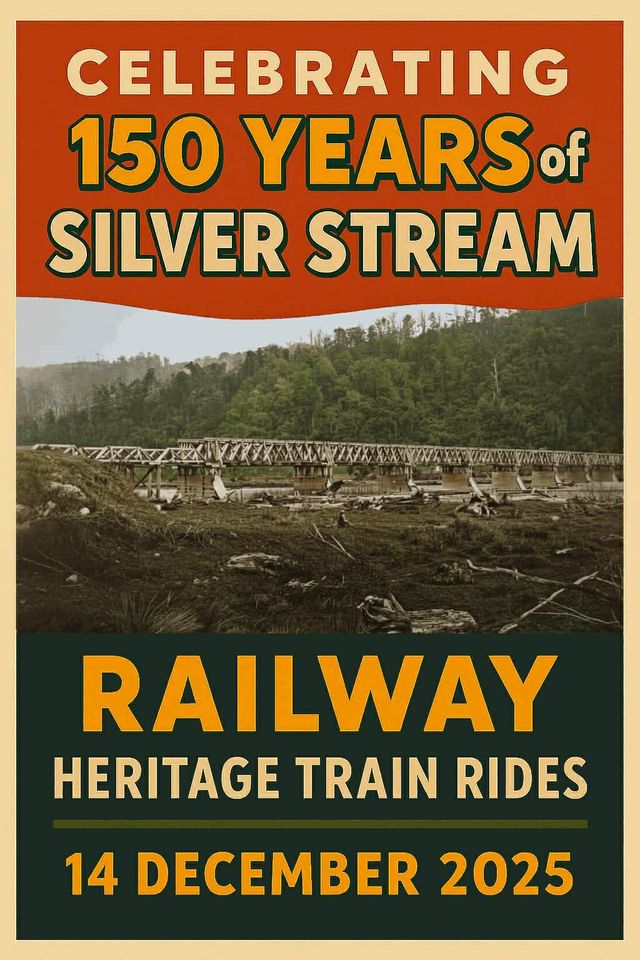
150th anniversary of the opening of the railway to Silverstream
- Silver Stream Railway
- Silver Stream Railway is celebrating the 150th anniversary of the opening of the railway to Silverstream with a special event on the 14th of December. To help us celebrate this…
- Accepted from Silver Stream Railway feed 2023 by feedreader
- Tagged as:
- silverstream
Silverstream, Upper Hutt, Upper Hutt City, Wellington, 5019, New Zealand (OpenStreetMap)
-
-
-

Wellington Walking Tour
- MuseumsWellington
- The post Wellington Walking Tour appeared first on Museums Wellington.
- Accepted from Museums of Wellington events by feedreader
- Tagged as:
- cable-car
Wellington Cable Car, Salamanca Road, Wellington Central, Wellington, Wellington City, Wellington, 6145, New Zealand (OpenStreetMap)
-
-
-
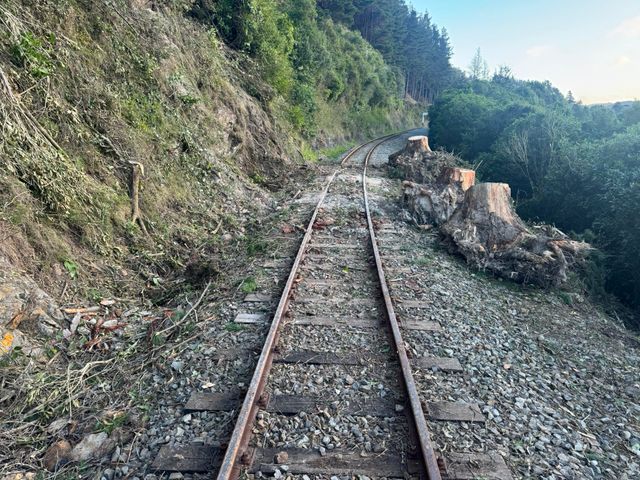
UHCC Trees cleared: track damage needs repair
- Silver Stream Railway
- A massive weekend by our team has seen the hillside cleared of our neighbours plantation pines and most of the clear up work completed. All of this work was completed…
- Accepted from Silver Stream Railway feed 2023 by feedreader
- Automatically tagged as:
- museums-and-galleries
- silverstream
- trains
-
-
-

UHCC Pine Tree blocks track
- Silver Stream Railway
- We were hoping this week to make a couple of posts, one informing you about the Environment Court Case about the Silvestream Spur Reserve, the other of course advertising our…
- Accepted from Silver Stream Railway feed 2023 by feedreader
- Automatically tagged as:
- museums-and-galleries
- silverstream
- trains
-
-
-
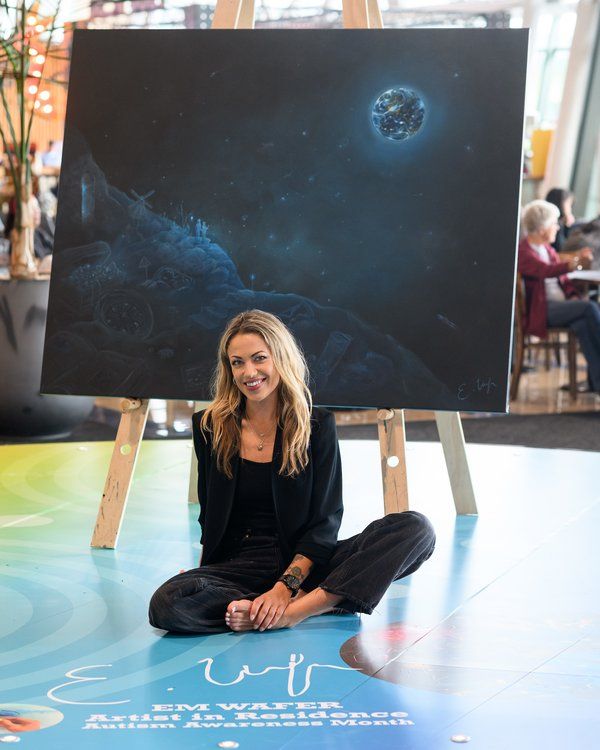
Airport artwork on sale to support special families
- Wellington International Airport
- Accepted from WIAL press releases by feedreader
- Tagged as:
- art
Wellington International Airport, Stewart Duff Drive, Strathmore Park, Wellington, Wellington City, Wellington, 6242, New Zealand (OpenStreetMap)
-
-
-
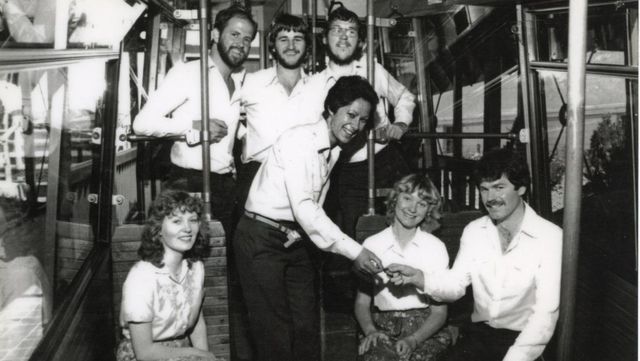
Display tells story of first woman cable car driver
- MuseumsWellington
- The post Display tells story of first woman cable car driver appeared first on Museums Wellington.
- Accepted from Museums of Wellington events by feedreader
- Tagged as:
- cable-car
- local-history
Wellington Cable Car, Salamanca Road, Wellington Central, Wellington, Wellington City, Wellington, 6145, New Zealand (OpenStreetMap)
-
-
-
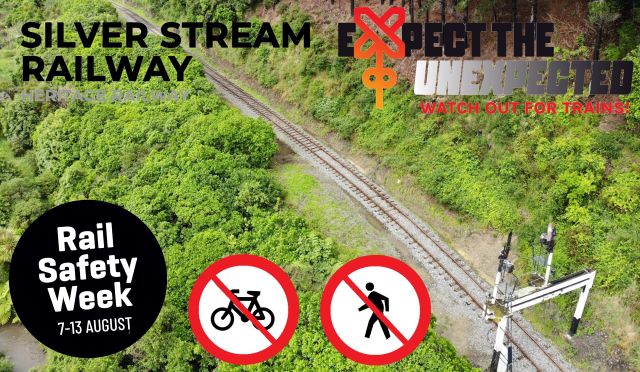
Rail Safety Week 2023
- Silver Stream Railway
- This week is Rail Safety Week in New Zealand and Australia, so we thought this would be a good opportunity to remind the community that we are part of about…
- Accepted from Silver Stream Railway feed 2023 by feedreader
- Automatically tagged as:
- museums-and-galleries
- silverstream
- trains
-
-
-
Taupo Swamp and Catchment science mural for the rail underpass
- Plimmerton Residents’ Association
- Working with Friends of the Taupo Swamp and Catchment, Plimmerton School, scientists and advisors, under the guidance of artist teacher Margaret Tolland Plimmerton Residents’ Association is working on the production for a large mural to go opposite the new rail mural in the underpass. It will show the flora and fauna of this vital area and how science is being applied to understand and protect the swamp and catchment.
- Accepted from Plimmerton Residents’ Association feed by feedreader
- Tagged as:
- art
- trains
Plimmerton, 31, Steyne Avenue, Plimmerton, Porirua, Porirua City, Wellington, 5026, New Zealand (OpenStreetMap)
-
-
-
Silverstream Spur Upper Hutt, saving a public amenity for future generations
- Silver Stream Railway
- Update September 2021.On the 22nd of September 2021 Upper Hutt City Council voted to scrap the controversial Memorandom Of Understanding that was signed back in 2016 between UHCC and a developer seeking to build 100 houses on he Slverstream Spur. Silver Stream Railway is obviously delighted with this step as we understand talk of constructing any houses on the Spur is now scuppered, a major step change from only a few months ago when we saw concept drawings of the 100 houses overlooking our site.
- Submitted by tonytw1
- Tagged as:
- silverstream-spur
-
-
-
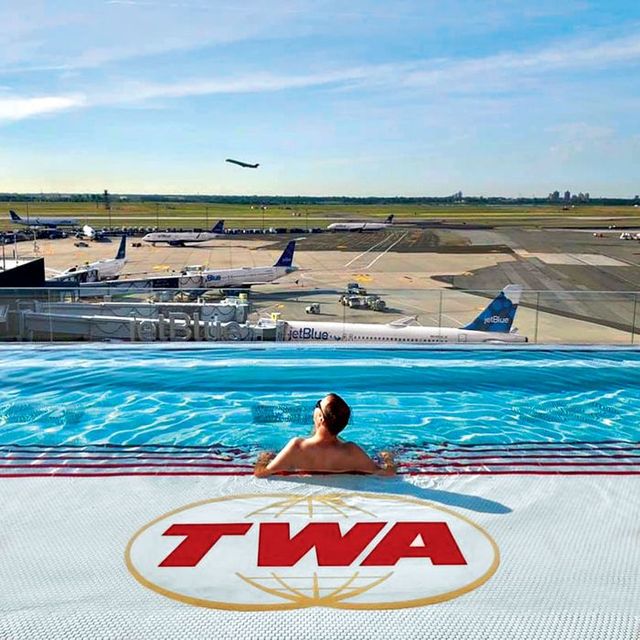
Requiem for an Airport
- City Gallery
- To coincide with our current exhibition Terminal, we invited five writers to deliver requiems for an airport.
- Accepted from City Gallery blog feed by feedreader
- Tagged as:
- airport
Wellington City Gallery, Civic Square, Te Aro, Wellington, Wellington City, Wellington, 6011, New Zealand (OpenStreetMap)
-
-
-
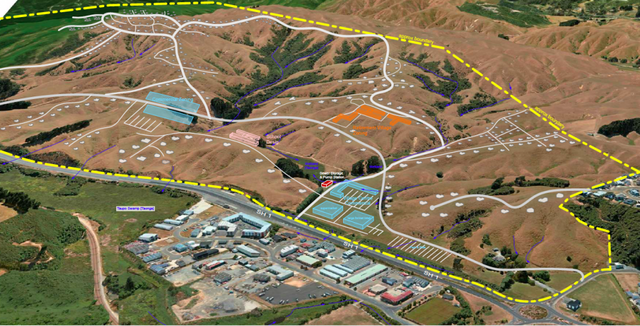
Plimmerton Farm: getting greenfields right
- Talk Wellington
- If we’re hellbent on doing more residential development in greenfields, what does “decent” look like in Plimmerton, hilly land near an existing suburb – like most of our region’s greenfields? This post is basically a guide for anyone who cares about Plimmerton, good urban development, or healthy wetlands, streams and coast, but is time-poor and can’t face going through the truckloads of documents they’ve stuck up without any specific meta-guidance (some FAQ are here). Hopefully this will help you pop in a submission! PCC’s “information” pages they suggest you use for submitting. Every one of these is a large PDF document, 90% written in technical language… aargh! The background: what where and how For those who don’t know, Plimmerton Farm’s a big proposed subdivision of hilly farmland draining into the significant Taupō Wetland and to Plimmerton Beach, just over the train line and highway from Plimmerton village (original Ngāti Toa name: Taupō). It’s going through a Streamlined Planning Process, a pre-COVID government scheme for accelerating development. The key step is the requisite change of the land’s zoning in the Porirua District Plan (“rural” zone to “residential” and other “urban” zones) that sets out what kind of stuff can then be built, where. It’s mostly streamlined because there’s just one shot for the public to have input on the plan change. One shot. Why submit? I was born and raised in Plimmerton, live here now, and intend to for the rest of my days. I’d love to see it grow, well. I would love Plimmerton to get more wallets, more hearts and minds, more faces (more diverse ones too!). But not with more traffic, and pointless damage to our environment. Right now, the proposal has some serious flaws which need sorting. I say Sorting because the changes won’t make it crazy innovative, just good enough for a development in the spot it is, being kicked off in 2020. Time matters too: there’a a bunch of good things happening imminently (and some bad Porirua trends that need to be reversed). I cover these in Get it right, below. It’s worth submitting because given the situation, a 1990s-grade development just won’t cut it. So what about Plimmerton Farm needs to change? It boils down to two themes: dial down the driveability and dial up the liveabilitymake Local the logical and easy choice for daily needs I’ll outline what needs to change in each. NOTE: There’s a third – don’t stuff the wetlands and streams. This is really important as Taupō Wetland is regionally significant, and all our streams and harbours have suffered from frankly shameful mismanagement of sediment from earthworks-heavy subdivisions like Aotea and Duck Creek, and from the earthworks-a-rama of Transmission Gully. Friends of Taupo Swamp have an excellent submission guide for you – add in some of their suggested bits to your submission. I: Dial down the driveability, dial up the liveability There aren’t many truly black-and-white things in life, but there’s one for towns: If a street is nice to drive in, it’ll be a crappy place to do anything else in (walk / eat / hang out / have a conversation / play / scoot or cycle / shop / have a pint). If it’s nice to do anything else in, it’ll be a crappy place to drive in. Mostly this is because of the nature of the automobile: big solid things that smash into our soft bodies if someone makes a mistake (75% odds of death if that’s at 50km/hour, 10% odds of death if at 30km/hour) big objects that need lots of space for manoeuvering and especially parking – which offstreet can be crazy expensive and push up the cost of a home, and onstreet hoover up valuable public space. big solid things driven by us real humans (for a while at least) who respond to the environment but also get distracted, and generally aren’t good at wielding these big solid things safely. The transport setup proposed for Plimmerton Farm makes for a much too driveable and poorly liveable place. 1. Narrow down all the roads. The current proposal’s roading setup has roads and streets that are too big, and there’s too much of them. Right sized roads for a liveable community The cross-sections for the roads include on-street parking and really wide lane widths. This is really gobsmacking for a consortium that talked a big talk about good practice. For all the reasons that Low Traffic Neighbourhoods are good, this is bad. (And it’s especially nuts when you realise that the excessively wide “arterial” roads (11 metres!) will need earthworked platforms built for them where they’re drawn running up the sharp ridges and across the tops of gullies. Expensive, damaging for the environment, and … what were they thinking?) So recommended changes: NARROW DOWN THE ROADS. Seriously. Design all the living-area streets and roads, and the centre, to be self-explaining for an operating traffic speed of 30km or less – that’s the speed where mistakes are rarely fatal. What does that look like? The designers will know and if they don’t they should be fired. Narrower crossing distances; chicanes (great way to incorporate green infrastructure and trees and seating!); narrowed sight-lines (trees! sculpture!) so no-one driving feels inclined to zoom. Reduced trafficked lanes (rori iti on the larger roads!), with properly wide and friendly footpaths. Threshold treatments, humps, modal filters, all the things we know very well are the natural ways to slow us down when driving, and make streets nicer for people. The beauty of all this “restriction” on driving is how much it frees us up for making everything else appealing. Streets become hospitable for kids to walk, scoot, bike to school safely, using the road not the footpath. Older people and those with impairments can walk and wheelchair safely. Teens coming home from town of an evening can scoot or bike home, safely. Popping down to the shops or for a coffee or to the train becomes a pleasure to do on foot, or on a scooter or bike. And you’re moving in a legitimate way – seeing and being seen, not stuck off in the bush on a “recreational” track like what they’ve described. The ordinary streets and roads are walkable, bikeable, scootable, mobility-scootable, and perfectly driveable, equally safe and useable in all weathers and anytime of day or night. Used to be a big, fast road. Now, kids bike to school and old people can chill out on it. (Mark Kerrison) (And in case you’re worried about firetrucks / rubbish trucks / buses, recall that on even Wellington City’s far more winding, narrower hilly streets everyone gets their rubbish collected and fires fought just fine. On public transport, smaller buses, like those that community transport operators use, are the way of the future for less densely-populated areas like this). Don’t build the through and loop roads. You don’t need signs like this when the only people who bother to drive in are those who live there, or who are visiting friends, because you just have to drive out again the way you came. When it’s the place you live, you’re invested in not being a dick far more than if you’re just out for a drive – or worse, out for a bit of a boyrace hoon on a massive loop route through a whole place. So just don’t build those big connector roads that enable people to drive easily from one residential area to the next, especially the ones up in the hilltops (section C) that just say “come for a hoon!” Instead, connect the living spaces heavily with bikeable, walkable, scootable, disability-friendly streets and lanes, and as much as possible, only one way in and out for cars from each living area. II: Make local logical and easy Plimmerton is a true village, with a great little centre (including a train station!) but Plimmerton Farm is ultimately a damn big area. The way to go is to enable people to get the basics of life – like school, groceries, a coffee – with a little local trip on foot, bike or scooter – it’s more of a bother to get in the car. Right now though, it needs two changes: 1. Provide for a second centre “Bumping into” spaces are known to be crucial to a feeling of neighbourhood, and in the (initial) absence of third places (worship places, community hall, sports club, cafe/pub, a supermarket is a vital social centre. Yet the north end of Plimmerton Farm is currently a deadzone for anything except residential. What things will probably look like under current layout. Like in Edwards Scissorhands without the interest of a castle. There’s no provision for a place to do your household groceries, so people will drive to Mana New World – more car trips – and less opportunity to bump into people who live nearby. (There’ll be no school in Plimmerton Farm for a while, because Ministry of Education isn’t allowed by the Education Act to build a school somewhere until there’s a certain population density of kids to fill it. A shitty Catch-22 for developments which is hopefully going to be fixed … sometime. Just another reason to make walking, biking and scooting really kid-friendly, as extra dropoff traffic for kids going to St Theresa’s, Plimmerton School, Paremata and Pukerua Bay schools will be a nightmare.) So they should provide for an additional centre in the north, including a groceries place of some kind. 2. Intensify within walking distance of Plimmerton proper. We should intensify properly, with lots of medium and even some high density (6 storeys of nicely laid-out density done well!) in the area that’s within a 5-minute walk of Plimmerton Village. The more people can live and work with access to all its many amenities, and its rail station (10 min to Porirua, 30 min to Wellington), the better. But there’s not enough density provided for there. Plimmerton Railway station: buzzing in 1916 and has only got bigger. (Photo: Pātaka Porirua Museum) So they should add another zone – E – of higher density in that 5-minute walking catchment of Plimmerton Village. What could it look like? A good example is 3333 Main, Vancouver . Submission tips On the site they ask you to fill in a Word or PDF form, saying which specific bit of the gazillion proposals you are talking about and the specific changes you want. This is a BS way to treat the vast majority of people submitting: normal non-professionals, just regular people who care about good development and liveable places. So just don’t worry about that. In those question 6 column boxes just put “Transport” and “Layout”. It’s the professional planners’ job to figure out specifically how to change a planning document. Just be specific enough that they know what you want to see. The text above is worth copying and pasting – it’ll be enough. And don’t forget the Friends of Taupo Swamp and Catchment advice is essential – definitely go read and use. That’s all you really need – just go submit! But if you’re keen to know more reasons why they should be doing this better, here’s some… Get it right, now Once this plan change is through, traditional developers like Gillies like to whack in all the infrastructure – hello, massive earthworks. And yet the place will take decades to fill with actual people – those hearts and minds and wallets. (Note even before COVID, Porirua’s growth rate was 0.1% per year. Yep, one tenth of one percent.) And extra pressure’s on to do this better because all these things are features of the next one to three years: the One Network Road Classification (sets the design specs for roads of different types) is being updated right now to be more people-friendly in the specs for roads in residential and centre areas, so designs like Plimmerton Farm’s will soon be Officially Bad Practice Sales and riding of e-bikes and e-scooters are going through the roof, continuing through and beyond COVID – this shows no signs of slowing, and prices are dropping. E-power flattens the hills of Plimmerton Farm and makes wheely active travel a breeze for the middle-class people who’ll be living here, if the streets and roads are hospitablePlimmerton Railway Station (on the most popular Wellington train line) is being upgraded to be a terminus station – i.e. better servicesThe Wellington Regional Growth Framework is setting a bunch of directions for councils on how to grow well, including well-known but often well-ignored issues like intensifying around public transport hubs Councils will soon be required to do to a bunch of a bunch of international good practice including get rid of many minimum parking requirements (in the news lately), and to upzone (enable intensification) of landuse in the walking catchment of public transport hubs. (5 min walk = approx 400 metres, 10 min = 800m).Bad trends we need to stop: Porirua’s really high car-dependency (we own cars a lot and drive a lot) is continuing, due to car-dependent urban form [PDF]– despite nice words in council’s strategic intentions.People living outside Wellington City are mostly to blame for our region’s 14% increase in emissions from transport in just 10 years. OK go submit now – and share with anyone who you think might care!
- Accepted from Talk Wellington posts by feedreader
- Tagged as:
- paremata
- porirua
- transmission-gully
- sculpture
- government
- parking
- design
- covid-19
- law
- planning
- wellington
- education
- developments
- sport
- buses
- coffee
- zoo
- people
Porirua, Wellington Region, New Zealand (OpenStreetMap)
-
-
-
Weekly Wrap Up (Week 11, Term 2)
- Wellington High School
- Important Dates Monday 29 June: Open Evening 6pm Wednesday 1 July: Music Evening 7pm Friday 3 July: End of Term 2 Monday 20 July: Start of Term 3 Wednesday 22 July: Parents’ Evening (Senior Students) Monday 27 July: Parents’ Evening (Junior Students) Important Information Board of Trustees by-election results As a result of the recent Board of Trustees by-election, Dr Wyatt Page has been elected to the Board. Wyatt will join the Board with effect from the next meeting on Monday 27 July. Reports and parent-teacher meetings Learning Profile reports for Term 2 are now available for download from the Parent Portal (see Results > Reports). Parent Teacher meetings will take place on Wednesday 22 July (Senior students) and Monday 27 July (Junior students). To make appointments go to: Go to: https://www.schoolinterviews.co.nz/ Enter the code: vdm7q (Juniors) or 5yjhn (Seniors) Choose the SUBJECT then the TEACHER. Please leave a five minute gap between bookings. Note that we are only able to run one conversation with each teacher per student. If you are hearing impaired the Riley Centre can be a challenging environment: please email admin@whs.school.nz and we will aim to accommodate your bookings separately. Revised guidance on testing for COVID-19 The Ministry of Education has circulated the following information to all schools: At a time where there are increasing numbers of colds and other winter illnesses, the Ministry of Health has revised its guidance on who might need testing for COVID-19. It is important to note that there is currently no known community transmission of COVID-19 in New Zealand. The vast majority of adults, children and young people with symptoms consistent with COVID-19 will not have COVID-19. Symptoms of COVID-19 can include new onset or worsening of one or more of the following: Cough Fever Sore throat Runny nose Shortness of breath/difficulty breathing Temporary loss of smell Health’s information on who should get tested notes that people with any of the COVID-19 symptoms who are close contacts of confirmed cases, have recently travelled overseas, or been in contact with recent travellers, should get assessed. If anyone has symptoms but is unsure if they have been exposed to COVID-19, they should ring Healthline on 0800 358 5453 or their GP for advice. Over winter there are many other viruses about that can cause people to feel unwell and have symptoms similar to those of COVID-19. Some people with symptoms consistent with COVID-19 may be tested as part of Health’s ongoing surveillance to ensure that there is no community transmission in New Zealand. If they are not close contacts of confirmed cases, have not recently travelled overseas, or have not been in contact with recent travellers, then there is no need for them to self-isolate while awaiting the test result, and they can return to school once they are feeling well. If not recommended for testing, they will be able to return to school or their early learning service when they are feeling well and no longer displaying symptoms. Wallace Street roadworks update The current phase of the Wallace Street roadworks is due for completion by the end of the month. As long as the rain holds off, Wallace Street should be re-opened to through traffic on 1 July. Following this, however, works will need to get underway along Wallace Street, near Massey University’s entrance, to upgrade wastewater pipes. This will take place in off peak hours (9.00am-4.00pm) on weekdays and traffic will often be reduced to a single lane with Stop / Go control. This is likely to take two months to complete. What’s happening? Economists breakfast with Dr Allan Bollard On Thursday, Year 13 Economics students Sarah Bennett and Rachel Woolcott, attended a Cullen Breakfast at the Wellington Club. Speaking at this week’s breakfast was Dr Alan Bollard, who has held numerous senior positions in Government and interGovernmental agencies. Dr Bollard discussed the economic impact of the covid epidemic and then participated in a question and answer session. Sarah said “the range of angles in the topic discussed was thought provoking”. Rachel commented “it was a very interesting discussion and I enjoyed listening to his jokes and insight.” Year 13 performance of ‘Girls like that’ Evan Placey’s Girls Like That is an ensemble play that explores the pressures young people face today in the face of advancing technologies. Year 13 Drama students produced and performed this play this week. The students are to be congratulated for their sophisticated performance which was an enduring piece of theatre, an achievement all the more impressive when considering that much of this production was conceived and developed during lockdown. Congratulations to all, and to Drama teacher Roger Mantel. He Kākano The He Kākano students have been engaged in a range of creative activities, cognitive thinking skills and maths throughout the week. Winter in the garden The weather over the past few weeks has seen our horticulture students spend time on maintenance, cleaning and repairing tools including secateurs. They will be well prepared for winter pruning and work outside once the weather improves. Instrumental & vocal lessons update If your Junior student is interested in taking instrumental / vocal lessons but has not yet enrolled, please download the form from the Student Hub and hand in or email the completed form to Fritz Wollner Lessons will be reorganised for Terms 3 and 4. If students have not been attending regularly, they need to see Mr Wollner as soon as possible to ensure they do not lose their spot. Achievements National Bridge Speech competition place secured Year 13 Amelia Smith qualified for a place in the National Bridge Speech competition following her success in the regional Chinese speech competition last week. Amelia will represent the North Island outside Auckland region in the competition, to be held at Victoria University on Sunday 2 August. At that event, each qualified candidate will need to present a speech, perform to demonstrate a skill and answer questions in Chinese. Finalists will represent New Zealand and compete with candidates from all over the world in October. We wish Amelia luck as she progresses through the competition. Sports Junior girls football For the first time in many years WHS has a junior girls football team out in competition. Their most recent game resulted in a very close 2-1 loss but the girls had fun and were very impressive despite some players not having very much experience. This team could not have gone ahead without the support of parents who helped with both transport and officiating. Special thanks to Bea Gladding and Jennifer Argyle who are the coach/manager dream team who make this team possible. Below are some photos of the action and sideline support. Basketball Basketball is underway with all teams at WHS having played at least one game so far. Big thanks to Jason Reddish who is taking on the entire boys programme at school which includes four teams and doing a great job. Another big thanks to Nick Andrews who along with a parent is coaching the Senior girls team. Junior Boys play on a Tuesday and another junior team plays on a Thursday. All Senior teams play on Fridays, with the top boys and girls team playing at the ASB Centre. Below are some photos from the first junior basketball game. Boys 1st XI football The 1st XI played their first game of the season, bringing home a 5-1 victory against St Patrick’s Silverstream. Their next fixture is against Newlands College this coming weekend.
- Accepted from WHS news by feedreader
- Tagged as:
- newlands
- water
- government
- transport
- music
- covid-19
- theatre
- wellington
- education
- art
- basketball
- people
Wellington High School, Taranaki Street, Mount Cook, Wellington, Wellington City, Wellington, 6011, New Zealand (OpenStreetMap)
-
-
-
Metlink to boost electric buses from 2 to 22 per cent of its fleet to meet climate change goals and passenger growth
- Greater Wellington Regional Council
- From left to right: Cr Daran Ponter – Chair, Greater Wellington Keven Snelgrove – Tranzit Brendan Prince – NZBus James Howard – Tranzit Cr David Lee – Greater Wellington Cr Roger Blakeley – Greater Wellington The ink has dried on contracts for 98 new electric buses, which will take Metlink’s fleet of electric buses to 108, significantly reducing its carbon footprint and taking Greater Wellington a step closer on its target of carbon neutrality by 2030. Metlink currently has 450 buses in its active fleet in the Wellington region 10 of which are EVs, making up two percent of the fleet. Once the 98 buses are added to the fleet the proportion of EVs will rise to 22 per cent which, excluding market leader China, is high by international standards. Seventy-three of the buses will be used on current scheduled services with a further 25 to be progressively added to routes to meet future network growth. The new electric buses will eventually take 61 diesel buses off the roads, leading to a 17 per cent drop in carbon emissions and a similar reduction in harmful emissions. Greater Wellington is delivering on its promise of a building a modern low emission bus network according to Chair Daran Ponter. “I’m sure that people across the region will be pleased to see another 61 diesel buses taken off the road and this will drive real climate benefits by deploying the new electric buses on high use areas of the network. “Just like our plans for rail, this is also about ensuring we have a fleet in place that can cope with rising population trends and demand for public transport over the next few years. That’s why 25 buses will be used to accommodate forecast passenger growth without an increase in emissions,” added Chair Ponter. Climate Committee chair Cr Thomas Nash said we have to provide attractive alternatives to our current 20th century car culture if we’re serious about responding to climate change. “Over the last two decades transport emissions rose by 14 per cent across the region, mainly from fossil fuel burning cars and trucks. “We need a real step change here and we know we can move far more people with far fewer vehicles if we provide high quality public transport. A modern, comfortable low emission fleet will play a key role in attracting new passengers, encouraging them to embrace public transport. We’ve got an opportunity to break free from the car-dominated landscape that’s been driving pollution in our cities - let’s take it,” added Cr Nash. Roger Blakeley, chair of Greater Wellington’s Transport Committee, said that the new fleet will also attract more bus drivers to the region. “This new fleet shows our intentions for growing the network and obviously more buses means more drivers. We want buses that drivers can be proud of and these state of the art buses, many fitted out right here in New Zealand, will help us attract drivers that want to be at the forefront of the public transport industry in New Zealand and internationally.” As part of the deal, NZ Bus will source 67 ready-to-go large single decker EVs from China and Tranzurban will build 31 double decker EVs at Kiwi Bus Builders in Tauranga, with parts sourced from world leading Chinese bus manufacturers. NZ Bus CEO Barry Hinkley said he was delighted that NZ Bus was making a significant contribution to NZ’s environmental performance, commenting that growing the number of EVs in its fleet is the right way forward as NZ Bus looks to a future of reduced fossil fuel usage. "With these 67 new electric buses, NZ Bus is proud to be having the largest EV bus fleet in New Zealand. With these new orders, we will see our EV fleet grow to at least 85 buses in the short term. "Obviously, we all should try and do as much as we can to look after our environment; taking public transport is a great way of reducing emissions, and electric public transport is an even better way. “We’re committed to doing our bit to help reduce emissions in New Zealand and at the same time provide people with a safe and easy way to get around,” said Mr Hinkley. Tranzurban Director Keven Snelgrove said today’s announcement is a clear demonstration of the company’s commitment to partnering with Greater Wellington and pioneering and investing in electric bus technology and infrastructure in New Zealand. He says the 31 new double deck EVs add to the company’s fleet of 10 New Zealand-built double deck EVs successfully in operation in Wellington already. “This new fleet will deliver multiple benefits of being New Zealand built, adding to our modern and reliable electric bus fleet and help reduce carbon emissions and air pollution for Wellingtonians.” The buses will be delivered between mid-2021 and early 2023.
- Accepted from GW media releases 2019 by feedreader
- Tagged as:
- rowing
- wellington
- art
- buses
- people
- electric-vehicles
-
-
-
Metlink to boost electric buses from 2 to 22 per cent of its fleet to meet climate change goals and passenger growth
- Metlink
- From left to right: Cr Daran Ponter – Chair, Greater Wellington Keven Snelgrove – Tranzit Brendan Prince – NZBus James Howard – Tranzit Cr David Lee – Greater Wellington Cr Roger Blakeley – Greater Wellington The ink has dried on contracts for 98 new electric buses, which will take Metlink’s fleet of electric buses to 108, significantly reducing its carbon footprint and taking Greater Wellington a step closer on its target of carbon neutrality by 2030. Metlink currently has 450 buses in its active fleet in the Wellington region 10 of which are EVs, making up two percent of the fleet. Once the 98 buses are added to the fleet the proportion of EVs will rise to 22 per cent which, excluding market leader China, is high by international standards. Seventy-three of the buses will be used on current scheduled services with a further 25 to be progressively added to routes to meet future network growth. The new electric buses will eventually take 61 diesel buses off the roads, leading to a 17 per cent drop in carbon emissions and a similar reduction in harmful emissions. Greater Wellington is delivering on its promise of a building a modern low emission bus network according to Chair Daran Ponter. “I’m sure that people across the region will be pleased to see another 61 diesel buses taken off the road and this will drive real climate benefits by deploying the new electric buses on high use areas of the network. “Just like our plans for rail, this is also about ensuring we have a fleet in place that can cope with rising population trends and demand for public transport over the next few years. That’s why 25 buses will be used to accommodate forecast passenger growth without an increase in emissions,” added Chair Ponter. Climate Committee chair Cr Thomas Nash said we have to provide attractive alternatives to our current 20th century car culture if we’re serious about responding to climate change. “Over the last two decades transport emissions rose by 14 per cent across the region, mainly from fossil fuel burning cars and trucks. “We need a real step change here and we know we can move far more people with far fewer vehicles if we provide high quality public transport. A modern, comfortable low emission fleet will play a key role in attracting new passengers, encouraging them to embrace public transport. We’ve got an opportunity to break free from the car-dominated landscape that’s been driving pollution in our cities - let’s take it,” added Cr Nash. Roger Blakeley, chair of Greater Wellington’s Transport Committee, said that the new fleet will also attract more bus drivers to the region. “This new fleet shows our intentions for growing the network and obviously more buses means more drivers. We want buses that drivers can be proud of and these state of the art buses, many fitted out right here in New Zealand, will help us attract drivers that want to be at the forefront of the public transport industry in New Zealand and internationally.” As part of the deal, NZ Bus will source 67 ready-to-go large single decker EVs from China and Tranzurban will build 31 double decker EVs at Kiwi Bus Builders in Tauranga, with parts sourced from world leading Chinese bus manufacturers. NZ Bus CEO Barry Hinkley said he was delighted that NZ Bus was making a significant contribution to NZ’s environmental performance, commenting that growing the number of EVs in its fleet is the right way forward as NZ Bus looks to a future of reduced fossil fuel usage. "With these 67 new electric buses, NZ Bus is proud to be having the largest EV bus fleet in New Zealand. With these new orders, we will see our EV fleet grow to at least 85 buses in the short term. "Obviously, we all should try and do as much as we can to look after our environment; taking public transport is a great way of reducing emissions, and electric public transport is an even better way. “We’re committed to doing our bit to help reduce emissions in New Zealand and at the same time provide people with a safe and easy way to get around,” said Mr Hinkley. Tranzurban Director Keven Snelgrove said today’s announcement is a clear demonstration of the company’s commitment to partnering with Greater Wellington and pioneering and investing in electric bus technology and infrastructure in New Zealand. He says the 31 new double deck EVs add to the company’s fleet of 10 New Zealand-built double deck EVs successfully in operation in Wellington already. “This new fleet will deliver multiple benefits of being New Zealand built, adding to our modern and reliable electric bus fleet and help reduce carbon emissions and air pollution for Wellingtonians.” The buses will be delivered between mid-2021 and early 2023.
- Accepted from Metlink news by feedreader
- Tagged as:
- rowing
- wellington
- art
- buses
- people
- electric-vehicles
-
-
-
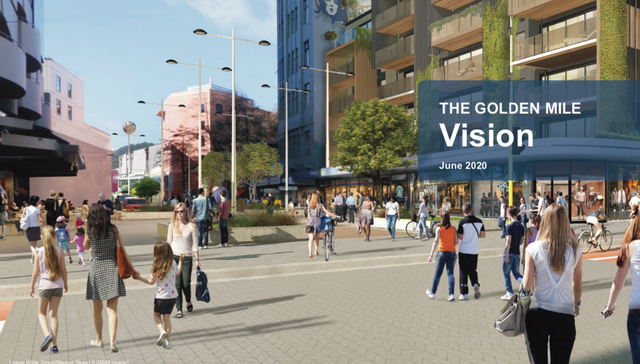
Let’s Get Consultation Started
- Eye of the Fish
- At long last LGWM have uploaded some of their work for the Public to look at and consult on.
- Accepted from Eye of the Fish feed by tonytw1
- Tagged as:
- art
- consultation
- lets-get-wellington-moving
-
-
-
More people and fewer vehicles on the Golden Mile – have your say
- Let's Get Wellington Moving
- Today we released three different concepts for community feedback to make the Golden Mile a better place for people and buses. Improving the Golden Mile is an important part of our plans to move more people with fewer vehicles and support Wellington’s growth.
- Accepted from LGWM news by feedreader
- Tagged as:
- art
- buses
- people
- wellington
-
-
-
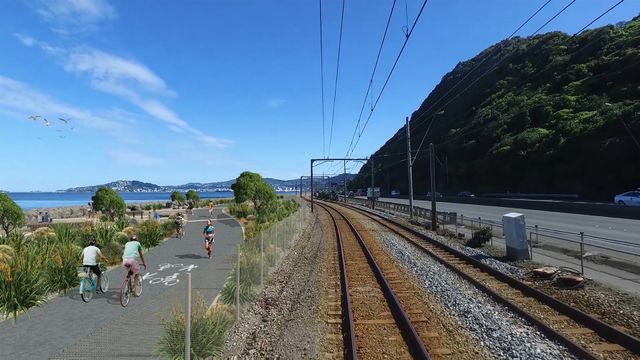
Te Ara Tupua
- Eye of the Fish
- One of Wellington’s long-desired and much awaited projects is apparently to get underway as part of the Government’s shovel-ready infrastructure projects: Te Ara Tupua, aka the Ngauranga to Petone Cycleway.
- Accepted from Eye of the Fish feed by tonytw1
- Tagged as:
- government
- petone
- wellington
- art
- island-bay-cycle-way
Petone, New Zealand (OpenStreetMap)
-
-
-

The Corncorde, the Weary Traveller, and the Astro Walk: Airport Art
- City Gallery
- Our upcoming exhibition Terminal features art made about the airport, not for it.
- Accepted from City Gallery blog feed by feedreader
- Tagged as:
- airport
- art
Wellington City Gallery, Civic Square, Te Aro, Wellington, Wellington City, Wellington, 6011, New Zealand (OpenStreetMap)
-
-
-

Plenty of parking, or something else? A webinar with Stuart Donovan
- Talk Wellington
- TUI Climate Community and Millions of Mothers proudly bring you expert transport researcher Stuart Donovan, live on Wednesday 3rd June and all about the parking.
- Accepted from Talk Wellington posts by feedreader
- Tagged as:
- art
- parking
- sport
-
-
-
COVID-19: Return to full timetables on trains and buses under level 3
- Metlink
- Following the Government’s COVID-19 alert level 3 announcement, Metlink has revealed its plans to return to full regular timetables on buses starting on Sunday 26 April and trains on Monday 4 May.
- Accepted from Metlink news by feedreader
- Tagged as:
- government
- covid-19
- art
- trains
- buses
-
-
-
COVID-19: Total Mobility transport subsidy until 30 June
- Metlink
- As part of the national response to COVID-19, The NZ Transport Agency will implement a fare-reduction for Total Mobility customers from Tuesday, 14 April 2020.
- Accepted from Metlink news by feedreader
- Tagged as:
- art
- covid-19
- sport
- transport
-
-
-
Minutes of the March 2020 Meeting
- Newtown Residents' Association
- Minutes of the Newtown Residents’ Association meeting 16th March 2020 Present: Rhona Carson (Chair), Steve Cosgrove (Minutes), Leonie Walker, Jane Patterson, Jill Ford, Alison Borbelly, Keith Powell, Tom Law, Don McDonald, Warwick Taylor, Peter Frater, Effie Rankin, Faye Tohbyn, Lyn Morris, Sam Somers, Eileen Brown, Neville Carson, Kevin Lethbridge, Graeme Carroll, Merio Marsters, Marion Leighton. Apologies: Paul Eagle, Dom Shaheen, Steve Dunn, Martin Hanley, Anna Kemble Welch, Jan Gould + Marion Leighton(for lateness)Noted that Paul apologised because MPs have been advised to stay away from community meetings due to Covid-19 risks.. Rhona welcomed everyone to the meeting. Newtown Festival Rhona thanked all the marshalls and other volunteers for helping. The meeting made an enthusiastic vote of thanks and appreciation to the organisers for another very successful Festival.Sadly there was one violent event later in the evening; this seemed to be the result of a personal conflict between two visitors to Newtown. The Police and Community Patrol were involved. Don asked what the noise policy is, as he worries about how loud the Festival is. Tom Law outlined the Council policy. Wellington City Council Consultations Parking Policy. Consultation opened today and will run till April 14th. WCC had a traveling road show on the subject in Newtown Mall this morning. It wasn’t widely advertised and no one at the meeting knew it was going to be there, or attended.Rhona noted that the policy is very high-level at this stage. We recommend that people look at the material on the website. The questions on the web site are quite general so Newtown-specific concerns would need to be added in narrative form.Some general issues were discussed.We will consider different things we can agree on, such as further communication with WCC to develop a Newtown-specific plan, and sensible Residents’ Parking areas and fees. Planning for Growth The WCC Consultation Team were to have a Newtown Festival stall but cancelled because they were not quite ready to go. Next consultation meeting is on 26 March at Prefab – Jane and Rhona interested in going. No one had any further comment: Rhona suggested reading the web page and keeping up-to-date with progress on the development of a proposed spatial plan for the city.District Plan Review – this is beginning at the end of this year or early next. Water Warrick is concerned that water metres are coming back into discussion. This has resulted in some suggesting we ‘need’ water metres to pay for replacement of aged infrastructure.A number of views were expressed regarding the pros and cons of water metering. COVID-19 Eileen Brown is working for the Council of Trade Unions developing plans and consolidating ideas for “managing the risk and flattening the curve”.The current situation was outlined, along with common narratives being used to describe the situation and management options. Eileen described then distributed some information.Marion Leighton (Consultant Physician at Wellington Hospital) arrived during this discussion, having been at a hospital meeting on the same topic. She outlined the hospital’s plans for managing an influx of seriously ill patients and also answered questions. Most important thing is to wash hands frequently and thoroughly, cough and sneeze into your elbow or tissues, don’t touch your face, avoid physical contact with others and self-isolate at the first sign of any symptoms. We are in this for the long-term, so make sure you have a reasonable plan. Emergency Management Discussion Neville Carson outlined his background in Civil Defence (previous name for Emergency Management, and introduced “Wellington Conversations” – facilitated conversations on various topics which have been running in Newtown and elsewhere for several months.Neville is organising a meeting to discuss Emergency Management issues on 31 March, 7:30 to 9:30, at Newtown Hall, using a model based on Wellington Conversations. Circus Performers – Steve informed the meeting that on Wednesday evening (18th Mcaarch) in Carrara Park circus performers will be performing with LED Hula hoops. Meeting ended at 8:58
- Accepted from NRA news by feedreader
- Tagged as:
- newtown
- wellington-city-council
- covid-19
- water
- consultation
- parking
- law
- planning
- wellington
- art
- noise
- hospital
- people
Newtown, Wellington, Wellington City, Wellington, New Zealand (OpenStreetMap)
-
-
-
Work underway on mass rapid transit and state highway projects
- Let's Get Wellington Moving
- Work to identify the best options for mass rapid transit and state highway improvements is set to begin, as part of the next phase of the $6. 4 billion Let’s Get Wellington Moving (LGWM) programme.
- Accepted from LGWM news by tonytw1
- Tagged as:
- art
- wellington
- lets-get-wellington-moving
-
-
-
Consultation opens on 30km/h speed limit proposal for central city streets
- Let's Get Wellington Moving
- Consultation is now open on a proposal to lower speed limits on most central city streets to 30km/h. The project is part of the Let’s Get Wellington Moving (LGWM) programme. LGWM programme director Andrew Body says it's clear that people want to see change in how we move to and through the central city.
- Accepted from LGWM news by feedreader
- Tagged as:
- art
- consultation
- people
- wellington
- lets-get-wellington-moving
-
-
-
January update from DCM - together we can end homelessness
- Downtown Community Ministry
- 96 January update from DCM - together we can end homelessness p{ margin:10px 0; padding:0; } table{ border-collapse:collapse; } h1,h2,h3,h4,h5,h6{ display:block; margin:0; padding:0; } img,a img{ border:0; height:auto; outline:none; text-decoration:none; } body,#bodyTable,#bodyCell{ height:100%; margin:0; padding:0; width:100%; } .mcnPreviewText{ display:none !important; } #outlook a{ padding:0; } img{ -ms-interpolation-mode:bicubic; } table{ mso-table-lspace:0pt; mso-table-rspace:0pt; } .ReadMsgBody{ width:100%; } .ExternalClass{ width:100%; } p,a,li,td,blockquote{ mso-line-height-rule:exactly; } a[href^=tel],a[href^=sms]{ color:inherit; cursor:default; text-decoration:none; } p,a,li,td,body,table,blockquote{ -ms-text-size-adjust:100%; -webkit-text-size-adjust:100%; } .ExternalClass,.ExternalClass p,.ExternalClass td,.ExternalClass div,.ExternalClass span,.ExternalClass font{ line-height:100%; } a[x-apple-data-detectors]{ color:inherit !important; text-decoration:none !important; font-size:inherit !important; font-family:inherit !important; font-weight:inherit !important; line-height:inherit !important; } .templateContainer{ max-width:600px !important; } a.mcnButton{ display:block; } .mcnImage,.mcnRetinaImage{ vertical-align:bottom; } .mcnTextContent{ word-break:break-word; } .mcnTextContent img{ height:auto !important; } .mcnDividerBlock{ table-layout:fixed !important; } h1{ color:#222222; font-family:Helvetica; font-size:40px; font-style:normal; font-weight:bold; line-height:150%; letter-spacing:normal; text-align:center; } h2{ color:#222222; font-family:Helvetica; font-size:34px; font-style:normal; font-weight:bold; line-height:150%; letter-spacing:normal; text-align:left; } h3{ color:#444444; font-family:Helvetica; font-size:22px; font-style:normal; font-weight:bold; line-height:150%; letter-spacing:normal; text-align:left; } h4{ color:#949494; font-family:Georgia; font-size:20px; font-style:italic; font-weight:normal; line-height:125%; letter-spacing:normal; text-align:left; } #templateHeader{ background-color:#10076f; background-image:none; background-repeat:no-repeat; background-position:center; background-size:cover; border-top:0; border-bottom:0; padding-top:54px; padding-bottom:54px; } .headerContainer{ background-color:transparent; background-image:none; background-repeat:no-repeat; background-position:center; background-size:cover; border-top:0; border-bottom:0; padding-top:0; padding-bottom:0; } .headerContainer .mcnTextContent,.headerContainer .mcnTextContent p{ color:#757575; font-family:Helvetica; font-size:16px; line-height:150%; text-align:left; } .headerContainer .mcnTextContent a,.headerContainer .mcnTextContent p a{ color:#007C89; font-weight:normal; text-decoration:underline; } #templateBody{ background-color:#transparent; background-image:none; background-repeat:no-repeat; background-position:center; background-size:cover; border-top:0; border-bottom:0; padding-top:27px; padding-bottom:54px; } .bodyContainer{ background-color:transparent; background-image:none; background-repeat:no-repeat; background-position:center; background-size:cover; border-top:0; border-bottom:0; padding-top:0; padding-bottom:0; } .bodyContainer .mcnTextContent,.bodyContainer .mcnTextContent p{ color:#757575; font-family:Helvetica; font-size:16px; line-height:150%; text-align:left; } .bodyContainer .mcnTextContent a,.bodyContainer .mcnTextContent p a{ color:#007C89; font-weight:normal; text-decoration:underline; } #templateFooter{ background-color:#333333; background-image:none; background-repeat:no-repeat; background-position:center; background-size:cover; border-top:0; border-bottom:0; padding-top:45px; padding-bottom:63px; } .footerContainer{ background-color:transparent; background-image:none; background-repeat:no-repeat; background-position:center; background-size:cover; border-top:0; border-bottom:0; padding-top:0; padding-bottom:0; } .footerContainer .mcnTextContent,.footerContainer .mcnTextContent p{ color:#FFFFFF; font-family:Helvetica; font-size:12px; line-height:150%; text-align:center; } .footerContainer .mcnTextContent a,.footerContainer .mcnTextContent p a{ color:#FFFFFF; font-weight:normal; text-decoration:underline; } @media only screen and (min-width:768px){ .templateContainer{ width:600px !important; } } @media only screen and (max-width: 480px){ body,table,td,p,a,li,blockquote{ -webkit-text-size-adjust:none !important; } } @media only screen and (max-width: 480px){ body{ width:100% !important; min-width:100% !important; } } @media only screen and (max-width: 480px){ .mcnRetinaImage{ max-width:100% !important; } } @media only screen and (max-width: 480px){ .mcnImage{ width:100% !important; } } @media only screen and (max-width: 480px){ .mcnCartContainer,.mcnCaptionTopContent,.mcnRecContentContainer,.mcnCaptionBottomContent,.mcnTextContentContainer,.mcnBoxedTextContentContainer,.mcnImageGroupContentContainer,.mcnCaptionLeftTextContentContainer,.mcnCaptionRightTextContentContainer,.mcnCaptionLeftImageContentContainer,.mcnCaptionRightImageContentContainer,.mcnImageCardLeftTextContentContainer,.mcnImageCardRightTextContentContainer,.mcnImageCardLeftImageContentContainer,.mcnImageCardRightImageContentContainer{ max-width:100% !important; width:100% !important; } } @media only screen and (max-width: 480px){ .mcnBoxedTextContentContainer{ min-width:100% !important; } } @media only screen and (max-width: 480px){ .mcnImageGroupContent{ padding:9px !important; } } @media only screen and (max-width: 480px){ .mcnCaptionLeftContentOuter .mcnTextContent,.mcnCaptionRightContentOuter .mcnTextContent{ padding-top:9px !important; } } @media only screen and (max-width: 480px){ .mcnImageCardTopImageContent,.mcnCaptionBottomContent:last-child .mcnCaptionBottomImageContent,.mcnCaptionBlockInner .mcnCaptionTopContent:last-child .mcnTextContent{ padding-top:18px !important; } } @media only screen and (max-width: 480px){ .mcnImageCardBottomImageContent{ padding-bottom:9px !important; } } @media only screen and (max-width: 480px){ .mcnImageGroupBlockInner{ padding-top:0 !important; padding-bottom:0 !important; } } @media only screen and (max-width: 480px){ .mcnImageGroupBlockOuter{ padding-top:9px !important; padding-bottom:9px !important; } } @media only screen and (max-width: 480px){ .mcnTextContent,.mcnBoxedTextContentColumn{ padding-right:18px !important; padding-left:18px !important; } } @media only screen and (max-width: 480px){ .mcnImageCardLeftImageContent,.mcnImageCardRightImageContent{ padding-right:18px !important; padding-bottom:0 !important; padding-left:18px !important; } } @media only screen and (max-width: 480px){ .mcpreview-image-uploader{ display:none !important; width:100% !important; } } @media only screen and (max-width: 480px){ h1{ font-size:30px !important; line-height:125% !important; } } @media only screen and (max-width: 480px){ h2{ font-size:26px !important; line-height:125% !important; } } @media only screen and (max-width: 480px){ h3{ font-size:20px !important; line-height:150% !important; } } @media only screen and (max-width: 480px){ h4{ font-size:18px !important; line-height:150% !important; } } @media only screen and (max-width: 480px){ .mcnBoxedTextContentContainer .mcnTextContent,.mcnBoxedTextContentContainer .mcnTextContent p{ font-size:14px !important; line-height:150% !important; } } @media only screen and (max-width: 480px){ .headerContainer .mcnTextContent,.headerContainer .mcnTextContent p{ font-size:16px !important; line-height:150% !important; } } @media only screen and (max-width: 480px){ .bodyContainer .mcnTextContent,.bodyContainer .mcnTextContent p{ font-size:16px !important; line-height:150% !important; } } @media only screen and (max-width: 480px){ .footerContainer .mcnTextContent,.footerContainer .mcnTextContent p{ font-size:14px !important; line-height:150% !important; } } What a gift! DCM's 24th Bookfair in DCM's 50th birthday year DCM's 50th birthday year has got off to a great start with the wonderful news that we will be able to hold another fundraising Bookfair. What a gift to DCM, our taumai and the many, many Wellingtonians who turn up at the Bookfair every year. Mark your diaries for Saturday 17 August 2019. What can you do to help? Write the date in your diary Share the poster with your friends and networks - we need to get thousands of book lovers through the doors this year We welcome your book donations, here at DCM, week days; we haven't been able to accept book donations for the last 6 months, so we encourage everybody to let their networks know that we are accepting books now so we can offer another high quality Bookfair in 2019 BUT MOST OF ALL! We are urgently seeking volunteer drivers to help transport books - please get in touch by emailing office@dcm.org.nz or phone (04) 384 7699 <!-- --> Supporters of the Month Each week during our 50th birthday year we are acknowledging one of our many kaitautoko (supporters), because together we can end homelessness in Wellington. In January, we have lifted up: Our DCM Bookfair sorters who eagerly await your book donations Press Hall Food Court who put on an amazing lunch for taumai, bringing their kai to us DCM Chairperson Kevin who has been on our board for 14 years now, supporting our staff and mahi Rick from Temple Sinai who picks up kai from Pandoro so we can offer hospitality to people who have been rough sleeping in the city of Wellington For all our regular updates follow DCM on Facebook and Twitter. Housing First Another exciting development in our 50th birthday year will be the launch of a Wellington Housing First service. We look forward to sharing more about this as the year progresses. To learn more about Housing First, enjoy meeting Tony in this video. Tony was housed from homelessness by DCM in 2018, and the pride he has in his new whare will inspire you. If you know of any qualified social workers who may be interested in joining our Housing First team, please get in touch. <!-- --> What can I do? Give our taumai a gift in our 50th birthday year. DCM's Te Hāpai service is a welcoming space for people who are rough sleeping. We are looking for a coffee filter sponsor ($30 a month), sugar sponsor ($50 a month) and a milk powder sponsor ($120 a month). For more ideas about how you can help visit our website and Support DCM Do you know others who would love to learn more about DCM and our work with people who are experiencing homelessness? Encourage them to join our mailing list for monthly updates during our 50th birthday year. <!-- --> Read More Success Stories <!-- --> Nāku te rourou, nāu te rourou, ka ora ai te iwi With your basket and my basket, the people will thrive <!-- --> Copyright © 2019 DCM. All rights reserved. Our mailing address is: DCMPO Box 6133Marion SqWellington, Wellington 6011 New ZealandAdd us to your address book Want to change how you receive these emails? You can update your preferences or unsubscribe from this list.
- Accepted from DCM alerts archive by feedreader
- Tagged as:
- transport
- media
- video
- books
- wellington
- art
- housing
- sport
- coffee
- hospital
- people
-
-
-

Grant Received for Historic Cottage Roof
- Silver Stream Railway
- General A big thank you to the Rotary Club of Heretaunga Charitable Trust Inc for funds to reroof historic Waiora Cottage.
- Accepted from SSR news
- Automatically tagged as:
- museums-and-galleries
- silverstream
- trains
-
-
-
Grant Received for Historic Cottage Roof
- Silver Stream Railway
- A big thank you to the Rotary Club of Heretaunga Charitable Trust Inc for funds to reroof historic Waiora Cottage. The reroofing work was undertaken in December 2018 and replaces…
- Accepted from Silver Stream Railway feed 2023 by tonytw1
- Automatically tagged as:
- museums-and-galleries
- silverstream
- trains
-
-
-
DCM Bookfair 2018 - One Week to Go!
- Downtown Community Ministry
- 96 DCM Bookfair 2018 - One Week to Go! p{ margin:10px 0; padding:0; } table{ border-collapse:collapse; } h1,h2,h3,h4,h5,h6{ display:block; margin:0; padding:0; } img,a img{ border:0; height:auto; outline:none; text-decoration:none; } body,#bodyTable,#bodyCell{ height:100%; margin:0; padding:0; width:100%; } .mcnPreviewText{ display:none !important; } #outlook a{ padding:0; } img{ -ms-interpolation-mode:bicubic; } table{ mso-table-lspace:0pt; mso-table-rspace:0pt; } .ReadMsgBody{ width:100%; } .ExternalClass{ width:100%; } p,a,li,td,blockquote{ mso-line-height-rule:exactly; } a[href^=tel],a[href^=sms]{ color:inherit; cursor:default; text-decoration:none; } p,a,li,td,body,table,blockquote{ -ms-text-size-adjust:100%; -webkit-text-size-adjust:100%; } .ExternalClass,.ExternalClass p,.ExternalClass td,.ExternalClass div,.ExternalClass span,.ExternalClass font{ line-height:100%; } a[x-apple-data-detectors]{ color:inherit !important; text-decoration:none !important; font-size:inherit !important; font-family:inherit !important; font-weight:inherit !important; line-height:inherit !important; } #bodyCell{ padding:10px; } .templateContainer{ max-width:600px !important; } a.mcnButton{ display:block; } .mcnImage,.mcnRetinaImage{ vertical-align:bottom; } .mcnTextContent{ word-break:break-word; } .mcnTextContent img{ height:auto !important; } .mcnDividerBlock{ table-layout:fixed !important; } body,#bodyTable{ background-color:#FAFAFA; } #bodyCell{ border-top:0; } .templateContainer{ border:0; } h1{ color:#202020; font-family:Helvetica; font-size:26px; font-style:normal; font-weight:bold; line-height:125%; letter-spacing:normal; text-align:left; } h2{ color:#202020; font-family:Helvetica; font-size:22px; font-style:normal; font-weight:bold; line-height:125%; letter-spacing:normal; text-align:left; } h3{ color:#202020; font-family:Helvetica; font-size:20px; font-style:normal; font-weight:bold; line-height:125%; letter-spacing:normal; text-align:left; } h4{ color:#202020; font-family:Helvetica; font-size:18px; font-style:normal; font-weight:bold; line-height:125%; letter-spacing:normal; text-align:left; } #templatePreheader{ background-color:#fafafa; background-image:none; background-repeat:no-repeat; background-position:center; background-size:cover; border-top:0; border-bottom:0; padding-top:9px; padding-bottom:9px; } #templatePreheader .mcnTextContent,#templatePreheader .mcnTextContent p{ color:#656565; font-family:Helvetica; font-size:12px; line-height:150%; text-align:left; } #templatePreheader .mcnTextContent a,#templatePreheader .mcnTextContent p a{ color:#656565; font-weight:normal; text-decoration:underline; } #templateHeader{ background-color:#FFFFFF; background-image:none; background-repeat:no-repeat; background-position:center; background-size:cover; border-top:0; border-bottom:0; padding-top:9px; padding-bottom:0; } #templateHeader .mcnTextContent,#templateHeader .mcnTextContent p{ color:#202020; font-family:Helvetica; font-size:16px; line-height:150%; text-align:left; } #templateHeader .mcnTextContent a,#templateHeader .mcnTextContent p a{ color:#2BAADF; font-weight:normal; text-decoration:underline; } #templateBody{ background-color:#FFFFFF; background-image:none; background-repeat:no-repeat; background-position:center; background-size:cover; border-top:0; border-bottom:2px solid #EAEAEA; padding-top:0; padding-bottom:9px; } #templateBody .mcnTextContent,#templateBody .mcnTextContent p{ color:#202020; font-family:Helvetica; font-size:16px; line-height:150%; text-align:left; } #templateBody .mcnTextContent a,#templateBody .mcnTextContent p a{ color:#2BAADF; font-weight:normal; text-decoration:underline; } #templateFooter{ background-color:#FAFAFA; background-image:none; background-repeat:no-repeat; background-position:center; background-size:cover; border-top:0; border-bottom:0; padding-top:9px; padding-bottom:9px; } #templateFooter .mcnTextContent,#templateFooter .mcnTextContent p{ color:#656565; font-family:Helvetica; font-size:12px; line-height:150%; text-align:center; } #templateFooter .mcnTextContent a,#templateFooter .mcnTextContent p a{ color:#656565; font-weight:normal; text-decoration:underline; } @media only screen and (min-width:768px){ .templateContainer{ width:600px !important; } } @media only screen and (max-width: 480px){ body,table,td,p,a,li,blockquote{ -webkit-text-size-adjust:none !important; } } @media only screen and (max-width: 480px){ body{ width:100% !important; min-width:100% !important; } } @media only screen and (max-width: 480px){ #bodyCell{ padding-top:10px !important; } } @media only screen and (max-width: 480px){ .mcnRetinaImage{ max-width:100% !important; } } @media only screen and (max-width: 480px){ .mcnImage{ width:100% !important; } } @media only screen and (max-width: 480px){ .mcnCartContainer,.mcnCaptionTopContent,.mcnRecContentContainer,.mcnCaptionBottomContent,.mcnTextContentContainer,.mcnBoxedTextContentContainer,.mcnImageGroupContentContainer,.mcnCaptionLeftTextContentContainer,.mcnCaptionRightTextContentContainer,.mcnCaptionLeftImageContentContainer,.mcnCaptionRightImageContentContainer,.mcnImageCardLeftTextContentContainer,.mcnImageCardRightTextContentContainer,.mcnImageCardLeftImageContentContainer,.mcnImageCardRightImageContentContainer{ max-width:100% !important; width:100% !important; } } @media only screen and (max-width: 480px){ .mcnBoxedTextContentContainer{ min-width:100% !important; } } @media only screen and (max-width: 480px){ .mcnImageGroupContent{ padding:9px !important; } } @media only screen and (max-width: 480px){ .mcnCaptionLeftContentOuter .mcnTextContent,.mcnCaptionRightContentOuter .mcnTextContent{ padding-top:9px !important; } } @media only screen and (max-width: 480px){ .mcnImageCardTopImageContent,.mcnCaptionBottomContent:last-child .mcnCaptionBottomImageContent,.mcnCaptionBlockInner .mcnCaptionTopContent:last-child .mcnTextContent{ padding-top:18px !important; } } @media only screen and (max-width: 480px){ .mcnImageCardBottomImageContent{ padding-bottom:9px !important; } } @media only screen and (max-width: 480px){ .mcnImageGroupBlockInner{ padding-top:0 !important; padding-bottom:0 !important; } } @media only screen and (max-width: 480px){ .mcnImageGroupBlockOuter{ padding-top:9px !important; padding-bottom:9px !important; } } @media only screen and (max-width: 480px){ .mcnTextContent,.mcnBoxedTextContentColumn{ padding-right:18px !important; padding-left:18px !important; } } @media only screen and (max-width: 480px){ .mcnImageCardLeftImageContent,.mcnImageCardRightImageContent{ padding-right:18px !important; padding-bottom:0 !important; padding-left:18px !important; } } @media only screen and (max-width: 480px){ .mcpreview-image-uploader{ display:none !important; width:100% !important; } } @media only screen and (max-width: 480px){ h1{ font-size:22px !important; line-height:125% !important; } } @media only screen and (max-width: 480px){ h2{ font-size:20px !important; line-height:125% !important; } } @media only screen and (max-width: 480px){ h3{ font-size:18px !important; line-height:125% !important; } } @media only screen and (max-width: 480px){ h4{ font-size:16px !important; line-height:150% !important; } } @media only screen and (max-width: 480px){ .mcnBoxedTextContentContainer .mcnTextContent,.mcnBoxedTextContentContainer .mcnTextContent p{ font-size:14px !important; line-height:150% !important; } } @media only screen and (max-width: 480px){ #templatePreheader{ display:block !important; } } @media only screen and (max-width: 480px){ #templatePreheader .mcnTextContent,#templatePreheader .mcnTextContent p{ font-size:14px !important; line-height:150% !important; } } @media only screen and (max-width: 480px){ #templateHeader .mcnTextContent,#templateHeader .mcnTextContent p{ font-size:16px !important; line-height:150% !important; } } @media only screen and (max-width: 480px){ #templateBody .mcnTextContent,#templateBody .mcnTextContent p{ font-size:16px !important; line-height:150% !important; } } @media only screen and (max-width: 480px){ #templateFooter .mcnTextContent,#templateFooter .mcnTextContent p{ font-size:14px !important; line-height:150% !important; } } Saturday 4 August, Shed 6, Queen's Wharf, 8am-6pm. DCM Bookfair 2018 - One Week to Go! View this email in your browser DCM's annual, fundraising Bookfair is ONE week away! Saturday 4 August, Shed 6, Queen's Wharf, 8am-6pm. Wellington's annual DCM Bookfair has been raising funds for vulnerable Wellingtonians for 23 years - but unless a new storage venue is found, this year's event will be the last. Our thanks to Lee-Anne Duncan for this story, published in today's Your Weekend. There's never a shortage of donations but the storage unit DCM has relied on will not be available next year, leaving the future of the book fair in doubt. Every year, book lovers flock to the DCM Bookfair on Wellington's waterfront to grab an armful of bargains in support of vulnerably housed citizens. But unless a new storage venue is found, this year's event will be the last. Lee-Anne Duncan reports. It's catnip to bibliophiles, that smell. It's the bouquet of books, heavy with dust and knowledge, to be stacked and sorted, packed then transported to Wellington's Shed 6 for next Saturday's DCM Bookfair. This year is the 23rd time hundreds of volunteers have poured thousands of hours into collecting, sorting, boxing and setting out nearly 100,000 books for the country's biggest book fair. The event is also DCM's biggest single fundraiser. Formerly known as the Downtown Community Ministry, DCM works "at the serious end" of homelessness. Along with supporting people to find sustainable accommodation, DCM provides a variety of services to support vulnerable Wellingtonians. The organisation calls the people they work with "taumai", meaning "to settle", preferring it to the less personal "client". While DCM receives funds from local and central government to carry out some of its work, donations and fundraising events like this one are its lifeblood. If this book fair is as successful as those past, a near quarter century of book fairs will have collectively raised at least $2 million to fund DCM's work. "That's $2 million we haven't had to ask of central or local government agencies," says Stephanie McIntyre, DCM's director for the past 14 years. "The only reason we have been able to raise that money is through the generosity of Wellingtonians who donate their books, the people who buy them, and of course the volunteers who give their time to make it all happen." A fundraiser's success often comes down to those volunteers, especially for an event as large and complex as DCM's annual book fair. But this year's event might be its last, as the planned development of Shelly Bay means the Wellington City Council-owned warehouse used to store and sort donated books won't be available next year. "All this is absolutely at risk," says McIntyre. "We have had zero response trying to find another warehouse. We'd love to have another book fair as it's become such a classic Wellington thing and it's essential fundraising for us. Next year is our 50th birthday and it would be a great shame not to have a book fair in such an important year." DCM director Stephanie McIntyre. Many – if not most – of the fair's volunteers give their time year after year. A core group of about 30 helpers travel to the warehouse on Thursdays or Saturdays, or both, for generally five or six hours a day every week between April and August. There, wrapped up against the winter chill, they receive donations, sort the books into categories, then into subcategories, and sometimes even into micro-categories. "I've found quite a few books on grief. I'm hoping I can get enough together to make a section of its own," says long-time volunteer Wendy Nelson. "And I've got all these diet books. This year we seem to have a lot of paleo books." Spirited exchanges have been known to happen over categories. All Blacks Don't Cry by John Kirwan, for example: "Is that sport or mental health? I even found copy in Psychology earlier," says Nelson. If there's more than one copy – and often there is – the books can be allotted wherever book seekers may think to find it. A marine biologist, Nelson works full time as a principal scientist at Niwa but spends her Saturdays sorting. She's been involved in the book fair every year since the first, in 1996. "The then director, Helen Walch, said she'd had this great idea to hold a second-hand book fair as a fundraiser that would engage the volunteers and community. "I thought it sounded like a good idea – I like books, so why not get involved? DCM does such important work, and is such an important part of Wellington. Sometimes it's hard to know how to contribute, but this is a way for us to do our own small bit." Volunteer Wendy Nelson, a marine biologist and book lover. Each year DCM supports about 1000 people who are experiencing homelessness or in danger of becoming homeless. But the work DCM does goes far beyond putting a roof over their heads. Every DCM day begins with a karakia and waiata. DCM kaimahi (staff) and their taumai gather to give thanks for the new day at 9am when the organisation's doors open in Te Aro's Lukes Lane. Social workers are on hand to talk to taumai to get to the heart of why they're experiencing homelessness. They support the person to access a benefit and manage their money, find and sustain housing, and connect to whānau and culture, health and other services. Statistics New Zealand defines homelessness as: "Living situations where people with no other options to acquire safe and secure housing are without shelter, in temporary accommodation, sharing accommodation with a household, or living in uninhabitable housing." Research by Otago School of Medicine in 2016 put the number of New Zealanders living this way at more than 40,000 people, nearly 1 per cent of our total population – the highest rate of homelessness in the OECD. It's difficult to accurately quantify homelessness. During this year's census, DCM staff worked with Statistics NZ staff to encourage and support people who were homeless to complete the census forms. "We explained that government funding decisions are made on census data, so filling out the census made sure they were counted," says McIntyre. DCM's own data vividly describes the increase in demand. Over the past five years, the number of people who are homeless that come to DCM for support has increased by more than a third. "Even more worrying, the number of people we see who are actually without shelter – so rough sleeping, or sleeping in cars – has more than doubled." McIntyre expects the number of people DCM supports to increase this year. "When you get a severe housing crisis, as we have now, it's the most vulnerable who are kicked to the end of the line. As housing gets harder for everyone it gets especially hard for these people, which makes our work even more necessary." In May, the Government announced $100 million to address homelessness – $37 million of that was allocated to find places by the end of this winter, with the rest spent over four years on the Housing First programme. While DCM will be at the forefront of delivering Housing First in Wellington, the organisation will continue to rely on volunteers and donations to pay for its core services. We visit four Saturdays from sale day. There's a stiff nor'wester whipping the waves a few metres from the warehouse. Out in the harbour, a rare southern right whale is leading the news. Te Amo Roberts, another volunteer and someone DCM has supported, reports he saw the whale on his way in. He stirs himself a coffee between breaking down cardboard boxes and helping with some of the "grunt work". Volunteer Te Amo Roberts received assistance from DCM in the past. Today, he's an important part of the book fair team. "There are some biscuits on the sideboard, Te Amo – Cameo Cremes," says McIntyre, who's holding a brief meeting with a small group of volunteers, a long, tightly written to-do list on her crossed knee. Cut sandwiches and fruit are boxed on the sideboard, along with those Cameo Cremes. Everyone knows a volunteer army sorts and packs on its stomach. Most of the fair's book-sorting volunteers stick to their areas of expertise – a retired anaesthetist is set to work deciding which medical books are still useful, and a war buff flicks through the military books. They determine which books will sell and for how much, which subjects are likely to be "in"' this year, and which – judging by the number of those donated – are on their way out. The volunteers' knowledge also means they're well-placed to spot a valuable book. Then, with the aid of local auction house expertise and internet bookseller searches, a price is applied and the book is included in the high-value stack. "We do get some amazing finds where people might not have realised they've gifted us an extraordinary treasure, but we have no way of reuniting it with its owner," says McIntyre, who, drawing on her own pre DCM music industry career knowledge, found a rare Beatles book some fairs back. "At the same time I'm sure we've had books we've sold for $2 that may have been worth hundreds. But you've got to be philosophical." A hand-drawn diagram of the Shed 6 book fair layout is pinned to the wall. Each table has a number assigned to a book category: children's, history, health, fiction (so much fiction), New Zealand, art, and so on. The more work done now, the better 100 or so volunteers on set-up day know exactly where everything fits. Taking too many books to fit a category's allocated section would lead to chaos – setting out 90,000 books is a precise science. "We've got a phenomenally good offering of children's books this year, so we've had to shuffle up some other things to accommodate that," says McIntyre, scrutinising the diagram. "The foreign languages are fine but the music is the big headache at the moment," says one volunteer, popping in to give McIntyre a quick update on her areas. The team is following a packing plan with scheduled revision points. According to the plan, by this day 75 per cent of books must be sorted, tallied and packed on pallets (each holding about 800 books) ready for transportation to Shed 6 at dawn the day before fair day. With clipboard in hand, Alexi Manouilenko is responsible for the tally. DCM stepped in when he needed support a couple of years ago, which led to him volunteering on fair day in 2016. "As well as wanting to give back to DCM, I'd been out of work for a while and people are reluctant to hire you when you don't have anything to explain your time off. I realised the best way to get back into work was to volunteer to show I could work. I already knew DCM so I volunteered for two years. That led to some paid work and now I have a full-time job with DCM." Part of Manouilenko's job is to decide how many books in each category should go to the fair and use his maths skills to keep tabs on the packing. "I look at the previous two years to see how many books were taken in each category and how many were sold. From that I try to guess at what we should take this year, and I tell the volunteers how many boxes in each category to pack." This level of organisation is why DCM must close the book on donations four weeks out from the fair. Even on the last day, every few minutes book-toting donors poke their heads around the peeling-painted door. "I just want to drop some books," says a man, setting down his burden. "Thank you, mate," says McIntyre. "Come to the fair and buy a whole lot more, won't you?" Surely he will – book lovers only clear their shelves to fill them with new finds. While the DCM Bookfair is certainly about finding new homes for old books, it's also about raising funds to support marginalised Wellingtonians into homes of their own. Nelson remembers when the team was ecstatic to raise $15,000 – now the book fair raises around $100,000, which goes directly into funding DCM's work with people experiencing homelessness. It's that work, as well as their shared love of books, that motivates the volunteers. Volunteer Tamara Morton with stacks of books ready for the fair. Tamara Morton is a consulate advisor at the Ministry of Foreign Affairs and Trade, but spends her Saturday mornings in the warehouse's fiction section, estimating the book-buying public's appetite for Philippa Gregory and Dan Brown. "When I was living overseas, circumstances happened that I found myself looking for a place to live. It was short-lived and I've never been truly homeless, but I can't forget the anguish that came with thinking, 'What am I going to do? I've got nowhere to go.' To be able to help an organisation with the resources to address that is why I do this for DCM. "There's also the huge bonus of making connections with people you wouldn't meet in a lifetime of routine days. The people who work here come from all sorts of backgrounds and different stages of life. It's really cute to see the cheeky banter that goes on between a Millennial and a Baby Boomer. It's really delightful to be a part of that." Nelson is busy assessing travel guides (nothing published before 2010 goes on sale). "What I love about the book fair is that everyone's winning," she says. "The people off-loading their books feel they're going to a good place, the people who rock up to the book fair get fantastic bargains, and the people who volunteer get satisfaction from contributing to something. And it's about making connections into the community." Our thanks to Lee-Anne Duncan for this story, published in today's Your Weekend. Feel free get in touch with us at DCM over the coming week if you have any questions about the Bookfair on (04) 384 7699 or events@dcm.org.nz Click Here to Donate Now! <!-- --> Copyright © 2018 DCM, All rights reserved. Want to change how you receive these emails? You can update your preferences or unsubscribe from this list
- Accepted from DCM alerts archive by feedreader
- Tagged as:
- waterfront
- accommodation
- water
- government
- transport
- media
- music
- events
- internet
- health
- books
- wellington
- art
- housing
- boxing
- coffee
- people
-
-
-

Grant received for track maintenance
- Silver Stream Railway
- Our thanks to the Wellington Community Trust for their contribution to our annual track maintenance costs. Every year we replace sleepers and upgrade the track formation to keep our trains…
- Accepted from Silver Stream Railway feed 2023 by tonytw1
- Automatically tagged as:
- museums-and-galleries
- silverstream
- trains
-
